

Raúl Fernández from Lemonlab: "For me, drag is a superhero."
The creator of LGBT+ cultural spaces in Chile, which receive, among others, the winners of RuPaul's Drag Race in Chile, talked about his personal journey and the meanings of drag culture.


Share

“I’ve always wanted to create spaces where the community and allies feel safe,” says Raúl Fernández on a cold, damp Sunday in a café in Santiago, Chile. Upon entering, he waves from a distance and approaches. He’s wearing an oversized white parka, a Nicki Minaj print t-shirt, and his canine companion, Amanda, is in a Gucci vest. This is the portrait of the man behind inclusive spaces, such as the iconic drag club Lemonlab .
Inspired by powerful women, Raúl felt his first attraction to the world of entertainment at the age of 10 with the iconic British band Spice Girls. From then on, his consumption of pop culture and admiration for maximalism set the tone for what would later become his work: the world of show business. Starting with local drag shows and eventually bringing in well-known international drag queens from the reality show RuPaul's Drag Race , since 2013 Lemonlab has established itself as a key venue in Santiago's nightlife for all gender identities.
“I started consuming movies and music, and discovering my divas. They say that gay men find their divas around age 10, and they take you under their wing, they welcome you for the rest of your life. Mine was Mariah Carey,” he says.
—How did your love for drag begin?
I remember when I was a kid, I used to draw the Spice Girls , Geri's silhouette. Geri was very busty, with a tiny waist and wide hips. I drew that figure very exaggerated, I didn't know why. Now it makes sense. I've always been drawn to exaggeration, to maximalism in women. They've been a reference point in my life, in every sense. I've always been drawn to women, I've been very inspired by them. That's why I think that, for me, drag was like a superhero woman.
—What is drag to you?
— It started as admiration. I liked drag queens, I always quoted them. Then it became my job. That was the beautiful thing; I had always wanted to work doing something I truly loved, being authentic. Now, the 35-year-old Raúl is grateful to the 20-year-old Raúl, because I've always been authentic and I'm working on something I really love. Drag is my passion and also my job. When the two come together, it's wonderful.
—What elements of drag do you apply in your life?
— It's my personality, it's shaped me. I think it's about going through life without fear. That fearlessness that drag queens have. I try to apply that to my life. Like RuPaul says, we all have a little bit of drag in us, and I feel like there's one inside me. But yes, this thing about going through life without fear, living it to the fullest, and letting people look at you. If you have to wear earrings, wear earrings. If you have to wear a big faux fur coat, do it. I've always been very maximalist. Drag is my love. It's my love. And it has been since I was a kid.
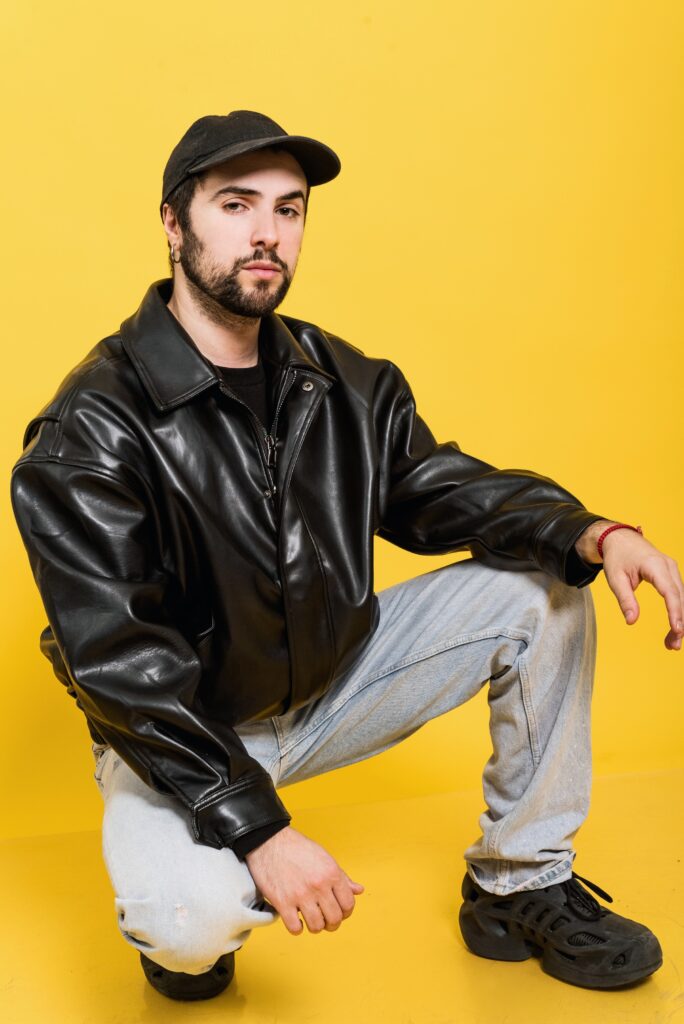
A space for the community
After graduating from university in 2012, Raúl got a job as a DJ at a nightclub that, at the time, focused solely on parties for gay men. “By 2013, the owner wanted to get rid of everything and told me he wanted to sell me the brand. That's when I started as the owner of Lemonlab along with another partner, until 2017.”
—¿How did the essence of Lemonlab change when you became the owner?
— In 2014 or 2015, we had more of a approach ; we brought in artists, singers. Like Javiera Mena, Denisse Rosenthal, back in the " I Wanna Give My Heart" , Espada . It was very kitsch . We also had themed parties. All of this was without drag. Then we ran out of Chilean artists, because back then there weren't as many as there are today. I called a drag queen from RuPaul Race, and it worked. That's when I got more involved with my own Lemon project. I gave it a twist and a approach , which is what I identify with most.
—How do you think spaces like Lemonlab contribute to building a safer community?
What I see in Lemon is that it's a response to the childhood many queer people had . It's about creating this space where no one messes with you, no one tells you otherwise. The approach I've taken with Lemon is a queer one, not a gay club with gay men. These spaces are our refuge, they're necessary, and they always need to exist.
—Through your projects, do you feel you have been an influence in the queer community?
1000%. And the queer community has also inspired me. Being part of the community, everything I do comes from there; it's something that comes from the gut. My whole life I've been very authentic to what I feel; I've never been able to pretend to be someone I'm not. And the same goes for my work because I've always wanted to create spaces where the community and allies feel safe, to generate events that people will remember when they're 60 years old.
— The meaning of family in a complex world
— His mother, already involved in the party, and his father, always aware of who the next guest will be, have been a constant support in this project that transcends the glitz and glamour of drag. “ Having to be gay, throwing gay parties, and working with drag queens, might be the icing on the cake for conservative parents. This was the complete opposite,” he says.
— "chosen family" is used a lot in the community . What does "chosen family" mean to you?
The family you choose is everything. It's important because, for example, I'm an only child. I had cousins, but it's not the same. Later, as time goes on, the cousins get married and have children; they have a different vibe, and so you unconsciously drift away. The family I chose has a double meaning for me because it's the family I choose, but they're also my siblings. I've always said that my friends from the community are my family. They're those friendships that have lasted for many years.
—How important do you think that family is to the rest of the community?
— It's important to me, but it's also important to people who don't have that blood family that truly supports you. It's 2024, what does it matter if your son likes men, or if your daughter likes women? What's the problem? It's stupid. I move in such a queer world that I don't understand it. I prefer to live in my pink, gay, queer bubble with drag queens than to live the reality of being called a faggot in the street . I think it's a response to not falling into that reality. It's a defense mechanism.
Social impact
Faced with a reality in which acts of discrimination continue, Raúl reflects on today's society and the importance that Pride Month has for him.
—According to Mohvil's annual report, 2023 saw the highest number of reported cases or complaints of discrimination based on sexual orientation, gender identity, or gender expression, an increase of more than 50% compared to the previous year. What do you think about this?
— It's terrible, especially in this day and age. I think seeing the reality is painful; everyone in the community carries that wound. The hardest part is how to educate people; it's like a chip implanted in their brains. What's your problem? Why do you care? How does it affect you if someone is gay? If someone is trans? In that sense, I unconsciously avoid these things; they reopen a wound from my childhood.
—Given these figures, what does Pride Month mean to you and how do you experience it?
— I really like Pride Month because I would have loved to have experienced it as a kid. I think all queer, gay, and lesbian kids see these events and it reaffirms that they're not wrong. In the era I was raised in, that didn't exist, not to the extent you see it today; they were clandestine marches. In my generation, we grew up with the idea that being gay was wrong, a sin, a source of guilt . Pride Month is very important for younger people, so they don't feel what I felt at 15, that it was an abomination. But it's also awesome that it exists for me, a 35-year-old man, because it's our month. It's great that it's celebrated and that it continues to grow.
—What elements of drag do you think we can apply as a society?
— Inclusion. Obviously, there's still a long way to go. The great thing is that today anyone can do drag. Any gay person, a trans person, a non-binary person, a cis or straight man or woman. How open the drag world is, the inclusion of different people, different gender identities. Not only in terms of sexuality or gender, but in every sense.
—Finally, what kind of mark would you like to leave?
— I think that, as human beings, we always want to be remembered. I want to leave a mark by creating these spaces, and for people to remember them in 20, 30, 40 years. Not as an individual, not by name—I'm not interested in being famous—but to leave a mark on my community with what I've done , for these spaces to become part of people's history. I hope to become part of history.
This text was produced as part of the Fundamentals of Journalism course at the University of Santiago (Usach), guided by the teacher Amanda Marton.
We are present
We are committed to journalism that delves into the territories and conducts thorough investigations, combined with new technologies and narrative formats. We want the protagonists, their stories, and their struggles to be present.
SUPPORT US

FOLLOW US
Related notes
We are present
This and other stories are not usually on the media agenda. Together we can bring them to light.