

The trial for Tehuel has begun: Ramos committed gender-based violence and "felt anger" towards LGBT people
On the first day of the trial for Tehuel's disappearance, his mother, his girlfriend, neighbors, and a former partner of Luis Ramos testified. Several requested that the accused not be present in the courtroom for fear of reprisals.


Share

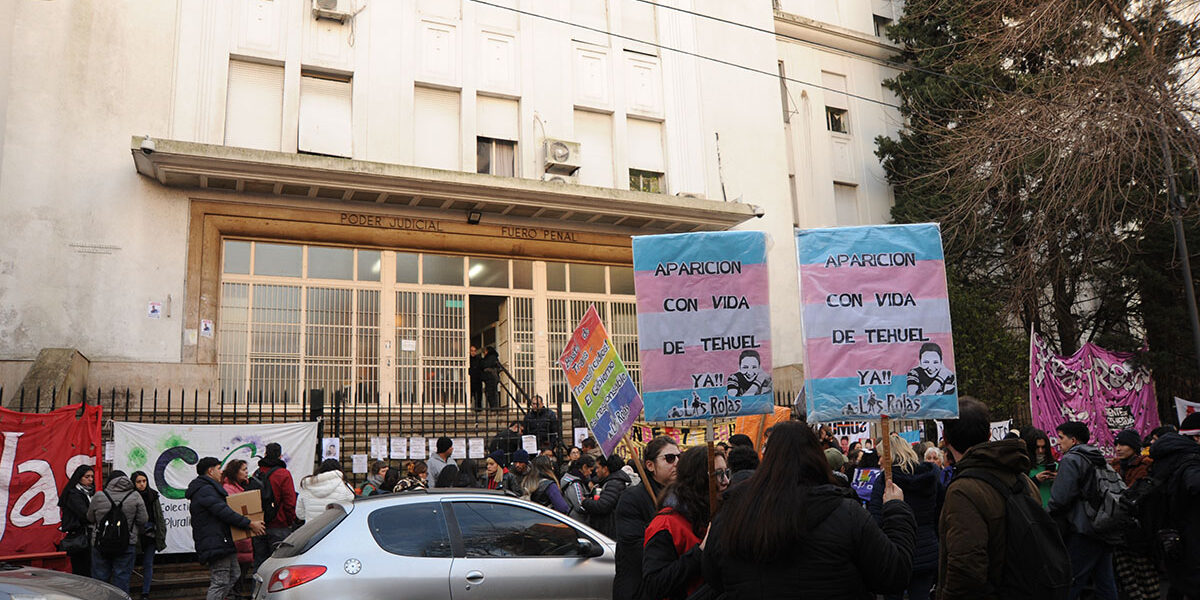
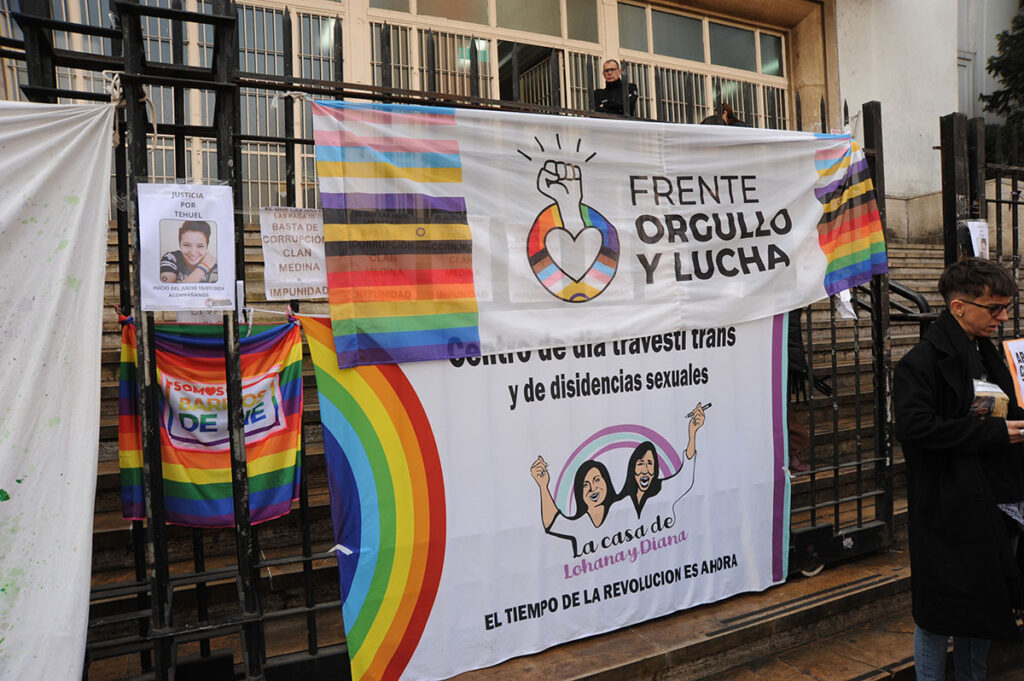
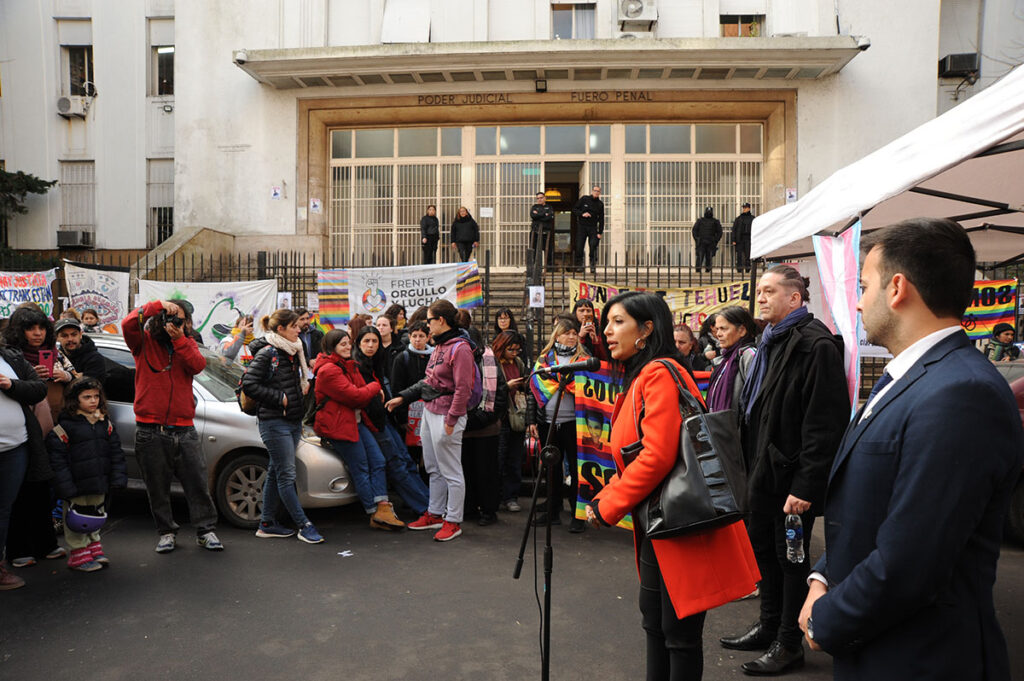
LA PLATA, Buenos Aires Province . The trial for the disappearance of Tehuel de la Torre began today in the Oral Criminal Court No. 2 of La Plata. In front of the courthouse, activists—who played a crucial role in bringing this long-postponed trial to the forefront—organized a demonstration with an open radio broadcast and other activities throughout the two weeks of hearings involved in this investigation against Luis Alberto Ramos.
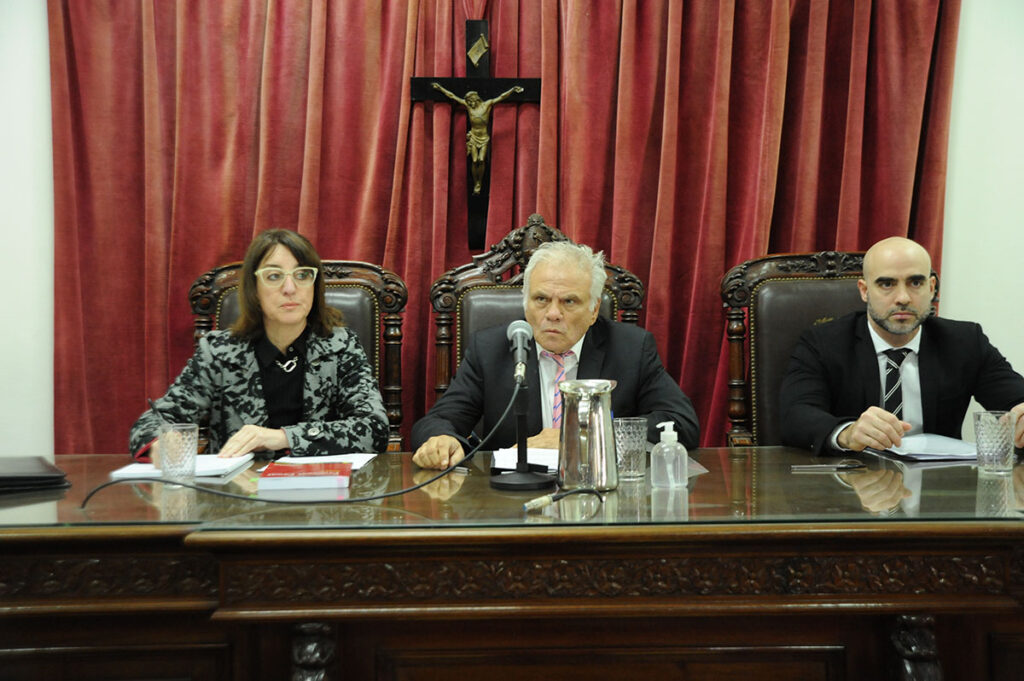
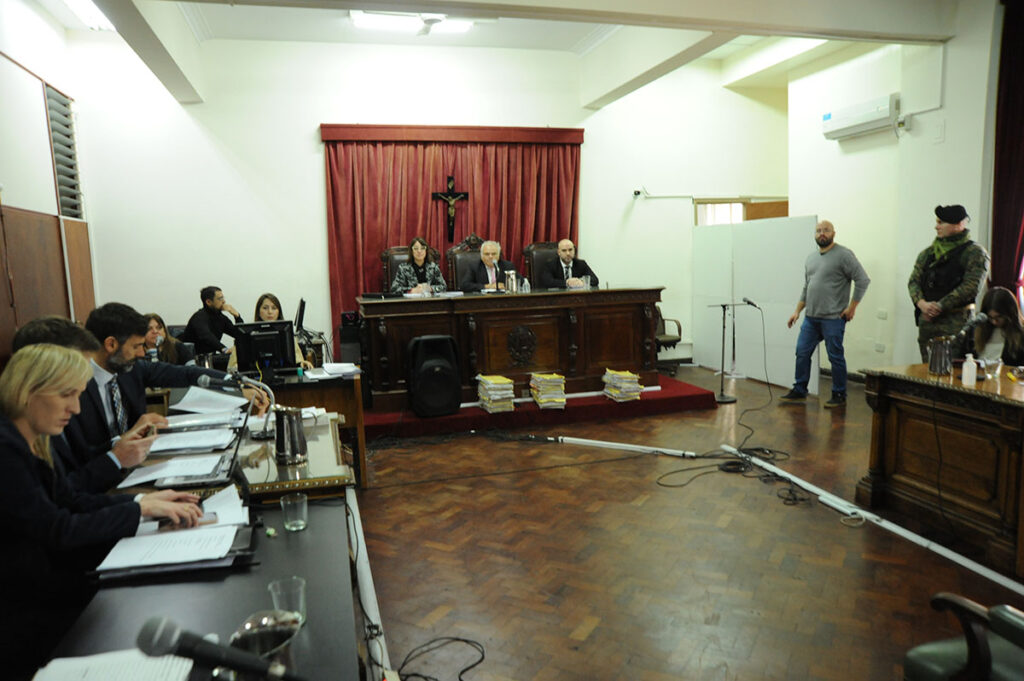
After 11 a.m., the court - made up of Claudio Joaquin Bernard, Silvia Hoerr and Ramiro Fernández Lorenzo - opened the trial for the disappearance of Tehuel in a room on the first floor, with a worn burgundy curtain in the background and a huge crucifix.
Many witnesses said they fear the accused
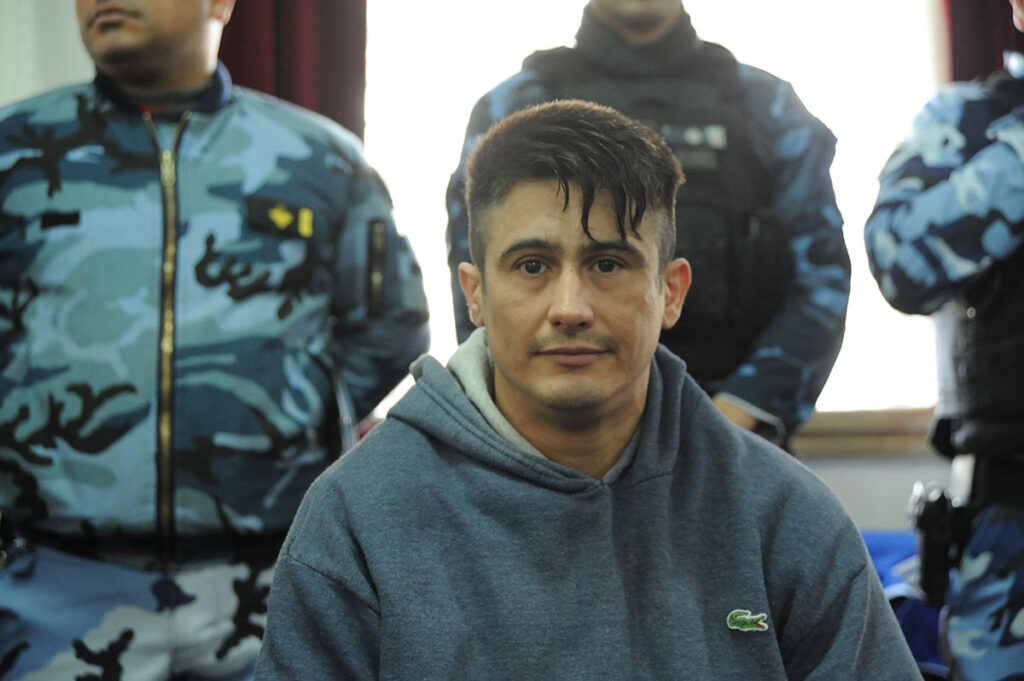
Ramos is the only defendant in this trial, which will run until July 26 and will include testimony from 90 witnesses. He is accused of being an accomplice in aggravated homicide motivated by hatred based on sexual orientation and gender identity (Transphobia). The other defendant, Oscar Montes, will face a jury trial, the date of which has not yet been set.
He arrived in handcuffs, escorted by four officers from the Buenos Aires Provincial Penitentiary Service, and sat next to his defense attorney, Natalia Argenti. At the outset, she recalled that Tehuel's father, Andrés de la Torre, had called the trial and the investigation a "farce." He had even asked that it not proceed, but his request was denied. He remains convinced that his son is alive and believes he was kidnapped by a human trafficking network.
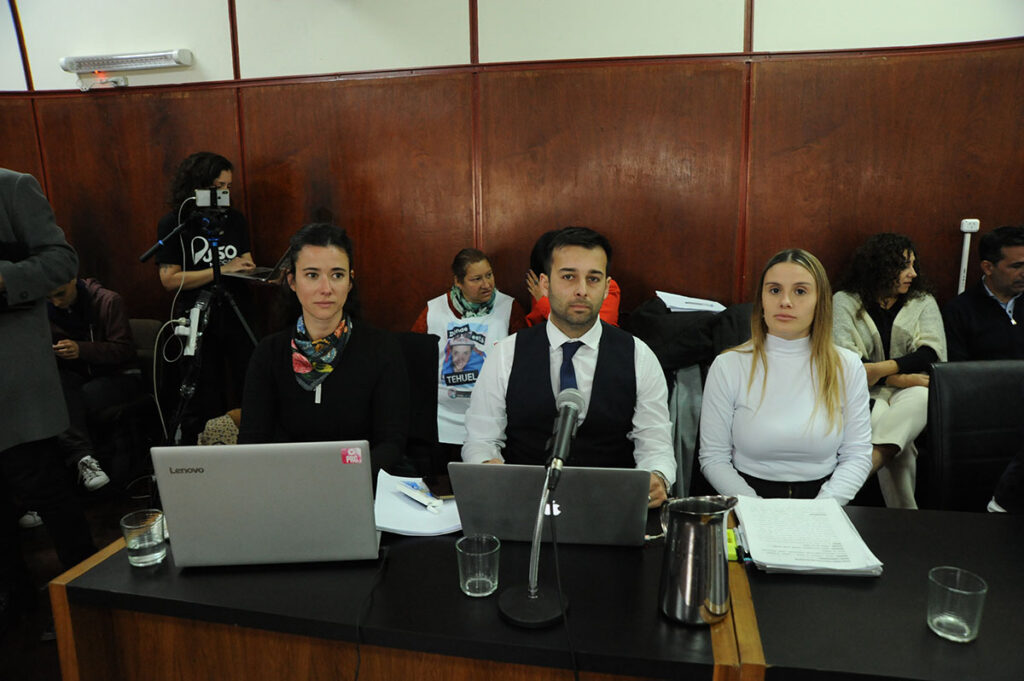
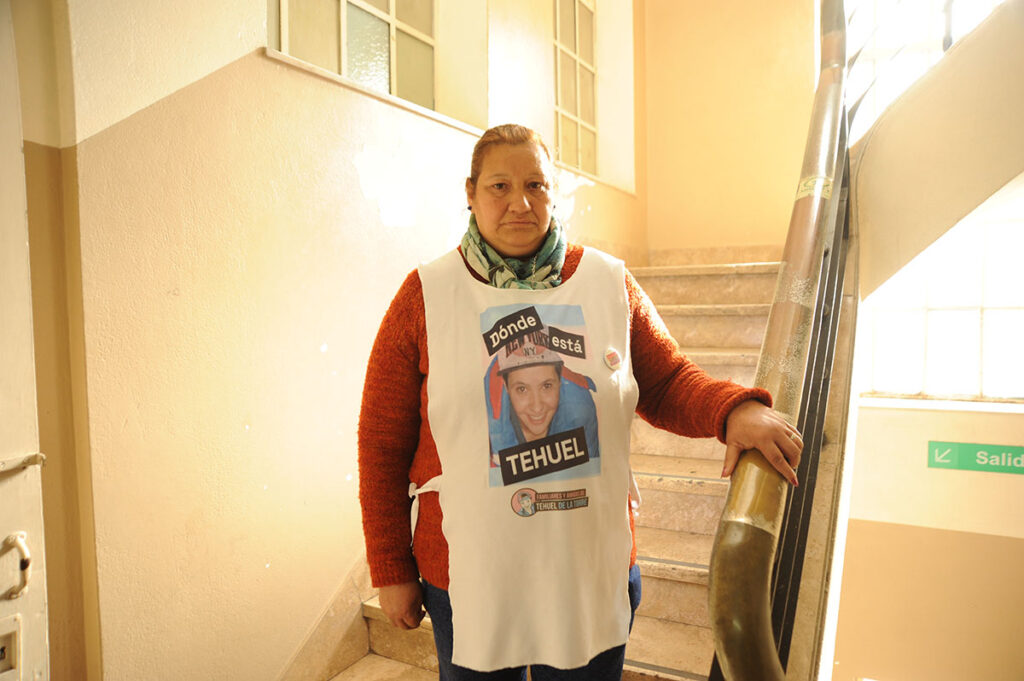
In this trial, the prosecution represents Tehuel's mother, Norma Nahuelcurá, who was the first witness to testify today. She was followed by Michelle L., the girlfriend who lived with Tehuel and her young son at Norma's house at the time of his disappearance on March 11, 2021. She, like three other witnesses, requested to testify without Ramos present in the courtroom, although this option was not granted to all who requested it, citing fear of reprisals.
Also testifying were Catalina S., Ramos's ex-partner; a male and female neighbor of Ramos in Alejandro Korn; and a man who had rented a room to Ramos and his mother.
Among those in attendance were Deputy Mónica Macha (UxP), Estela Díaz, Minister of Women, Gender Policies, and Sexual Diversity of the Province of Buenos Aires, trans activist Florencia Guimaraes from the Trans and Transgender People's Access to Rights Program at the Women's Justice Center of the Buenos Aires City Council of Magistrates, Martín Canevaro from 100% Diversity and Rights, Darío Arias from ILGA LAC and Conurbanxs for Diversity, and Marcela Tobaldi from La Rosa Naranja. These organizations are part of the Pride and Struggle Front, which has been working on the cause to ensure it incorporates a gender perspective. Also present were Lucía Portos, Undersecretary of Gender and Sexual Diversity of Buenos Aires, Provincial Deputy Laura Cano, and Soledad Mendé, Director of Gender and Diversity of San Vicente, representing Mayor Nicolás Mantegazza. Representatives from other organizations supporting the Tehuel Family and Friends Commission were also in attendance.
First trial for trans homicide of a trans man
“We are facing a trans homicide,” were among the first words of the lawyer for the plaintiff, Cristian Ariel González, who together with Flavia Centurión represents Tehuel's mother.
The prosecution's questions were posed by Juan Pablo Caniggia. The prosecution framed the questions from a gender perspective, highlighting Tehuel's gender identity and how it affected other aspects of his life, such as access to employment for a poor young man.

Tehuel's mother: “a certain Luiggi”
Norma Nahuelcurá was the only witness who wasn't afraid to testify in Ramos's presence. Seated just a few feet from the man accused of killing her son, she recounted those days when she last saw him. Prosecutor Caniggia began by asking about Tehuel. His mother said that Tehuel enjoyed playing soccer, that when he was 12 he called her and told her he liked girls. That the son of Michelle, his girlfriend, called him "Dad," and that her son's financial situation was bad. When she said this last part, Ramos nodded. "Tehuel didn't have a job, he couldn't find one, he did odd jobs," said the mother, who in her testimony painted a picture of what it was like for Tehuel to be a poor, trans man living in the Greater Buenos Aires area. She said she believes she met Ramos at marches, when he "was involved with a group, the MST" (Socialist Workers' Movement).
Norma last saw him on March 10, 2021: “I was with him until 11 a.m., then I went to my daughter’s house because she was sick.” Tehuel, she said, was always in contact with her and also lived at her house. She started to worry when she saw that Tehuel wasn’t reading her messages. On Saturday, she asked Michelle to file a police report, but according to Norma and later Michelle, they refused to take it, claiming she was a minor (anyone, even a minor, can file a report).
“She told me he had gone to Alejandro Korn because he had been called for a job as a waiter, by a man named Luigi. She said he was a friend of Tehuel's. I found out later that it was Luis Ramos,” Norma said. She refers to her son using feminine pronouns, but says she always accepted whatever he wanted to be.
“I am Tehuel de la Torre’s girlfriend”
The next to testify was Michelle, who was 17 when Tehuel disappeared. She said they met on Facebook and were together for two or three years. She made donuts and fritters, and he would go out to sell them on his bicycle. “If we didn’t sell, we didn’t eat. That’s how it was,” she explained. She said Tehuel was looking for work but couldn’t find any. “They didn’t want to hire him because he was a trans boy. They said he might change his mind and get pregnant.”.
On March 11, Michelle and Tehuel were washing clothes together when Tehuel received a call about a job. It was Ramos; he had a part-time job as a waiter. Tehuel had told his girlfriend about Ramos: that he was a friend, that he knew him “from the marches” he attended with the MST.
Michelle cooked quickly; Tehue barely managed to eat a potato. He put on gray sweatpants, a blue windbreaker, and blue sneakers, and left on his bicycle. A week earlier, Ramos had called him about another event, but Michelle told him not to come. She didn't like Ramos: she said in her statement that she knew, from what her boyfriend had told her, that he was a creep and harassed girls.
She also knew that Ramos had a case against him for abuse, and that's why she had refused invitations to eat at his house, for fear of bringing her son.
“Tehuel isn’t here. If you want to come and get her, you can.”
During her statement, which lasted just over an hour, Michelle was asked to read aloud the WhatsApp messages she sent to Ramos the day after Tehuel disappeared. Worried, Michelle had hacked her boyfriend's Gmail account to find Ramos's phone number, thinking he might know where Tehuel was.
When she asked about him, saying she was the last person to have seen him, Ramos replied, "No, how can you say that? She's my friend, I love her very much." Then she told her that the event hadn't taken place and that Tehuel had left.
Michelle found Ramos's address and went to the house with a policewoman and Tehuel's father. Ramos opened the door and told them, "Tehuel isn't here. If you want, you can come and get her ." Both the prosecution and the plaintiff questioned Michelle about the use of the feminine pronoun. She explained that yes, Ramos did refer to Tehuel using feminine pronouns.
According to Michelle, Ramos never offered to help with the search. Days later, during a search of that house, she recognized a piece of Tehuel's jacket, burned, and his destroyed Motorola cell phone.
“Ramos abused my son. I left him because he hit me.”
The next to testify was Catalina Salas, Ramos's ex-partner. Like Michelle, she requested to speak without the defendant present in the courtroom. Ramos remained in a room with the door open to listen to her. Catalina recounted: “Ramos abused my son. I filed a report in September 2020 at the women's police station in Alejandro Korn.”.
Regarding her relationship with him, she recalled that the first few years were "excellent," but then he began to behave strangely, like a "crazy" or "bad" person. He took pills and hit her. She said she was pregnant, and she lost the baby because of a beating.
“Luis and Tehuel were friends. He came to my house twice, then I saw him at the marches. But Luis wouldn't let me participate in the conversations with other people,” Catalina said.
Among Ramos's behaviors, he remarked: "He didn't like men being with men and women with women, it made him angry," referring to gay or lesbian relationships.
“Ramos chased us with a knife”
Julio Elias Agüero was the third to testify. He arrived in handcuffs, surrounded by prison guards, and also requested that Ramos not be present in the courtroom.
Julio lived in the same neighborhood. He began by recounting a time when he and some friends were playing soccer on a small field, around seven in the evening, and Ramos arrived “looking for a fight” with a knife. “He was drunk. He was with a girl with a backwards baseball cap and short hair,” he said, referring to Tehuel.
The last two people to testify were also neighbors: Romina Lobosco and Ricardo García Somaruga, who arrived at the courthouse by train. Ricardo lived for a few months renting a room on Ramos's property and said he saw Tehuel there a few times.
The Court asked him several questions regarding how he addressed Tehuel, and the witness said that Ramos referred to Tehuel as "boy-girl" or "a girl who was a boy.".
Many of the judges' questions during today's testimonies revolved around the money Ramos had lent Tehuel, something mentioned by several witnesses. They also questioned Ramos's use of the feminine pronoun when referring to Tehuel.
The day ended around 3 p.m. It was announced that 13 witnesses have been summoned for tomorrow.
Activists call for daily support
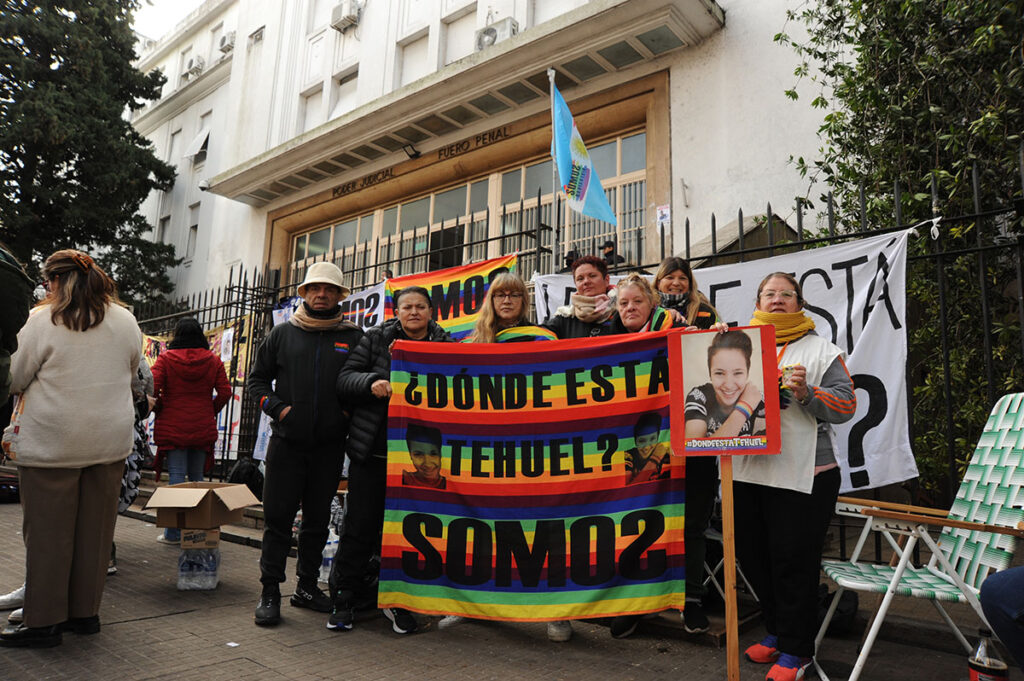
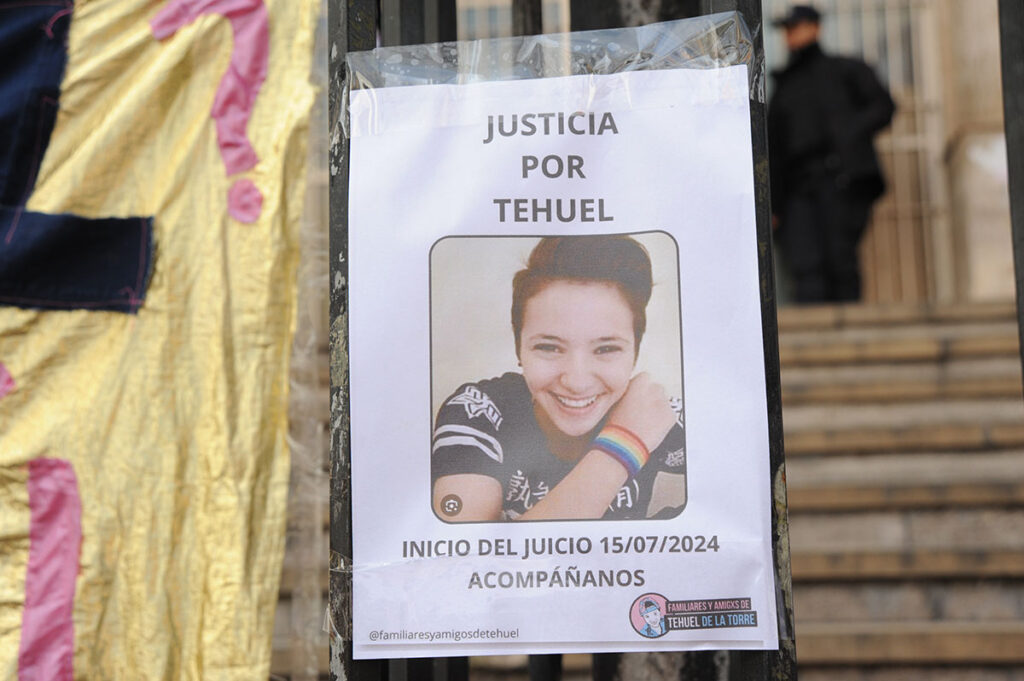
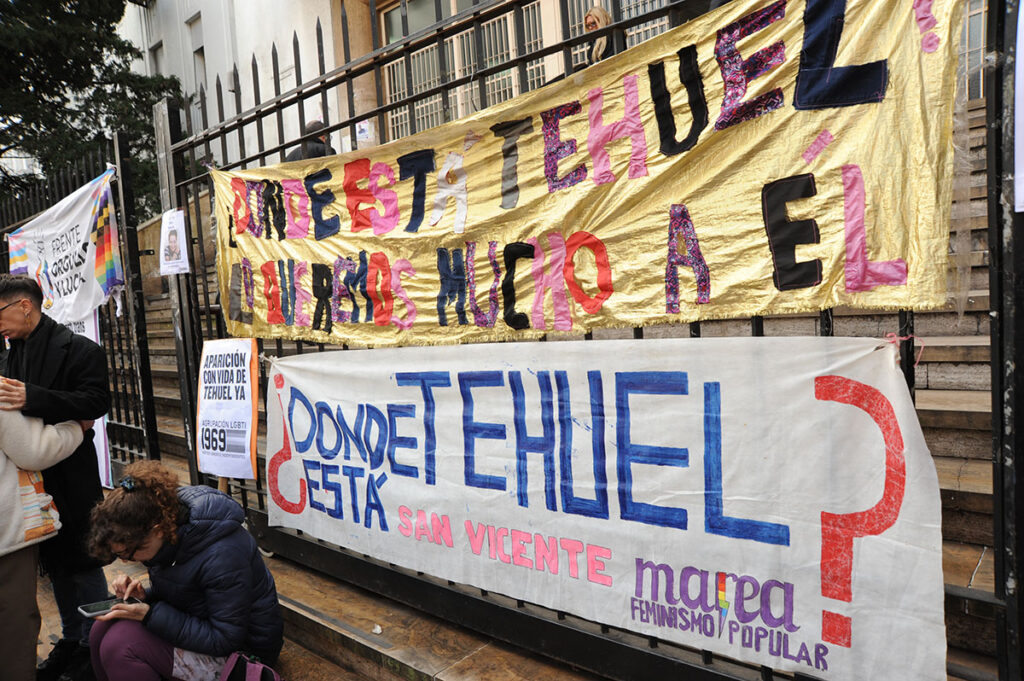
Outside, throughout the day, activists accompanied the demonstration with music, flags, and other activities. The Ministry of Women, Gender Policies, and Sexual Diversity of the Province of Buenos Aires set up a tent. The entire fence surrounding the courthouse was covered with signs demanding justice for Tehuel.
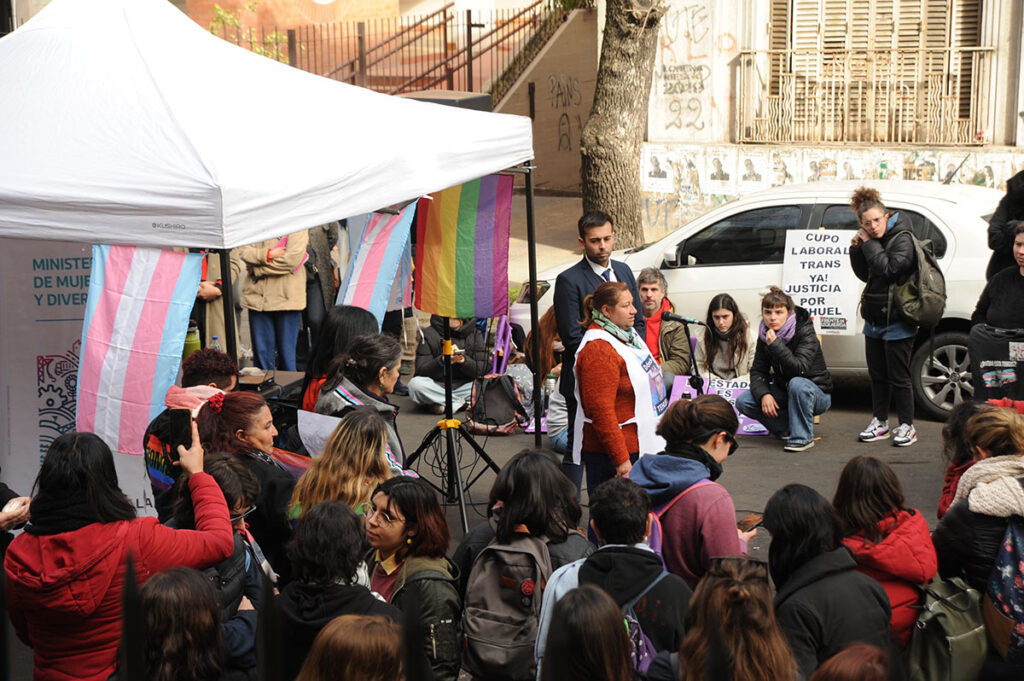
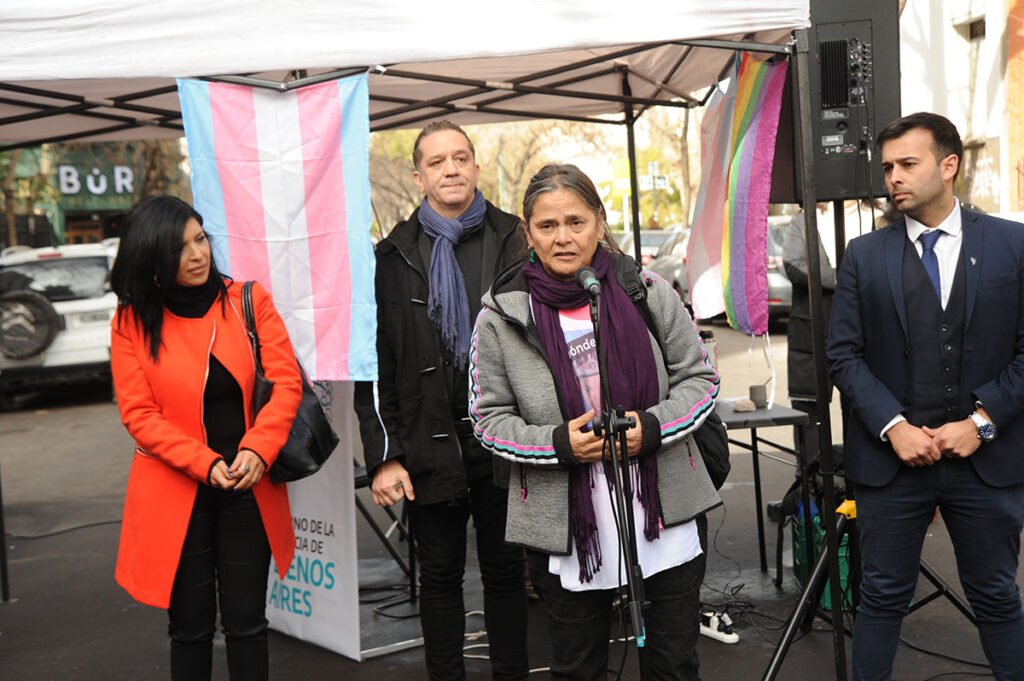
During the recess before the last witness testified, lawyers shared updates on the trial. Tehuel's mother, Norma Nahuelcurá, offered words of gratitude, and Mónica Galván, representing the Tehuel Family and Friends Association, also spoke.
🇦🇷⚖️🏳️⚧️ Florencia Guimaraes (Furia Trava) explains why it's important to support the Tehuel trial, going to the La Plata courthouse Monday through Friday to attend the hearings. pic.twitter.com/VsKgFkBiI9
— Presentes Agency (@PresentesLatam) July 15, 2024
“It’s important to be here, to organize ourselves to come. We want the justice system to see that we have a network and also to understand our needs,” said trans activist Florencia Guimaraes in closing.
Tehuel's mother, Norma, expressed her gratitude: "I've been waiting a long time for this day. I thank the court, the prosecutor, the lawyers, and especially all of you because I feel so supported in my fight for justice for Tehuel. I won't stop until I get justice. I don't want to see any more Tehuels, never again," Norma said. She concluded: "Thank you for giving me the strength to keep fighting until the very last day of the trial.".
🏳️⚧️⚖️🇦🇷 Where is Tehuel? This open question closed the first day of the trial for Tehuel de la Torre, a young trans man last seen in March 2021, in front of Court No. 2 in La Plata. pic.twitter.com/paLFjNP3gu
— Presentes Agency (@PresentesLatam) July 15, 2024
We are present
We are committed to journalism that delves into the territories and conducts thorough investigations, combined with new technologies and narrative formats. We want the protagonists, their stories, and their struggles to be present.
SUPPORT US

FOLLOW US
Related notes

We are present
This and other stories are not usually on the media agenda. Together we can bring them to light.