

What is the Paraguayan government trying to achieve with its anti-NGO law?
The anti-NGO law received preliminary approval in Paraguay, joining countries with similar initiatives, such as Russia, Hungary, Mexico, El Salvador, Nicaragua, Guatemala and Venezuela.


Share

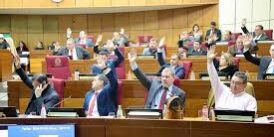
The Paraguayan Senate, with votes from the ruling Colorado Party and its allies, approved a bill on Monday, July 8, "establishing control, transparency, and accountability for non-profit organizations." Leaders of social organizations denounced the law, arguing that under the guise of "transparency," it seeks to restrict freedom of association, human rights, and endanger these organizations.
One of the most criticized aspects of the "gag law" is the ambiguity in its definition and scope. Article 2 of the bill, which addresses its scope, includes "associations whose purpose is the common good" and "any natural or legal person or legal structure that receives or manages public or private funds of national or international origin to be allocated to services or areas of competence of the State." "Basically, no one is exempt," warned lawyer Diana Vargas.
In addition to its impact on human rights organizations, the law could also affect parent-teacher associations, those providing after-school support, and even soup kitchens. With even more bureaucratic registration requirements and fines of up to 2.798 billion guaraníes (approximately US$373,107), many organizations would end up closing.
Vargas believes the legislative initiative is based on false premises. Another point of criticism is that controls already exist, stipulated in various laws, for both those receiving public and private funds. This was also expressed by other lawyers to the local press, who cited controls carried out by the Comptroller General's Office, the National Directorate of Tax Revenue, the Ministry of Economy and Finance, and the Secretariat for the Prevention of Money Laundering and Asset Forfeiture.
Disinformation campaigns in Congress
Senator Lizarella Valiente, a member of the Colorado Party and a bill's author, spread misinformation during the extraordinary session of Congress. She presented videos with false allegations about the organization Families for Comprehensive Education in Paraguay (FEIPAR) and the digital rights organization TEDIC , and criminalized human rights activists. “That's the problem,” she stated, “FEIPAR sits at a technical table of the Ministry of Education and they propose public education policies for children in Paraguay. And you can't promote homosexuality in the education system .”
Adriana Closs, president of Feipar, told Presentes that they are not against oversight of organizations, but rather that this law proposes authoritarian control over NGOs and seeks to eliminate organizations that dissent from the Cartes administration. “It cannot be denied that this is a very worrying escalation and that, moreover, it increases the stigmatization of us as individuals and of our organization. But our collective spirit and experience in these situations allowed us to react quickly and implement strategies to remain organized and not remain silent. We understand that the ultimate goal is to discipline us,” Closs said regarding the disinformation campaign.
🚨 #NEWS | A senator irresponsibly and falsely accused us during an extraordinary session of the Paraguayan Congress.
— TEDIC (@TEDICpy) July 10, 2024
What do we have to say about this? 🧵👇 pic.twitter.com/Tr9d27Sfuz
LGBTTIQ+ rights organizations also took to social media to express their views. Aireana, a lesbian rights group, stated: “LGBTIQ+ people are such a nuisance to this government that it seeks to harm us to divert attention from its atrocious thefts. This is clear when they try to bureaucratize civil society organizations and individuals who wish to associate freely.”
“The anti-NGO law is part of a globalist agenda.”
"Globalism" and "gender ideology" are discursive strategies that Chartism repeats time and again in order to steer any conversation in the public debate towards the narrative of the "internal enemy," a category that could include anyone from a foreigner to a homosexual or opposition person.
During the debate on the anti-NGO law, Cartes-aligned legislators like Gustavo Leite and Lizarella Valiente denounced the "interference in governance" and the "intrusion of these organizations into public policy." But for Vargas, this law, based on false premises, is itself part of a broader agenda with an authoritarian bent, designed to prevent people from organizing to criticize the government.
“This has a whiff of the Cold War about it,” Vargas said. Following the US trade sanctions against former President Horacio Cartes and his designation as “significantly corrupt,” it became necessary to forge new alliances. “For geopolitical reasons, we have to be aligned with Russia,” he said.
Russia’s 2012 Foreign Agents Law was passed by Vladimir Putin. According to an Amnesty International report published four years after its enactment, it was designed to stigmatize and silence NGOs that were critical of the European Court of Human Rights. “In El Salvador, in 2021, a law with these same characteristics was debated, an initiative of Bukele,” he said, listing other countries with similar legislative initiatives such as Hungary, Mexico, Brazil, El Salvador, Nicaragua, Guatemala, and Venezuela.
In May of this year, the Georgian passed a "foreign agents" bill, which critics call the "Russian law" and believe could be used to suppress the civil liberties of Georgians. This sparked mass protests in the capital, Tbilisi.
“What they do in all these countries is implement cumbersome registration processes. They aim to stifle these organizations so they end up closing or paying these exorbitant fines. It's similar to what happens in Russia and other countries where even minor errors in complying with these registration requirements result in sanctions,” Vargas adds.
We are present
We are committed to journalism that delves into the territories and conducts thorough investigations, combined with new technologies and narrative formats. We want the protagonists, their stories, and their struggles to be present.
SUPPORT US

FOLLOW US
Related notes

We are present
This and other stories are not usually on the media agenda. Together we can bring them to light.