

Danielle Cruz, non-binary journalist: “Hope lies in the formation of communities”
Activist and media critic Danielle Cruz tells in this interview about her life and career journey analyzing narratives about LGBTI+ people.


Share

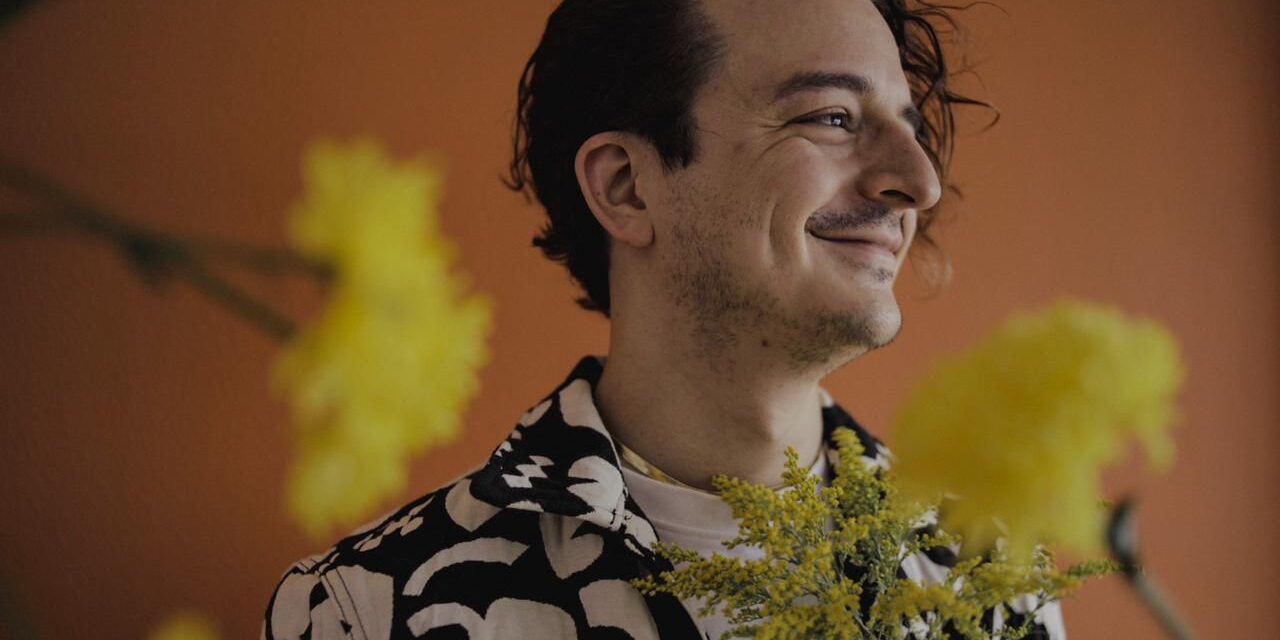
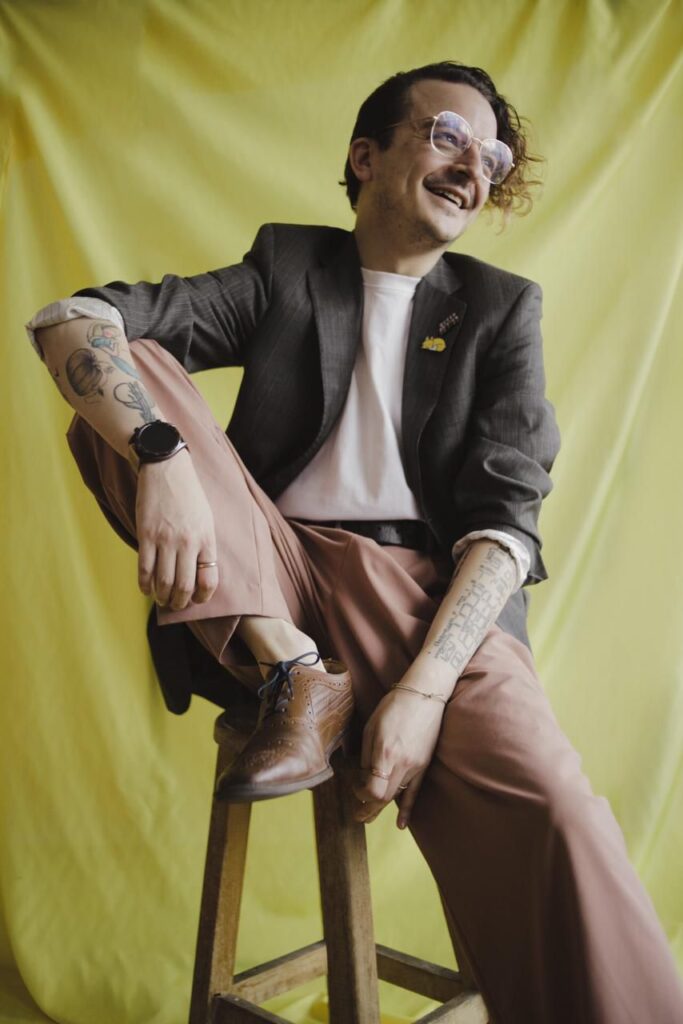
Danielle Cruz is a Mexican journalist, media critic, and non-binary activist. She has worked in communications for a decade, which has given her firsthand experience of how mainstream media portrays trans and non-binary people. There, she confronted misinformation and the construction of stigmatizing narratives, including hate speech, which have direct consequences on people's lives.
One of her analyses can be found in the book Polarization and Transphobia: Critical Views on the Advance of Anti-Trans and Anti-Gender Movements in Mexico , available for free online at this link .
In the context of Non-Binary Visibility Day , Presentes spoke with her about how she discovered her non-binary identity as an adult, the ups and downs of visibility and her work, of course, because as she says, "we are more than our gender identity."
As a reminder: Non-binary people exist. They are those who do not necessarily identify with the male or female genders. They can be both, neither, dismantle that binary, or build something new. It is common for them to be associated with the neutral pronoun (they/them) , but the use of these is a personal decision. There is no single way to be non-binary.
– How was it to discover yourself as a non-binary person?
– There are always two answers. The short one is that since I was little, I always had this strange feeling of not being the gender I was told I was. The long one is that since I was little, I had to work really hard to perform the male gender. The worst violence I experienced was homophobic violence, and I didn't understand that noise. But that bullying I experienced my whole life made me question a lot. I wondered, "Are they seeing something I'm not?" I even questioned whether I was bi (bisexual), but no, men always disgusted and scared me because they were the group that primarily abused me. It wasn't until I was 33, taking a workshop on queer theory, that I came across non-binary people, and when I heard their experiences and read various authors, I said, "Ah, there's something here." I found the word "non-binary," and that gave meaning to everything I had felt since I was little.
From there it's been quite an interesting journey, but a fundamental part of this path has been my wife, Mar. I wouldn't have been able to take this step without Mar's support and love.
– We don't talk much about adults who identify as trans or non-binary. What advice would you give to an adult who is discovering their non-binary identity?
– Doing it is like reliving a second adolescence, in the sense of how you relate to the world and how the world relates to you. It's a complex exercise to accept, especially because there's this idea out there of "you're too old now, what's the point?" But the truth is, even though it sounds corny and cliché, it's never too late to get to know yourself, to allow yourself to be yourself. It's not just about naming yourself and that's it. It's an exercise in self-examination, examining every little piece of memory you have of yourself, every curious event from your past. In the end, it allows you to free yourself from that psycho-emotional burden that gender and its demands often impose.
And as a piece of advice: we don't owe anyone an explanation about our identity, nor do we have to come out of the closet all the time. It's exhausting.
– When we talk about non-binary visibility, what is important to reflect on?
– It's often said, “what isn't named doesn't exist,” and it's true. But I think there's a risk in visibility, and that's that we live in a deeply transphobic Mexican society. I think it's important to keep in mind that greater visibility doesn't mean safety or a dignified life. Let's ask ourselves, visibility for what? When non-binary people still have to constantly remind everyone that we exist. Visibility implies having opportunities to generate social and political pressure, but achieving those effects in itself carries risks. And an example of this was the murder of Ociel Baena ; he was the most visible non-binary person in Mexico, he was murdered and extremely revictimized.
– How do hate speech and disinformation impact the lives of trans and non-binary people?
– Just looking at the general data on the trans population is a good example of how these discourses, which I call crystallized discourses, are prejudices that, literally like crystal, you can't see but still have an impact. Data on mental and physical health, lack of employment, housing. It's an example of how trauma has direct effects on our lives because these narratives constantly violate our identity on a personal, social, and institutional level.
Non-binary people have a whole life history in which our identity is not only denied, we are told that it does not exist, that it is an affront to Spanish, that it is an invention, and having to explain and defend ourselves is brutally tiring.
– What can we do to help the media transform hateful and misinforming narratives?
The biggest problem is media owners, and to see real change, it will be necessary to put pressure on management, editors-in-chief, and digital consultants. And that's the hardest thing to change. But one thing that's a little more within our control is digital literacy . It helps us understand how communication algorithms operate and avoid falling into the traps of the far right and social media, but also to understand how news is created and how online media works. It's not about ordinary people becoming fact-checkers , but about being aware of how we react to news stories and the emotions they evoke. Data alone won't transform narratives; what will work is telling stories, telling who we are. And it sounds painful to say, but that transformation will happen when the media engages in genuine curiosity, asks good questions—the foundation of good journalism—and tells the story of trans and non-binary people, showing that we are also people and that we are more than our gender identity.
– Where do you find hope?
– In the formation of communities. True change comes from taking action, not just in protests but in everyday life. I've found more comfort in a friend's message asking if everything is okay than in books on queer theory. The networks of friendship and solidarity we weave among ourselves have been a lifeline and have shown me that we are not alone.
We are present
We are committed to journalism that delves into the territories and conducts thorough investigations, combined with new technologies and narrative formats. We want the protagonists, their stories, and their struggles to be present.
SUPPORT US

FOLLOW US
Related notes
We are present
This and other stories are not usually on the media agenda. Together we can bring them to light.