

We're Floating: Dissident Design for Social Change
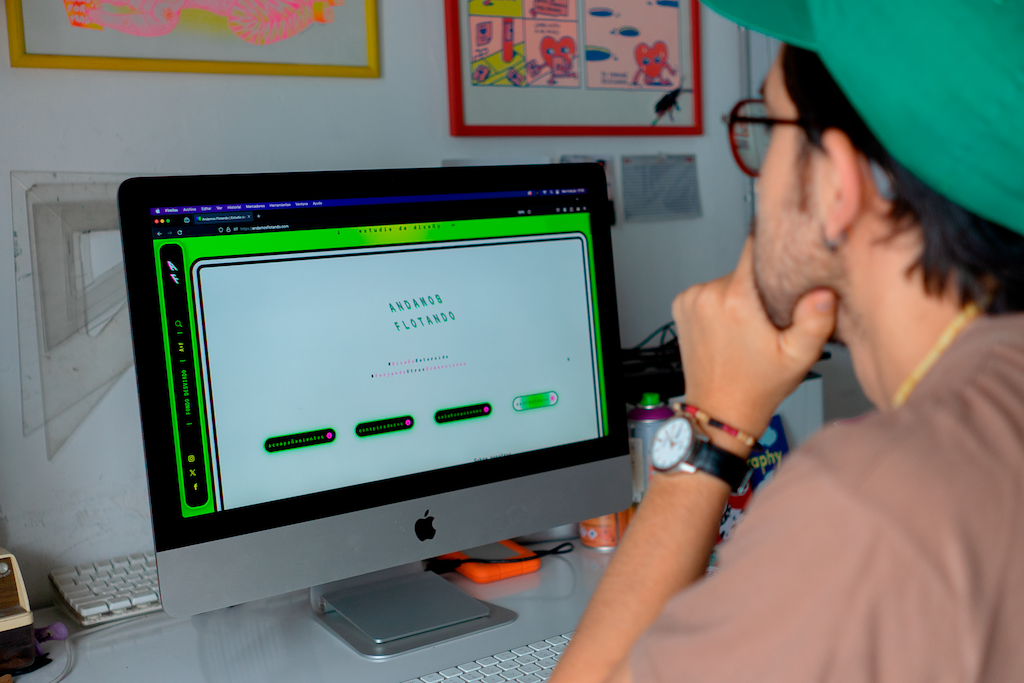
Andamos Flotando is a dissident design project that seeks to communicate through alternative approaches. It dedicates its "Diverted Fund" to supporting collectives within the solidarity economy.


Share

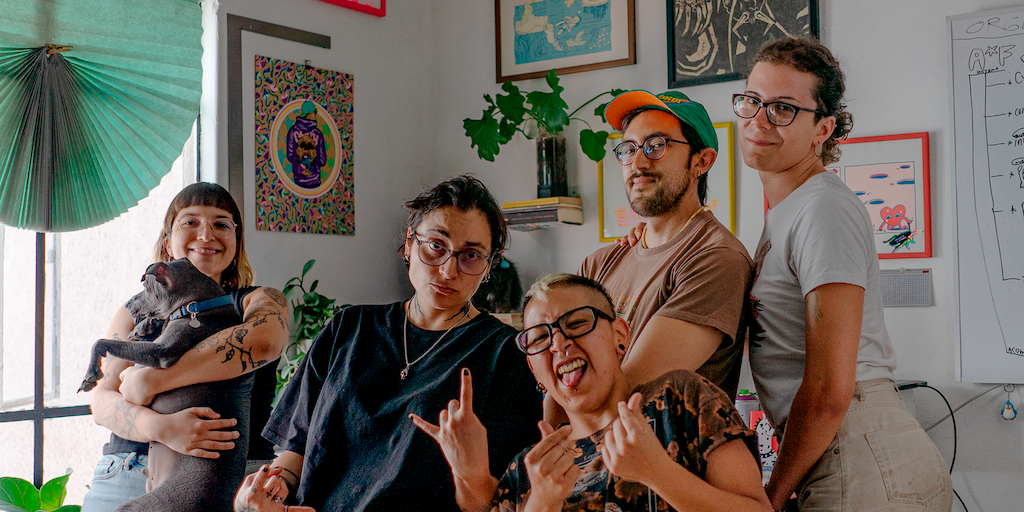
MEXICO CITY (Mexico). Andamos Flotando is a design studio in Mexico made up of dissident individuals who use communication and design as collective tools for social change. One of their most innovative lines of work is the Diverted Fund. Through this solidarity economy project, they support and accompany social projects to strengthen their communication processes through design, documentation, and multimedia journalism at a low cost and even outside the logic of money.
Andamos Flotando (A*F) is made up of Sebastián , who does motion graphics and graphic design; Erika Lozano , better known as Kuru, a documentary filmmaker and freelance journalist; Steph Quiroz, who does graphic design and illustration; Poni Alta , an editorial designer and illustrator; and Queso Rayones, who also does graphic design and illustration. They all contribute a bit of everything to the logistics and operational running of Andamos Flotando.
This project was born in pre-pandemic times. In early 2023, they formed a larger team of friends specializing in certain areas of design and communication. A key aspect is that collaborators share their political values; in their words, that they be "enthusiastic about nonconformity."
Presentes spoke with them to learn how this project, which provides services to social, cultural and political ventures in Mexico and Latin America, applies other logics to sustain itself and show solidarity with social causes.
-How do they build this collective and work space outside of the logic of exploitation?
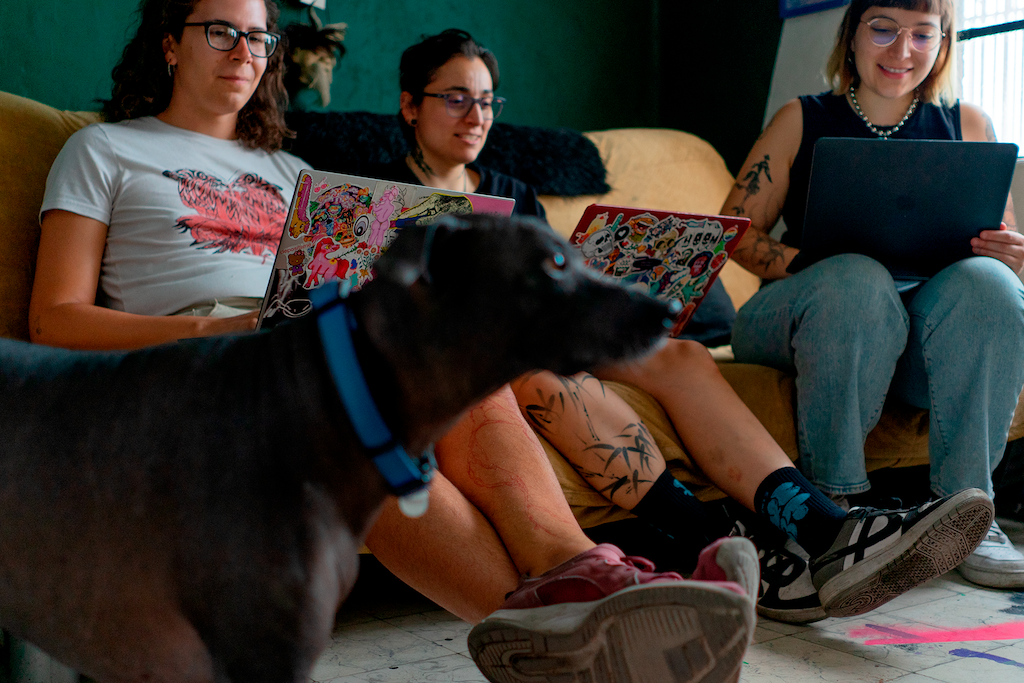
Kuru: We agree on having a space for ongoing listening and support among ourselves. We seek mutual care from within, not only in the workplace, but also in other areas. We prioritize issues that we see are overlooked in other workplaces, such as mental health and the space to imagine. Here, urgency and demands for immediate results don't prevail. For us, adopting those kinds of attitudes would be like putting life above it.
Poni Alta: Those of us who make up A*F are women and gender non-conforming individuals, and we understand this "work" space from non-heterosexual and non-commercial perspectives. We operate with a concept called twisted design , which encompasses all of that: twisting the expected ways of communicating, designing, researching, conceptualizing, and distributing money. And that is also an ideological commitment that relates to labor dignity and creative dignity.
Steph: It sounds very ideal, but it's not quite like that. Maintaining this way of working collectively requires listening, agreements, continuous communication, self-criticism, and constant learning.
-From where and how do they dissent in Andamos Flotando?
Queso: We think of dissent not only in terms of sex and gender, but also in terms of how you feel, think, act, how you relate to others, and how much you disobey capital. And from that perspective, yes, we are all dissidents here.
Poni Alta: We don't present ourselves as an LGBT design team, that's not what it's about. Being dissident is about not isolating struggles. For us, being dissident means having a critique of what oppresses us and taking action . Being consistent.
-What is the Diverted Fund and why was it created?
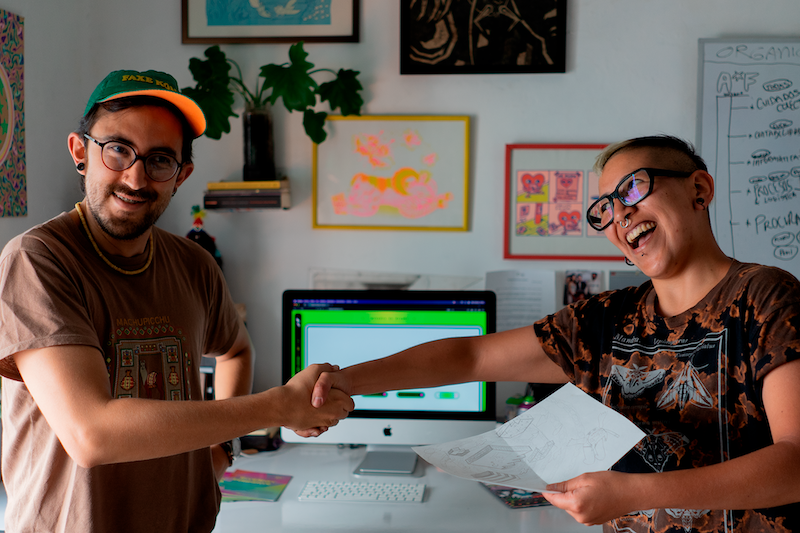
Steph: It's a type of support we provide to collectives and social organizations so that we can contribute to their causes through communication and design. Often, these are also our own causes, ones that resonate with us and with which we empathize. We offer services in editorial design, illustration, animation, multimedia journalism, and more.
Kuru: It was born out of the need to observe and support communication processes in areas where we have expertise. Often, organizations and collectives lack the money and resources to invest in design and communication. For social movements, we know that generating impact through visuals, documentation, and dignified representations is crucial.
-Do you also support a form of solidarity economy when working with social movements?
Queso: We are very involved in street struggles, so from our desire to contribute something, we know that communication or design can have an impact in getting the messages that these struggles seek to convey, and which are often very difficult to obtain.
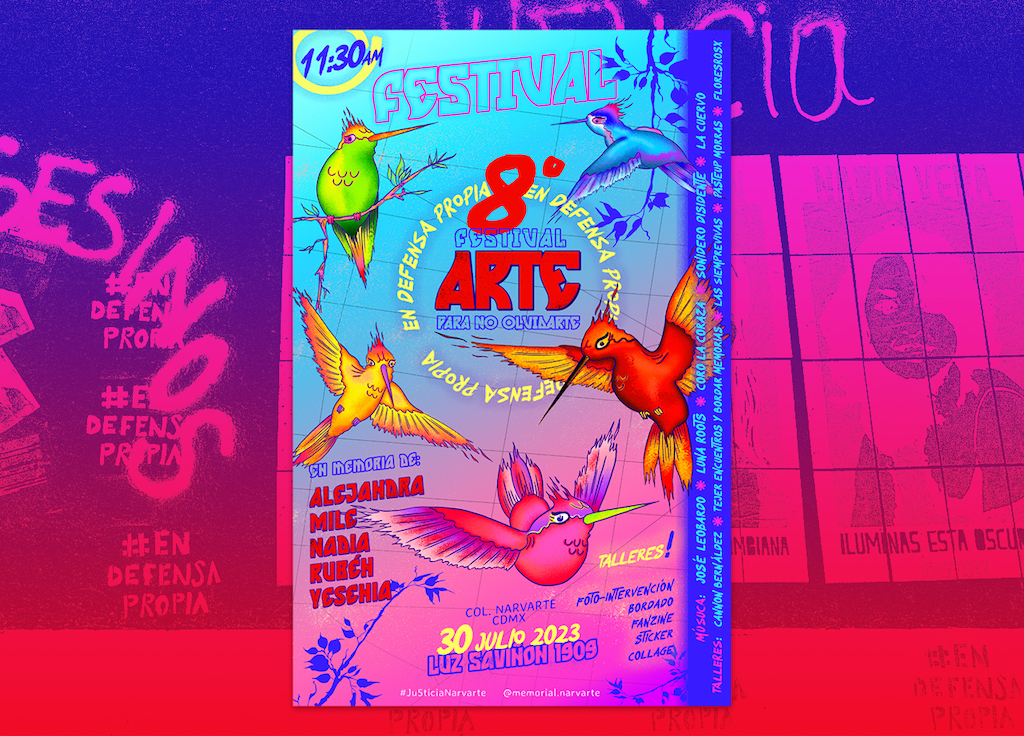
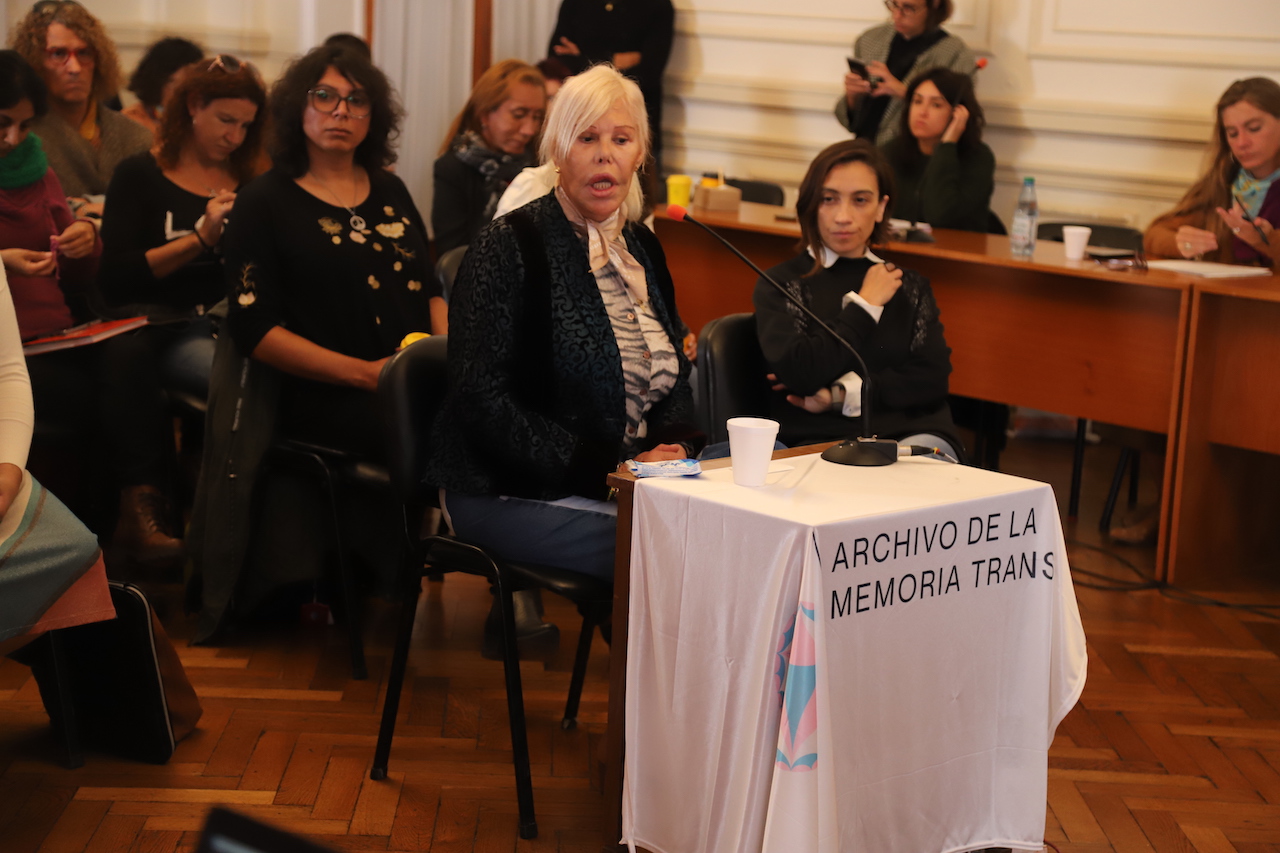
With Fondo Desviado, we support the struggles of friends and loved ones, almost like when someone asks, "Hey, you know how to draw, make me a logo." That's how we do it, and it's our way of contributing to these causes. For example, we support the Arte para No Olvidarte Festival with documentation and design, and the Archivo de la Memoria Transmasculina by developing its visual identity.
Pony Alta: Those who don't have much money (resources) can request the Diverted Fund and there we opt for solidarity prices and even other forms of economy such as bartering and even others outside the logic of money.
Sebastián: We've found that these methods allow us to support social causes through high-quality products, while also ensuring our livelihoods remain secure. Our goal, of course, is to maintain and improve this approach to ensure its long-term sustainability.
-What power do you find in communication and design when it is involved with social struggles and the defense of human rights?
Cheese: For me, it's about ceasing to live in my imagination, and materializing my desires and feelings for a different world; and design, engraving, the visual is the way I find to give my life to the struggle.
Kuru: For me, supporting struggles for dignity and memory is a life choice. When it can be done from spaces that dignify not only my work but also the people who are part of those struggles, I believe it's the best path.
Sebastian: It's about dedicating my time, which is the most important thing I have, to what motivates me.
Poni Alta: When the worlds of visual languages used by those of us who are design or communication professionals are combined with the visual language of people who defend their territory, who search for their missing loved ones, of gender and sexual minorities, etc., the messages are amplified. They are full of substance, and these multiple realities, captured visually, communicate and provoke something, for better or for worse, but something always shifts.
If you are part of a collective that needs communication and design work, you can contact Andamos Flotando at this link .
We are present
We are committed to journalism that delves into the territories and conducts thorough investigations, combined with new technologies and narrative formats. We want the protagonists, their stories, and their struggles to be present.
SUPPORT US

FOLLOW US
Related notes

We are present
This and other stories are not usually on the media agenda. Together we can bring them to light.