

“Unemployment for trans people is a form of punishment.”
Transgender exclusion from the workplace is a form of "material punishment," says Sayak Valencia, an academic, writer, and border activist. Data, experiences, testimonies, and a hope for workplace equality are presented in an affirmative action project.


Share

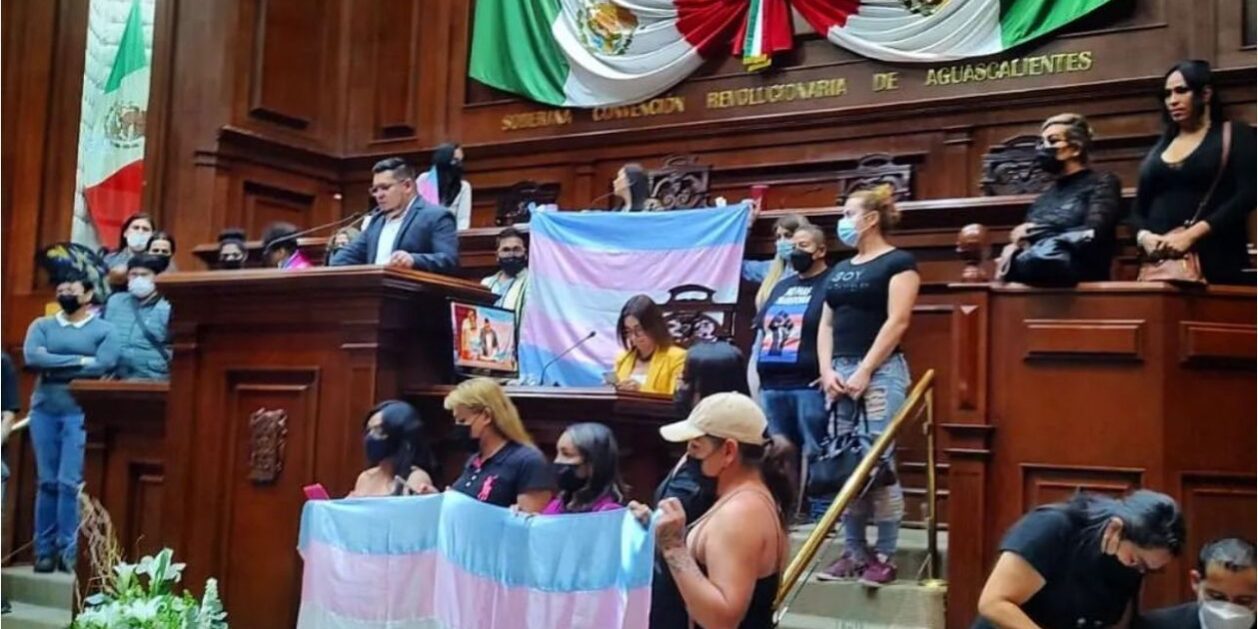
Mexico City, Mexico* . “Unemployment among trans people is a form of punishment,” explains Sayak Valencia . The goal, she affirms, is to inhibit recognition and prevent survival in the labor market. In other words, this is a system that prevents trans people from being recognized or remaining in spaces outside of sex work or feminized forms of labor . This same expulsion, Sayak comments, is replicated for all those who do not identify with the binary categories that capital imposed on the State and the State imposed on individuals .
“Everything that escapes that (the reproduction of capital) becomes a threat, not only symbolic, but real because it shows other forms of socialization, subjectivation and also of production that are not linked to the concentration of wealth,” Sayak asserts.
The data supports the researcher's findings. According to information published in the National Survey on Sexual and Gender Diversity (ENDISEG), the probability of experiencing discrimination in the workplace increases by 36.9% if you identify as a trans woman; 18.3% if you identify as a trans man; and 16.6% if you belong to the non-binary population . These figures, recently incorporated into the statistical analysis of the Mexican State, help us to understand, define, and problematize the issue that Sayak Valencia explains.
For example, according to 2021 data published in 2022, there are almost one million transgender people in Mexico . Of these, only 486,617 were economically active (although the data segments the population because the National Institute of Statistics and Geography (INEGI) eliminated employment categories, making it impossible to know whether it was paid work or not) at the time of the survey. Of these individuals, 144,045 (one-fifth) had considered suicide for various reasons .
Among the working conditions reported in the INEGI study, 27,322 transgender people had been threatened or sexually assaulted by a school or workplace authority ; 38,880 had been assaulted by a school or work colleague; and 17,176 reported having been humiliated by school or workplace authorities . In 69,257 of the cases, the humiliation was perpetrated by a coworker.
One of the reasons that could define this reality, Sayak explains, is that trans people, as well as migrants or other human realities that oppose (voluntarily or involuntarily) reproducing systems of resource concentration, will simply be the object of that scorn.
Broadly speaking, Sayak argues, the State, having been conceived in a masculine way, constantly excludes trans populations from its structures, reproducing this practice of misgendering in the social programs that the State implements for that population . Its consequences go beyond the mere threat of being forgotten.
“Without material conditions, life becomes impossible and therefore there is, in a way, a condemnation, a social death that can become material due to the conditions; it is simply a lesson,” Valencia concludes.

Companies don't even meet the basic requirements…
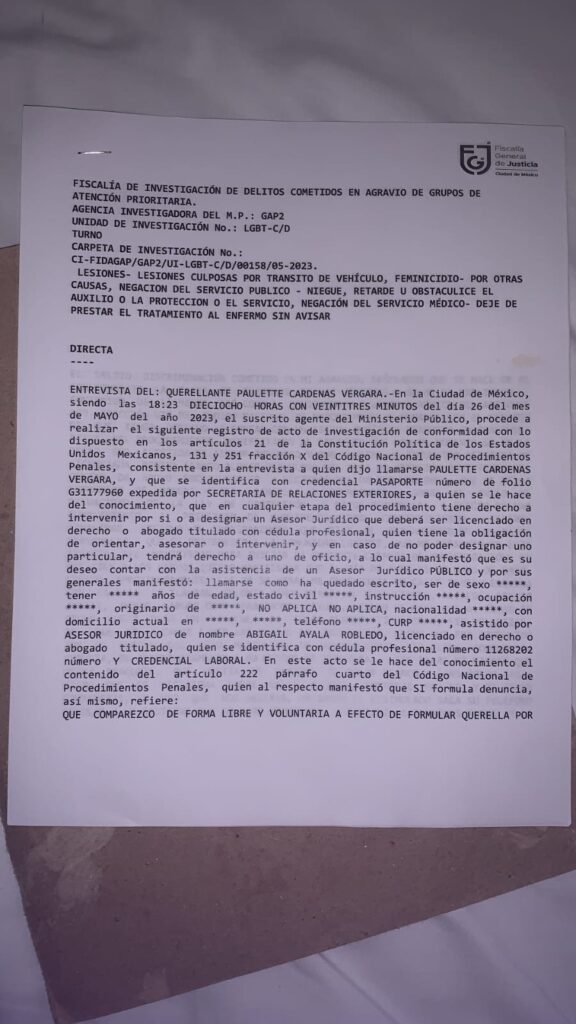
A nightmare come true. Just as Sayak recounts, this happened to a trans woman from Guadalajara who tried to attend the Pride march in Mexico City and ended up being kicked out of the Cinemex restrooms . Paulette, who leads a movement for sex workers as an activist, was hit by a car after leading a protest against transphobia.
Paulette's story cannot be told without that day. The day that employees of that movie theater chain exposed her in front of hundreds of people because, according to the company's policy—part of Grupo México, owned by magnate Germán Larrea—"Trans people should not use those spaces."
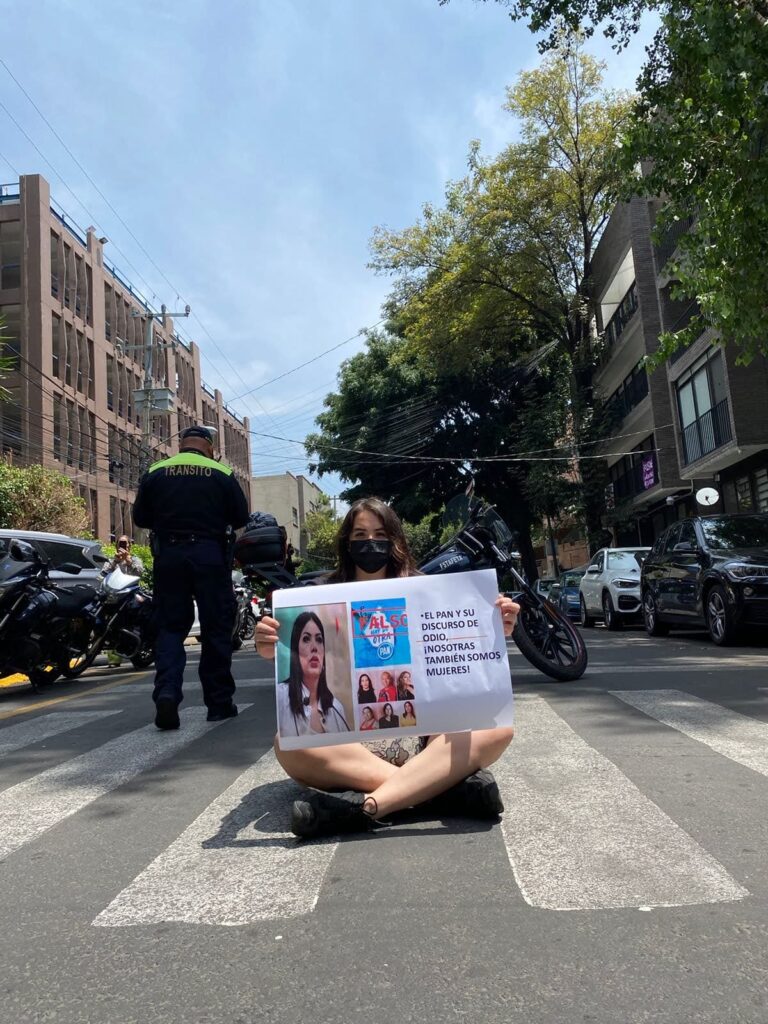
“Since 2020, I have been attacked by PAN (National Action Party) congresswoman América Rangel for leading a protest with other women where we denounced the Cinemex company for acts of transphobia. She then began thanking the company for having kicked me out of the bathroom, saying I was a man. I never responded to her, but I did report the discrimination,” she says.
The activist, who also advocates for sex workers, alleges that after the disagreement with the legislator, she was subjected to intimidation, harassment, and an attempted murder of her transgender relatives. Following the events at the Congress of the Union, Paulette decided to file the corresponding complaints and pursue her case to the fullest extent of the law.
This is how he managed to get the Council to Prevent and Eliminate Discrimination in Mexico City (Copred) to issue a statement against the company Cinemex on April 27, 2022, for the evident violations of the law committed by its employees.
“They tried to kill me after I started my activism in Mexico City. It’s difficult, and it will be difficult for all of us. Few people can imagine the harassment we experience every day, from the moment we wake up until we go to sleep. And it frustrates me that they don’t understand that we don’t want to take anyone’s space; we just want to know that we can have a space, and that that space isn’t death. We’re not going to take anything from them; we just want to live ,” she concludes.
Although Paulette does not blame the congresswoman for the events, she does explain that this attack may stem from the hate speech issued by the legislator during the conflict with the company.
The Copred document, obtained by PODER, is addressed to Operadora de Cinemas SA de CV, along with its holding companies, subsidiaries, affiliates, and companies under the control of Grupo Cinemex. It explains how several company employees aggressively removed Paulette, arguing that “he was a gentleman” and that “it wasn’t his bathroom.”
According to the UN Guiding Principles on Business and Human Rights (UNGPs), companies have a responsibility to respect the human rights of all people in their operations and to conduct themselves with due diligence . This means that, in their human rights risk assessments, corporations should include a gender, diversity, and intersectionality perspective in order to address potential negative human rights impacts, including those of the LGBTIQ+ population . Despite this, Paulette's reality was different.
An effort in Cristero land and our comrades in Latin America
Not everything is oppression and violence. From the Bajío region of Mexico, Juan Regalado Ugarte , is promoting a bill that aims to include at least 2 percent of transgender people as employees in state hiring processes . And, although his party holds a minority of seats, this precedent already demonstrates, at least, a glimmer of political will to raise the issue in a region where religious and corporate morality are the norm.
“The 2018 LGBT Diversity and Talent Survey indicates that 41 percent of trans people in Mexico have university studies and yet they are the ones who have the most difficulty finding employment and who generate the least work experience among the sexual and gender diversity groups,” the initiative document in PODER’s possession states.
Regulations to expand employment opportunities for the trans population had been proposed before, and fortunately, we can now speak of success stories. In this regard, activist, literature scholar, and founder of the Uruguayan Trans Collective , Collette Spinetti, discusses the effectiveness of these inclusion programs, which, she affirms, are indeed possible.
The activist's main observation is the need to diversify programs because all human realities are different . And it is essential, in order to achieve exemplary results, that these realities be considered in affirmative action programs and, in general, throughout the entire social assistance system.
“Affirmative action policies for non-binary people are indeed viable . Definitely. Now, these policies cannot be generalized because they don't take intersectionality into account. For example, a positive policy for a white trans woman who has had access to education is not the same as one for a Black trans woman living in poverty,” she explains.
Another example of the viability of implementing programs that integrate the trans population into public policies comes from Ecuador. In the same vein as Collette, Gabriela Alejandra Rivadeneira , former Secretary of Government of Ecuador during Rafael Correa's presidency, explains exclusively to PODER some of the challenges that arise when implementing public policies for priority populations.
According to her account, her experience as Secretary of State implementing integration policies for vulnerable populations was complex. This, she explains, is because the structure "remains that of a liberal state," meaning that social policies do not have the approval of all sectors.
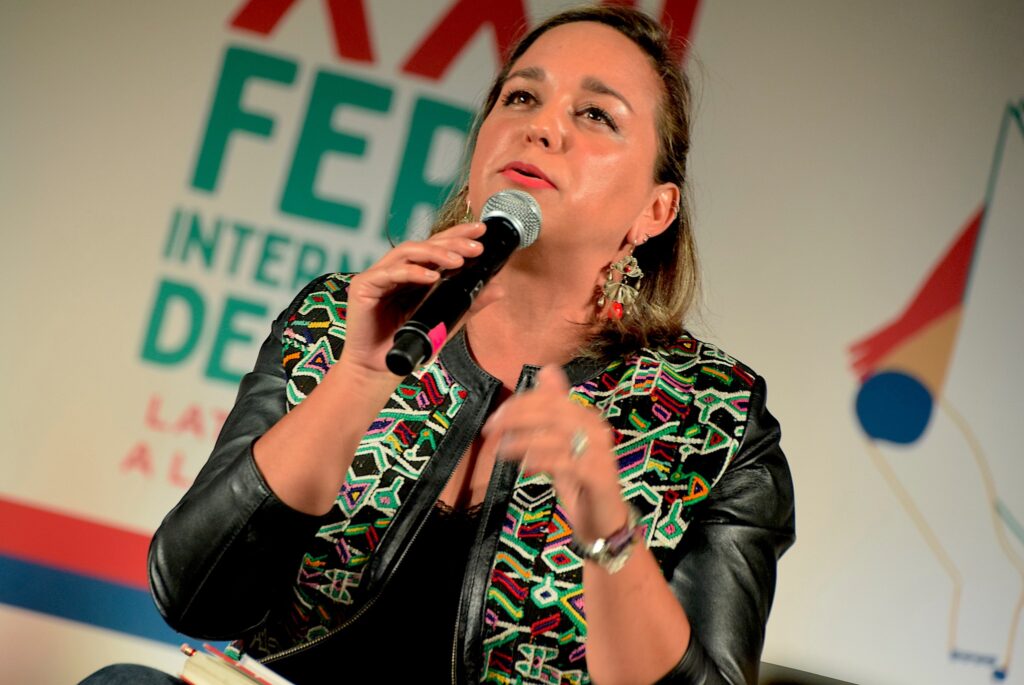
Another explanation offered by Rivadeneira stems from a critical analysis of the model he calls “ planned capitalism” (sic), where he points to the International Monetary Fund for limiting state action and strengthening the private sector in social “services” that have supplanted nations’ responsibilities toward people’s rights. This makes reaching agreements complex.
Despite the above, the former official comments that for her, the fight from within the State is and continues to be essential to achieving well-being. “A strengthened State institution is the best tool for development in democracy, for compliance with the International Human Rights Treaties to which our countries are party, and for the full exercise of individual and collective rights,” she explains.
Finally, regarding the specific needs of women and LGBTQ+ populations, Rivadeneira notes that in Ecuador (and in some cases the world), “more than half the population is female, and the recognition of gender and sexual diversity has shown that the priority population is far from being a minority. (…) The problem is that the patriarchy inherent in capitalism has entrenched stereotypes that prevent the expansion of structural debates, such as the recognition of policies for equality and non-discrimination . Therefore, the political participation of representatives from these population groups is important and should be a priority. The first laws should be those recognizing parity and mandatory alternation, as well as affirmative action for Indigenous peoples and nationalities, people with disabilities, migrants, and LGBTQ+ individuals,” she concludes.
Thus, based on the experiences of all those consulted, the reality, at least in Mexico, Ecuador, and Uruguay, is unfavorable for trans women and gender and sexual minorities. However, pathways through community organizing, regulation of businesses, and the implementation of welfare measures by the State have served and will continue to serve to improve the lives of those who do not identify with the gender binary offered by the economic and market system. The reality is diverse.
*This note is published as part of an agreement with the allied media outlet Poder (Mexico), where it was originally published on 28/6/2024.
We are present
We are committed to journalism that delves into the territories and conducts thorough investigations, combined with new technologies and narrative formats. We want the protagonists, their stories, and their struggles to be present.
SUPPORT US

FOLLOW US
Related notes


We are present
This and other stories are not usually on the media agenda. Together we can bring them to light.