

Bolivia: Chronicle of an attempted coup d'état
Those were hours of violence and tension that threatened democracy in Bolivia. The people took to the streets to defend it. Our correspondent was there and reports on it.


Share

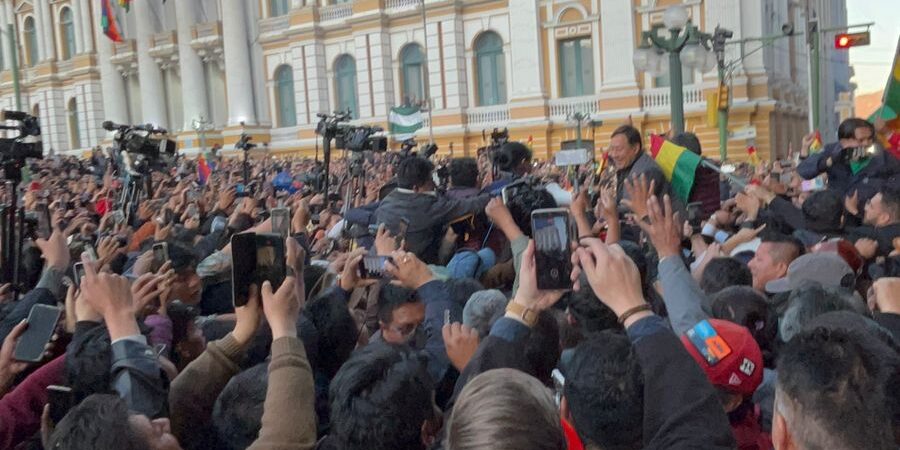
A convoy of tanks and more than a hundred masked soldiers began to surround Plaza Murillo, the political center of Bolivia. Around 2:30 p.m., the military personnel sang military songs to encourage their objective: to take the government building and "recover the homeland."
The deployment was led by the deposed general and former commander of the Bolivian Army, Juan José Zúñiga.
Meanwhile, the streets of La Paz quickly filled with people trying to return home. But faced with the threat of another military coup, similar to the one in 2019 that forced former president Evo Morales (2006-2019) to resign, they changed their minds.
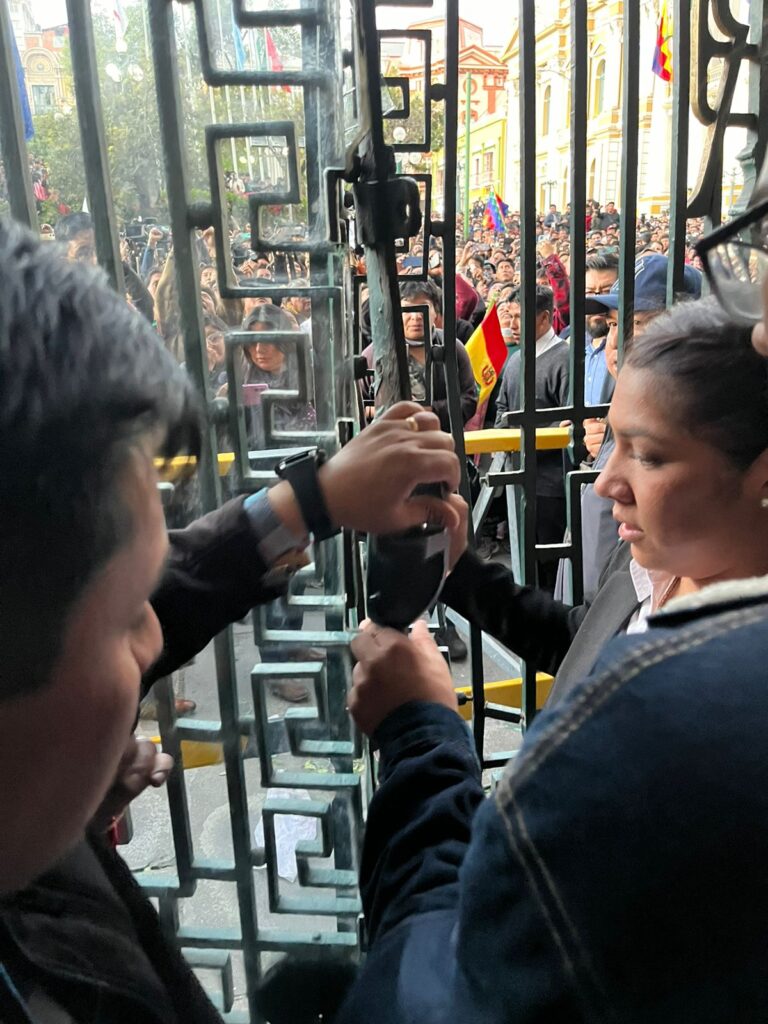
Zúñiga, who led the insurgency, positioned himself inside a tank and attempted to breach the gates of the presidential palace, also known as the "Burnt Palace." Inside was President Luis Arce Catacora.
“I am your captain.”
For security reasons, the doors remained closed, forcing Zúñiga to return to his tank. He redoubled his efforts to force his way through the main door of the most important building in the Andean nation.
“Our country can’t continue like this, with them doing whatever they please. We are showing our displeasure. We are going to reclaim this homeland; enough of destroying it, enough of impoverishing our homeland, enough of humiliating our homeland,” Zúñiga told the press.
Zúñiga is a former Bolivian military officer with a long career in the Army. From November 2022 until his recent dismissal in June 2024, he held the position of commander-in-chief. He was responsible for leading Bolivia's military operations.
During his tenure, Zúñiga held the rank of colonel and was in charge of the REIM-23 Max Toledo regiment between 2012 and 2013. His career was marred by accusations of embezzlement of public funds. He faces charges for the alleged misappropriation of 2.7 million bolivianos earmarked for social programs such as Dignity Income and Juancito Pinto. For this reason, he was imprisoned for seven days.
Despite these accusations, Zúñiga continued to rise in his military career. Thanks to his performance as Chief of Staff and Brigadier General, President Luis Arce chose him to lead the Army as Commander-in-Chief, effective November 1, 2022.
Support for Arce
After a group of approximately forty soldiers entered the presidential palace accompanied by Zúñiga, President Arce confronted them in an attempt to contain the military insurgency.
"As captain, I order all military police to return immediately to their barracks. General, we will not allow you to continue your actions against the Bolivian people," Arce declared firmly, looking Zúñiga in the face.
Arce, a sixty-year-old economist, assumed the presidency of Bolivia with authority on November 8, 2020. His experience as Minister of Economy and Public Finance between 2006 and 2017, and again in 2019, has made him recognized as the main person responsible for the country's impressive economic growth during the government of Evo Morales.
Since 2006, Bolivia has been governed by the Movement for Socialism – Political Instrument for the Sovereignty of the Peoples (MAS–IPSP), founded in 1997 by the social organizations that make up the Unity Pact.
🇧🇴 #Bolivia
— Presentes Agency (@PresentesLatam) June 26, 2024
✊🏽📣President Luis Arce denounced an attempted #Coup today when military personnel seized Plaza Murillo and entered the Presidential Palace in La Paz.
✊🏽📣Shouting "The coup plotters will not pass," the people mobilized in front of the Presidential Palace… pic.twitter.com/AKmAvECJFI
“The armed forces intend to restructure democracy, to make it a true democracy, not one for just a few, not one for owners who have been running the country for thirty or forty years,” Zúñiga told the press after his attempt to take over the government house.
Zuñiga also demanded the release of Jeanine Áñez and Luis Fernando Camacho, identified as the main perpetrators of the coup against former president Evo Morales in November 2019.
“One request I have received and we will fulfill it is the immediate release of all political prisoners. We will release absolutely all political prisoners, from Camacho, from Añez, the generals, the lieutenant colonels, the majors who are imprisoned. That is the request of the armed forces. "We want to restore democracy, the people have no future and the army has the guts to look after the well-being and progress of our people," Zúñiga said.
According to the Inter-American Commission on Human Rights (IACHR), 36 people lost their lives in different regions of the country during the conflicts of that year.
Mobilizations and injuries
During the institutional crisis, Arce appointed new commanders for the armed forces. A large crowd gathered at the burning palace to show their support for the government. The military took measures to contain the protesters, using tear gas and erecting barricades.
According to Bolivian Security Minister Carlos Eduardo del Castillo, clashes resulted in at least nine civilian injuries. The nature and severity of the gunshot wounds were not specified.
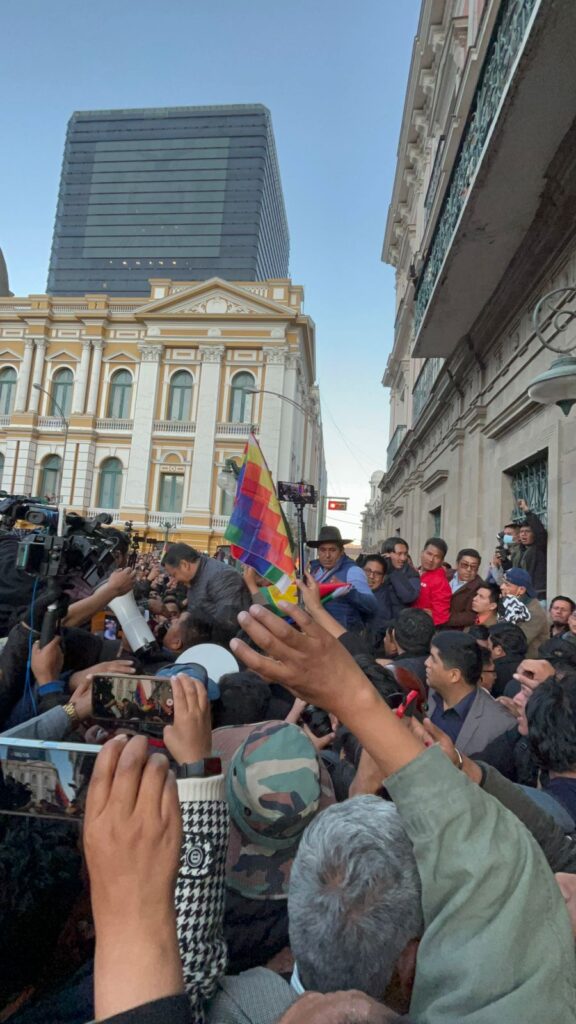
“There are civilians who have been wounded by firearms. Clearly, the wounded show us that this was not a drill; the disobedience to the power of the people, currently vested in our president, demonstrates that what they were seeking here was to commit another coup d'état,” Castillo stated at a press conference.
Following the military withdrawal, Zúñiga was arrested as he left the Bolivian General Staff headquarters. The Attorney General's Office formally filed criminal charges against the deposed general and others responsible for "a failed coup attempt and subversion of the prevailing constitutional order," the public prosecutor's office stated in an official press release.
We are present
We are committed to journalism that delves into the territories and conducts thorough investigations, combined with new technologies and narrative formats. We want the protagonists, their stories, and their struggles to be present.
SUPPORT US

FOLLOW US
Related notes



We are present
This and other stories are not usually on the media agenda. Together we can bring them to light.