

Being pregnant as a trans man in El Salvador
Obstetric violence impacts the physical, mental, and emotional health of those going through pregnancy, childbirth, and postpartum. For transgender men, this problem can be even more heartbreaking, as Jonathan's experience illustrates.


Share

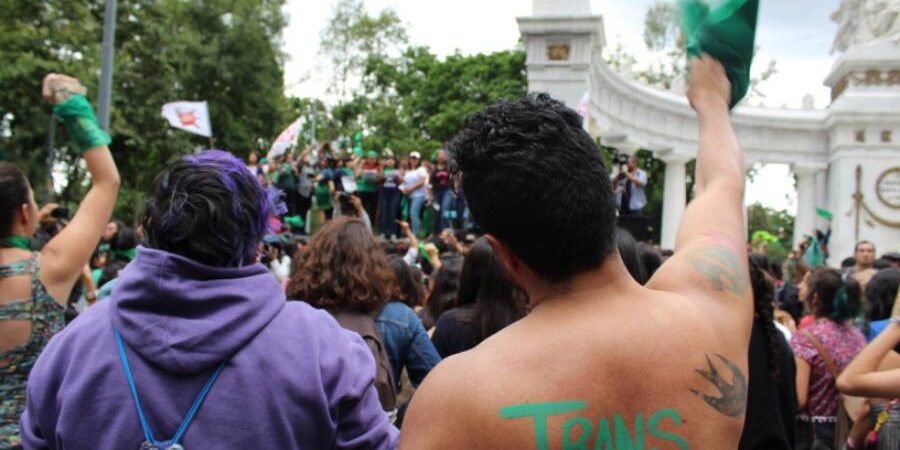
From childhood, Jonathan knew he was a boy. During adolescence, he began to express his male gender identity: wearing loose-fitting polo shirts and athletic jerseys; using undershirts to flatten his chest; keeping his hair short and shaved on the sides. He started playing soccer with his friends from the neighborhood and school, and asked them to call him by the name he had chosen for himself. He did not identify with the sex he was assigned at birth; he was a trans man and began to recognize and present himself as such.
One of the most significant moments in his life was when his father offered him a job in construction when he was 15 years old. In this environment, he felt his masculinity was validated.
At 20, while in a relationship with a transgender woman, Jonathan became unexpectedly pregnant. In March 2018, he confirmed the pregnancy. Due to his financial situation, he sought medical care in the public health system for his prenatal checkups, despite his apprehension. His gender identity had already been subject to scrutiny and questioning in various aspects of his life, including school and work.
According to the UNFPA report "Active Fatherhood: Men's Participation in Childrearing and Care ," the model of fatherhood in Latin America and the Caribbean is traditionally linked to hegemonic masculinity, characterized by heterosexuality, emotional detachment, and a heteronormative stance within families. However, the report notes a progressive shift in this "traditional model," which is expanding to include greater diversity in parenting. In the conservative environment of El Salvador, Jonathan has not been able to experience joyful fatherhood since the beginning of his pregnancy.
She received prenatal care at a clinic run by the Solidarity Fund for Health (Fosalud) in the department of San Salvador. Fosalud is part of the public health system in El Salvador and is financed through specific taxes on products such as alcohol and tobacco, as established by the special law for the fund's creation, in Article 12 , paragraph two.
The doctor in charge of his care respected his gender identity, using his correct name and pronouns during appointments. However, the nursing and administrative staff questioned his appearance and never called him by his chosen name. "The gynecologist I saw was a wonderful person because, thank God, he respected my gender expression, but the nurses... not so much the ones who gave me the appointment and the time I had to arrive," he recalls. He says that one nurse in particular harassed him to the point of making him consider abandoning his prenatal care. According to him, she even made him cry because of her comments and treatment. "She asked me if I thought what I was doing by having a daughter was a good thing, just as I am," he remembers.
Obstetric violence, according to the United Nations Population Fund (UNFPA) , refers to actions or omissions by healthcare personnel during pregnancy, childbirth, and the postpartum period that can harm the mental, physical, sexual, or reproductive health of those who experience it. It manifests as dehumanizing treatment, frequently motivated by prejudice, and can result from inadequate health policies, the absence of laws preventing such abuses, and a lack of sensitivity or knowledge among healthcare personnel. These actions affect the well-being, dignity, and human rights of pregnant people. Jonathan reports having experienced this form of violence.
The 2019 National Survey on Sexual Violence against Women allows us to identify the prevalence of obstetric violence in the lives of pregnant people who have been pregnant, considering two key aspects: 1) the quality of care received during childbirth and 2) the lack of informed consent in the performance of medical procedures during childbirth.
The three main acts of violence related to care provided during childbirth include yelling and scolding, delayed care as punishment for expressing pain, and indifference to inquiries.
On the other hand, the three main acts of violence related to the lack of informed consent during medical procedures in childbirth are the performance of episiotomies (cuts to enlarge the vaginal canal), the shaving of the genitals and the repeated performance of vaginal examinations considered unnecessary.
In 2016, the Ministry of Health (Minsal), during the administration of President Salvador Sánchez Cerén and under the leadership of Violeta Menjívar as Minister of Health, issued the "Technical Guidelines for Comprehensive Health Care for the LGBTI Population ." This document aims to provide guidelines for comprehensive health care for LGBTI individuals, based on the principles of human rights, gender, and equity, and to guide health personnel at different levels of care.
Regarding pregnancy, the guidelines stipulate that prenatal care for lesbian or bisexual women should be provided according to current technical guidelines, while pregnant trans men should be referred to the National Women's Hospital. All should have access to prenatal care and designated facilities.
The document is part of a series of public policies designed to serve the LGBTIQ+ population and eradicate discrimination against them. It includes specific guidelines for the care of transgender people, stipulating that their legal name must be identified in their records, but also that their gender identity must be noted and respected, using their chosen name and pronouns, as well as respecting their sexual orientation.
Alharaca verified on December 1, 2023, that the document was still valid on the ministry's transparency portal, with a last update on October 30 of the same year.
However, in a search on June 10, 2024, these guidelines no longer appeared on the transparency portal, where they were previously located in the section of "other regulatory documents".
To confirm the document's status, Alharaca submitted a public information request to inquire about the validity of these guidelines, which appeared as current until December of last year, and asked when and why they were removed from the website. The same request was made via email to the Ministry of Health's communications department. To date, no response has been received from either the Ministry's information access office or the communications department.
In February 2024, during the Conservative Action Conference (CPAC) in the United States, then-President Nayib Bukele of El Salvador declared that the country prohibits gender ideology, arguing that these ideas contradict nature, religious principles, and family values. In response to this declaration, the Minister of Education, Mauricio Pineda, issued an order to eliminate all teaching on gender or sexual diversity in schools. The ban included removing the use of the acronym LGBTQ+ from documents and programs across all 16 ministries .
On February 27, an order was issued requiring health facilities to collect and submit all HIV-related publications to the Ministry of Health. At the same time, the STI/HIV Program was removed from the Ministry of Health's website, and the use of the current HIV/STI testing form was suspended because it included data on sexual orientation, gender identity, and gender expression.
Invisibility persists in the laws
In June 2017, a year before Jonathan became pregnant, the then Minister of Health publicly expressed her support for the LGBTIQ+ community during Pride Month. This was the second ministry in that administration to publicly declare its support, as reported by La Prensa Gráfica at the time. However, these public displays of support, along with public policies and technical guidelines, did not eliminate discrimination by staff within the public health system.
Since he began receiving prenatal care, delivery, and postpartum treatments, Jonathan says he was called by his legal name, known in the trans community as his "dead name." This is a name he never identified with and stopped using at age 15.
Before Nayib Bukele's presidency, although cases like Jonathan's and the results of the 2019 National Survey on Sexual Violence Against Women show that healthcare personnel perpetrate violence during pregnancy and childbirth, El Salvador had taken significant steps to combat discrimination against the LGBTIQ+ population. While Jonathan's pregnancy did not occur during Bukele's presidency, initiatives and policies to address this violence existed on paper. However, under Bukele's administration, many of these advances were reversed or ignored. Since assuming the presidency in June 2019, Bukele closed the Secretariat of Social Inclusion, which oversaw the Directorate of Sexual Diversity. The closure of this institution has had various repercussions on the lives of LGBTIQ+ people, including a setback in protection against workplace discrimination , among others.
Currently, the "Born with Love for Respectful Childbirth and Caring and Sensitive Care for the Newborn" Law , approved in February 2022, regulates pregnancy and childbirth care. This law does not mention other people with the capacity to gestate, such as trans or non-binary people, nor does it include the terms "diversity" or "LGBTIQ+." According to Article 1, the law seeks to "guarantee and protect women's rights from pregnancy," childbirth, and the postpartum period, and "the rights of girls and boys from gestation" to "the newborn stage," through the organization and operation of the National Integrated Health System.
Article 3, section A of the law also states that "the dignity of the woman, the unborn child, and the newborn child" must be respected. The law makes no mention of the diversity of pregnant people, nor does it recognize those with other gender identities who can also become pregnant.
The technical guidelines for women's care during the preconception, prenatal, childbirth, postpartum, and newborn periods do not explicitly mention terms such as "trans men," "non-binary people," "pregnant people," or "pregnant bodies," nor do they use the acronym "LGBTI." The guidelines generally refer to "women," "adolescents," and "girls" in the context of reproductive and perinatal health. Although page 129 mentions "sexual diversity" and the identification of groups belonging to this spectrum as potential victims of sexual violence, it does not specifically address preconception, prenatal, childbirth, postpartum, and newborn care for trans or non-binary people.
Alharaca also attempted, through freedom of information requests and interview requests, to find out why the LGBTI population was excluded from both the Born with Love Law and the technical guidelines. No response was received by the time of publication.
Joshua Navas, executive director of the organization Generación Hombres Trans El Salvador (HT), pointed out the need to broaden the language in legal materials to include the diverse population. He stated: “It’s not just about the legal framework being inclusive by mentioning pregnant people, specifically transmasculine and intersex individuals, but this inclusion must also be put into practice. If there isn’t inclusion in theory, there won’t be inclusion in practice.”
This is further exacerbated by the recent decision of the Ministry of Health to eliminate material related to sexual diversity and forms that identified gender identity from health units and clinics for Sentinel Surveillance and Control of Sexually Transmitted Infections (VICITS).
A global problem without local data
In 2019, the Pan American Health Organization (PAHO) estimated that 43% of women in Latin America will experience obstetric violence at some point in their lives . The World Health Organization (WHO) indicates that this type of violence is more likely to occur among adolescents, single women, women of low socioeconomic status, women belonging to ethnic minorities, immigrants, and women living with HIV, among others, who often experience disrespectful and offensive treatment during childbirth in health facilities.
Furthermore, these organizations acknowledge the disparities in access to and use of health services for lesbian, gay, bisexual, and transgender (LGBT) people. They emphasize that countries must strive to ensure equitable and non-discriminatory healthcare.
"The stigma and discrimination faced by lesbian, gay, bisexual and trans (LGBT) people often prevent them from accessing the health care services they need, including mental health services and a wide variety of other services, which, added to other factors of social and cultural exclusion, is a cause of inequity and inequality in health, as well as greater vulnerability to adverse health outcomes ."
Alharaca requested data from the Ministry of Health on prenatal, delivery, and postpartum care for LGBTIQA+ individuals between 2017 and March 2022. The institution declared the request inadmissible, arguing that "the sexual orientation of people receiving gynecological and obstetric care is not data that should be collected, and that this constitutes an abusive invasion of people's privacy." In its response, the Ministry of Health (Minsal) stated that “the statistical variables that state institutions must collect must, on the one hand, be useful to the institution itself, or on the other hand, be required by a regulation or law.” They added that “a person’s sexual orientation is irrelevant when providing gynecological and obstetric care,” as it is “personal data that the law defines as sensitive.” Collecting it “would be excessive and invasive of people’s privacy, and without any justification for collecting this data.” In other words, in El Salvador, statistical data is not collected on pregnant people with gender identities other than cisgender women, even though sexual orientation and gender identity are crucial for receiving treatment and hospital care.
According to Joshua Navas, director of Generación HT El Salvador, collecting statistical data on healthcare for LGBTQIA+ people is fundamental. “Self-recognition and the consultation, tabulation, and recording of healthcare services for the LGBTQIA+ population are necessary.” For Navas, without this monitoring, “there is no follow-up on processes, and this creates a significant gap in the healthcare system.” The lack of records makes it impossible to identify human rights violations.
A doctor in the public health system's obstetrics department, who prefers to remain anonymous, commented that obstetric violence is frequent in the country's public healthcare network. She explained that healthcare personnel are often not sensitized to the issue and tend to think that abuse is only physical, without considering psychological and emotional mistreatment.
“Not recognizing the gender identity of a pregnant person is a violation of their sexual rights and, therefore, a violation of their human rights. That's where we start off on the wrong foot,” she pointed out. “A person whose gender identity is not recognized during their pregnancy, childbirth, and postpartum care will not feel cared for in the way they should be. The comfort and trust that we should be fostering for the person, their partner, and the rest of the family who supports them will be shattered, and without that, quality care cannot be provided. This is an issue of inclusion that undoubtedly needs to be addressed,” she added.
Awareness-raising efforts
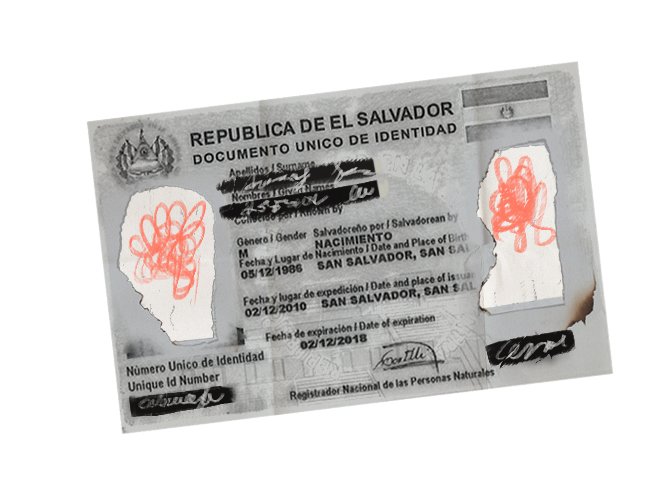
In El Salvador, the absence of a law allowing name changes and the obligation for transgender people to use identity documents with names that do not correspond to their gender identity worsens their situation. "There, they call you by the name on your ID. When they called me and saw me, it was even worse... and the people there also gave me dirty looks," Jonathan recalls about his prenatal checkups.
Navas noted that trans men tend to seek healthcare in the private sector due to a lack of empathy in the public sector, but stressed that not everyone can afford this privilege.
"We believe that education is key, and we want to generate content to educate in that sense, because we do need respectful care; a law that respects our identity would be ideal so that the health system also respects that," she added.
In Chile, there are signs of increased awareness among medical personnel regarding gender issues. In addition to the 2016 technical guidelines, in 2019, the Ministry of Health, through its gender unit, and with the support and funding of the NGO Medicusmundi, presented the “Training Manual on Gender and Health.” Although this material does not directly address the care of parents in Jonathan's situation, it seeks to develop training processes that prioritize equality and non-discrimination in healthcare. The document also emphasizes the importance of providing quality care during pregnancy, childbirth, and postpartum, and of identifying potential instances of obstetric violence. It acknowledges that “the gravity of these actions lies in the fact that the woman is in a situation of complete vulnerability, while the healthcare personnel at this time hold all the power (knowledge and resources) over her and the situation.”
In 2021, the Mélida Anaya Montes Women's Movement (Las Mélidas), together with the Center for Gender Studies at the University of El Salvador, the Gender Unit of the Ministry of Health, and Medicusmundi, conducted a virtual diploma course on Gender and Health for healthcare workers. Dr. Angélica Gutiérrez, technical coordinator of the Las Mélidas project, explained that the initiative was aimed at healthcare personnel in the central and eastern regions of the country.
In that edition of the diploma program, 59 people were trained: 52 women and 7 men. Gutiérrez explained that the program included intersectional themes to raise awareness about gender issues. The modules covered were: gender as a category of analysis in health, sexuality as a product of sociocultural relations, gender-based violence, biases and inequalities in healthcare, health research with a gender perspective, the health of adolescent and young women, and political advocacy for sexual and reproductive rights.
Although the Mélidas community is no longer part of the initiative, Gutiérrez emphasized that Medicusmundi continues its work in the area of training. In its 2022 activity report , the NGO reported on three health projects, with a comprehensive and intersectional approach, in El Congo, Coatepeque, Santa Ana, and the central region of the country. Similar activities were also found in the Ministry of Health's activity report for June 2021-May 2022. In its section on "Attention to other priority groups" / "Attention to victims of all forms of violence," it mentions online courses conducted with the support of the UN Refugee Agency (UNHCR).
These courses were offered by the Association for Communicating and Empowering Trans Women with HIV in El Salvador (COMCAVIS Trans), and part of their content addressed gender and identity awareness. Alharaca contacted COMCAVIS Trans's communications unit about these courses, and they reported that during 2021 they provided training to 62 people in the health system. In 2022, they trained 93, and in 2023, 270. In total, they have trained 425 people in the public health system. However, this number is insufficient when compared to the total number of employees in the health system.
In 2019, the Ministry of Health had 12,827 positions under the salary law. By 2023, this number had increased to 12,728, and an additional 3,428 contract positions were added, bringing the total to 16,156 employees in the health system .
Jonathan's experience reflects how few people in this sector have received training or information on how to care for transgender people. The doctor who oversaw his prenatal checkups asked him at one point how he was being treated. He told him about the discrimination and harassment he suffered. "He told me not to pay attention to them, not to worry because some people weren't going to change," Jonathan recalls.
Joshua Navas pointed out that this discourse is difficult to hear and should not be the norm in the public health system. However, many LGBTQ+ people have normalized it because it is their reality.
A complicated birth
Seven months pregnant, in June 2018, Jonathan experienced complications. He went to the doctor because of severe pain. He says he was told his uterus was too small and that if he wanted his daughter to be born, he would have to take extra care, assuming responsibility in case of any problems. When he was nine months pregnant, he gave birth to his daughter in a public hospital in San Salvador. His labor lasted approximately eight hours, and he shared the delivery room with other women who expressed their pain through screams and tears.
“I didn’t scream because the nurses would say, ‘Whoever screams the loudest gets seen last.’ I preferred to stay there crying, silent, clutching a sheet I had.” The doctors would come to examine him without speaking to him directly. During one of those examinations, a doctor pressed on him in a strange way, and he felt his daughter “coming out.” “Squeeze, squeeze, she can’t give birth here!” the doctor ordered, and they rushed to the delivery room. He didn’t know what was happening. When he entered the new room, he gave birth to his daughter. Although he loves the experience of being a father, Jonathan says he doesn’t want to go through another pregnancy because of his experience, marked by discrimination and mistreatment.
*This report was produced with the support of the International Women's Media Foundation (IWMF) as part of its reproductive health, reproductive rights and justice initiative in the Americas.
We are present
We are committed to journalism that delves into the territories and conducts thorough investigations, combined with new technologies and narrative formats. We want the protagonists, their stories, and their struggles to be present.
SUPPORT US

FOLLOW US
Related notes

We are present
This and other stories are not usually on the media agenda. Together we can bring them to light.