

Triple lesbian murder: a collective farewell will be held for Pamela, Roxana, and Andrea.
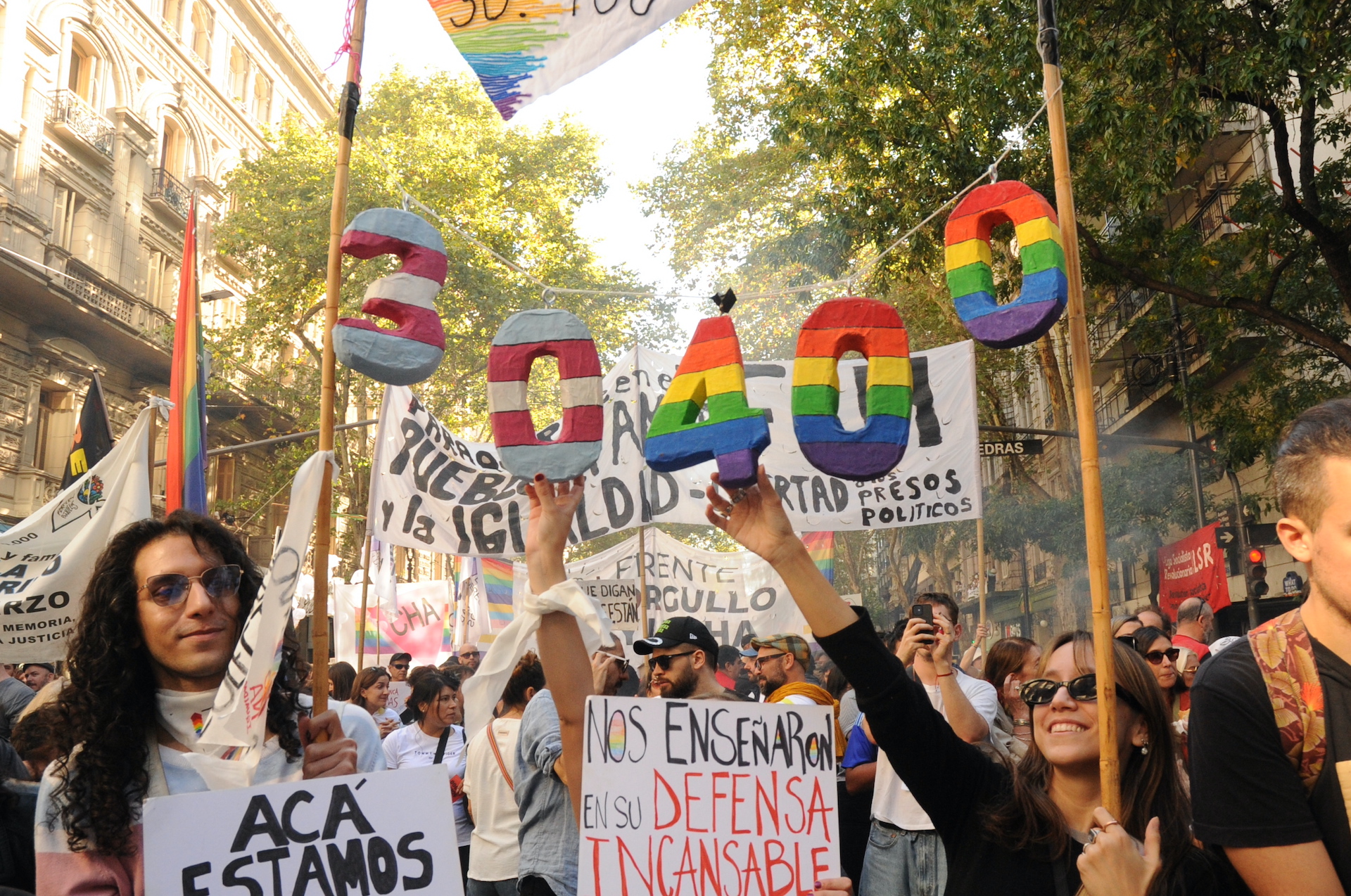
The wake and burial for the victims of the triple lesbian murder in Barracas will take place on Wednesday, June 26. LGBTQ+ organizations have filed a lawsuit and are demanding that the crime be prosecuted as a hate crime.


Share

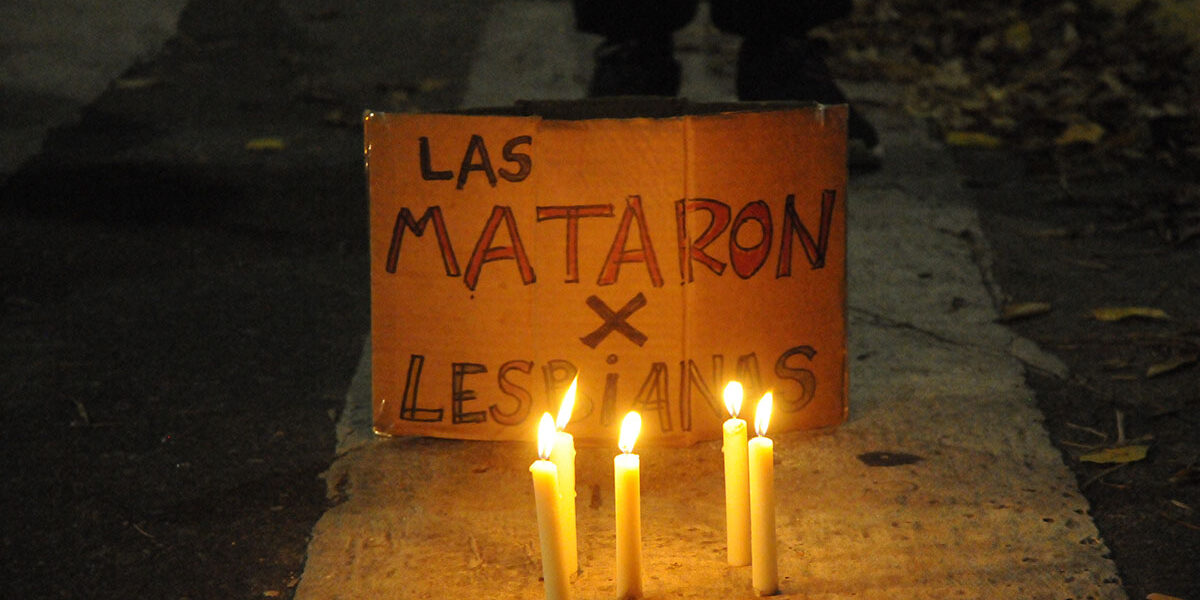
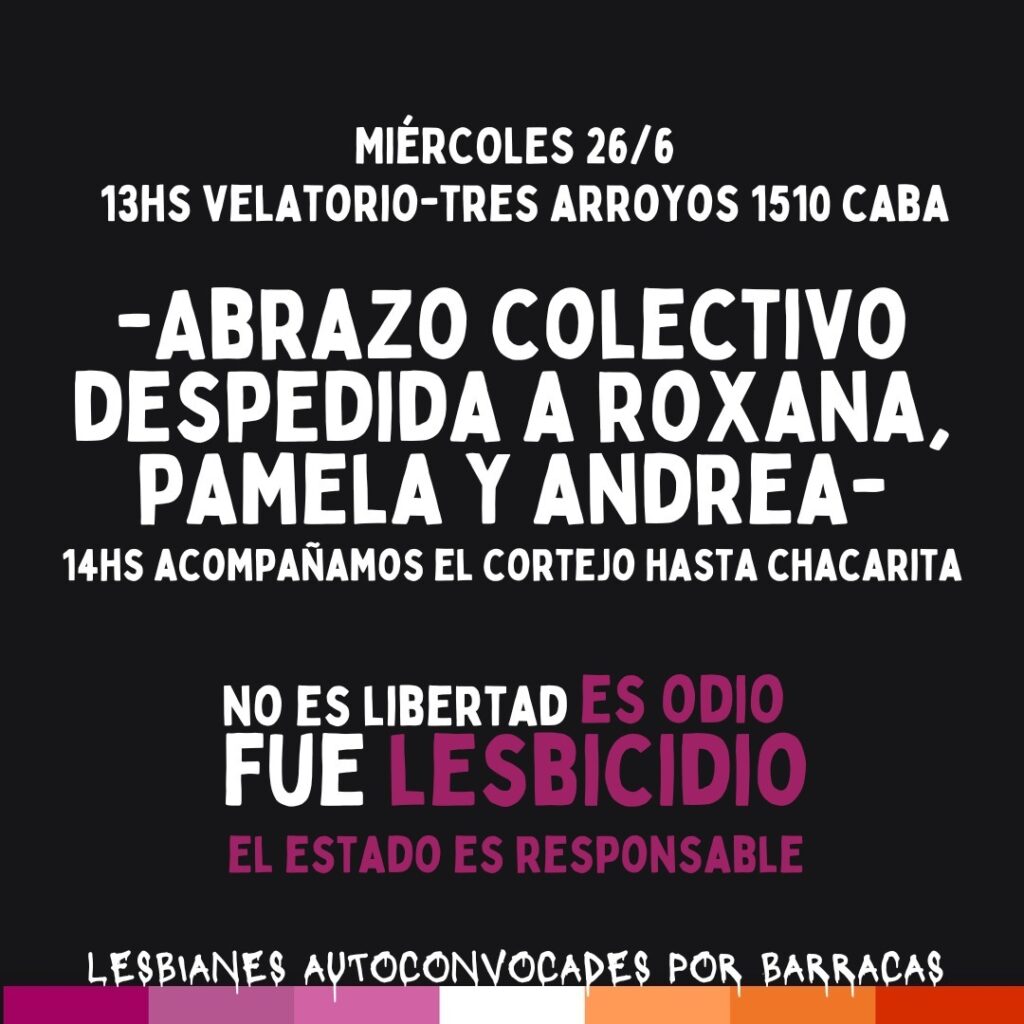
The wake and burial of Pamela Cobbas, Mercedes Roxana Figueroa, and Andrea Amarante will finally take place on Wednesday, June 26. All three were victims of the triple lesbian murder and hate crime that left Sofía Castro Riglos as the sole survivor. Organizations are calling for people to join the farewell procession starting at 1:45 p.m. This is to participate in the final part of the wake and the procession to Chacarita Cemetery in the City of Buenos Aires. Sources emphasized to Presentes the importance of respecting the space where the wake will be held, as family members of the victims will be present.
Yesterday, the Argentine Federation of Lesbians, Gays, Bisexuals and Trans (FALGBT+) filed a document with the Justice system to form a lawsuit for the four victims .
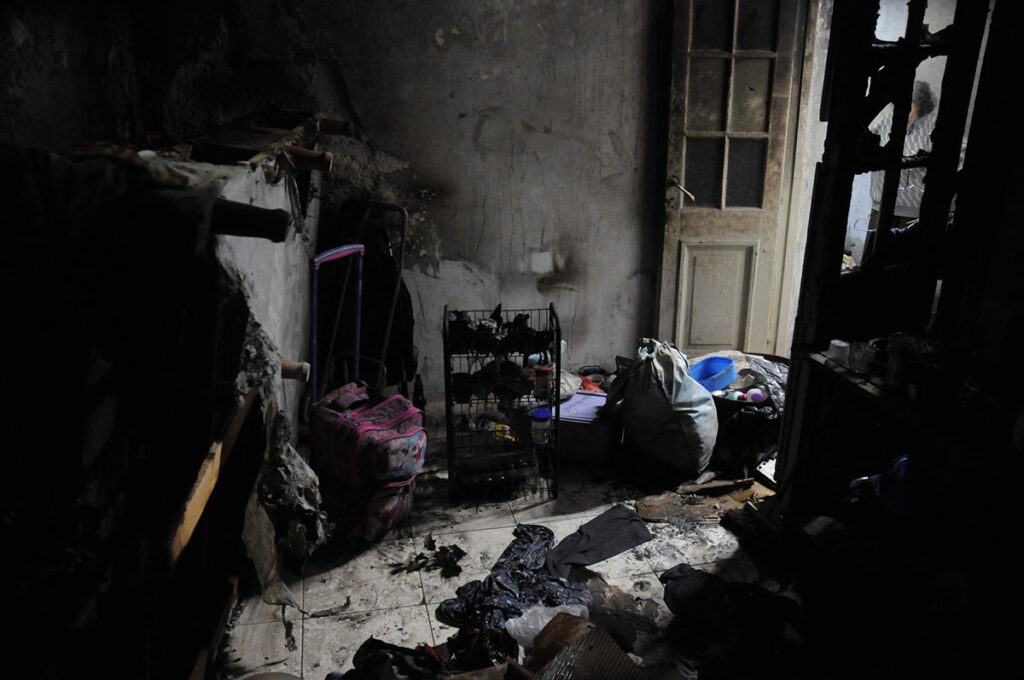
Justo Fernando Barrientos (67), a neighbor of the boarding house where the four women shared a room, is in custody. He has been charged with the aggravated murder of three of the victims: Andrea Amarante, Pamela Cobbas, and Roxana Figueroa, and with assault against Sofía. The aggravating circumstances applied were treachery and common danger, but the specific aggravating circumstance of hate crime based on sexual orientation was not considered, nor was gender-based violence.
Hate crime
The document presented by FALGBT+, which Presentes obtained, requests that these crimes be classified as hate crimes against four lesbians. “The lawsuit filed by the organizations is on behalf of all four victims. To ensure that everything perpetrated is considered a hate crime, we are requesting that the charges against all four be aggravated,” explains María Rachid, a representative of FALGBT+. “In the three cases of aggravated murder and in Sofía's case, we believe it was attempted aggravated homicide.”
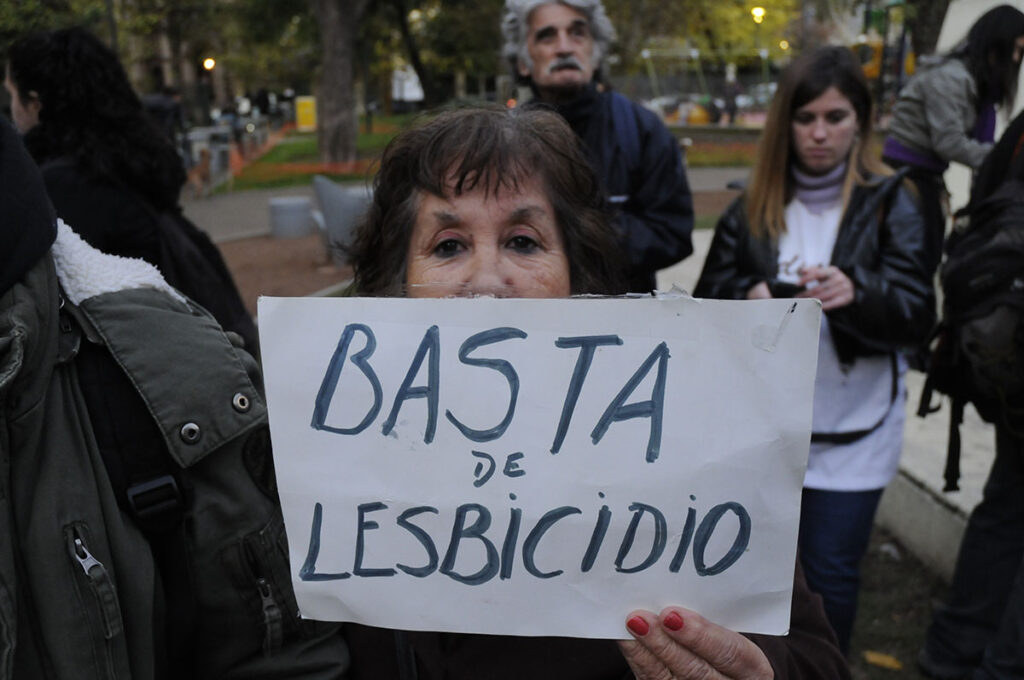
The organizations' complaint argues that the investigation "has omitted circumstances that in no way allow us to rule out that the murderer's motivation was gender -based violence and hatred toward the gender or sexual orientation of all the victims ." The text adds: "We understand that we are facing a case of extreme cruelty and a flagrant violation of the human rights of four women, murdered because of their sexual orientation. We are filing this complaint because we consider this an abhorrent act, which can only be identified as LESBICIDE."
Testimony from neighbors
The complaint requests that people who gave statements to the press be summoned to testify. In this report by Agencia Presentes, Agustina Ramos recounts that neighbors said the victims were insulted because of their sexual orientation. He called them "monsters" because of their sexual orientation. He called them "dykes," "dirty fat," a neighbor stated days after the hate attack.
“This case concerns the murder of three women, and the attempted murder of another, all of them lesbians, all of them in a vulnerable situation, all of them exposed to patriarchal violence daily by the accused,” the document states.
For LGBTQ+ organizations, the crimes under investigation affect more than just the rights of the victims. “Due to their extreme gravity, their investigation and prosecution are of public interest (…) And there is ample evidence in the case file to support the claim that the perpetrator acted with gender-based violence and was motivated by hatred of the victims' lesbian identity.” They also point out that in hate crimes, the victim is never just one person. “It is the individual who fits the stereotype, and through their harm, the perpetrator intends to send a message to the entire group or community.”
They are requesting the intervention of the UFEM
The document also requests the intervention of the Specialized Prosecutor's Unit for Violence against Women (UFEM), which functions as an auxiliary prosecutor's office.
“In order to expand the investigation and prosecution of the serious case presented here, as well as to apply basic policies related to gender-based prosecution , we believe it is appropriate for the UFEM to intervene in order to deploy investigation strategies in a case of such gravity and unusual violence against four women because of their sexual orientation,” the document states.
The UFEM has worked with prosecutors in other cases of lethal violence linked to hate crimes—one of the best-known cases being the transphobic murder of Diana Sacayán. But in the case of the triple lesbian murder, the prosecutor's office had not accepted the intervention that FALGBT+ is now requesting.
Sofia's long-awaited statement
Sofía Castro Riglos, the only survivor of the four, continues her recovery after spending nearly a month hospitalized at the Burn Institute with severe burns. She lives in a rented apartment thanks to community support. She and the other three girls were in a housing emergency at the time of the attack. Today, Sofía is receiving support from an interdisciplinary team. This team includes representatives from the LGBT Advocacy Office, a territorial team from the Laura Bonaparte Hospital—a leading mental health institution—and the organizations Yo No Fui (I Wasn't There) , No Tan Distintes (Not So Distinct ), and the Barracas Assembly.
Her lawyer, Gabriela Chiqui Conder, confirmed to Presentes that Sofía will testify before the court on July 30. Meanwhile, other witness statements will be given in the case between today and tomorrow.
It was lesbicide
The document filed by the Argentine LGBT+ Federation to initiate legal proceedings includes several lesbian organizations. One of the Federation's founding organizations is La Fulana, a lesbian and bisexual women's organization that has been operating in Argentina since 1998, "and, not coincidentally, has seen Roxana pass through its peer groups," states the document submitted to the Court.
The document also states that the lawsuit seeks to include the perspectives of other organizations and individuals: the Self-Convened Lesbian Assembly for the Barracas Massacre, convened by the Network of Self-Convened and Lesbian Organizations, which comprises dozens of lesbian groups, including La Fulana (Labrys Civil Association), Sueños de Mariposas, Asociación Civil Acción Reflexión Lesbofeminista Las Safinas, and Las Tucumanenses, among others. All of these groups, the document states, “have been expressing in various actions and documents that ‘This is not freedom, it is hate. It was lesbicide. Justice for Pamela, Roxana, Andrea, and Sofía .’”
“Given a long history of human rights violations, special protection measures must be taken into account to preserve and guarantee access to justice for this group historically vulnerable to discrimination (lesbians) in order to enable the full exercise of human rights, guarantees to which the rest of the population has always had access, but which people of sexual diversity, and lesbians in particular, only began to achieve through specialized laws; highlighting that a gender and diversity perspective is also fundamental in all judicial and/or administrative procedures and processes, as has been reflected in the text of this document ,” the text recalls.
We are present
We are committed to journalism that delves into the territories and conducts thorough investigations, combined with new technologies and narrative formats. We want the protagonists, their stories, and their struggles to be present.
SUPPORT US

FOLLOW US
Related notes

We are present
This and other stories are not usually on the media agenda. Together we can bring them to light.