

Triple lesbian murder in Barracas: the justice system does not consider it a hate crime
The judge in the case classified it as "double aggravated homicide" against the three women who died after the hate attack. The sole survivor has already been discharged from the hospital.


Share

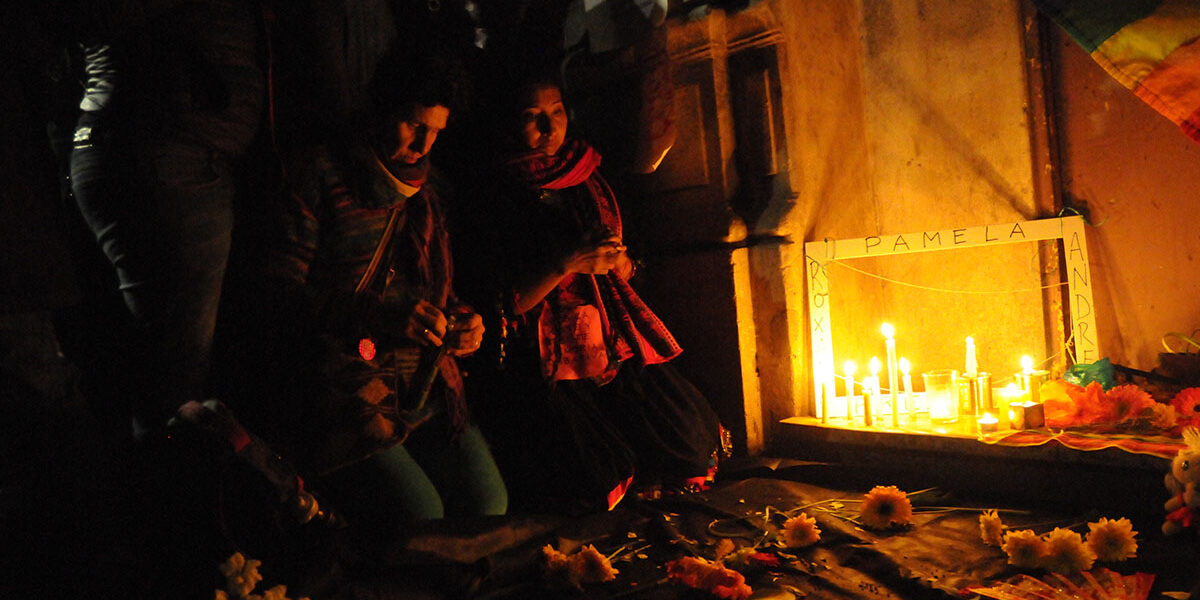
BUENOS AIRES, Argentina. One month after the triple murder of four lesbians and the hate crime against them, there were developments this week in the investigation and in the recovery of the sole survivor, Sofía Castro Riglos, who was discharged from the Burn Unit a couple of days ago.
On Sunday, May 5th, at 11:30 PM, Justo Fernando Barrientos, the victims' roommate in the Barracas family hotel where they lived, opened the door to the room where the four women were, threw a homemade explosive device at them, set them on fire, and caused a blaze. The case was assigned to Criminal and Correctional Court No. 14, presided over by Judge Edmundo Rabionne.
On Monday, from this court on the fifth floor of the Palace of Justice, Justo Fernando Barrientos was formally charged with “double aggravated homicide” against the three victims: Andrea Amarante, Pamela Cobbas, and Roxana Figueroa. The aggravating circumstances applied were treachery and common danger. However, the aggravating circumstance expressed in section 4 of article 80 of the Penal Code, which refers to the specific crime of hate crime, was not applied, nor was gender-based violence considered.
In Argentina in 2012, Law 26.791 introduced reforms to several sections to criminalize, in an aggravated manner, homicides related to gender violence. Section 4 of Article 80 (which refers to homicides) was expanded to specifically include hate crimes in order to protect groups especially victimized due to their gender identity and sexual orientation, such as lesbian, gay, bisexual, transgender, transvestite, and intersex (LGBTI) people.

“It makes hatred towards lesbians invisible”
“The sentence is the same. But by not including the hate crime aggravating factor, it renders the hatred toward lesbians invisible,” María Rachid, head of the LGBT Ombudsman's Office, explained to Presentes . The court maintains that there is no evidence to prove this hatred, even though there is.
Witnesses told Presentes a few weeks ago that Barrientos insulted the women because of their sexual orientation and had already threatened to kill two of them. They also said he attacked them viciously. After the attack, when the women managed to get out of the room, Barrientos began hitting them and pushed them back into the fire.
But that wasn't taken into account in the prosecution. "This points the way forward for the investigation. It's not definitive, so excluding the obvious is a political decision," Rachid said.
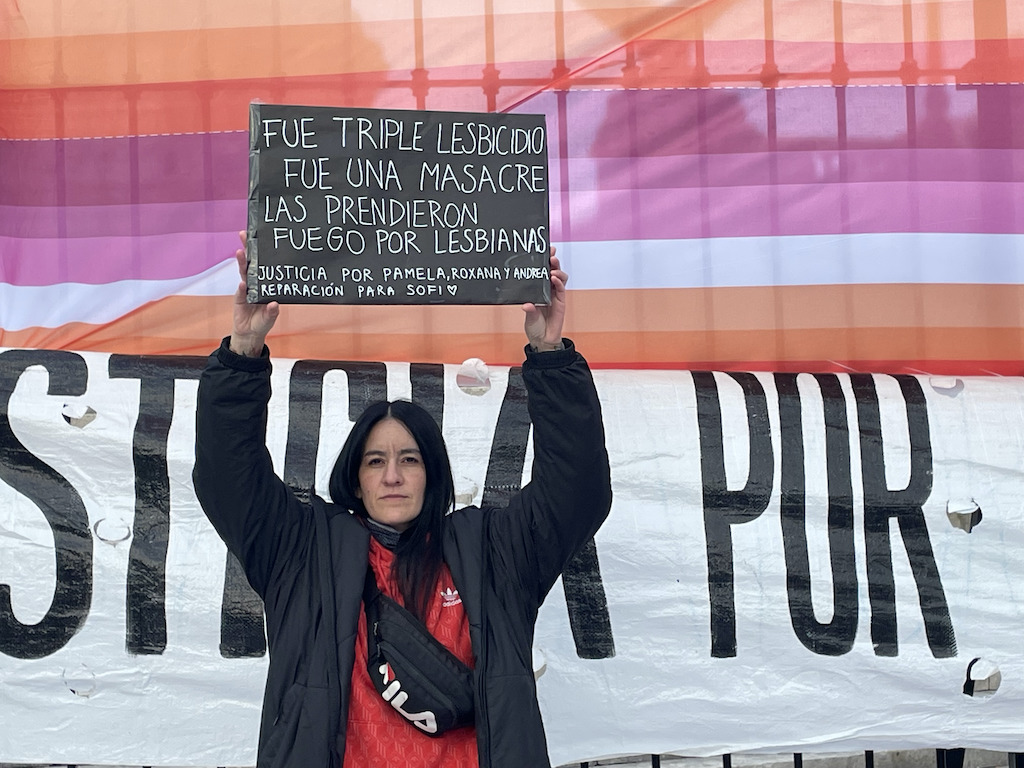
Injuries, in the case of Sofia
In Sofía's case, the charge against the aggressor is noteworthy because it is limited to "injuries." The lawsuit filed by the sole survivor is being handled by attorney Gabriela Chiqui Conder.
“Sofía is a survivor, the only one. These aren't just injuries. An explosive device was thrown at her; her companions died. There was a clear intention to kill all four of them. Unfortunately, this approach has always been the norm in the judicial system. The judicial system perpetuates a patriarchal view, one that dates back years, and despite laws and advances in gender issues, it continues to disregard them,” says Conder. She was the one who defended Eva Higui de Jesús in the trial a few years ago, who was ultimately acquitted.
Sources close to the case explained to Presentes that, although testimonies describing Barrientos' hatred of four lesbians exist in the press, those included in the case file were gathered by the police. The ruling contains details that raise concerns about the victims' characteristics, from the police perspective. They also stated that the legal framework is provisional, as the judge may change it.
Meanwhile, Barrientos is in custody and already in prison, after having been treated at the Alvear neuropsychiatric hospital. He attempted suicide several times.

How Sofia is recovering
Sofia was able to leave the Burn Hospital, where she had been transferred from the Pena.
She is receiving support from the LGBT Ombudsman's Office and the organizations Yo No Fui , No Tan Distintes (Not So Different ), and some members of the Barracas Assembly. Since leaving the Burn Unit, she has been receiving care at the Laura Bonaparte Hospital, a leading mental health center. At the request of the LGBT Ombudsman's Office , which supported all the victims, and the other organizations, this support system was established in conjunction with the Burn Unit and the Bonaparte Hospital's community outreach team.
Sofía now lives in an apartment, rented for a few months thanks to the solidarity network woven by feminist movements and organizations to receive donations. She was in a housing emergency and lost everything in the fire. With the funds raised, they bought food, hygiene and cleaning supplies, and clothing, among other things. Through the people who are supporting her, she expresses her gratitude to the entire community.
At the Ni Una Menos demonstration on Monday, among other things, reparations for her were demanded .
Tomorrow at 6 PM, to mark one month, there will be a march from Plaza Colombia to Plaza Quinquela Martin (Suárez 1534) organized by self-organized lesbians with the slogans "It is not freedom, it is hate," "It was lesbicide," and "The State is responsible.".
We are present
We are committed to journalism that delves into the territories and conducts thorough investigations, combined with new technologies and narrative formats. We want the protagonists, their stories, and their struggles to be present.
SUPPORT US

FOLLOW US
Related notes


We are present
This and other stories are not usually on the media agenda. Together we can bring them to light.