

Not One Less: in the streets against hate, hunger and with Norita's love
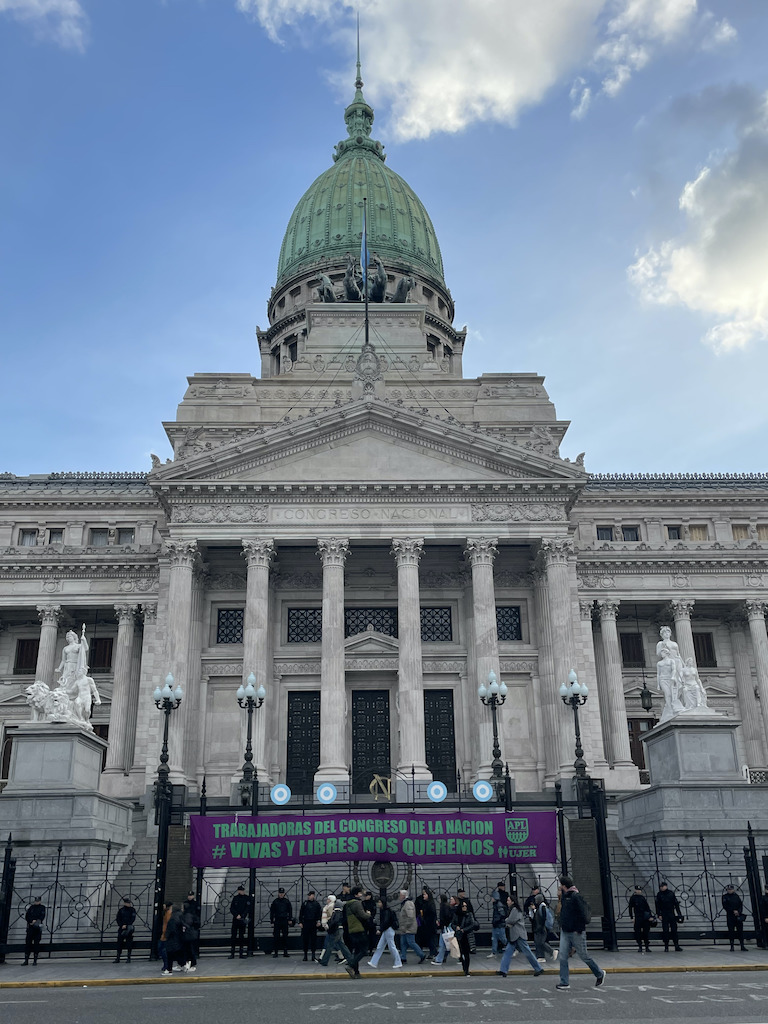
Thousands of women demonstrated across the country for the ninth annual Ni Una Menos (Not One Less) march. In Buenos Aires, a massive demonstration took place in front of the National Congress.


Share

BUENOS AIRES, Argentina. Nine years after the first June 3rd march, this Ni Una Menos (Not One Less) demonstration—the first under the Milei administration, which is about to complete its six-month term—focused on three main issues that dominated the street protests across the country: hunger, the triple murder of lesbians, and the hate-motivated attack in Barracas. It was also marked by the farewell to Norita Cortiñas, a Mother of Plaza de Mayo, who died on Thursday, May 30th.
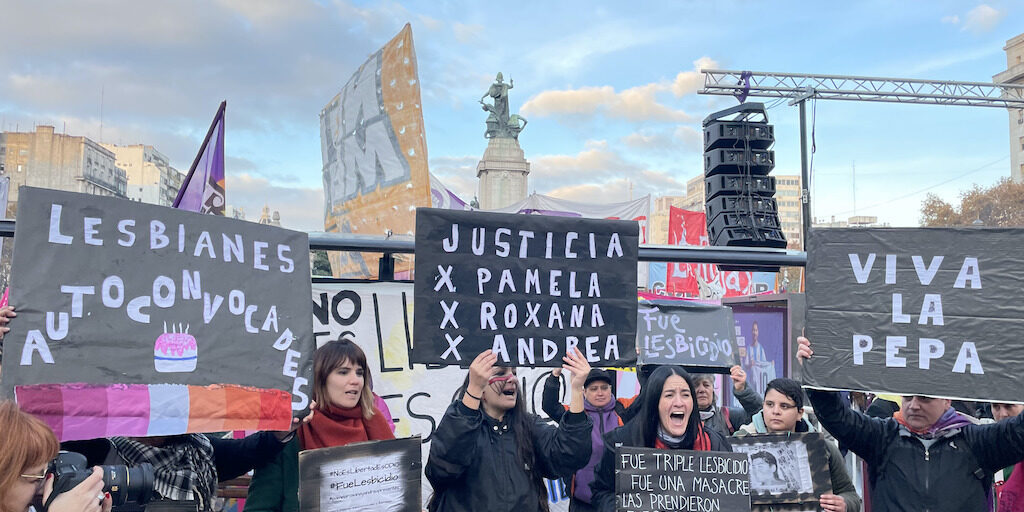
Never before in a Ni Una Menos (Not One Less) march had the word "lesbian" been uttered so loudly, with such pain and rage, within the context of the multiple forms of patriarchal violence denounced by the women's and LGBTQ+ movements. "Lesbian, lesbian, lesbian," was repeated to bridge a historical gap and to ensure their demands were heard, just shy of a month after the triple lesbian murder and attack on four women in a family hotel in Barracas. "We are not all here, Pamela, Roxana, and Andrea are missing." "Not one more lesbian." "Long live Pepa!" The condemnation of the triple lesbian murder in Barracas spearheaded the mobilization.
“They were killed for being lesbians, they were set on fire while they slept. Justice for Pamela, Roxana, and Andrea,” declared self-organized lesbian activists, their voices a mix of powerlessness and sorrow, on the very day that Sofía, the sole survivor, was discharged from the Burn Unit. For her, the demand was for reparations from the Buenos Aires City government. Concern about hate speech also featured prominently in the demonstration in front of Congress and in the streets across the country.
In front of Congress, an installation repeated the call for justice for Pamela, Roxana, and Andrea, and expressed support for Sofía. “We demand urgent and necessary support for Sofía,” Claudia Aguilar told Agencia Presentes . Eris, a lesbian and Indigenous activist, explained: “We lesbians are facing a housing crisis. We demand dignified lives, we want to reclaim our territories, sovereignty over our land, and access to food, which is urgently needed.”
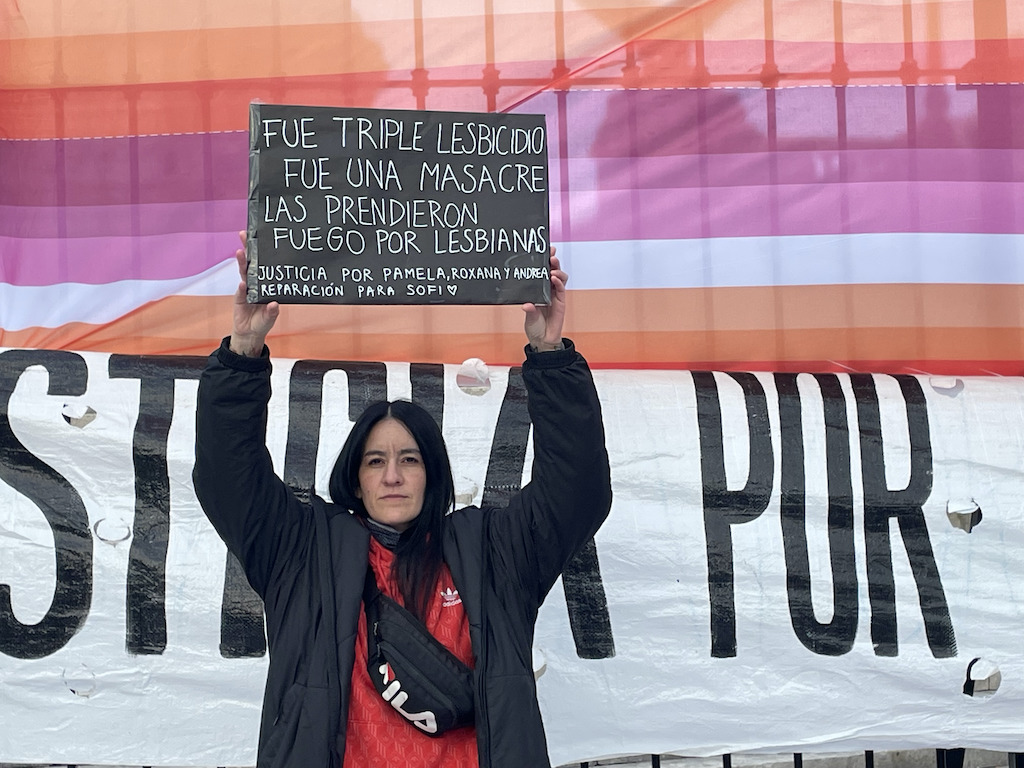
The absence of public policies aimed at preventing gender violence and the economic adjustment that falls especially on women and diverse people is sustained by stigmatizing and hateful discourses.
Estefanía is a member of the Self-Convened Lesbian Assembly for the Barracas Massacre. “In this classist, colonial, racist, and homophobic system, we are constantly discriminated against. These attacks are not new; we have been suffering them within the community, especially lesbians and trans people. It is always necessary to raise our voices and make them visible. This massacre is the beginning of many things to come if we don't stop this hatred.”
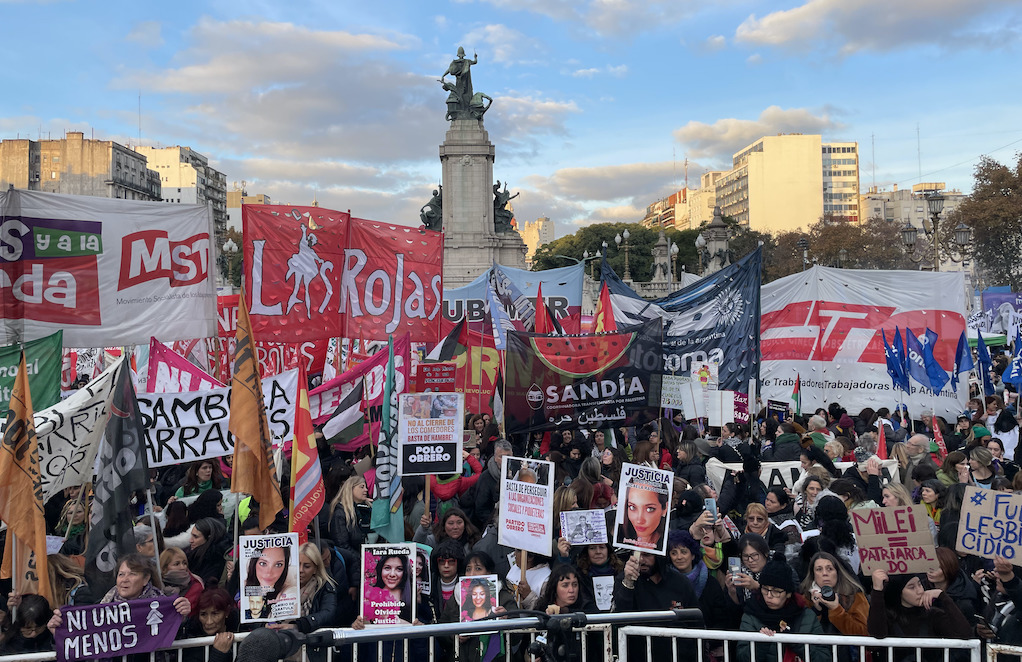
Regarding Hipólito Irigoyen, alongside popular organizations, Ornella Infante, a leader of Igualdad Evita (of the Evita Movement) and former INADI official, said: “It is important to be in the streets this June 3rd, firstly because the people are starved by Milei's policies. But also because of the intensified violence from the President of the Nation down, which ended up triggering a massacre of lesbian women in Barracas.”
With hunger, there is no Not One Less
The demand for food deliveries to soup kitchens and community meal programs, along with the rejection of the proposed Law on Food Security, were other key issues that marked this latest Ni Una Menos (Not One Less) demonstration, which spread throughout the country. “Eating is not a privilege.” “With hunger, there are no rights.” “Hunger doesn't wait; the social and food emergency is urgent.”
The same themes were repeated in different forms on signs and slogans. There were those addressing the triple shifts at community kitchens and soup kitchens, and those carried by people carrying pots and pans, alluding to the socioeconomic crisis the country is experiencing as a result of the austerity measures. There were also those referring to the opaque dealings of the Ministry of Human Capital. The signs pointed directly: “Petovello, while the food rots, the lines at the soup kitchens grow longer.” “Petovello, you're the ghost,” read another, reversing the hypothesis that pointed to the existence of ghost soup kitchens when they weren't, as in the case of La Tomasita.
María Teresa Ferreyra, from the Juana Azurduy group, Barrios de Pie, explains that they had to reduce the days they operate their soup kitchen due to a lack of supplies. For now, the Unidos por un Sueño (United for a Dream) soup kitchen, located in Almirante Brown, remains open every day. “I fight for the children. I have 50 little ones in my care. We stopped receiving donations a long time ago. Sometimes we collect from fellow activists, from neighbors, through sheer willpower, however we can. Because the children have to eat. Sometimes there are donations because those who have the least are the ones who help the most,” she adds.
Against the Emergency Decree and the Framework Law
Women workers in the informal economy were an essential part of organizing this massive 3J protest. In addition to food shortages, they are also being punished by the measures imposed by Decree 70/2023 and the possibility of the proposed labor law being passed.
“We, the workers of the informal economy, are once again gathering in front of Congress on June 3rd to say no to the Basic Law. We are also demanding that this austerity-driven and impoverishing government immediately deliver food aid. This June 3rd is very different from last year because it brings us all together in front of Congress to raise our voices,” said Dina Sánchez, a representative of UTEP.
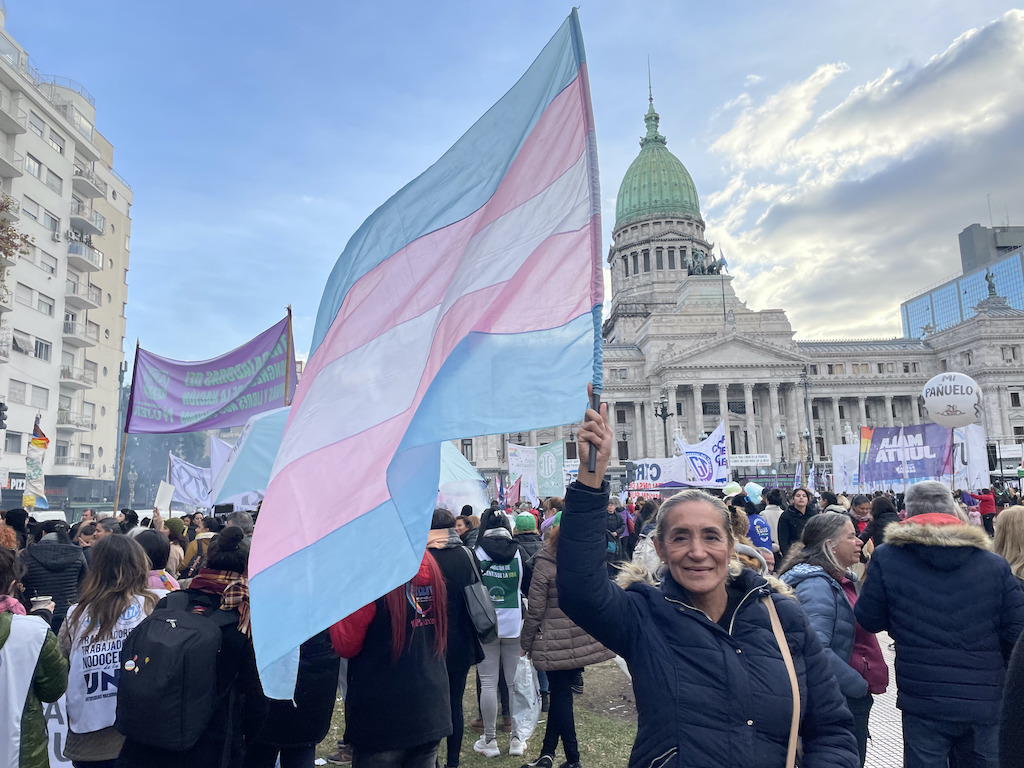
Yen Rodríguez, an activist with Otrans Argentina and a worker at INTI (National Institute of Industrial Technology)—one of the sites militarized in recent days following the announcement of layoffs—walked while waving a trans flag and told Presentes : “I’m here to express our support for all our sisters in social and feminist movements. Also, to condemn the triple lesbicide of our sisters in Barracas. And to reject the approval of the Framework Law by a government that has decided against women and LGBTQ+ people.” Trans activists remembered Diana and Lohana and also called for historical reparations.
Congresswoman Mónica Macha, for her part, stated: “We are in the streets, as we have been since 2015. Today more than ever, we are defending our rights, defending everything we have been able to build and expand. We are protesting against the devastation that Milei's policies are causing in homes across Argentina, especially those headed by women, single-parent households where daily life has become incredibly difficult.”
Eternal Norita
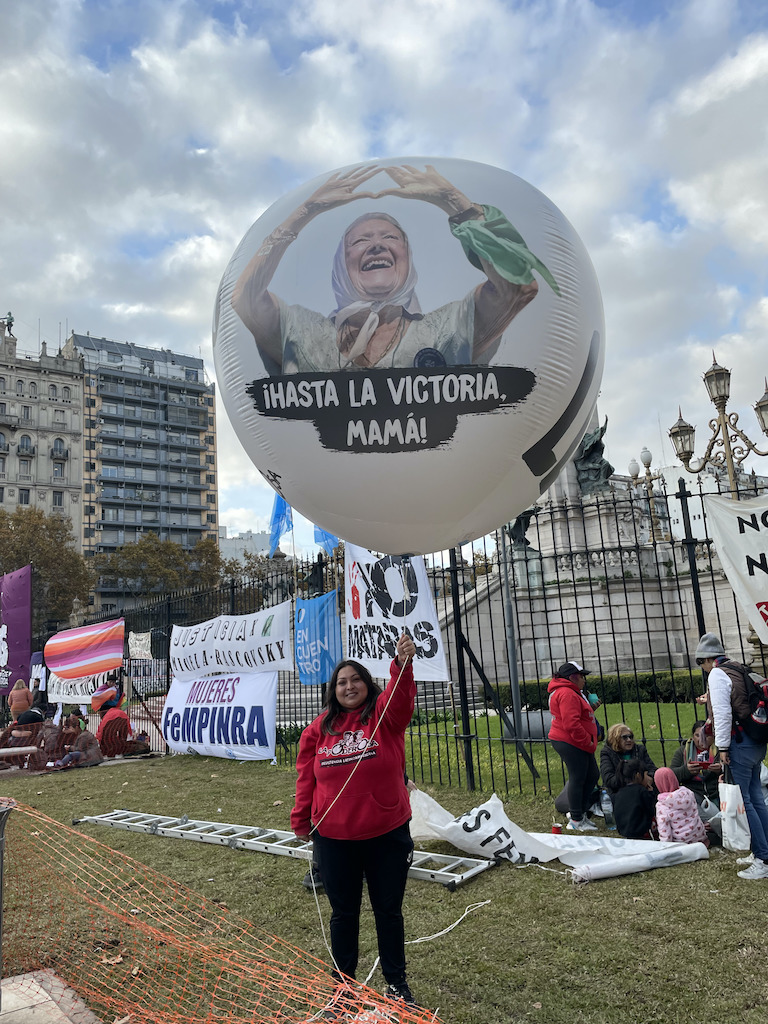
The image and memory of Nora Cortiñas lingered throughout the entire gathering. A huge banner with a smiling Norita greeted those arriving at the Congress building. From La Poderosa, activists released a giant balloon over the plaza, bearing the face of the Mother of Plaza de Mayo and the message “Until victory, Mom.”
They had also strategically hung posters with Norita's quotes near the Congress building, which was guarded by police. “I became a feminist in the streets. We Mothers have acted like true feminists without actually being so. We will win, Norita.”
From the stage, HIJXS activist Sabrina Bölcke, victim of a violent hate attack in March of this year, was in charge of reading the tribute to Norita Cortiñas.
“This plaza of feminisms bids farewell to the Mother who so often uplifted us with her presence, her words, her white headscarf, her green headscarf, and the multicolored one. The plaza of the Mother who did not hesitate to raise her voice to end the Palestinian genocide. This lesbian-trans-feminist plaza bids farewell to the Mother who taught us to fight. The Mother with whom we all demanded the opening of the archives from 1974 to 1983, a demand we continue to uphold,” Sabrina read through tears.
What do transfeminisms demand?
The document also alluded to the dismantling of INADI (National Institute Against Discrimination, Xenophobia and Racism), the closure of the Télam news agency, and threats against public media. It reiterated its demands against layoffs and for historical reparations for the trans and travesti community. It called for justice for Tehuel and the acquittal of Pierina Nocetti, who was prosecuted for asking “Where is Tehuel?”
The call for justice for Sofía Fernández, a trans woman who was a victim of institutional violence at the Pilar police station, was repeated. It was the first June 3rd protest held under a new and excessive police operation, with officers attempting to provoke the demonstrators throughout the afternoon.
“Faced with the hatred and cruelty of this government, we remain organized, weaving networks that sustain us. As we have for nine years, every June 3rd, we say again: Not One Less,” the document concluded.
Coverage: Agustina Ramos, Maby Sosa and Maria Eugenia Ludueña
We are present
We are committed to journalism that delves into the territories and conducts thorough investigations, combined with new technologies and narrative formats. We want the protagonists, their stories, and their struggles to be present.
SUPPORT US

FOLLOW US
Related notes


We are present
This and other stories are not usually on the media agenda. Together we can bring them to light.