

Claudia Sheinbaum: who is the first female president of Mexico and what is her relationship with feminism and diversity?
Claudia Sheinbaum is Mexico's first female president and the most voted-for person in the country's history. Where does she come from, and why is her relationship with feminist, human rights, and LGBTQ+ movements strained?


Share

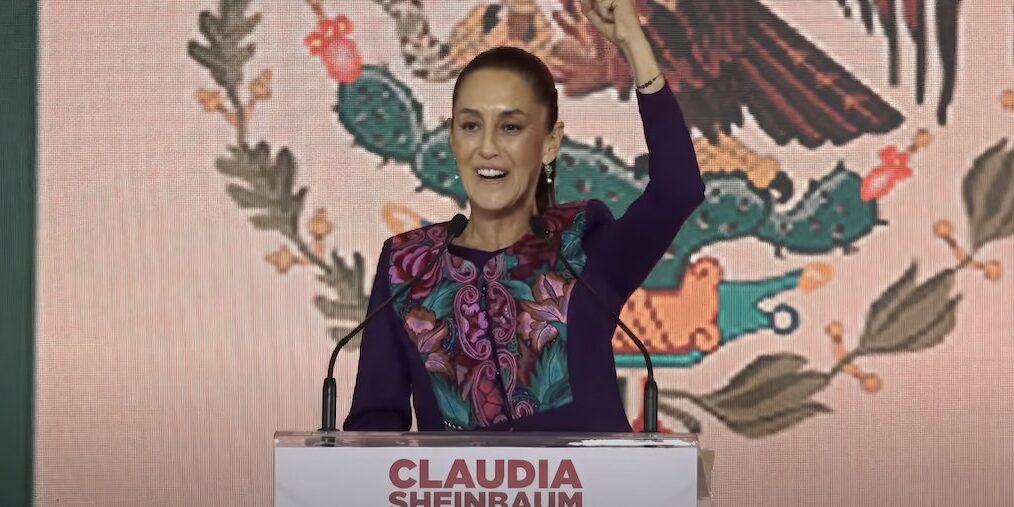
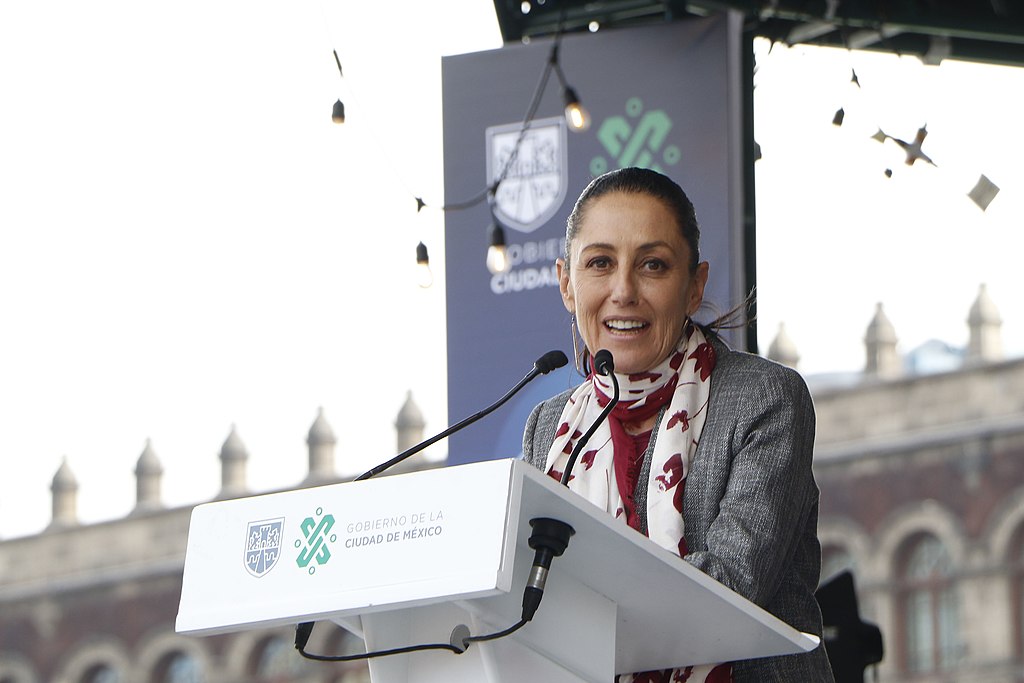
Mexico City. “Yes, we did it! We reached nearly 35 million votes!” Claudia Sheinbaum Pardo celebrated at 1:08 p.m. in Mexico City’s Zócalo, with the National Palace behind her and thousands of supporters in front of her. At the end of election day, preliminary results from the National Electoral Institute (INE) confirmed her as Mexico’s first female president . With between 46 and 51 percent of the vote, this also means she is the most voted-for person in the country’s history.
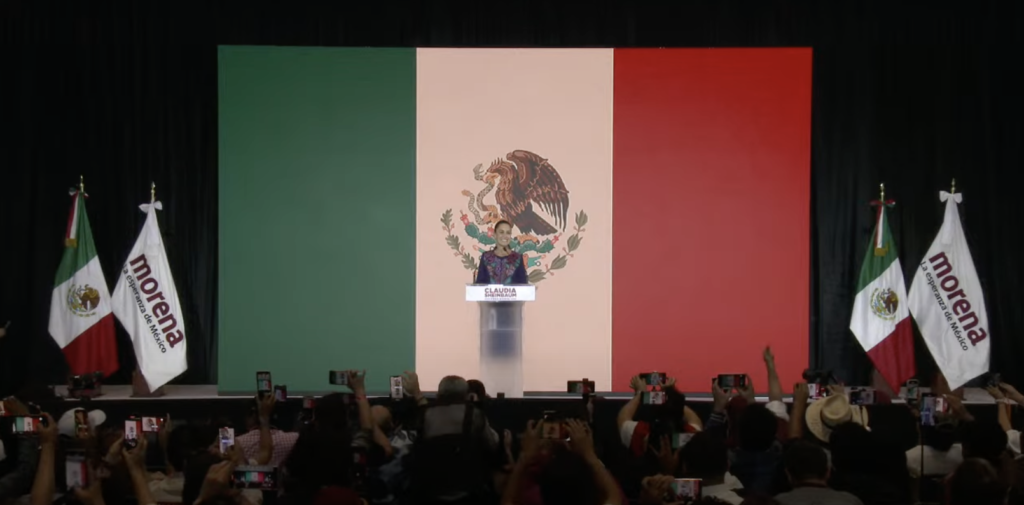
By October 1st, when she takes office at the age of 62, the former head of government of Mexico City (2018-2023) will lead a nation facing multiple crises, profound inequality, and pressing demands for change. Sheinbaum affirms her intention to expand the social programs initiated during Andrés Manuel López Obrador's current administration, reduce poverty, and address the root causes of violence. She calls it "the second phase of the transformation."
He will also come to power amid skepticism from a non-partisan sector of the left. This sector views with suspicion the record of the outgoing president: a growing militarization of the country's public life, crises in human rights, security, and access to justice , and the stagnation of the left's most progressive demands, such as the nationwide decriminalization of abortion and the legalization of drugs.
Sheinbaum's success can be explained by multiple factors. She ran a grassroots presidential campaign, just as López Obrador did in 2018. "We estimate that we gathered in massive assemblies throughout the country, close to 3 million people (...) we have visited all 31 states and Mexico City about five times and have traveled 110,000 kilometers," Sheinbaum herself explained at the close of her campaign.

The idea of continuity also garnered the support that López Obrador maintained throughout his six-year term. His victory was also boosted by his counterpart in the opposition, another woman, candidate Xóchitl Gálvez Ruiz, whose campaign focused on attacking the current government and the president, who maintains a 60 percent approval rating.
Violence that does not cease in Mexico
One noteworthy event of these elections: on June 2nd, social media was flooded with photos of dozens of ballots bearing the names of missing persons, an initiative promoted by search collectives to encourage citizens who were going to annul their vote to make visible the more than 110,000 officially registered absences in Mexico.
During 2024, an average of 79 people were victims of homicide every day in Mexico. Although the President says this crime has decreased by 22 percent since the beginning of his term, when an average of 101 victims per day were reported in 2018, the country also has high rates of femicide, forced disappearances have not stopped, nor have hate crimes against the LGBTIQA+ community.
In the first five months of 2024 alone, at least 26 trans women have been victims of transfeminicide, according to data from the National Trans and Non-Binary Assembly.
From student activism to the Presidency
“ We’ve all arrived: with our grandmothers, our mothers, our daughters, and our granddaughters ,” Claudia Sheinbaum declared. She then named a list of women who have been part of the country’s history. Conciliatory, as she was at her campaign closing, she assured that she will govern for all Mexicans, regardless of whether they support her project or not.
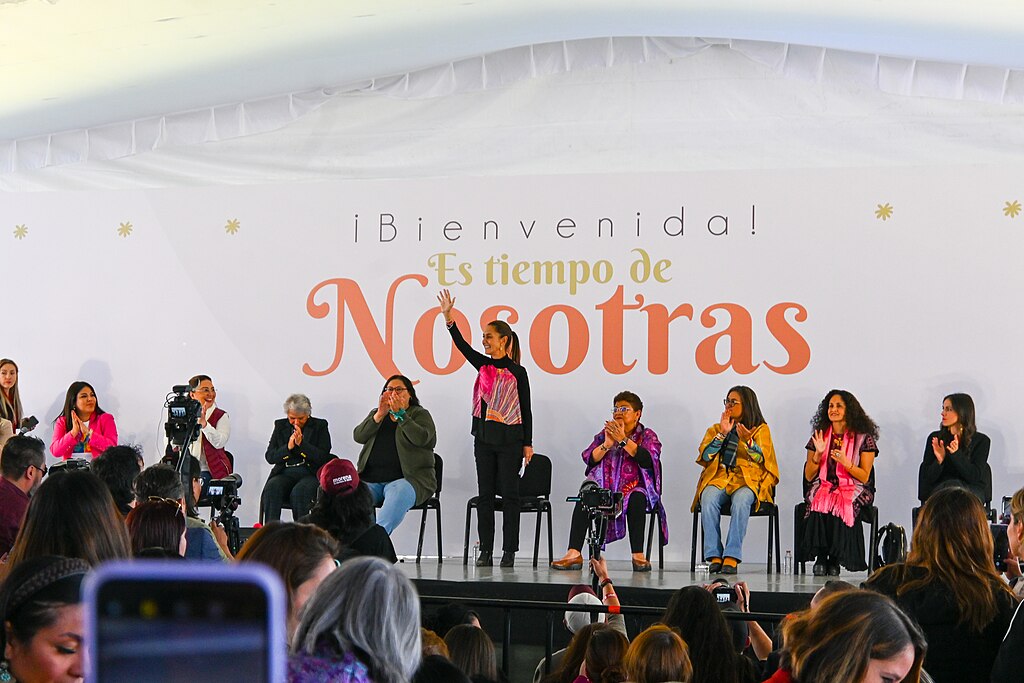
Photo: Wotancito, CC BY 4.0 https://creativecommons.org/licenses/by/4.0 , via Wikimedia Commons
Sheinbaum—daughter of chemist Carlos Sheinbaum Yoselevitz and biologist Annie Pardo Cemo, both members of the 1968 student movement—also comes from the student activism at the National Autonomous University of Mexico (UNAM). There she trained as a physicist and was part of the University Student Council (CEU).
From a middle-class background, and already a mother, she was the first woman to complete a doctorate in Energy at the Faculty of Engineering of the UNAM in 1995. She was also the first female Delegate to govern the Tlalpan Municipality in 2015.
She served as Secretary of the Environment when López Obrador was Head of Government of what was then the Federal District. She remained close to him in the first three presidential elections of this century, winning the fourth one this Sunday.
For her, the incursion into spaces historically occupied by men is an undeniable victory for the feminist movement, of which she has declared herself a part. But there are also those who question whether a woman in the highest position of power can bring about structural changes in the lives of thousands of women who experience multiple deprivations and violence.
Although Sheinbaum has occasionally called herself a feminist, she understands these demands as a natural result of social justice: attending to the poor sectors of the country will benefit the most vulnerable women in these sectors.
A strained relationship with feminisms and diversities
“We will respect and uphold political, social, cultural, gender, and sexual diversity. We will continue fighting against any form of discrimination,” he said yesterday at the Hilton Hotel in Mexico City, where he received the election results and gave his first message to the media.
While distant from the causes of feminism and the LGBTQIA+ movement, Sheinbaum attempted to reconcile the gender agenda with that of the movement she represents. It was with this left wing that she experienced major disagreements, conflicts, and her most critical moments during her time in the nation's capital.
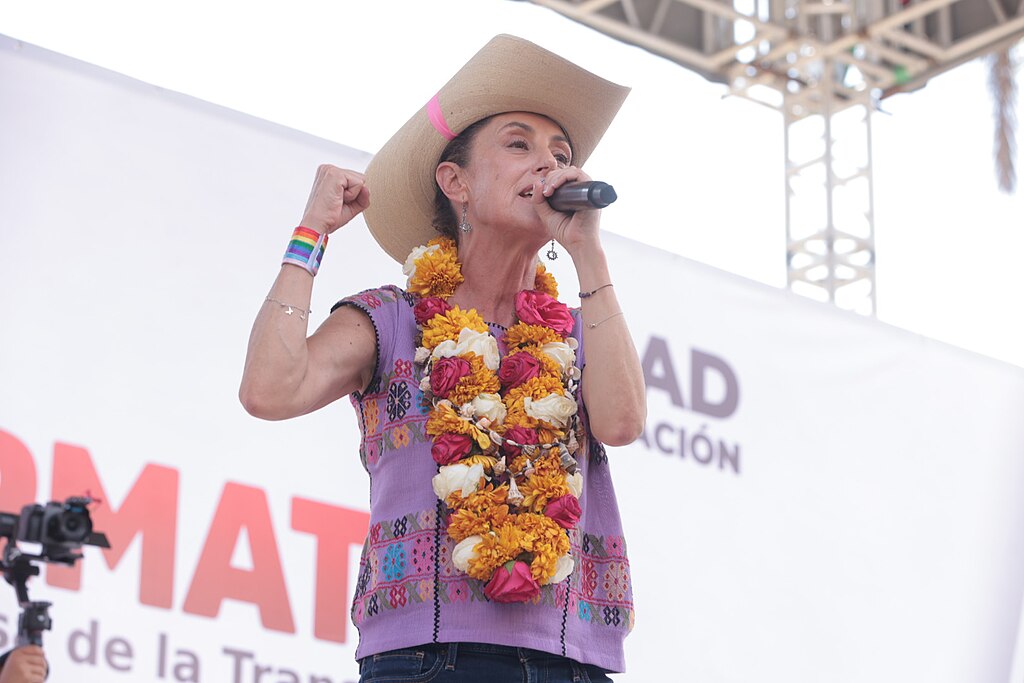
Photo: ftscsp2324, CC BY 2.0 https://creativecommons.org/licenses/by/2.0 , via Wikimedia Commons
Feminists expressed their views on social media at the campaign's closing rally on May 29th in Mexico City's Zócalo. As a candidate, she declared, "It's time for women and transformation, and I want to say it here too: that means living without fear and free from violence." Meanwhile, behind her, alongside the leaders of the parties that accompanied her, stood Senator Félix Salgado Macedonio, a man with multiple accusations of sexual abuse, but supported by Morena, currently the country's most powerful political force.
“Well, there are complaints, but as far as I know there is no sentence,” she said in February 2021 to media outlets that questioned her about whether, as a feminist, she supported Macedonio’s candidacy for Governor of the state of Guerrero in the country’s midterm elections.
The rift with the feminist movement began almost simultaneously with Sheinbaum's administration in Mexico City, when in 2019 a 17-year-old girl accused four Mexico City police officers of rape. The outrage, which intensified due to the decision not to suspend the accused officers, sparked massive demonstrations against police violence.
“We are not going to fall for provocations; they wanted us to respond violently. This was not a protest, it was a provocation,” said the now President-elect.
In the following months, the Sheinbaum administration responded by summoning 11 feminists and two transgender people who had participated in the demands for clarification of the case to appear before the Mexico City Attorney General's Office (FGJ-CdMx), a move denounced by feminists as an attempt at intimidation and political persecution. Meanwhile, feminist movements, mobilized in response to state violence and the rising number of femicides, continued to grow.
Repression of social movements
“The effects of the green smoke on the eyes and throats of protesters, recorded by staff from the Mexico City Human Rights Commission and the Marabunta Brigade, served as evidence of the discretionary measure, for which there was no protocol to (…) preserve the balance between containing acts of vandalism and guaranteeing the right to protest,” recounted journalist Ivonne Melgar in the book Mexican Women on the Front Lines. The use of police force to inhibit, contain, or break up any demonstration, and the subsequent denial of any repressive acts in the official narrative, persisted even after Sheinbaum left the Head of Government position and Martí Batres Guadarrama took her place.
Sheinbaum is held politically responsible for the confinement of a group of trans children and youth on November 20, 2021, and also on April 25, 2022, of a group of women from the indigenous Triqui community, victims of forced displacement from the Tierra Blanca Copala community in Oaxaca.
Both cases, among many in her administration, have one name behind them: Omar García Harfuch, former Secretary of Citizen Security (SSC) of Mexico City and a key figure in the security strategy that Sheinbaum touted during the presidential debates. Harfuch, who became one of the president-elect's closest collaborators, will take a seat in the Senate, but he could also become part of Sheinbaum's federal security cabinet.
Trans advances in Mexico City
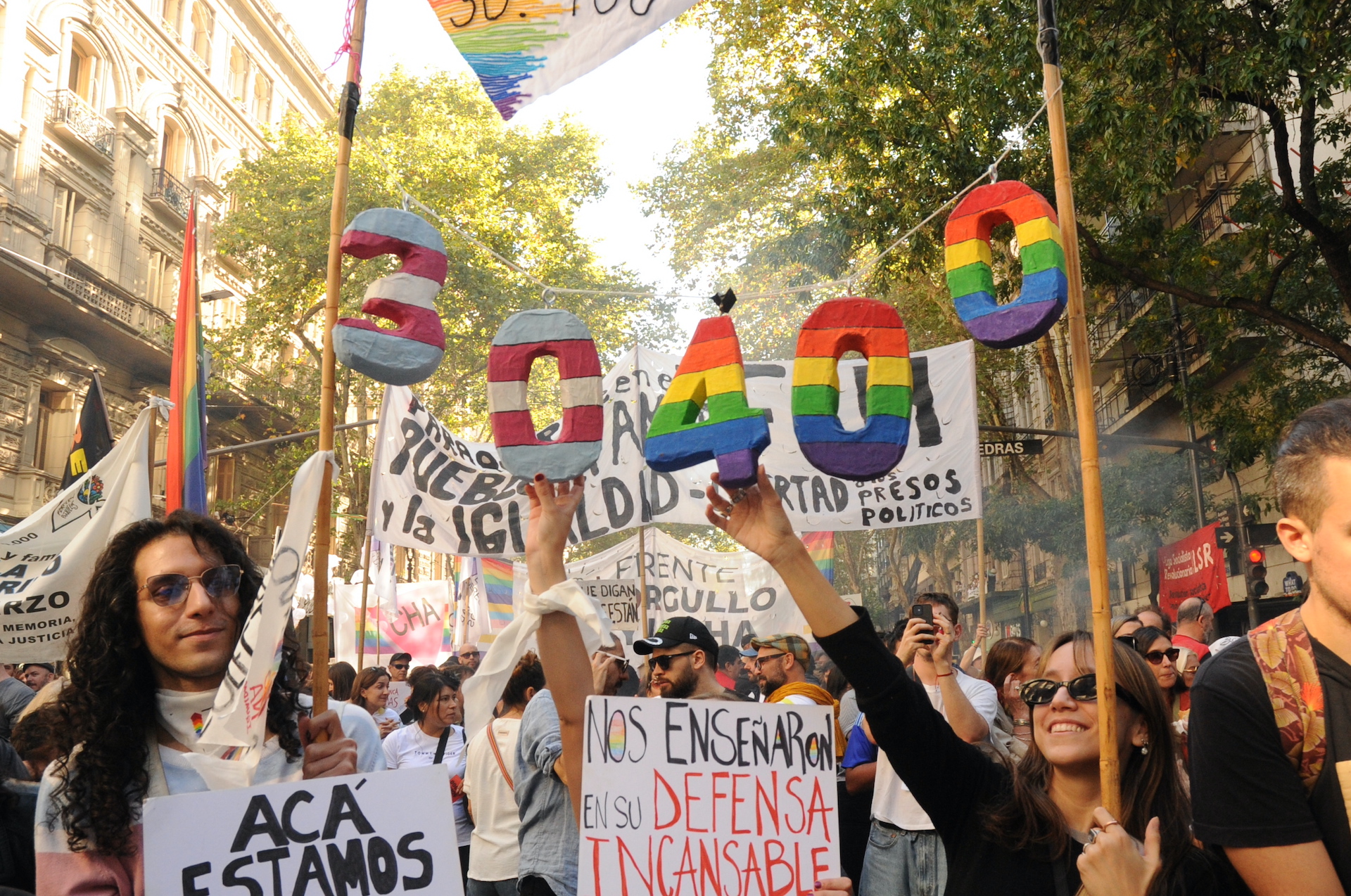
Despite state resistance to recognizing their rights, the trans community and feminist movements have made significant progress in Mexico City and other parts of the country. To date, 22 states have passed gender identity laws, and abortion has been decriminalized in 13, all achieved through local struggles without federal support.
In 2021, Sheinbaum fulfilled a demand from advocacy groups and created the Comprehensive Health Unit for Trans People (USIPT) in Mexico City. By 2023, it was serving 719 trans women, 474 trans men, and 119 non-binary people in their transition processes, providing them with free general medical care, endocrinology, dermatology, gynecology, nutrition, mental health, and psychiatry services, among others.
Furthermore, given the legislative omission of the Congress of Mexico City, Sheinbaum published a decree to allow the legal change of gender identity for adolescents over 12 years of age, leaving out children .
Sheinbaum, however, is viewed with suspicion due to the constant repression of LGBTQ+ protests and accusations of transphobia from close associates. In the second presidential debate, when Sheinbaum was asked how to address the violent murders of trans women, the Morena candidate said: “We are totally against any form of discrimination; it even needs to be included in the penal code. We are not only talking about the trans community, but about everything related to discrimination. Past governments were dedicated to discrimination. For the first time, there is a government that is taking care of those who have the least.”
The ambitious Plan C
With the victory of Sheinbaum, nominated by the Morena party – of which she is a founder –, the Labor Party (PT) and the Green Ecologist Party of Mexico (PVEM), comes the President's ambitious plan C: to obtain the large majority in the federal Congress that will allow Sheinbaum to reform the Constitution, a milestone that López Obrador did not achieve.
Civil society organizations warn of the loss of checks and balances that a Morena majority could represent. Some see the ruling party's intention to reform the current Supreme Court of Justice of the Nation (SCJN) and eliminate autonomous bodies, such as the National Institute for Transparency and Access to Information (INAI), as a threat. For their part, the government and Morena argue that a profound change in the Court is necessary to pacify the country and stop spending on costly institutions.
Sheinbaum has everything she needs to achieve ambitious reforms. The opposition has been reduced to a mere foothold. “We continue making history,” Sheinbaum said from the Zócalo in Mexico City.
We are present
We are committed to journalism that delves into the territories and conducts thorough investigations, combined with new technologies and narrative formats. We want the protagonists, their stories, and their struggles to be present.
SUPPORT US

FOLLOW US
Related notes


We are present
This and other stories are not usually on the media agenda. Together we can bring them to light.