

Diversity activists bid farewell to Nora Cortiñas: "We thank you for the radical tenderness with which you taught us to fight."
What did Norita mean to each of us? And to the struggles for diversity? Activists share farewells and memories of the mother who embraced all struggles as one.


Share

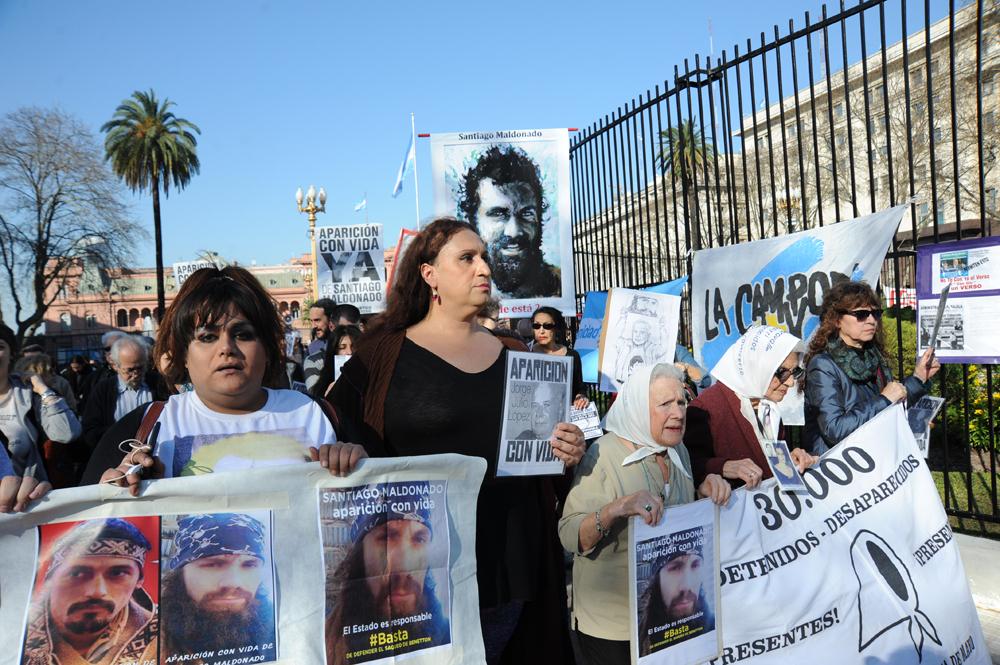
Nora Cortiñas, one of the founders of the Mothers of Plaza de Mayo, died on Thursday afternoon, May 30th, in Buenos Aires, leaving us all orphaned. She was 94 years old and began her political struggle searching for her son, Carlos Gustavo Cortiñas, who was disappeared by the military during the civic-military dictatorship. Until the beginning of this month, Norita continued to attend the Thursday marches and put her body on the line wherever there was injustice and social resistance.
She supported struggles that received little media attention, such as the fight for LGBTQ+ rights. She marched with transvestites and trans people; she attended the trial for the transvesticide of Diana Sacayán; she demanded the acquittal of Higui de Jesús and participated in the demonstrations; she visited factories that had been occupied and later recovered during the 2001 crisis; she wore the green scarf of the movement for legal abortion; she supported the demands of Indigenous peoples, and the list is as long and powerful as her life and legacy. Seeing her arrive in the plazas across the country, marching with other Mothers—in her later years in a wheelchair—embracing everyone and raising her fist when she spoke was a source of comfort and a guarantee of hope. Wherever she was, a path had been forged. Farewells are painful but necessary.
Sexual diversity activists told Presentes what Norita meant to them and their struggle.

Norita in the red sky of the transvestites
By Florencia Guimaraes, trans activist
What did Norita mean to me and to the struggle? I learned about the Mothers' struggle through my mother, a very young activist; at home, we supported the Mothers and Grandmothers of Plaza de Mayo. Later, in collective terms, I came to understand, through my comrades, what the Mothers' struggle meant for trans and gender-diverse people, and what the Right to Identity means, for which they also fought and continue to fight tirelessly.
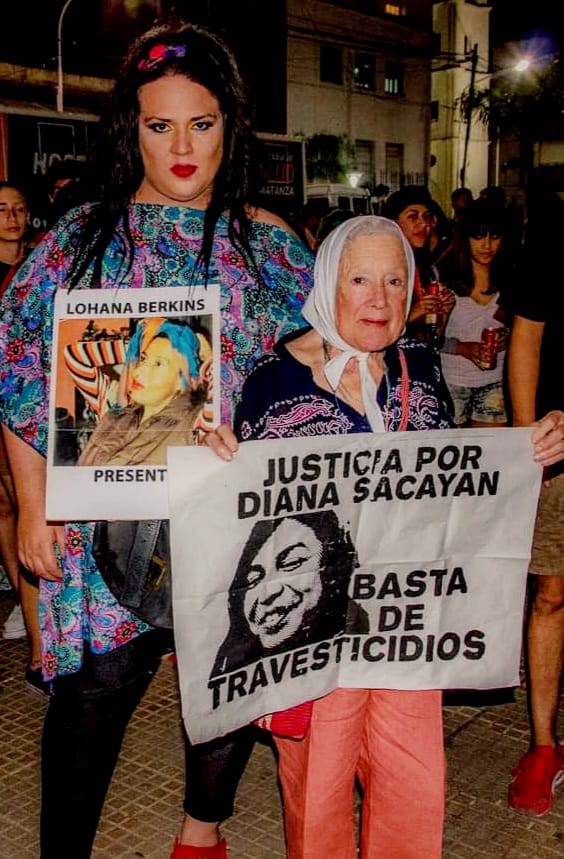
Norita was at the wake for our beloved Lohana Berkins, when Diana Sacayan was murdered, and she joined us in the first Pride March in La Matanza eight years ago, under the slogan "Justice for Diana." She accompanied us in countless struggles, chanting "Job quotas for trans people!" and supporting the demand for a law of historical reparations, understanding that part of history that has befallen trans people: the clandestine existence, the criminalization, the persecution, the inability to live in the public sphere and having to subsist in the private.
Norita leaves behind seeds, an example of struggle, of life, of resistance, of internationalist revolution. This has been an inspiration to many of us. It has taught us that the fight against oppressors must find us in every place on the planet where they oppress, repress, and murder.
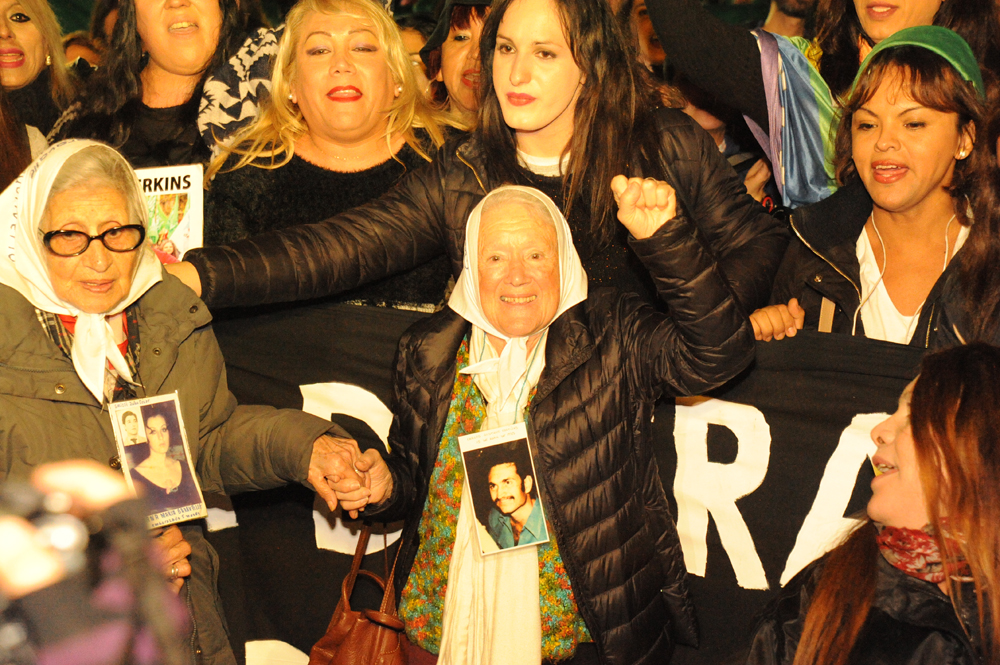
Goodbye, Norita. You're surely in the red heaven of trans women, alongside Lohana and Diana, watching over us, guiding us, creating new revolutions. You'll always be in each of us, in every march, in every shout, in every project, in everything we do. And this isn't goodbye, it's a see you later that will allow us to live, to carry on, and to fight.
Norita, Mother of all the battles we will continue to fight. That is the best way to honor her, to continue her legacy today.
Infinite Norita
By Ese Montenegro , trans activist
I was born in 1980, when the civic-military-clerical dictatorship still controlled the lives of all our people. I was born and raised, at least for a long time, in a country where "don't get involved" was the law. I've run into Norita in countless places over the years. The first time I met her in person was during the defense of a worker-recuperated factory, because my first activism, outside of student activism, was in the labor movement. And there I saw Norita, supporting the occupations, fighting for the reinstatement of workers, or participating in the picket lines in those early 2000s, right in the middle of the crisis . She had been fighting for decades, but it was only then that I began to see that guiding light.
We owe it to them, to the Mothers and Grandmothers, to the Noritas of life, to be part of this lineage of struggles that weave together the search for our disappeared comrades, the defense of workers; the right to abortion, to gender identity, to Higui's acquittal, to the demand for Tehuel's reappearance, or the trans and travesti employment quota. They politicized motherhood and the right to identity, and knowingly or unknowingly, they transformed the lives of millions of people.
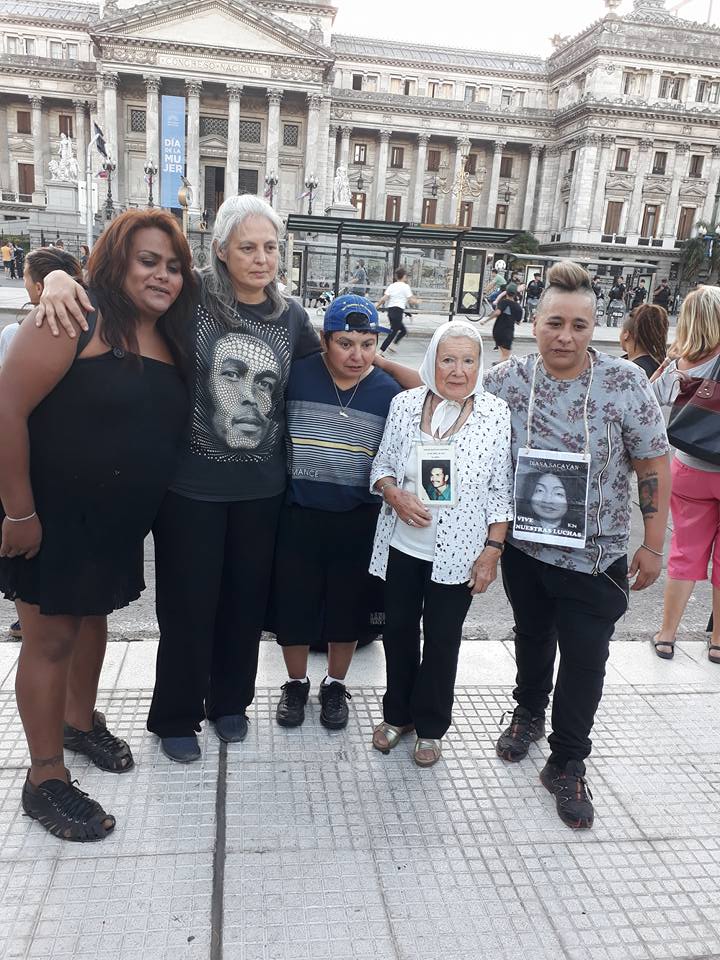
To speak of Norita is to recognize ourselves as part of a history that continues to demand all our strength to keep searching for that memory, that truth, and that justice she spoke so much about. People like Norita, who, beyond everything she always said—because she never kept quiet, not for anyone—are rare, because not everyone can carry consistency as their banner. She was tirelessly consistent in her actions. She gave her all to set an example for us, to teach us to be committed people. People capable of being moved by injustice, any injustice, and fighting to reverse it, to change the world.
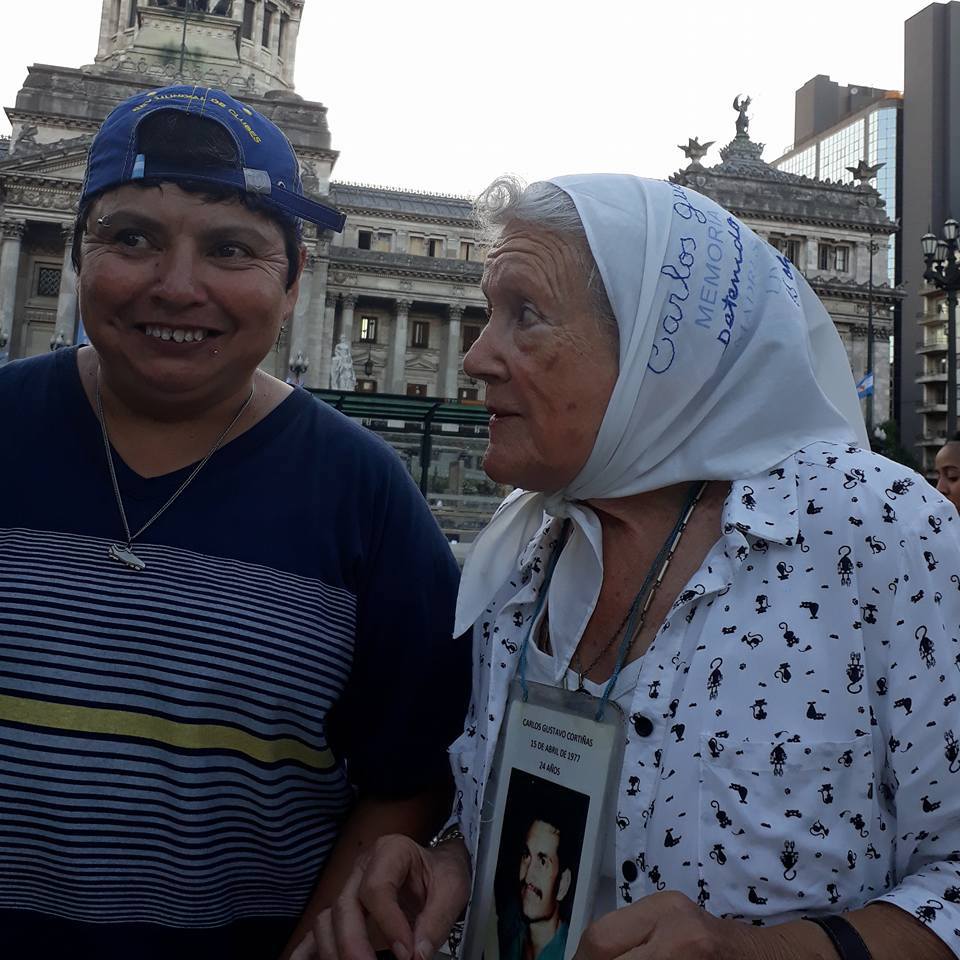
Last night I was reading a friend's post that said something like this: If we are even a tiny fraction of the fighters that Norita was, even for just a minute of our lives, we have no doubt that we will change the world. And we will do it also because we owe it to her, we owe it to ourselves. Infinite Norita, we can only thank you for the radical tenderness with which you taught us to fight.
Sandra Chagas, Black, lesbian, and feminist activist
Norita, so wise, paved the way for the youth, leaving a legacy to those young people committed to the suffering of the people. A mother aware of what the civic-military dictatorship was, and also aware of what the economic dictatorships meant, she knew how to fight against both. Norita bequeaths to us the foundations to prevent this hard-won democracy from becoming a pseudo-democracy, both military and economic, plagued by a lack of freedom for the people. She asks us for consistency in our actions, words, and deeds. Thank you, Norita, for marking a path of resistance and struggle. As an Afro-descendant, as a Black woman, a lesbian, and a feminist, this is the true struggle, the resistance and fight you bequeathed to us. Thank you, Norita.
"He leaves us a great legacy that we will continue to honor."
Martín Canevaro, activist for 100% Diversity and Rights
When Carlos Jáuregui died, Nora Cortiñas and the Mothers of Plaza de Mayo turned out in massive numbers for his public wake. They had been able to provide refuge to the LGBT movement when sexual dissidence activism was developing in isolation.
Nora, in particular, supported the fight for marriage equality, the recognition of gender identity, and the demand for justice for the transvesticide of Diana Sacayán, among others.
In 2023, the Pride and Struggle Front commemorated the National Day of Remembrance for Truth and Justice with Nora Cortiñas at an event in Carlos Jáuregui Square in Buenos Aires. There, we paid tribute to the disappeared LGBT people and the Homosexual Liberation Front (FLH). At that event, Nora remembered Jáuregui, César Cigliutti, Lohana Berkins, and Diana Sacayán. She called on us to continue fighting for liberation, and that is what we will do. I remember that on that Saturday, March 18th, she had several invitations to different events, but her commitment to the LGBT movement took precedence.
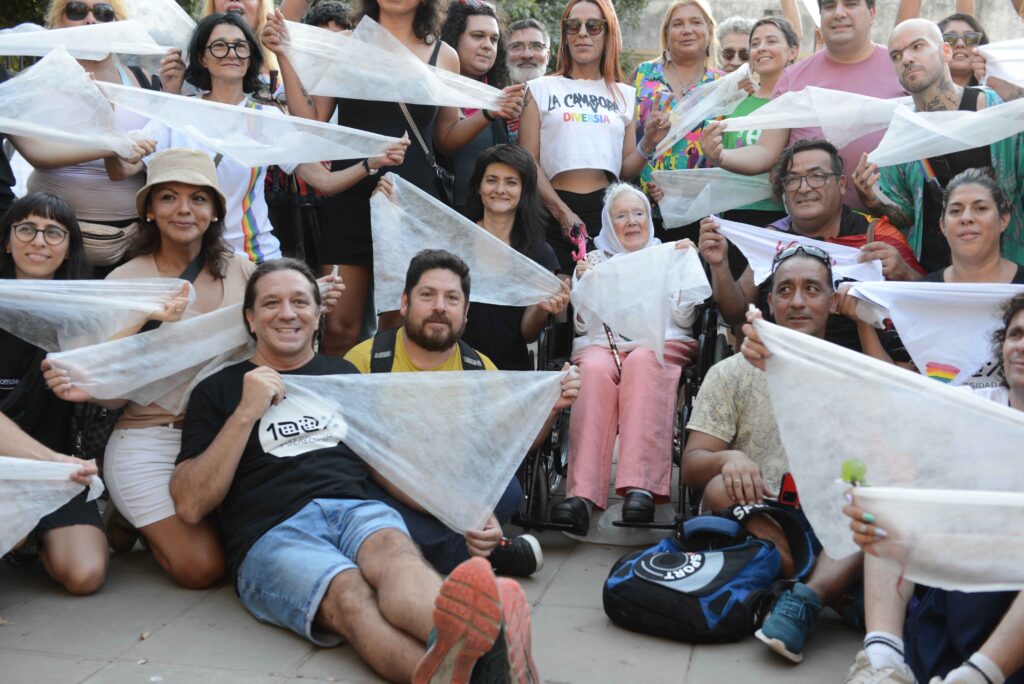
I also remember when 100% Diversity and Rights, together with the CHA, commemorated the 5th anniversary of the legalization of same-sex marriage at the Manzana de las Luces. She asked us activists who had married if we were still together because she had heard of some separations, and we couldn't contain our laughter. She was a great ally of our movement; her physical absence will be felt, but she leaves us a great legacy that we will honor by fighting as she and the Mothers taught us.
"Continue to raise the banner of human rights"
Pía Ceballos, transvestite and Afro-indigenous activist
Norita extended her hand to us, accompanied us, and walked alongside us in defense of LGBTQ+ rights in Argentina. That journey and that embrace were not just an alliance with the founding members of Mothers of Plaza de Mayo. It was a shared commitment in every action we have taken for our rights.
We have faced situations of fear, anguish, and violence, even in a democracy. In these concrete demands against police violence, against institutional violence, against the trampling of our human rights, we find remarkable women like Norita Cortiña. She was always there. It's something I remember about Norita, at least from the last 10 years, her active presence, despite her age. In the actions for trans employment quotas, for the gender identity law, for abortion rights.
The values and the enormous embrace she gave our group are truly an inspiration, a driving force to continue fighting for human rights. I believe that is a tremendous legacy Norita Cortiñas leaves us: to continue raising the banners of human rights, especially in the difficult contexts we are experiencing in Argentina. You won't find anything else like it, will you? Raising those banners of struggle and reclaiming all the values Norita instilled in us.
"A moving hurricane that drives us to continue being revolutionary"
Lara Bertolini, transvestite activist
The day they tried to force us out of a march in Plaza de Mayo, Claudia Korol ran straight to where Norita was. And Norita hugged us and said: Justice for Luz Aimé Díaz. A wonderful memory of so much power in a woman who, at first glance, might seem imperceptible. But she is a moving hurricane that compels us to remain revolutionary and disruptive at all times. I remember at CIP, the struggle of the popular high schools, when we had to give a talk and Norita appeared out of nowhere, walking arm in arm with Fernando, who led her to the table to talk. And I see her there, sitting in her chair, in front of me, as I was about to start talking about revolution, education, and identity.
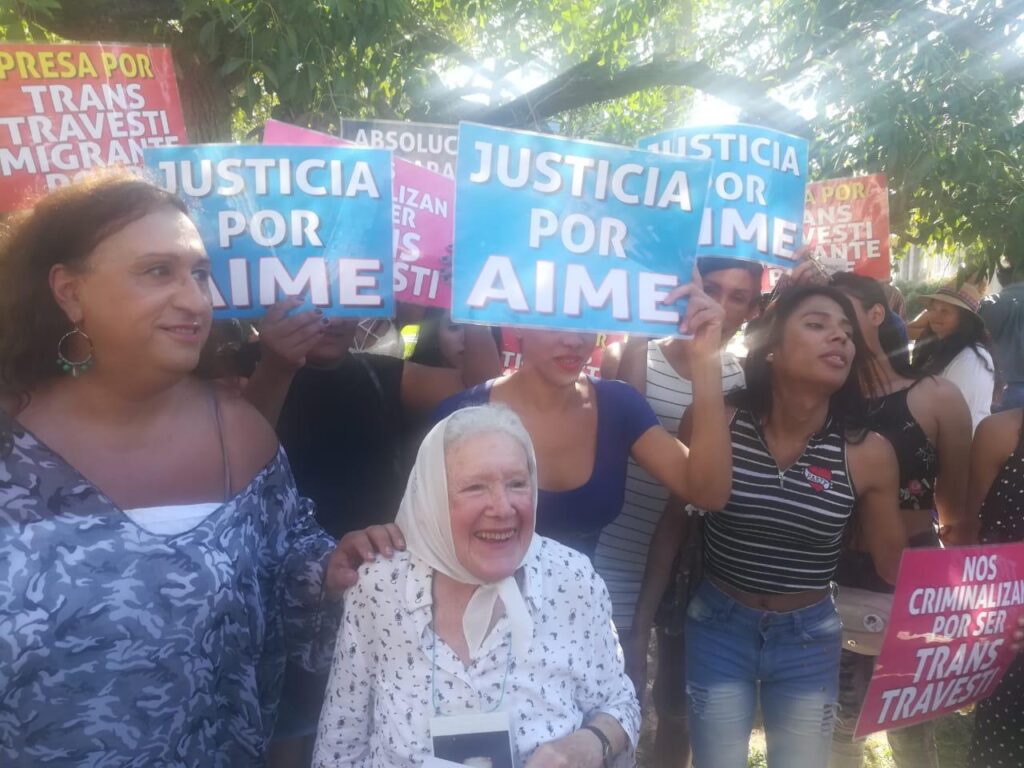
"Norita supported us when few dared to."
Something she instilled in us, and which seared itself into my very being, was the fight for identity. She raised her hands and took that legendary headscarf from her purse, and like a kabuki artist, she arranged it, wrapping it around her hair and neck, donning that crown of struggle that is the Mothers' headscarf. She left us with the message that we must never give up. The phrase "we will overcome" will always be in my mind.
Dario Arias, activist for Conurbanes por la Diversidad
Nora Cortiñas was, is, and will forever be etched in the memory of the struggles of the sexual diversity movement for supporting it even in times when few dared. Her constructive, loving, and collective activism is for us an example of struggle that we must follow every day.
The LGBTI+ community without Nora and without the Mothers of Plaza de Mayo would be nothing; we owe everything to the Mothers and to human rights organizations. Nora also represents the generosity of being present in the causes of every territory and every community. Many moments come to mind when she accompanied us, but there is one that moved us deeply with its humility: when she joined us in 2016 to embrace the inclusive clinic with a sexual diversity perspective in Morón, which the recently elected right-wing local government wanted to close. Nora, mother of the suburbs, mother of just causes, we will always carry you in our memory and in our struggles.
We are present
We are committed to journalism that delves into the territories and conducts thorough investigations, combined with new technologies and narrative formats. We want the protagonists, their stories, and their struggles to be present.
SUPPORT US

FOLLOW US
Related notes

We are present
This and other stories are not usually on the media agenda. Together we can bring them to light.