

Mónica Linares: what it's like to be active for trans and HIV+ people in Bukele's time
Interview with Mónica Linares, a 44-year-old activist who has exceeded the average life expectancy for trans women in Latin America. She is a co-founder of ASPIDH Arcoíris Trans.


Share

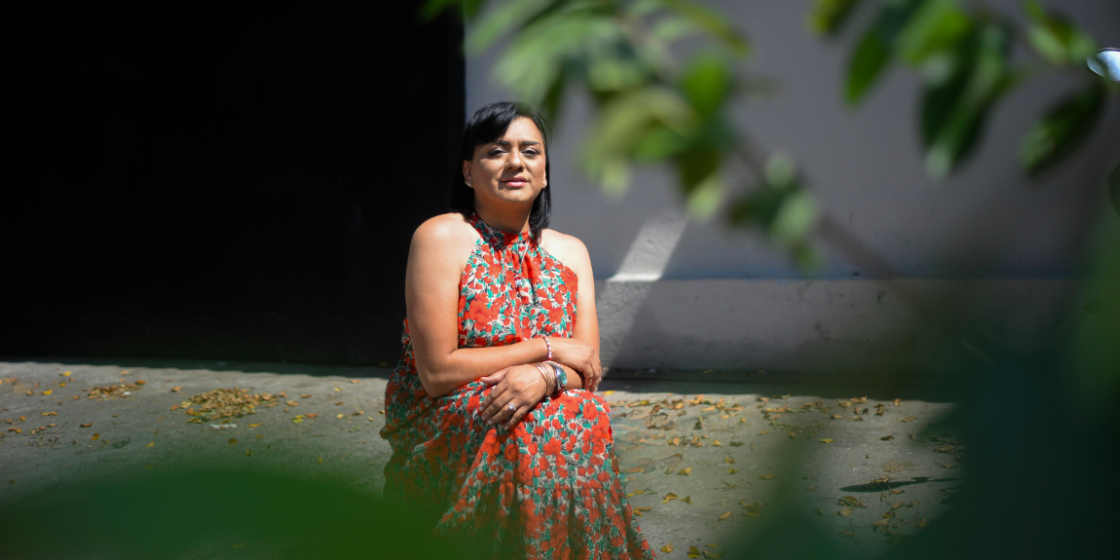
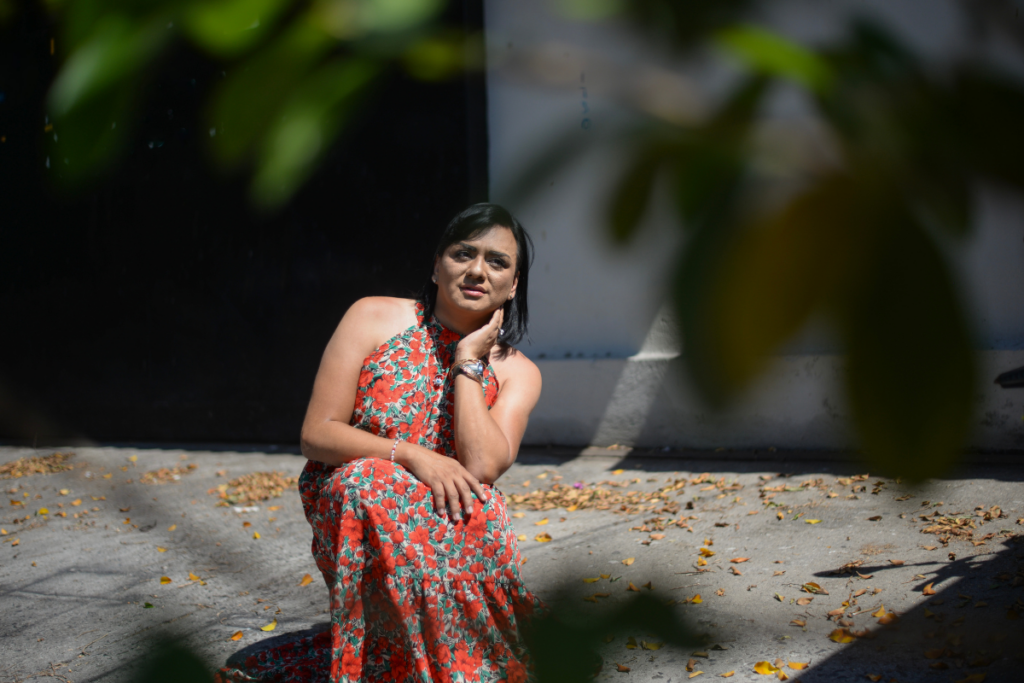
Mónica Linares is one of the founders and representatives of the Salvadoran Association to Promote Human Development (ASPIDH) Arcoíris Trans. From a young age, she knew she was a girl, that this was her true identity.
Born in 1979 in San Antonio Pajonal, a district now part of the new municipality of Santa Ana Oeste, a small town on the border between El Salvador and Guatemala, she has been a defender of the rights of the LGBTI population since she was 18. In 1997, five years after the signing of the Peace Accords, which ended more than a decade of armed conflict, she collectively founded ASPIDH to confront the violence perpetrated by agents of the security forces.
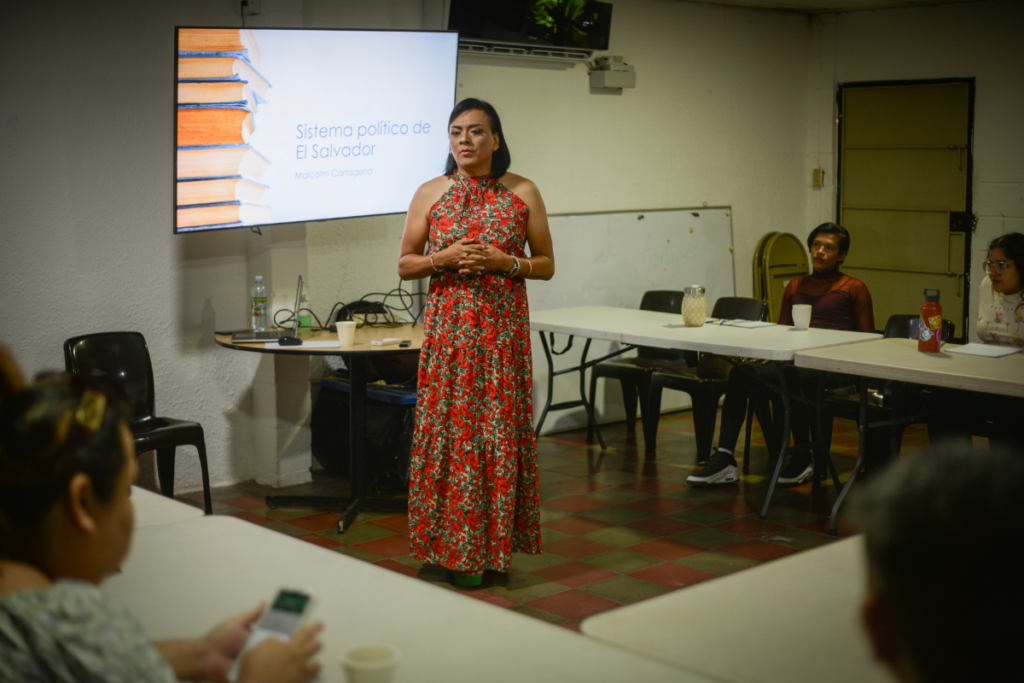
In this interview, Mónica gives a brief account of 27 years of struggle for the recognition of the rights of sexual dissidents, including the right to identity, and for the elimination, prevention and recognition of hate crimes, understood as the different forms of violence that trans people experience during their life cycle.
The report also highlights the lack of government support during nearly three decades of struggle for their rights, especially under the administration of Nayib Bukele, who eliminated the Directorate of Sexual Diversity, banned the acronym LGBTI+ in documents and programs across all 16 ministries, and ordered changes to the HIV test form, replacing terms like "homosexual" with "men at high risk," which revictimizes and stigmatizes LGBTQ+ individuals. It also notes the president's recent statements formalizing his anti-rights stance by declaring that "gender ideology" is prohibited in El Salvador due to its promotion of "unnatural, anti-God, and anti-family" ideas in education.
It also laments that the ruling party's deputies shelved the draft Gender Identity Law and that, despite the Constitutional Chamber's order more than two years ago, the Legislative Assembly has still not complied with the resolution to reform the Law on the Name of Natural Persons to recognize gender identity. On February 22, 2022, the Constitutional Chamber of the Supreme Court of Justice declared unconstitutional the exclusion of name change for reasons of gender identity in Article 23, paragraph 2 of the Law on the Name of Natural Persons.
– Who is Mónica Linares and what does she do?
– I am a 44-year-old transgender woman. This year, I turn 45. I come from a Christian family. I am the oldest of five siblings, although one has already passed away; he was killed in a gang-related incident. I consider myself a generous person, with a very strong maternal instinct towards my communities.
I represent ASPIDH Arcoíris Trans, an LGBTI organization that emerged in 1997 and was legally recognized in 2008. Despite political, governmental, and financial challenges, the organization has grown and strengthened over time. We are working on the issue of aging among LGBTQ+ people, given that historically, the life expectancy for trans women in Latin America was only 33 years, and old age was not taken into account. However, we have broadened this perspective, recognizing that older adulthood begins at age 45 for trans people and at age 50 for gay men and lesbians.
We have worked on the prevention of sexually transmitted infections (STIs) and HIV. Unfortunately, after the president's statements [Nayib Bukele formalized his anti-rights stance on February 22 in an interview conducted by the national director of Moms for Liberty] , we have experienced setbacks, especially in the area of health. Care protocols have been modified, making it more difficult to access appropriate services. For example, the categories on HIV testing forms have changed, mislabeling people; gay men are now considered "high-risk men," as are trans women. This represents a significant setback for us. Furthermore, comprehensive health care remains insufficient, as it is limited to the treatment of STIs and HIV, without considering other medical needs, such as appropriate feminization for trans people. HIV treatment dropout rates could also increase due to these changes.
Despite the work done by our organization to promote respect for the human rights of LGBTI people, setbacks by the Salvadoran State are beyond our control.
What was your journey of self-discovery and recognizing your identity like?
– I can go back to my childhood. I studied until ninth grade in my town, then I came to the capital and transitioned at 14. Before that, I had no role model other than one person—now I understand, a trans woman—in the entire town. To everyone there, this person was seen as "a faggot dressed as a woman" and was ridiculed . I was warned not to do certain things because I would look like him. Even my mother would scold me if she found out I played softball, considered a "women's" sport.
I did treat myself like a little girl from a young age; I didn't know I was a trans woman, I just felt like I was a girl. I returned to my hometown after my transition about 15 years later, and obviously, for many people in town it was a shock.
When we moved to the capital, to a neighborhood in Soyapango, I lived with my mother and my two brothers, which caused family conflicts because I began my transition. There I met who became my best friend, the first trans person I ever met. We were best friends until the day she was killed, about 12 years ago. I never went back to that neighborhood because of the gangs. In fact, my friend was killed by gang members, but not the same gang members who were around when we were growing up. I went back with the police to search for her body all over the neighborhood, and we found her eight days later in some horrible ravines. That was a hate crime, that one and all the bodies I've gone to identify since.
– In that process of self-discovery, did his family also recognize his identity?
– I had an accident in which I almost died, and my family's attitude toward me changed drastically; it was a complete 180-degree turn. Their acceptance was like magic. The accident left me with many lasting effects, scars, and traumas.
I don't remember what year it was, but it was a car accident I was in while working as a sex worker. I was in the car with a man who was under the influence of drugs; he was driving at high speed and crashed. He was wearing his seatbelt, but I wasn't, so I got the worst of it. I barely remember it, but I was the one who was most seriously injured. I have a scar with 17 stitches on my head and scars all over my body. Before this, my mother and I fought a lot, but afterward, everything changed, I imagine because of her fear that I would die. I was also part of the family's support, and if I weren't there, that would end. After that, the change was radical, and we started to have a better relationship. I've always had a very close relationship with my siblings, especially with my brother who was killed; we've always remained close.
At first, I wanted to be a doctor, but after the accident and the terrible treatment I received at Rosales National Hospital, I never wanted to go back. Later, because of our work, I had to go in, identify bodies, and go to the HIV ward, seeing terminally ill patients. Sometimes you want to do so many things, but society prevents you; they simply reject you.
– What were their support networks?
Definitely my friends, my cisgender female friends, among whom there is also a lesbian, and we are super close, we are like a family. And this circle of trans friends [from ASPIDH] is part of my life.
– What led her to fight for the rights of the trans population and motivated her to embark on her path as an activist?
– Initially, we were sex workers because it was the only thing we could do. We couldn't get jobs or continue our studies. We were limited in every way. Around 1996 or 1997, the Metropolitan Agents Corps (CAM) had, and still has today, a ordinance regarding sex work, which isn't prohibited, but it's not legal either. Mr. [Eduardo] Linares, who was in charge at the time, was transphobic and hostile toward our community. We faced raids, arrests, and fines, although the latter were the only legal sanction. We were subjected to abuse of power by these authorities.
In response, we, trans sex workers, decided to organize to fight this injustice. Initially, we thought this was the only violation of our rights, but over time we realized that there were many other areas where we were denied access, such as education, employment, and the right to a legal identity.
This is how the trans movement began in El Salvador. At that time, there was only one LGBTI organization, Entre Amigos, and we later built our own movement. We were the first trans organization in El Salvador and the first to obtain legal status. Our organization began with sexual health programs, promoting condom use and facilitating HIV testing. Over time, we expanded our agenda to address fundamental rights.
– What challenges do you encounter in your work as an activist?
The biggest challenge is the resistance from the state, which doesn't provide the necessary tools or space to carry out our work. Furthermore, society lacks an education that fosters respect for all people, regardless of their sexual orientation, gender identity, or gender expression. This lack of education is influenced by the statements and actions of President [Nayib Bukele], because when he says something, it happens. If he promoted respect for all sexual orientations and gender identities, we could see a significant change.
What do you consider to be the most important steps that governments and international organizations should take to guarantee the human rights of the trans population?
Ensuring compliance with existing laws. In El Salvador, Article 3 of the Constitution establishes equal rights for all persons, without distinction of race, creed, or sex. Although sexual orientation and gender identity are not explicitly mentioned, the situation would be different if this principle were fully respected. International treaties, such as Advisory Opinion OC24 /17, which address gender identity law, must also be respected. Despite El Salvador being a signatory to these treaties, it does not comply with their provisions. Furthermore, the recommendations of the Inter-American Commission on Human Rights (IACHR) on issues such as abortion, hate crimes, and gender identity law are not being implemented.
– You have seen the transition of several governments, what changes have you noticed in human rights over the years?
For us, there were significant changes because before, there was nothing. We've lived through right-wing governments, left-wing governments, and currently, a supposedly neutral government. Perhaps during the left-wing government, due to pressure from civil society, some progress was made, though not necessarily due to political will. Despite having been in power for ten years, the Identity Law, for example, was not ratified into law, which demonstrates a lack of real political will. The changes achieved in human rights have been driven primarily by civil society, since governments have not shown genuine political will.
In 2009, we started working on the whole issue of the gender identity law. In fact, people told me I was crazy, that it wouldn't happen here. When funding became available, other organizations joined in. The bill was introduced in the Legislative Assembly (in 2012), but it was shelved (when Nuevas Ideas took over the Assembly). The Constitutional Chamber ordered the Assembly to amend the name law [in 2022]. More than two years have passed, and nothing has happened. The Legislative Assembly that installed this Chamber also ignores the Chamber's ruling. There is no political will.
– What are the human rights implications of the current government eliminating the inclusion department, prohibiting the use of the LGBTI acronym, and ordering changes to HIV forms?
The most worrying aspect of this situation is the lack of clarity and official action taken by the current government. To date, no official document has been issued mandating these actions, the use of the acronym, or the changes to the forms. It all began with a comment in an interview, which was then shared on Twitter and retweeted by the Minister of Education, who announced the removal of everything related to "gender ideology." However, the concept of "gender ideology" is ambiguous and used by various individuals and groups, including the Church and conservative sectors. The Ministry of Health then continued with these actions.
–What does it mean to you that the pro-government deputies are holding meetings with groups such as churches or conservative sectors?
– Except with us, except with civil society, and that's because the churches are gaining ground. But if you look, for example, there was a meeting and there wasn't a single woman there with the pastors, not one. That means that machismo still reigns because it was all officials, men, the Church, all men. Where is the equality? There isn't any.
– Two years have passed since the Constitutional Chamber ordered the Legislative Assembly to approve an identity law. What is your interpretation of this?
There is a lack of political will on the part of the officials responsible for making decisions in the Legislative Assembly. There may be a transphobic bias, but I don't believe they don't have LGBTQ+ family members. It's important to recognize that the experience of being LGBTQ+ is very different for those with economic resources and those without. If LGBTQ+ people have money, they don't care about laws or not; they still have rights.
Furthermore, I believe this is a political power struggle. Everything accomplished by previous administrations has been dismantled. And in the last five years, we haven't seen any progress, and it remains to be seen what will happen now—anything is possible.
– Do you consider education to be an important factor in eradicating aggression against the diverse population?
This is the beginning, because with education, we will have access to employment, decent housing, and a dignified old age. LGBTI people and cisgender heterosexual people will have accurate information about who LGBTI people are, instead of the misinformation they've had until now.
– What remains to be done to guarantee the rights of the trans population?
More lobbying is needed, and we're about to launch a diploma program on governance and public policy so that LGBTI people can also get involved, because there have been LGBTI people in positions of power (in decision-making spaces), but they've been largely symbolic. All civil society organizations will face an uphill battle from now on.
This interview was originally published in the Salvadoran media outlet Alharaca.
We are present
We are committed to journalism that delves into the territories and conducts thorough investigations, combined with new technologies and narrative formats. We want the protagonists, their stories, and their struggles to be present.
SUPPORT US

FOLLOW US
Related notes
We are present
This and other stories are not usually on the media agenda. Together we can bring them to light.