

Women's soccer teams spoke out about the triple lesbian murder in Barracas
With the reaction of the Racing women's team to the triple lesbicide in Barracas, the players raised their voices once again.


Share

BUENOS AIRES, Argentina. “We are people. We are women. We are workers. We are soccer players. We want to live in peace, in freedom, and in the full exercise of the rights that belong to us as human beings.” This is how the letter written by the players of the Racing women's soccer team begins, following the triple murder of lesbians that occurred on Sunday, May 5, in a boarding house in the Barracas neighborhood.
Justo Fernando Barrientos, the alleged murderer , committed a hate crime based on sexual orientation. "We decided to write this letter because we cannot, as a society, normalize a crime founded on hate speech and homophobic behavior that still persists in our neighborhoods, our sports fields, and our homes," the Racing players' statement continues.
Amidst so much silence, women's football is once again making its voice heard off the pitch. The players are raising their voices again. They know that the sport's social reach allows them to bring visibility to causes such as gender equality and LGBT+ rights.
Social responsibility
"When you're a public figure, you have a responsibility. I think it's important to stand up for everyone's rights; there's no reason to hide. In sports, we need to send a clear message of tolerance and against hate," declared María Pilar "Mapi" León, a player for Barcelona and the Spanish national team, a few years ago.
The Spanish defender was the first professional player in the Spanish league to publicly come out as gay in 2018. "I didn't do this for myself. I don't need to shout to the world that I'm a lesbian, but I do believe that society needed to hear it. If no one speaks up, we stay the same and nothing changes. It's a way to take another step forward and help future generations. Or at least try," she said in one of her first interviews after openly discussing her sexual orientation.
Following Mapi's words, several players from her country followed suit. During the last Women's World Cup, at the end of 2023, photos of the Spanish players went viral. Not only because they won the championship, but also because of the displays of affection between the players and their girlfriends after each match. Alba Redondo – forward for Levante –, Irene Paredes – defender for Barcelona – and Ivana Andrés – defender for Real Madrid – are some of those who celebrated with a kiss with their partners after each game.
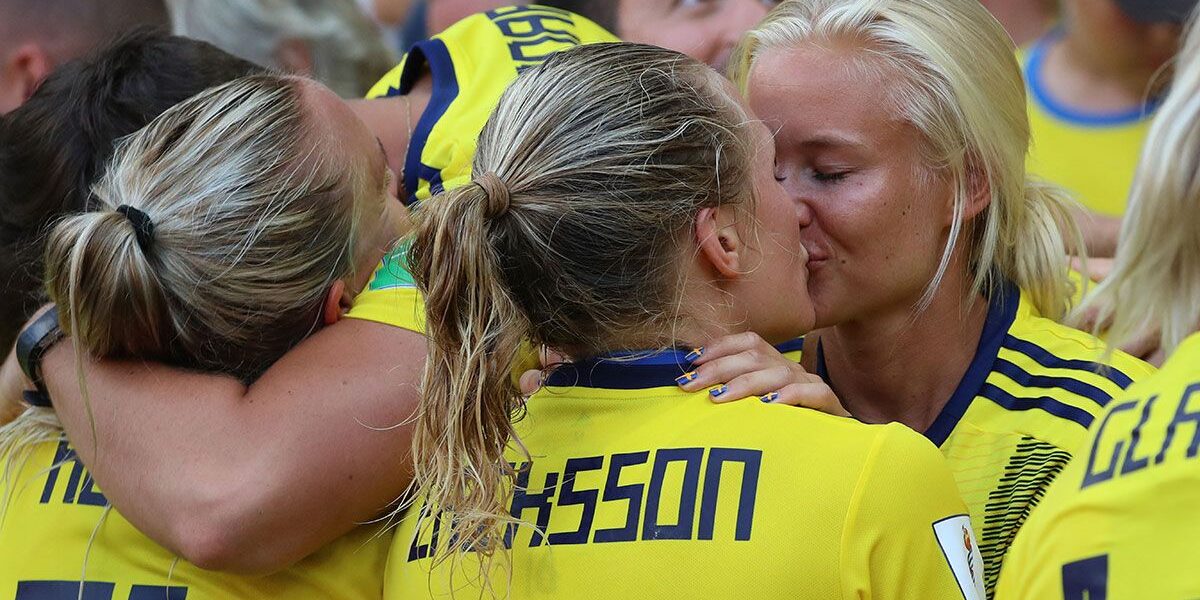
Kisses between female footballers and their girlfriends became a symbol of women's football at the 2019 World Cup in France after the kiss between Swedish player Magdalena Eriksson and Danish player Pernille Harder, girlfriends and players for Bayern Munich, was photographed.
Politics and social activism are part of the game in women's football. It's not just 22 players chasing a ball; their voices are also part of the game. This contrasts sharply with the men's game, where players speak out and express their opinions less and less.
How can the Racing players remain silent if hate crimes based on sexual orientation have increased in Argentina for the third year in a row?
Speaking in a context of violence
The National Observatory of LGBT Hate Crimes, part of the Institute Against Discrimination of the Ombudsman's Office of the City of Buenos Aires, reported that in 2023, there were 133 hate crimes in Argentina where the sexual orientation, gender identity, and/or gender expression of all the victims were used as a discriminatory pretext for human rights violations and violence. This figure represents an increase compared to 2022, when there were 129 hate crimes. The previous year there were 120.
This situation, of course, is not limited to the Argentine case. According to data from the International Lesbian, Gay, Bisexual, Trans and Intersex Association (ILGA), 62 UN member states still criminalize consensual same-sex sexual acts between adults.
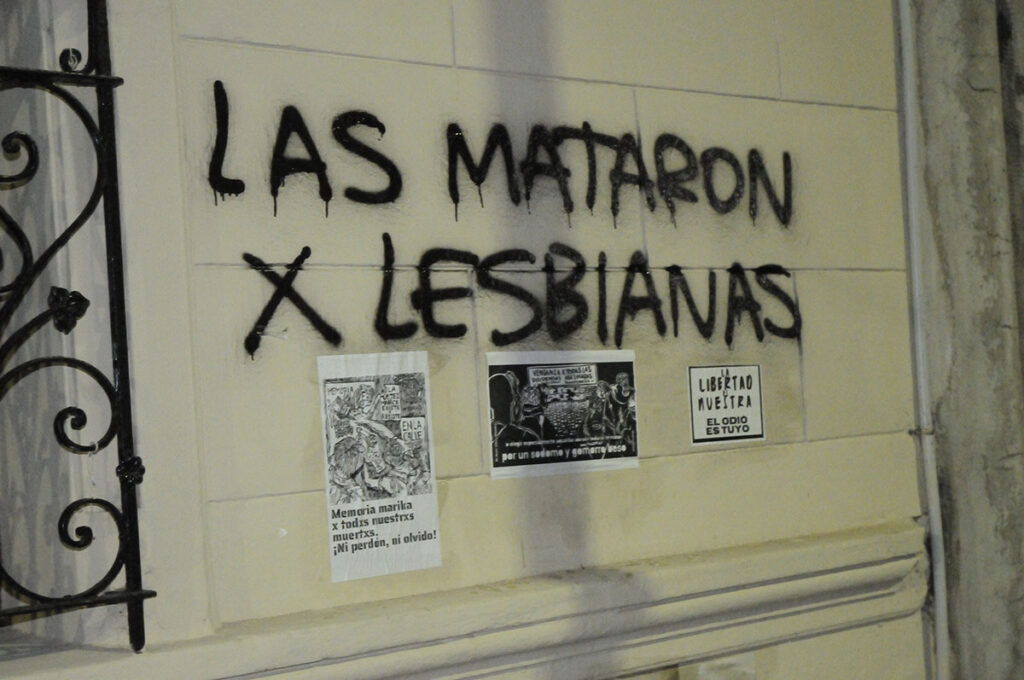
Photo: Ariel Gutraich.
The pronouncements that paved the way
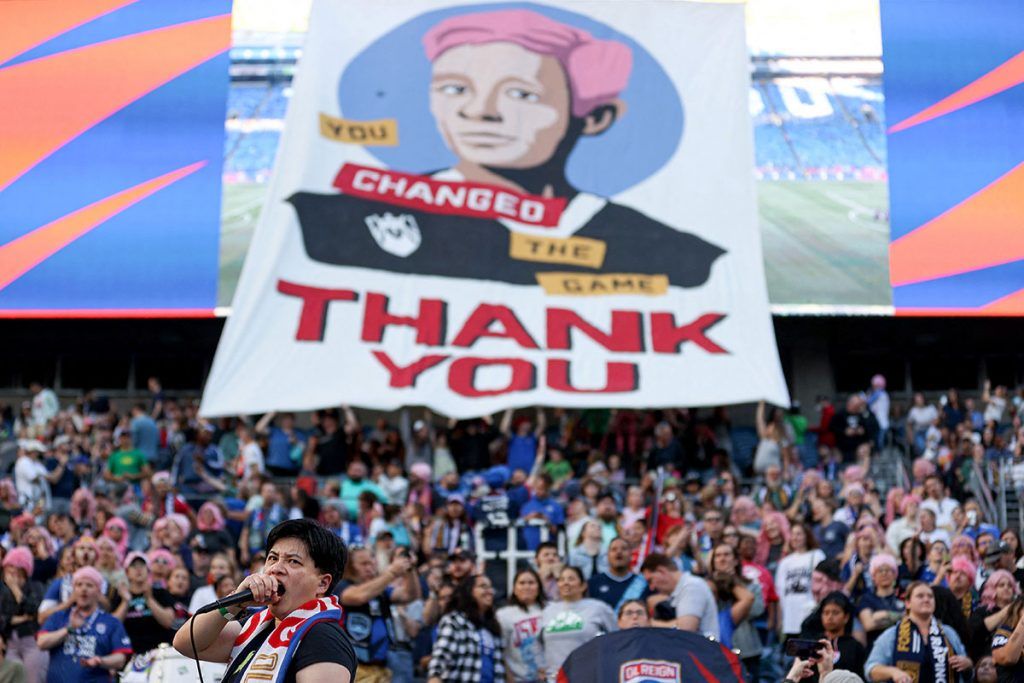
"I'm not going to the fucking White House. Their message excludes people who look like me. We don't fight for the same thing," declared US player Megan Rapinoe publicly at the 2019 World Cup in France, after being asked if she would visit then-President Donald Trump if they won the championship.
Rapinoe has been an activist for LGBT+ rights since she came out as gay in 2012. She used the popularity she gained from football—being one of the best female footballers of her generation—to break the taboo surrounding homosexual relationships in football.
"I suppose that, because I'm a woman and a lesbian, I feel greater empathy for people who aren't in a dominant position. It seemed obvious to me. When someone is drowning, are you going to help them or do you stay on the shore?" she declared a few years ago in El País .
Following her statements against Trump, the former president didn't remain silent and publicly attacked her on several occasions. Sue Bird—former basketball player, four-time U.S. Olympic champion, and Rapinoe's partner—defended her against Trump's comments and wrote a letter in 2019 titled "So the President f*cking hates my girlfriend." In it, Bird stated: "I think that by trying to help others, Megan has solidified who she is."
Women's football, like Rapinoe, has also consolidated its identity in recent years through the voice of its protagonists based on gender equality and the fight for LGBT+ rights.
This article was published by our partner media outlet, Tiempo Argentino.
We are present
We are committed to journalism that delves into the territories and conducts thorough investigations, combined with new technologies and narrative formats. We want the protagonists, their stories, and their struggles to be present.
SUPPORT US

FOLLOW US
Related notes


We are present
This and other stories are not usually on the media agenda. Together we can bring them to light.