

Maricas Bolivia, a movement that expands and diversifies the LGBT struggle
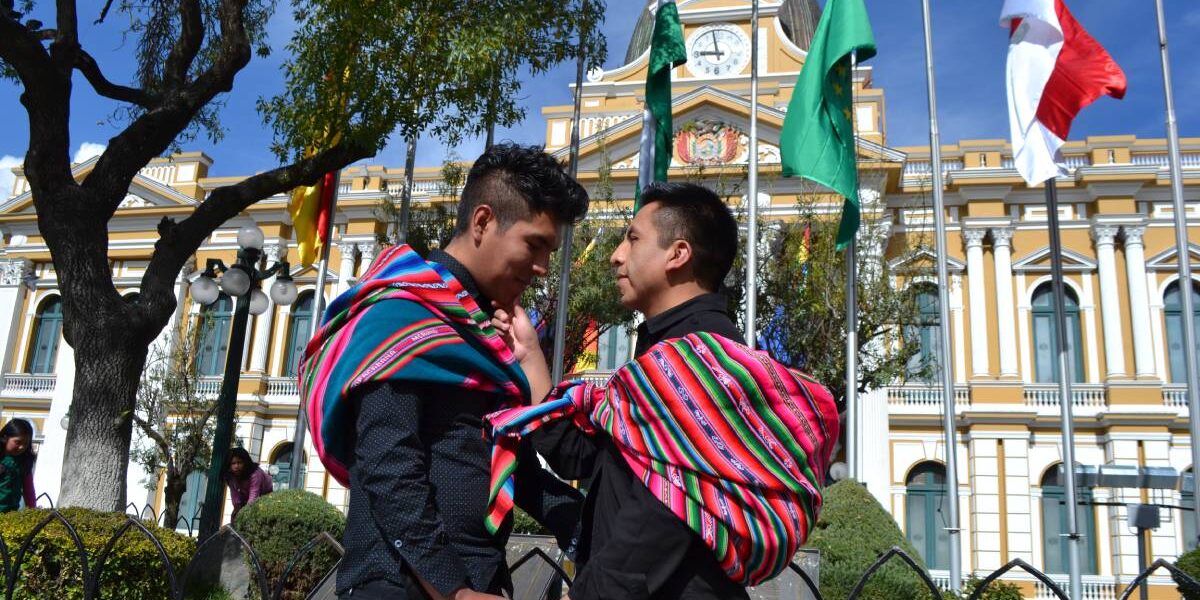
Edgar Solís Guzmán is one of the leading figures in the Maricas Bolivia movement. They assert that it was necessary to challenge the hegemonic image of LGBT bodies.


Share

The Maricas Bolivia Movement brings together diverse identities—Indigenous, cholita, and queer—from Abya Yala (the Americas), in a decolonial, intersectional, and feminist work. Their viral voice began to spread in 2010 with the program “Soy marica, ¿y qué?” (I'm a queer, so what?) on Radio Deseo, and since then, like other dissident movements, it has evolved to resist and persist. They inhabit the streets and social media with their message, but also with the invitation to collectively question everything.
The 'marica' in the name comes from taking that term, so often used to hurt, and turning it into a source of pride. “Without that feminist reflection, that refuge where the radio program was born, it might have been very difficult for us to achieve this reappropriation of the insult,” Edgar Solíz Guzmán explains to Presentes . “Understanding that it wasn't just activist work focused on rights. It was a social struggle against the patriarchal system, political powers, and colonial structures.”
Edgar Solíz Guzmán identifies as queer, poor, Quechua, brown, and the son of a chola. He is one of the people behind the YouTube channel of the Maricas Bolivia Movement , a community media outlet that is a leading voice for diversity. There, he is active both on the streets and on social media.
She recalls that in 2010, whenever an event was organized to talk about HIV, STIs, or a movie night, “the bodies were always white, Nordic, well-fed, muscular, masculine. That was the image being imposed on the social imagination. We, those on the margins, couldn't see ourselves as equals; we couldn't be or feel represented.” It was necessary to question that social imaginary that imposed “the gay body.”
What about Bolivian queer people from the periphery, the working class, Indigenous, Indigenous, migrant, fat, elderly, and HIV-positive communities who exist outside the colonial centrality of "gayness"? This question is part of the genesis of this ever-evolving movement. "It's a process of reflection that we continue to discuss." Because in the act of naming themselves, they assert that there is a decolonial practice that seeks to dismantle a linguistic apparatus used to displace, violate, and even kill.
Not a collective, not an organization: a movement
“We are not a fully formed collective, we don’t have legal status, we are not interested in having this institutionalization or being the official voice of any movement. We speak for ourselves, understanding that we are a movement, a collective, a community of gay men, butch women, and trans women who identify as Indigenous and also as sexually dissident,” Edgar explains.
For them, both NGOs and civil society organizations fighting for rights must sit down and negotiate with those in power, engaging in political advocacy. And while they acknowledge that several laws have been passed this way, the Queer Movement of Bolivia prefers to address issues and urgent needs from the streets. That's where those laws should be implemented. Their proposal even transcends the borders that define one country and another; they embrace the regional struggle.
Jiwasa is an Aymara word that speaks of the union between two. “The linguist Félix Layme suggests that naming a plurality of people is quite inclusive because it can refer to a same-sex couple, a same-sex couple, or a same-sex couple, all within the framework of a kind of community.” Thus, language itself opens up a perspective for reflecting on these struggles and reimagining the group dynamics that unite what are now called nation-states. This union is also found in shared geographies, landscapes, customs, languages, and feelings.
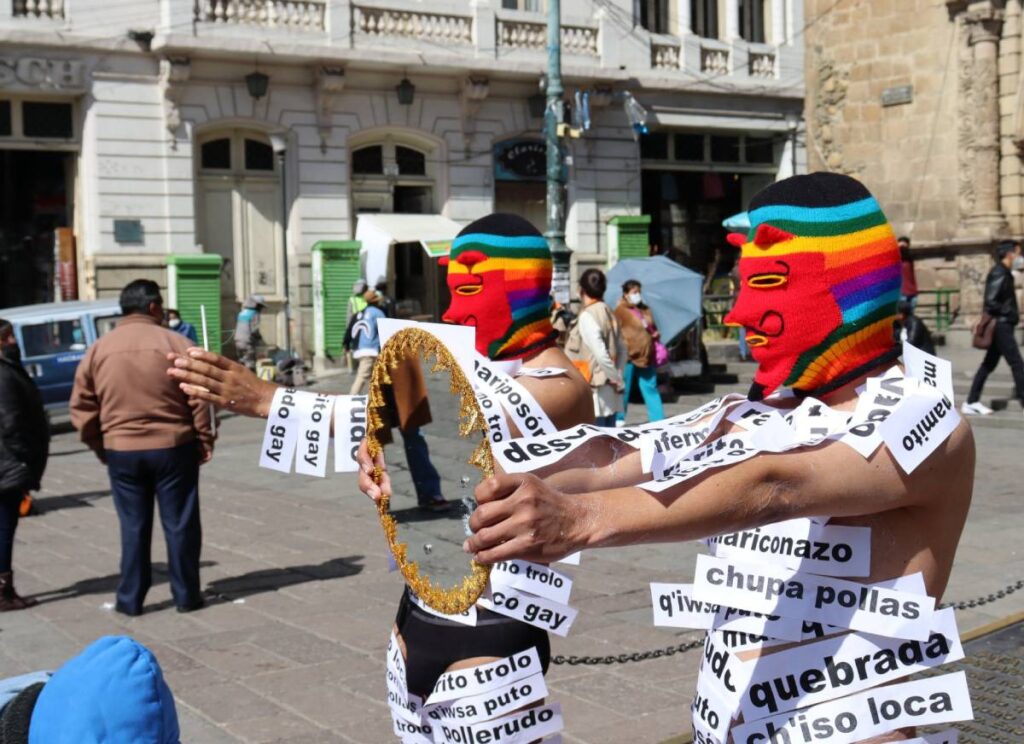
Plaza Mayor de San Francisco, La Paz. Production and photography: Movimiento Maricas Bolivia
Territory is identity
“I identify as a Quechua Indian because of my family's origins. My mother and father were the first to migrate, from the countryside to the city,” Edgar says.
Having grown up in the city, he, like so many other urban children, lost the possibility of a piece of land to return to. It is at this moment of feeling orphaned from their homeland that the term coined by the philosopher Adriana Guzmán embraces them: imagined communities.
“We are a generation orphaned in community. Because community beyond the physical land of the physical territory also exists as an affective community; there is a community of memory that we carry, understanding ourselves as daughters of Quechua people, daughters of cholitas, and daughters of Indigenous women. While there is no physical town to which we can return, there is an affective community in which to find refuge, support, confine, and meet.”
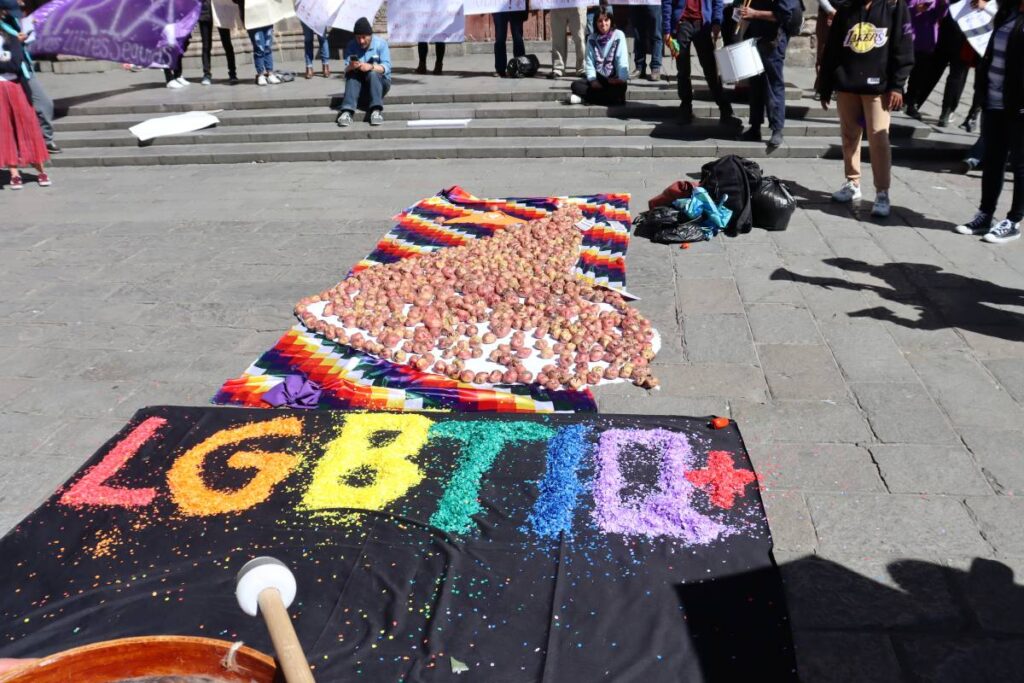
Plaza Mayor of San Francisco, La Paz. Production and photo: Maricas Bolivia Movement.
Breaking the patriarchy : a social struggle
For Maricas Bolivia, these struggles are all-encompassing: “It’s no use ending homophobia when the patriarchal system is going to remain in place.” It’s not just about waving flags with rainbow stripes and “symbols of gay civic pride” once a year, about upholding the logic of colonial desire that caters to the white subject, or about pride marches being just a “pride.”
For them, the challenge points toward a feminist horizon in the face of a system that is racist, misogynistic, and sexist. “The struggle isn't just for LGBT+ people for their rights; we understand it alongside our feminist comrades, alongside working-class and Indigenous women; it's for land and water alongside environmental struggles. It's intersectionality, understanding that it's one great social struggle.”
He explains that this is not a dispute in which the states are collaborating. Because as we speak, a road is still being built through the middle of the TIPNIS, “one of the few remaining natural and national reserve parks in Bolivia.” While decisions favor the powerful agribusiness owners of eastern Bolivia, Edgar denounces that these lands are not being granted to the indigenous peasant communities who claim them as an inheritance from their ancestors. “The governments are not resolving this, even though they call themselves indigenous and leftist.”
“There is a process of denial of diversity in indigenous communities because the struggle has focused on urban areas; the LGBT struggle in Bolivia has not been able to cross the border into rural areas.”
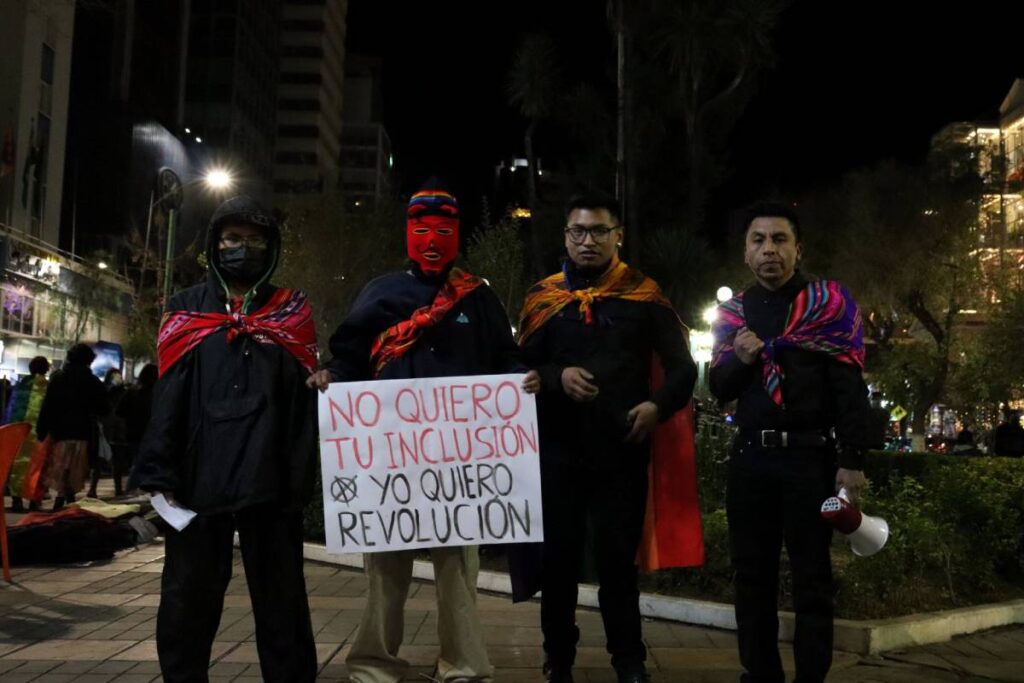
A hug for all the communities
Hatred persists in Indigenous communities. The narrative continues that there is no sexual diversity, that “everything is chacha-warmi,” an Aymara term referring to the binary gender system (man-woman) and complementarity. Edgar connects this to the fact that “the LGBTQ+ movement has instilled in the social imagination the image of urban, white LGBT bodies. So, of course, Indigenous communities are going to deny the existence of gay men, lesbians, or trans people in their communities.” This is what happens when struggles remain confined to urban areas and fail to reach rural communities.
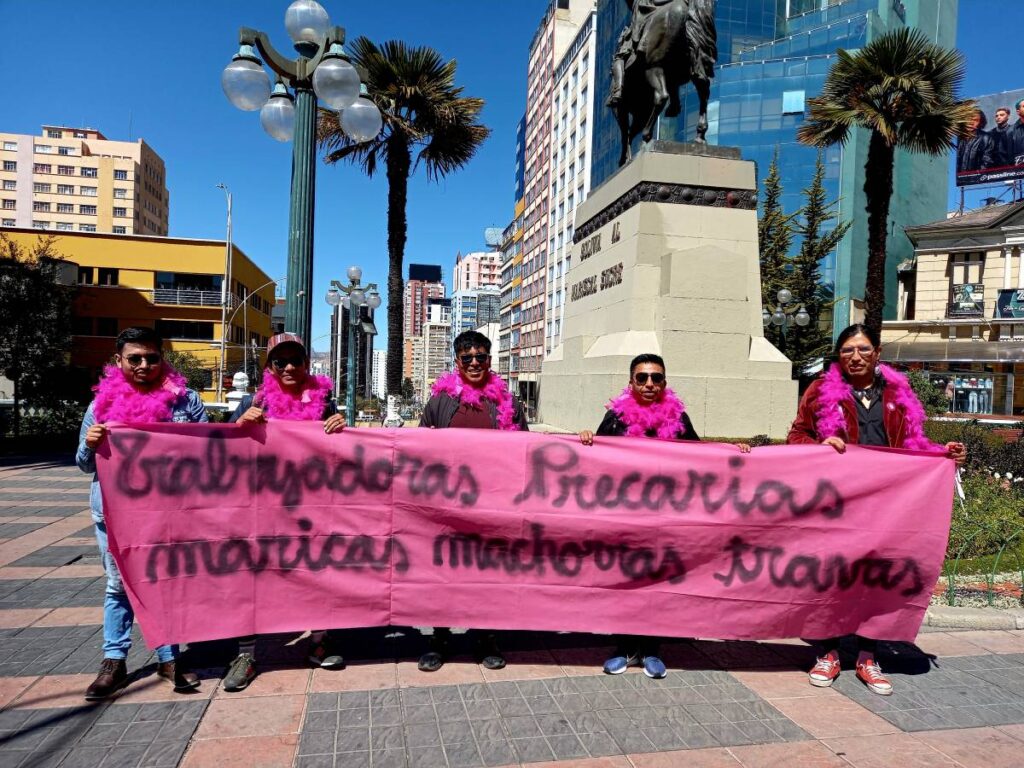
Historic center of La Paz. Production and photography: Maricas Bolivia Movement
Some women must flee rural life to protect their existence. Others leave to transition and then return to fight for the visibility of their voices and land rights. The role of Law 807 (Gender Identity) , but as Maricas Bolivia reiterates, these debates cannot take place without a presence in the streets and communities. “It’s important to understand that in these communities, you are first and foremost Indigenous, you do community work, you hold positions of authority within the community, and only later do you identify as a lesbian/queer/transvestite. These processes must be understood within the specific context of each Indigenous community.”
Edgar speaks, and what he says unites territories, urgent needs, and identities. He brings the law into the street, narrating with a critical eye, but to broaden its reach, its scope, and to force us to rethink ourselves. Feminisms, labor movements—all embodied in an Indigenous perspective that confronts us with the ever-present reality of racism. Sexual diversity and the demands here are seen as part of a whole that calls for decolonization and a regional perspective. The stories they tell and that precede them are part of a present that intertwines with their demands: “For us, what remains urgent is Indigenous identity, ethnic identities. But not conceived as an ancestral past, but rather from the perspective of the present.”
We are present
We are committed to journalism that delves into the territories and conducts thorough investigations, combined with new technologies and narrative formats. We want the protagonists, their stories, and their struggles to be present.
SUPPORT US

FOLLOW US
Related notes
We are present
This and other stories are not usually on the media agenda. Together we can bring them to light.