

Andrea, the third fatal victim of the lesbian attack and a survivor of Cromañón, has died.
This morning, Andrea, the youngest of the four victims of the lesbophobic attack in Barracas, passed away. The sole survivor, Sofía, needs help: how to contribute.


Share

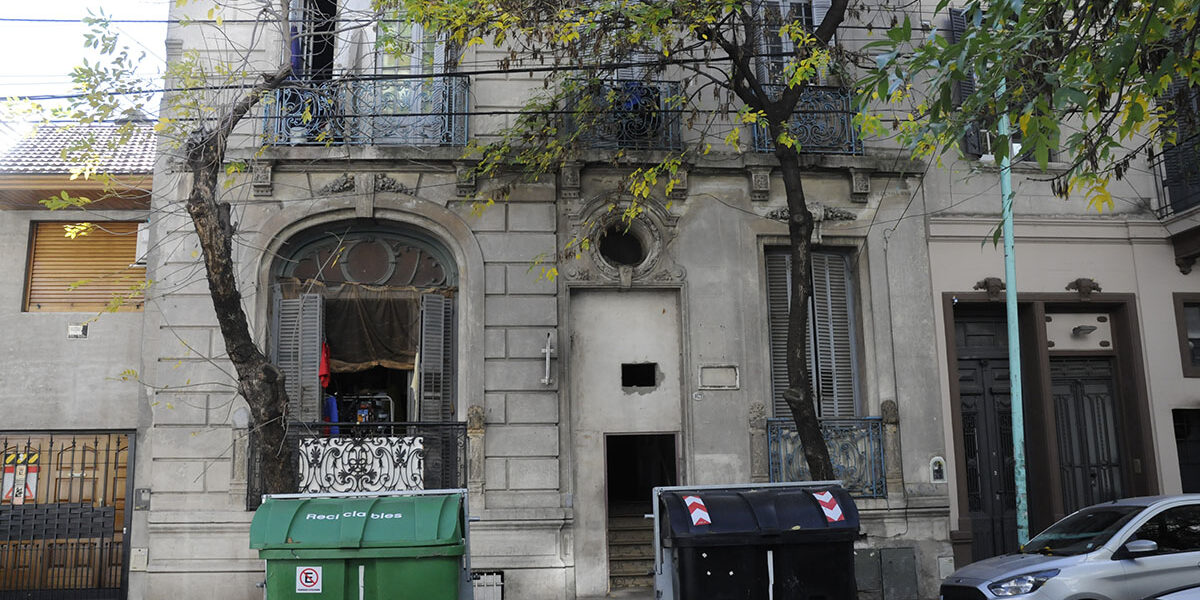
BUENOS AIRES, Argentina. This morning, the death of Andrea Amarante was confirmed. She was the third victim of the lesbian attack perpetrated a week ago at a family-run hotel in the Barracas neighborhood. She was 43 years old, the youngest of the four lesbians attacked, and a survivor of the Cromañón nightclub fire, which broke out on December 30, 2004, while a band was playing during a Callejeros concert. The fire killed 194 people and left thousands with lasting injuries.
Andrea had been in intensive care at Penna Hospital since last Wednesday, with burns covering 75 percent of her body. Her death was reported by the Buenos Aires City Health Ministry in a statement. No city authority condemned the attack or even mentioned it.

What happened on Sunday night
Last Sunday at 11:30 p.m., Justo Fernando Barrientos, who lived in an adjacent room in the same hotel, opened the door to the room where Pamela and Mercedes Roxana were sleeping and threw what is believed to have been a homemade explosive device. The Buenos Aires City Police ruled out the possibility of a Molotov cocktail. What is known so far is that the attack was aimed directly at the bed where the couple was sleeping. Andrea and Sofía, another lesbian couple, were also temporarily staying there. The underlying context of this hate crime—the housing crisis and the rise of discriminatory rhetoric—is explained in this article.
Pamela died hours after the attack, and Roxana died last Wednesday. That same day, Andrea was admitted to intensive care with burns covering 75 percent of her body. Sofía also has burns and is in shock, although she is slowly recovering.
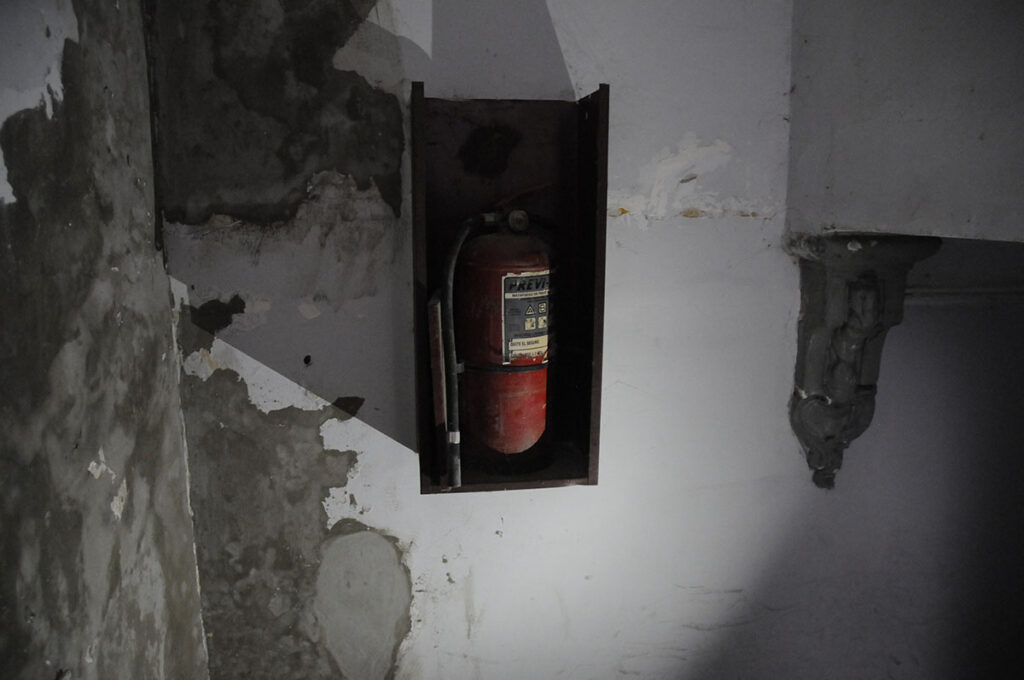
Witnesses told Presentes that the perpetrator had threatened the women and acted with cruelty, a sadly common trait in hate crimes. According to at least two people who live at the Barracas hotel and spoke with Presentes, including Diego Britez and Sergio Araujo, when the women managed to escape the room, Barrientos began to beat them. “When they came out of the room on fire, he hit them and pushed them back into the flames,” said Araujo. “There were five of us trying to pull him away from her so he would stop hitting her,” added Britez.
After setting them on fire, Barrientos—according to the police report—attempted to harm himself. He was hospitalized under arrest, charged with homicide and aggravated assault. The investigation is being handled by the National Criminal and Correctional Court No. 14, presided over by Judge Edmundo Rabbione, who declined to comment to this publication.
Complaint in Congress
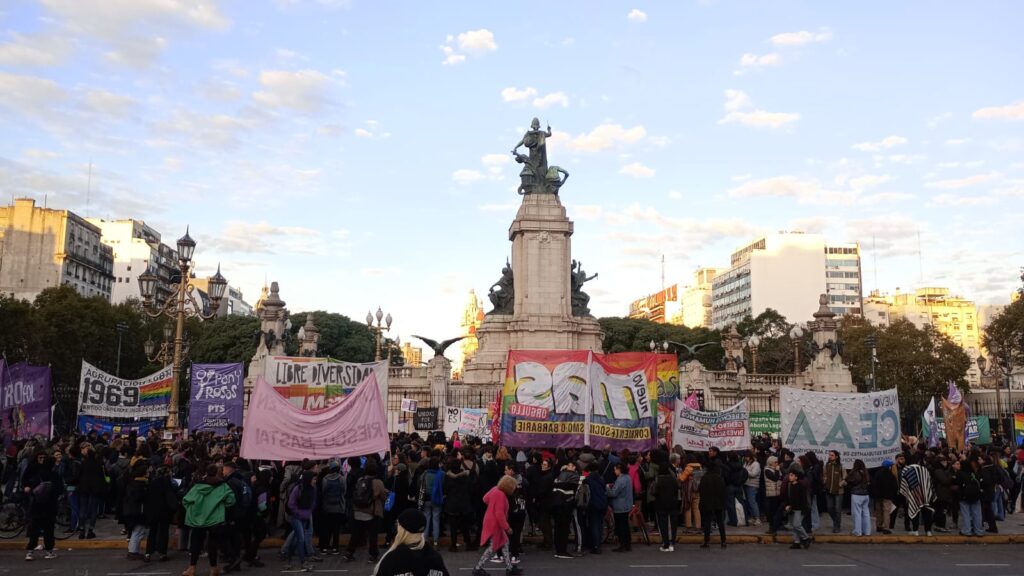
Friday, May 10, Buenos Aires. Photo: Celeste Madrut.
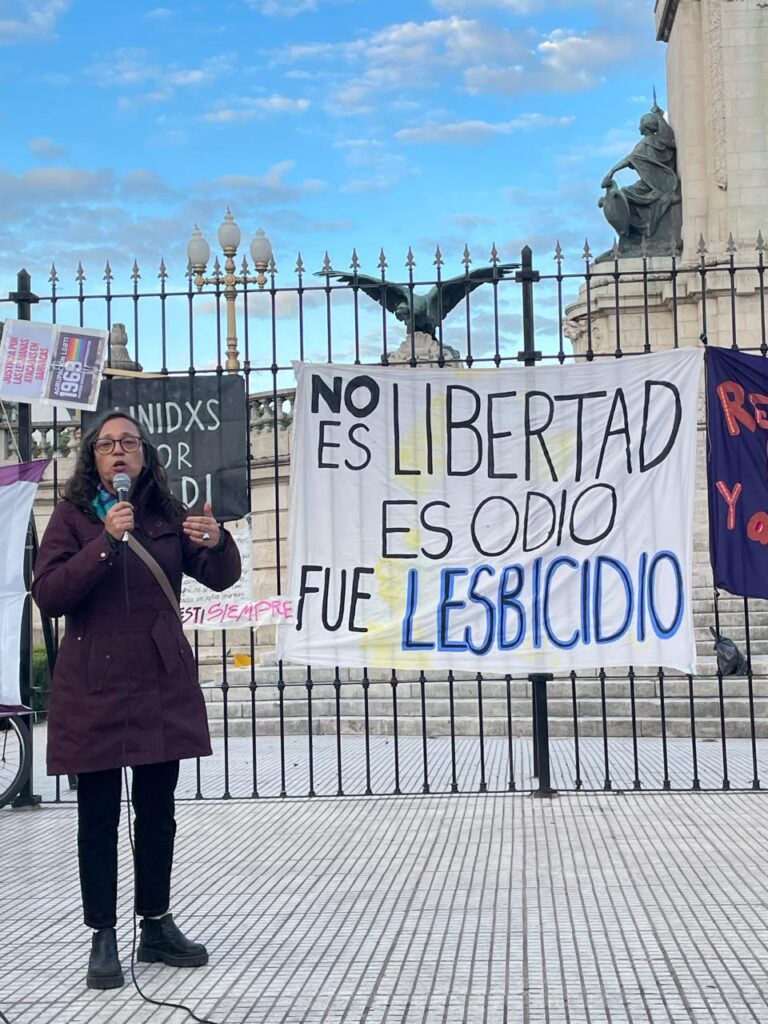
On Friday, in front of Congress, some 600 people—lesbian collectives, political and social organizations, neighborhood assemblies, including the one from Barracas— gathered to demand justice, to say, "This isn't freedom, it's lesbophobia ." Speakers took turns denouncing the gravity of the situation and demanding accountability from the State and the Justice system. They also discussed the climate fostered by hate speech.
"When the highest authority, the president—in our democratic culture—makes such misogynistic, lesbophobic, transphobic speeches, the consequences are impossible to measure, and they happen. And this is what happened in Barracas," said legislator Mónica Macha.
From Sueños de Mariposas (Butterfly Dreams), a colleague spoke about the need and the right of lesbians to live a dignified old age, one of the demands of lesbian activist Alicia Caf. Alicia spent the last years of her life working to organize a lesbian center that would bring together older lesbians in a space for community care and activism.
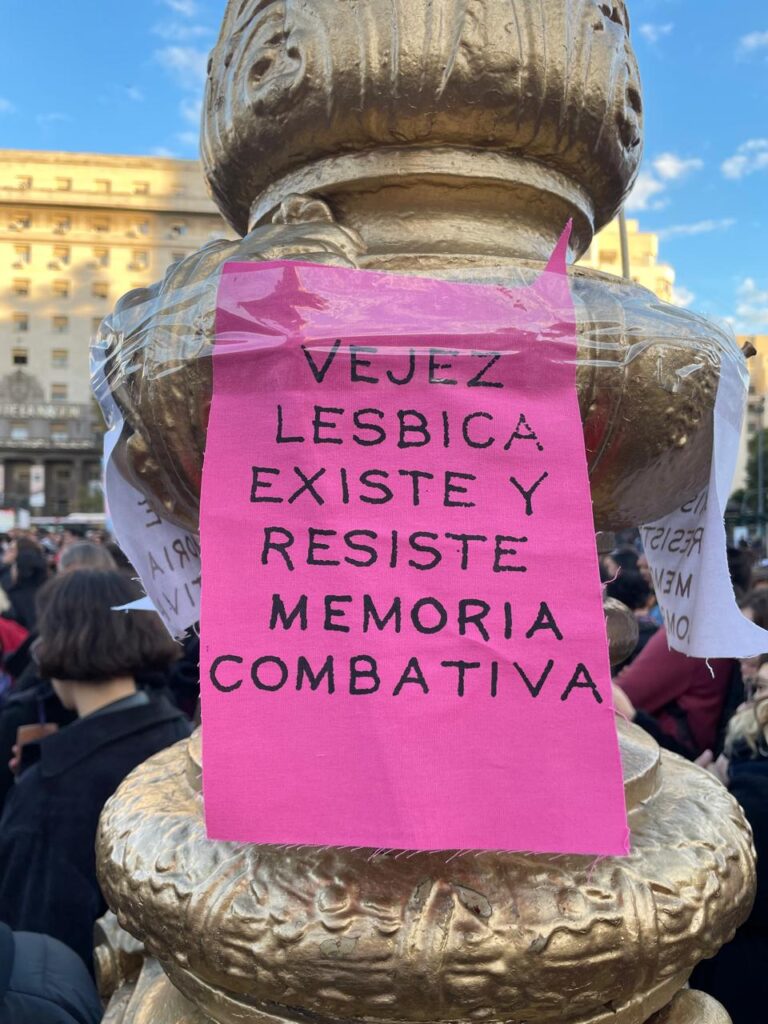
From Marabunta, Eva expressed: “In this society, being a lesbian, being poor, living on the street, or protesting is considered deviant. Faced with this patriarchal counteroffensive, we need to find forms of resistance that do not reproduce the cruelty with which we are being attacked.”
Also present was Georgina Orellano, who highlighted the prevalence of hate speech in the neighborhoods. “We need to go to the ground. Violence is taking root in the neighborhoods, and today hate speech is completely unchecked. Justice for our sisters and to prevent what happened in Barracas from happening again, to make them get their hands dirty,” Orellano said.
Also present was Georgina Orellano, who highlighted the prevalence of hate speech in the neighborhoods. “We need to go to the ground. Violence is taking root in the neighborhoods, and today hate speech is completely unchecked. Justice for our sisters and to prevent what happened in Barracas from happening again, to make them get their hands dirty,” Orellano said.
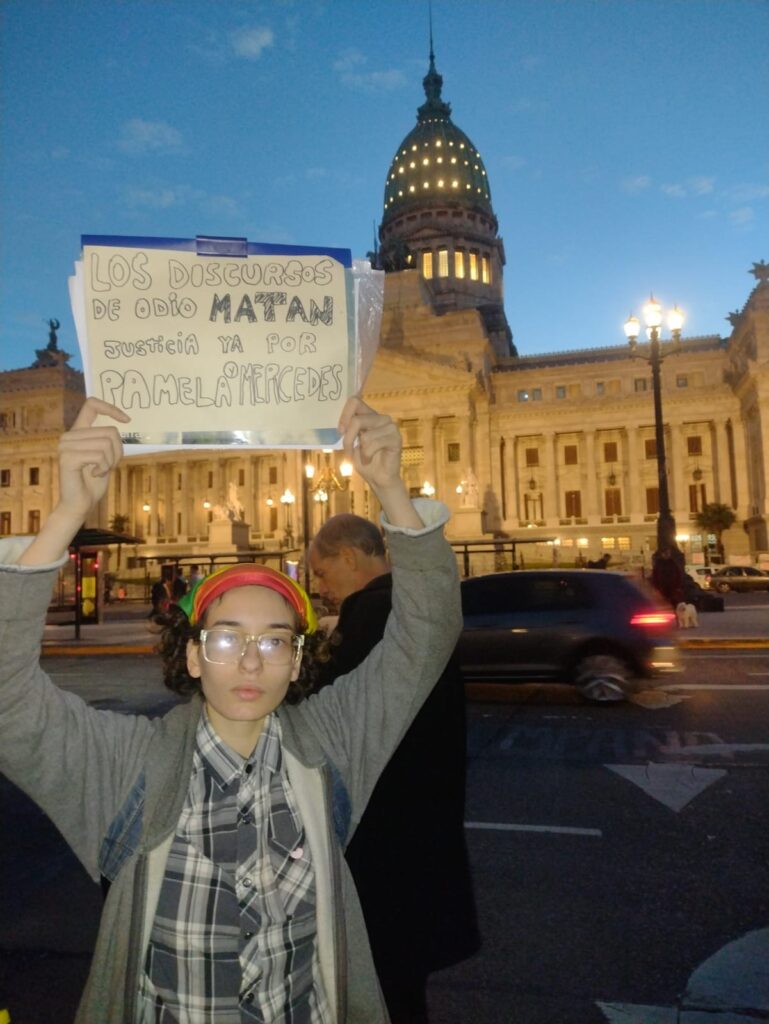
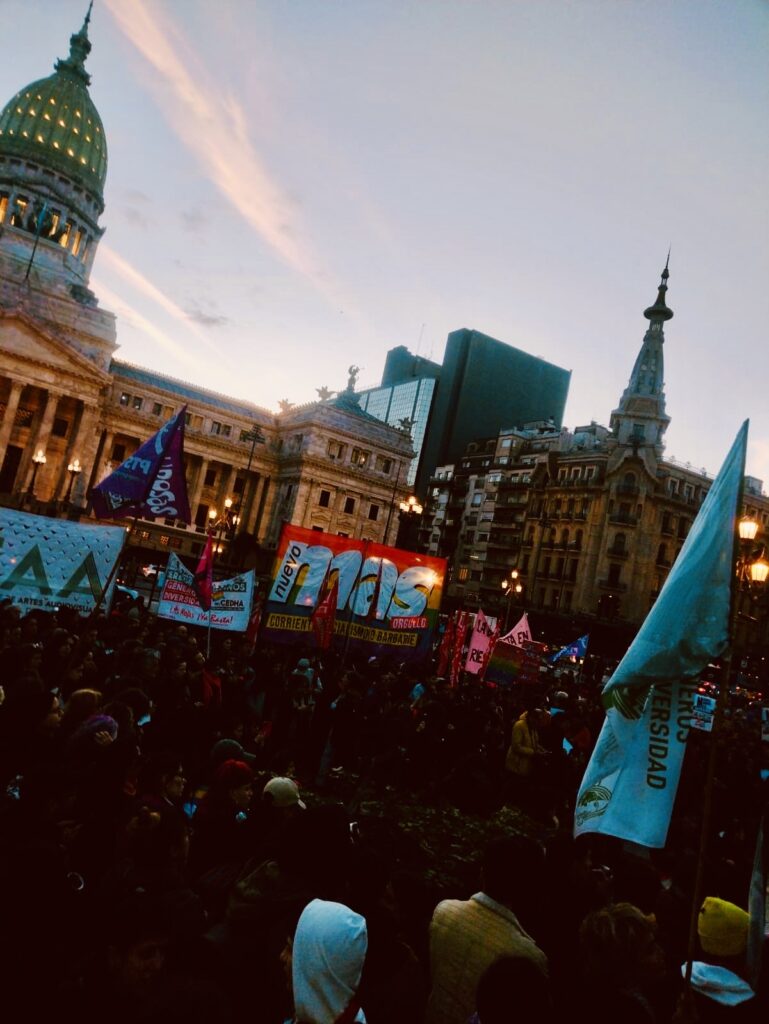
“The evidence shows that when crimes against LGBTI people occur, they are often preceded by a context of high dehumanization and discrimination,” says the IACHR in the most comprehensive report to date on the situation of LGBT* people in Latin America .
Solidarity appeal
The organizations that came together to demand justice organized a fundraiser to create a donation fund for the victims. Sadly, Sofía is the only survivor. She is close to being discharged from the hospital but has nowhere to go. “Repairing after so much violence will be costly… We raised money to support them in this process, we raised money to provide them with support. We want to ensure that those who were robbed of everything lack nothing.”
The account for donations is that of the Ni Una Menos Association. They request that when making transfers, the word "lesbians" be included in the reasons or motives.
The data is
Transfer Alias: ACIVIL.NIUNA.MENOS
Subject: lesbians
CBU 1910027855002701341732
Current Account Number 191027013417/3
Meeting scheduled for Monday
The Barracas Assembly is calling for a mobilization on Monday.
Dear colleague: if you use information from this note for your work, please cite Agencia Presentes.
We are present
We are committed to journalism that delves into the territories and conducts thorough investigations, combined with new technologies and narrative formats. We want the protagonists, their stories, and their struggles to be present.
SUPPORT US

FOLLOW US
Related notes


We are present
This and other stories are not usually on the media agenda. Together we can bring them to light.