

The plot behind the double lesbian murder and attack in Barracas: threats and cruelty
The lesbian couple who died after a man set them on fire in a family hotel had previously received threats. The plot behind the crime and attack against Pamela, Mercedes, Andrea, and Sofía: housing crisis and hate speech.


Share

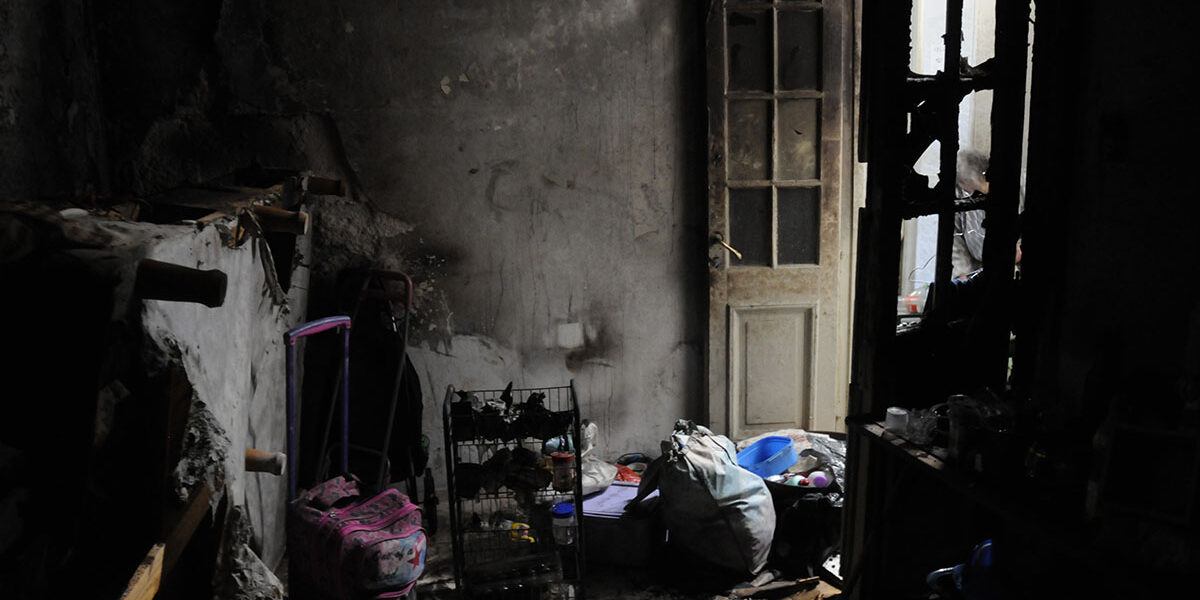
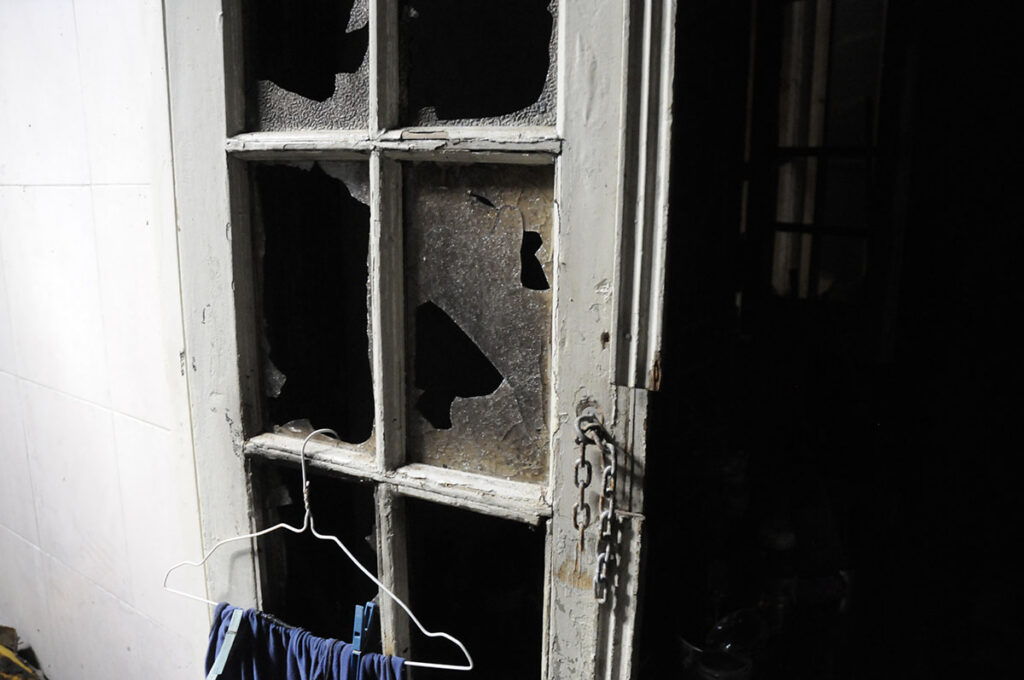
BUENOS AIRES, ARGENTINA . The door to the room where Pamela Cobbas, her partner Mercedes Roxana Figueroa, and, temporarily, Sofía Castro Riglos and Andrea Amarante lived, has shattered glass. In broad daylight, the Barracas hotel room shared by the two lesbian couples is shrouded in darkness: soot covers the walls and a few belongings in black. On Sunday, May 5, at 11:30 p.m., Justo Fernando Barrientos, the man from the next room, carried out his threat. He opened the door, threw in a homemade explosive device, set them on fire, and caused a blaze. After the attack, all four were hospitalized. Pamela and Mercedes died, Andrea remains in critical condition in intensive care, and Sofía is recovering.
Pamela Cobbas was 52 years old. She died hours after the attack due to the severity of her injuries. According to neighbors of the hotel, she sold sweets and cosmetics. On social media, she was openly lesbian and a supporter of LGBTQ+ rights. In some photos, she is seen with her son.
Mercedes Roxana Figueroa, also 52 and Pamela's partner, died on Wednesday. Neighbors reported that the women lived off odd jobs; some believe they sold handkerchiefs, while others say they worked cleaning clothes.
Andrea Amarante remains in critical condition, with 75% of her body burned, and was admitted to the intensive care unit the day before yesterday. Of the four victims, Andrea is the youngest at 43 years old. The Cromañón Coordinating Committee reported that she is a survivor of the Cromañón tragedy, the fire that occurred on December 30, 2004, in a nightclub in the Once neighborhood of Buenos Aires during a concert by the band Callejeros.
“Andrea received no financial assistance and is not a beneficiary of the Cromañón Victims' Health Program. Andrea was homeless and slept wherever she could. Twenty years later, all of Andrea's fears and nightmares came true,” the Cromañón Coordinator stated in a press release .
Sofía Castro Riglos, 50, is the only one with a favorable prognosis, as she is "responding well to treatment," according to the medical report. She was able to give her statement at the hospital on Wednesday.
“I had already threatened them”

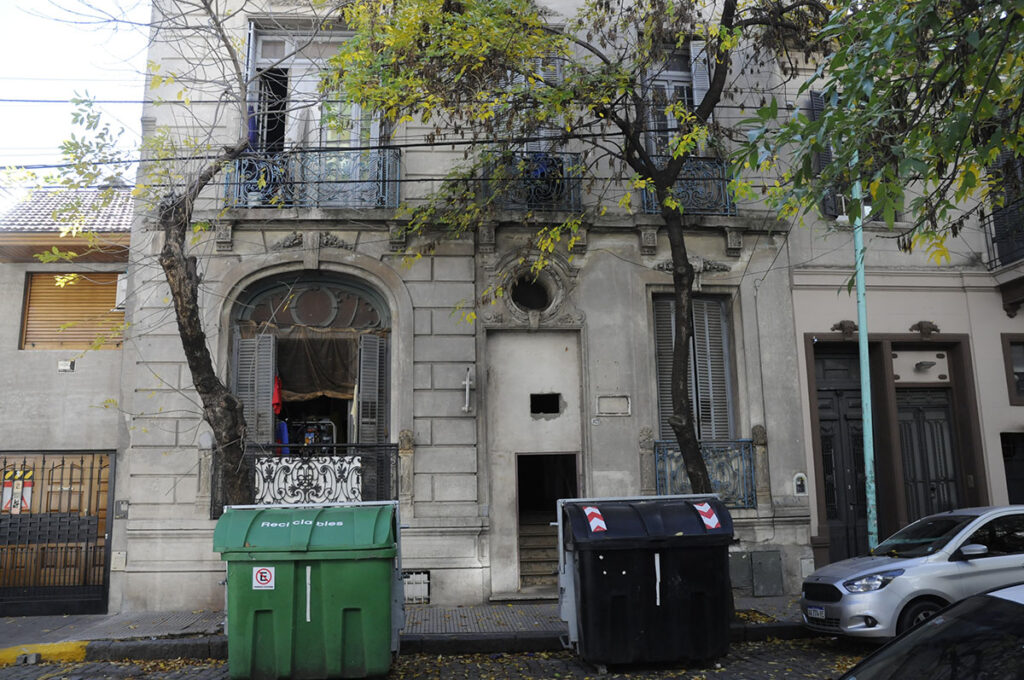
“He had already threatened them once. It was last Christmas. He told them he was going to kill them both (Pamela and Mercedes), and look what happened now,” says Diego Hernán Britez. A street vendor, at 51 years old he lives on the second floor of the family hotel located at 1621 Olavarría Street, in the southern part of the City of Buenos Aires, where the crime occurred.
Diego says he overheard several of the verbal arguments that took place between the man and the women during the two years they lived there. He acknowledges that Barrientos disliked their being lesbians and made this explicit.
“They argued a lot. They called the police once, and I understand they had filed a complaint against him. He called them 'monsters' because of their orientation . He called them 'dykes,' 'dirty fat,'” Britez shared with Presentes.
Barrientos is in custody, charged with homicide and aggravated assault. The National Criminal and Correctional Court No. 14, presided over by Judge Edmundo Rabbione, is investigating the case. When contacted by this publication, it was reported that, by order of the judge, no information about the case will be released except to the parties involved.
It was lesbicide: an act of hatred against lesbians
Since news of the attack broke, various activist organizations have been calling for it to be investigated as a hate crime motivated by the victims' sexual orientation. A rally will be held today at 5 p.m. at the National Congress, with similar events taking place in different parts of the country, under the slogan "It's not freedom, it's hate. It was lesbicide.".
“The attack fills us with deep pain and anger: it was not just any incident. It was an act of hatred towards lesbians . The crime occurred in a context of extreme poverty, where the four women lived crammed into a single room, and where LGBTQI+ individuals are daily targets of increased violence,” stated the Self-Organized Lesbian Collective of Barracas.
At the top of the stairs leading to the first floor, María Rosa Correa—89 years old and the owner of the house—was busy sorting through some of the belongings, leaving Pamela and Mercedes's room. “One of them, I don't remember which one, had a son. She told me once that she was going to visit him in Mar del Plata, where she lived,” she recalled.


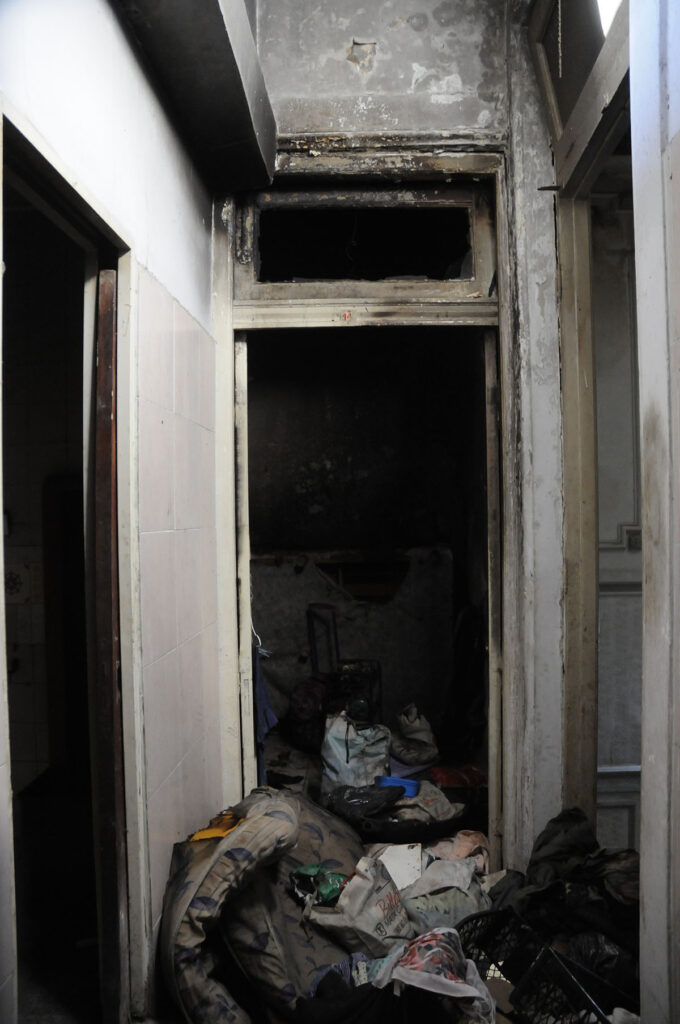
Much of the belongings, clothing, and other items were engulfed in flames and then flooded. Using a bucket to collect the water from the floor, a man who works as an urban recycler and is in charge of cleaning the hotel, along with María Rosa, packed the destroyed items into boxes and bags to be disposed of in the block's dumpster. One question remains: to what extent are crime scenes in these hate crimes preserved, beyond the initial investigation?.

The fire mainly affected the entrance area of the women's room. The double bed was there, along with other belongings such as a suitcase with a melted handle. Little remained standing: a pair of shoes, a 2023 planner, a baking book, and a fuchsia backpack with wheels, among other things.
One room away is the room of Fernando, the perpetrator. The door is secured with a chain that allows it to open about ten centimeters so his cat, which now lives with a family from the hotel, can come and go. He shared the kitchen and bathroom with Pamela and Mercedes, as with the rest of the apartment.
“They were very nice girls. He was too. They all paid on time, they didn’t have any debts. I never had any problems with any of them. For me, he was the devil. I can’t explain it any other way,” said María Rosa.

Some of the hotel's residents prefer not to talk about the relationship between Barrientos and her victims. "You know how lesbians are... they don't speak to men," commented one of the hotel's residents.
For Diego Britez and other neighbors, the situation was different. “There are many people here who think like him (Barrientos),” he said, referring to the prejudice and hatred against LGBT+ people.
“I don’t know why they say they were problematic. Just because they sometimes invited friends over, played music a little louder on a Friday, like anyone else, shared pizza and some beers. They weren’t problematic, but even if they were, it doesn’t justify what she did,” he asserted. And he acknowledged that Barrientos’s violent behavior was a recurring issue. “She’d already had problems before with a gay man who lived at the hotel. She made him leave. She threw a shoe at his door, yelled ‘faggot’ at him,” Diego recalled.

“He set them on fire and then beat them.”
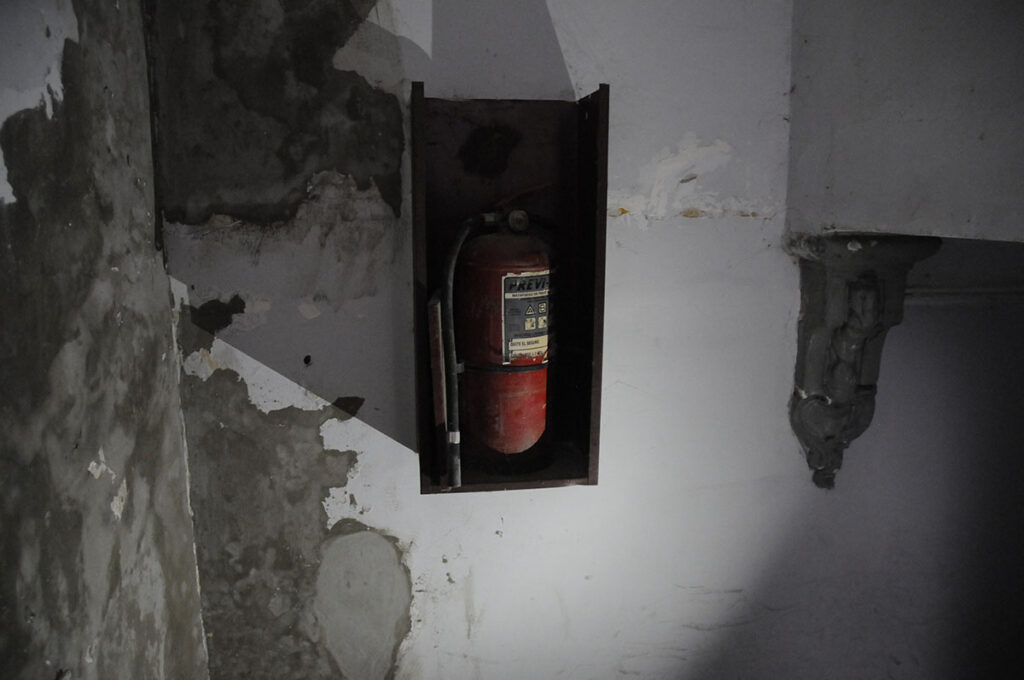
Sergio Araujo, 36, lives on the second floor of the hotel, and although he initially didn't want to talk, he eventually approached to ask how his neighbors were and recount what he had experienced. “When I saw the fire, I yelled for everyone. I woke my dad, who had already gone to bed, to come downstairs because we didn't know what might happen. When I went downstairs, I saw the girls. I went to get a fire extinguisher I keep in my room; I brought it from my mom's, and we used it to go into the room,” he said.
According to at least two people, including Diego and Sergio, when the women managed to escape the room, Barrientos began beating them. “When they came out of the room on fire, he hit them and pushed them back into the flames,” Araujo said. “There were five of us trying to pull him away from her so he would stop hitting her,” Britez added. Such brutality in the attack is a common feature of hate crimes.
The women were taken to the showers and placed under running water. “Several of us tried to help them. But some people didn't come to help. That makes me angry,” said Sergio, who hasn't been able to sleep well since the incident.
“I carried the oldest one on my back to go down the stairs. There she told me several times that it was him. I feel bad because we couldn't save them,” she said.
After the attack, the City Police found Barrientos in the bathroom on the second floor of the building with a sharp saw with which he had injured himself, according to police sources.
Housing crisis in Buenos Aires

The hotel has twenty rooms and houses about thirty people. The ground floor, first floor, and second floor with a terrace accommodate street vendors, self-employed workers, waste pickers, and retirees, who share bathrooms and a kitchen. A room costs around 50,000 pesos. Some come from having previously lived in shelters or being homeless. Others arrive there after being evicted.
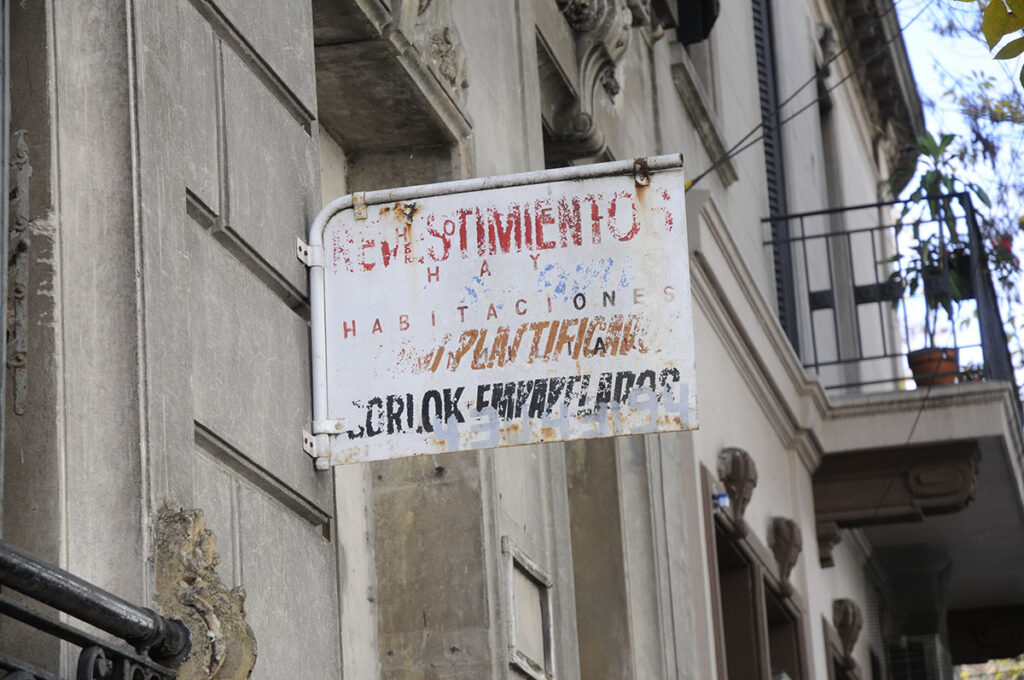
The building is a small, elegant hotel with aristocratic airs, now completely dilapidated. All that remains of its former glory is a grand marble staircase and an imposing facade, now crumbling. The owner bought it in the 1980s. Over the years, rising utility rates and an increasingly severe housing crisis in Buenos Aires have only worsened its condition.

The City of Buenos Aires “is experiencing a shortage of habitable housing,” according to the report “Housing Deficit in the City ” by the City of Buenos Aires Ombudsman's Office. Nationwide, one in three households in Argentina lacks adequate housing. This means a housing deficit affecting more than 4 million households . The main causes include: a lack of sustained housing access policies, the growth of short-term tourist rentals, the increase in vacant properties, and the closure of hotels and guesthouses.
Added to this are the problems brought about by Decree 70/2023 of the current government, which repealed the Rental Law. According to a national survey conducted in March 2024 by the National Tenants Federation and Ni Una Menos (Not One Less) , rental conditions worsened after the decree. In the City of Buenos Aires, the average cost of renting a two-room apartment rose from 179,832 to 249,942 pesos.
Following complaints received by the Ombudsman's Office of the City of Buenos Aires (CABA) regarding hotels and boarding houses in the city, the agency conducted an investigation to determine the living conditions in these establishments. Among the key findings, they noted that 45% of the surveyed establishments are overcrowded, and nearly 20% exhibit critical overcrowding levels: three or more people per room. Furthermore, 43% of the surveyed establishments have balconies without proper safety netting, 38% have cracks or falling masonry, and 55% lack electrical panels that are properly labeled or in adequate safety condition, among other issues.

More hate speech and attacks on diversity
For activists, this event is part of a broader context of escalating hate speech and attacks on sexual diversity. It was recently revealed that in 2023, Argentina saw 133 hate crimes in which the victims' sexual orientation, gender identity, and/or gender expression were used as a pretext for lethal violence. This figure represents an increase compared to 2022, when there were 129 hate crimes , and the previous year, when 120 were recorded.
Meanwhile, the national government and public figures affiliated with La Libertad Avanza are promoting hostile and misleading rhetoric about the LGBT+ community. Last week, lawyer Nicolás Márquez, a friend and close associate of Javier Milei, stated in an interview with Radio Con Vos that “when the State promotes, encourages, and finances homosexuality—as it has done until Javier Milei came onto the scene—it is encouraging self-destructive behavior.” He justified, using false data, why there should be no public policies in favor of the LGBT+ community.
The list of hate speech and discriminatory language is very long and continues .
“Endorsing violence and discrimination from the State generates more violence and discrimination in society. Hate crimes are related to the increasingly frequent hate speech in our country,” analyzed activist María Rachid, from the board of directors of the Argentine LGBTI Federation, in dialogue with this agency.
The organization 100% Diversity and Rights called for justice, stating that the Judiciary “must address this attack and murder with a gender perspective and as motivated by hatred toward lesbian identity.” They also demanded that the political authorities of Buenos Aires and the National Executive Branch “condemn the act as lesbophobia.”
“We denounce the dismantling of national agencies and policies for protection against sexist and lesbophobic violence, such as INADI and the Ministry of Women, Gender and Diversity, and their programs for care and prevention against gender-based violence, gender identity, and sexual orientation,” they stated. “This did not occur in a vacuum, but rather within + people
The Ministry of Women and Diversity of the Province of Buenos Aires was the only institutional voice within the government to publicly condemn the attack. It did so through a statement, expressing: “Given the abandonment resulting from the closure of the Ministry of Women, Gender and Diversity, the INADI (National Institute Against Discrimination, Xenophobia and Racism), and other agencies that protected the rights of the LGBT+ population, this ministry urges the national government and the City of Buenos Aires to allocate all necessary resources to support the victims and their families, and to guarantee interventions with a gender perspective.”.

We are present
We are committed to journalism that delves into the territories and conducts thorough investigations, combined with new technologies and narrative formats. We want the protagonists, their stories, and their struggles to be present.
SUPPORT US

FOLLOW US
Related notes



We are present
This and other stories are not usually on the media agenda. Together we can bring them to light.