

Photo essay: four stories about trans people and work
Accessing formal employment is one of the main problems facing transgender people, according to a survey in Mexico City. The stories of Mónica, Zafiro, Desire, and Ángela tell part of that journey, which speaks to so many other stories across Latin America.


Share

MEXICO CITY, Mexico . In the latest survey conducted by the Center for Support of Trans Identities in 2020, which gathered the opinions and perceptions of 219 people from the trans community in Mexico City regarding human rights, access to services, and evaluation of public policies, finding formal employment stands out as one of the biggest challenges facing the trans community. Despite the recognition of gender identity, this alone is not enough to open doors to employment, and only 20% of those interviewed indicated that it had helped them find a job.
In an open-ended question about what they would ask of the public administration on their behalf, the transgender people surveyed responded: inclusion and access to jobs where they are not discriminated against and can achieve economic and social development like anyone else. Of the transgender people surveyed, more than 50% indicated having a bachelor's degree or other similar qualifications. But despite their level of education, 64% do not have formal employment that provides them with legally mandated benefits.
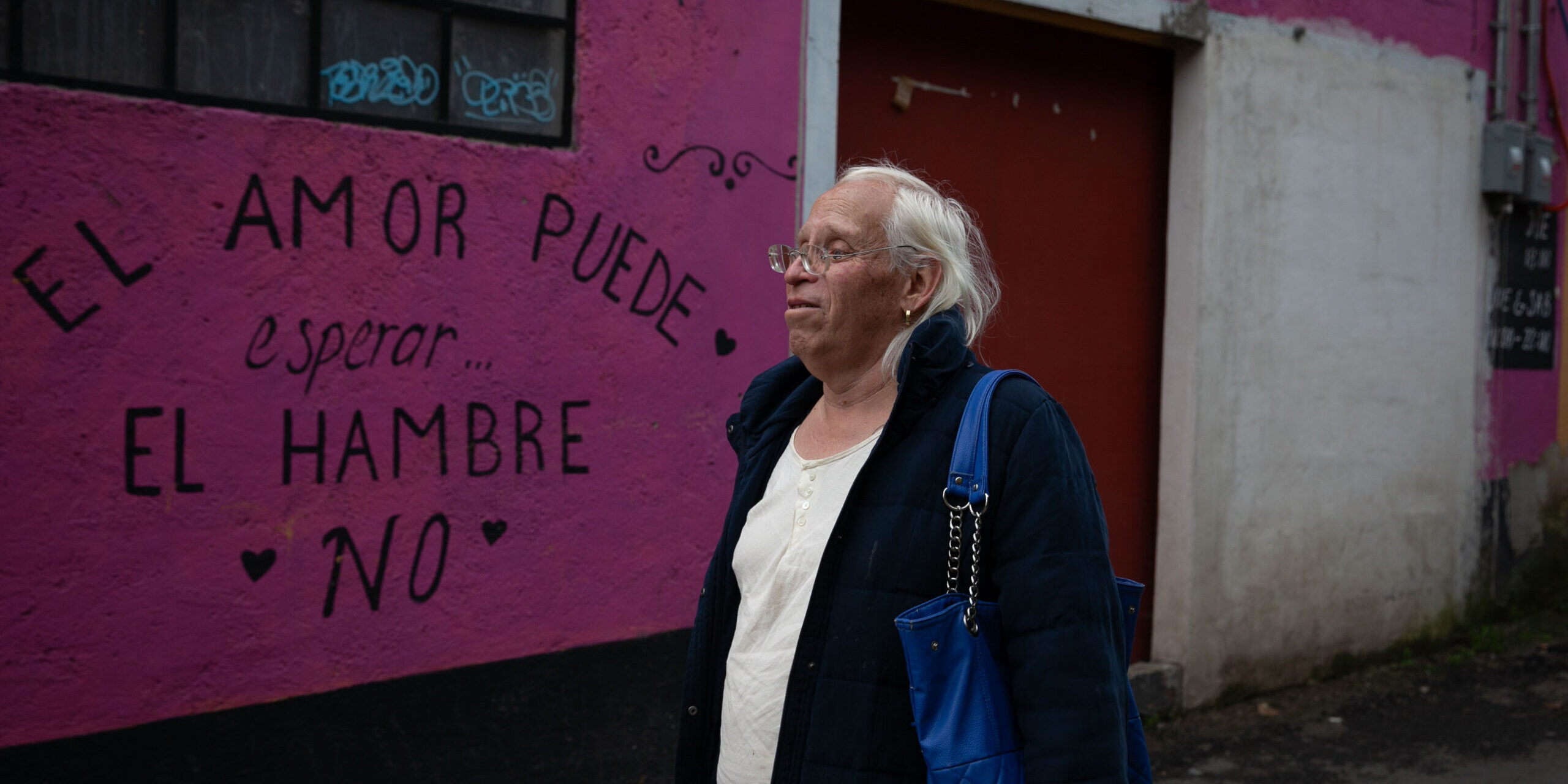
Monica
Mónica Calderón began her transition at age 47. A mother of four, she holds degrees in Political Science and History and is an English teacher. Before becoming Mónica, she worked teaching English in government institutions and private companies. She also worked as a political analyst and even ran for Congress in the 1990s with the National Action Party (PAN). Today, she makes a living by giving private English lessons and selling avocados on the streets of her town.

In 2000, Mónica first encountered the terms trans and transsexual . Upon delving into the topic, she realized that everything she had read perfectly described what she had felt and wanted to be for many years. With the help of psychologists, she was able to begin the journey of self-acceptance. After 30 years, she began her transition.

When she became Monica, the work problems began. They even told her to present herself as a man so she could keep her job. "For Monica to exist, Monica had to go out to work."

“Being a man means having many privileges, being a trans woman means having none.” Faced with financial hardship, she began working as a sex worker. She was frustrated that, despite having degrees and education, she was making a living this way.
After several years of that life, his health deteriorated. During a visit to the Condesa Clinic for medical tests, he met Alexa, his current partner. Now he has a roof over his head and has resumed teaching English, primarily online. In addition, in partnership with a neighbor, he sells avocados door-to-door in the streets of his neighborhood.

Currently, she is fighting to receive her retirement and pension money, as she has not been able to legally change her old name to Monica so that all her paperwork is in order.
Sapphire
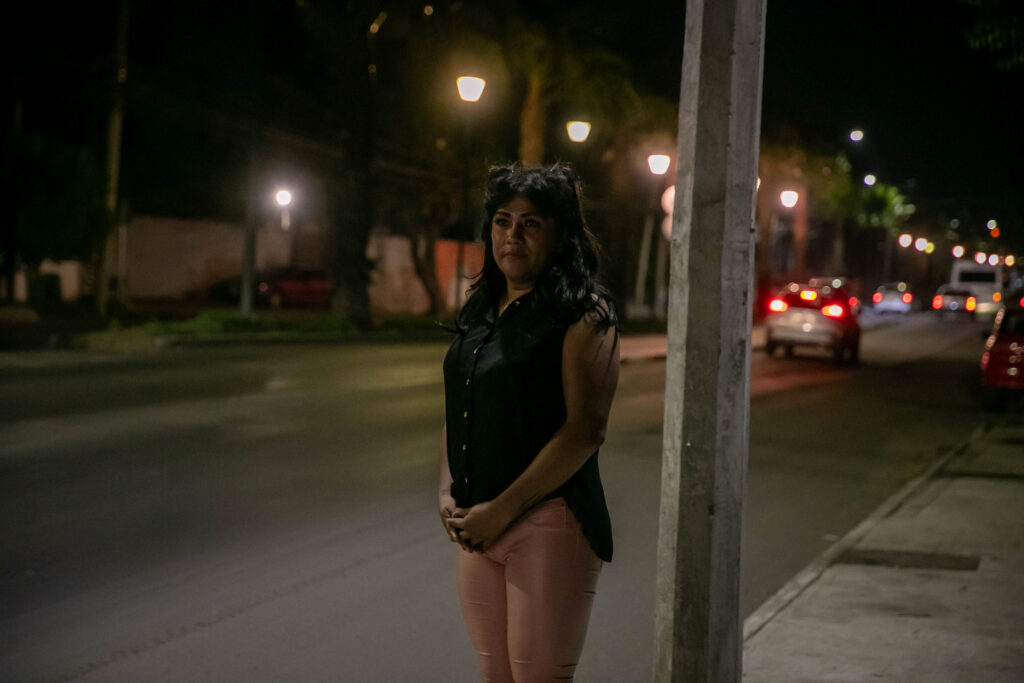
Zafiro Hernández works as a sex worker to support her mother and raise her niece, who has become her adopted daughter. Had she had her family's support during her transition, she would have liked to study gastronomy.
She is the eldest of four siblings in a family raised with machismo values, who work in commerce near the La Merced market in Mexico City. At 13, she knew she was attracted to men. When she told her mother, her mother replied that she couldn't say for sure, since she had never been with a woman. She suggested she leave those topics alone.
When her gender expression began to reflect the woman she felt she was, she faced rejection from her family. There were insults, mistreatment, and discrimination from aunts and cousins, who contacted people outside the family to threaten and beat her, going so far as to disown her, "because there are no faggots or lesbians in their family."
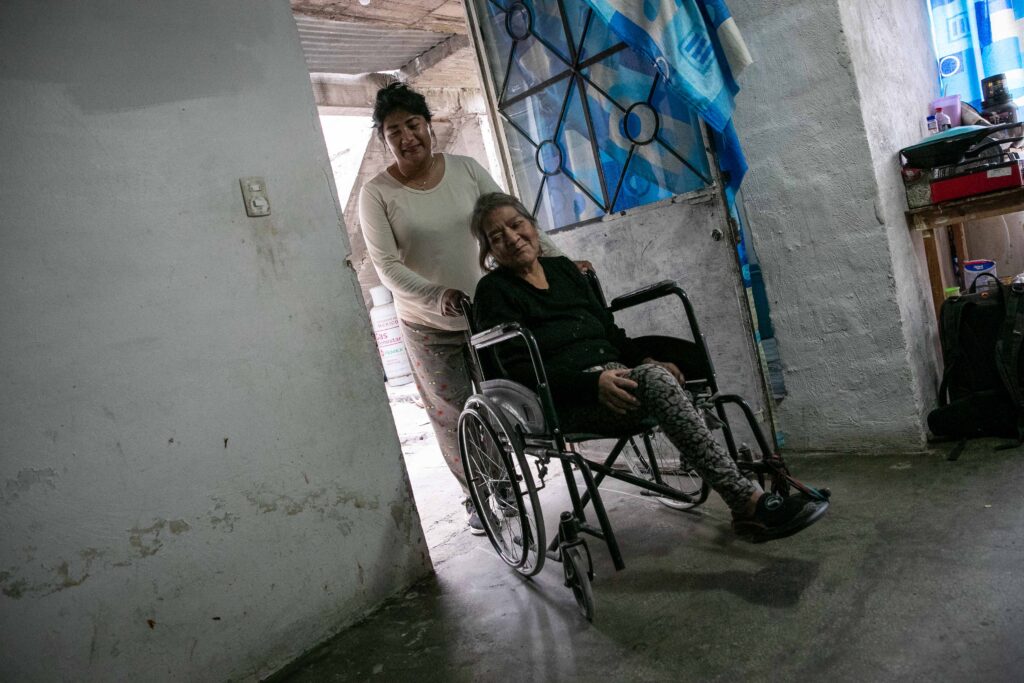
Due to the lack of documentation regarding her gender identity, she only found work in the informal market, on the street, or in beauty salons.

During the ten years she has worked as a sex worker, sometimes her mind goes blank and she asks herself, "Why am I here?" "It's like my mind leaves the plane, and then suddenly I come back. In those moments I've realized that for me this (sex work) isn't something good; you earn well, sometimes not, but it's all part of the game."

Desire

Desire Gómez thought that obtaining her legal documents proving she was a woman would solve her employment problems. “I had the appearance, I had papers, and I thought that was it; now you're a person, now you have value,” but reality didn't change much. She suffered discrimination during her school years. When looking for work, it always ended with “we'll call you.”

At 22, she started working at a customer service center for the country's largest mobile phone company. As a joke, a coworker gave her the first female name, which now also appears on her official documents: Emma. Her colleagues began calling her that. Her job became a safe haven where she felt accepted. She grew her hair long and started wearing earrings and makeup. After a year working there, Zafiro says management rehired its staff and asked her to change her appearance to that of a man. They told her that otherwise, she wouldn't project a good image and wouldn't be able to continue. Over time, other conflicts arose, such as issues with bathroom use and the correct use of pronouns, which ultimately led to her leaving the job.

During several job interviews, she faced rejection to the point where she was told they "didn't hire people like her." After a little over a year and a half of trying to obtain her birth certificate reflecting her new gender identity, an inconsistency was discovered in her father's birth certificate, which means her documents are still not in order.
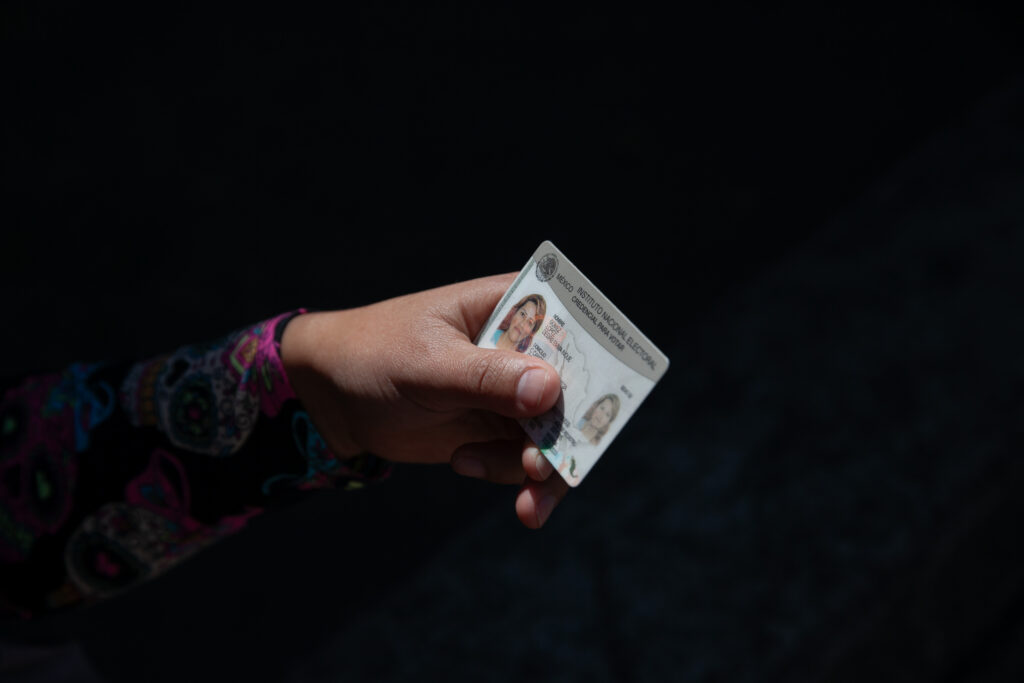
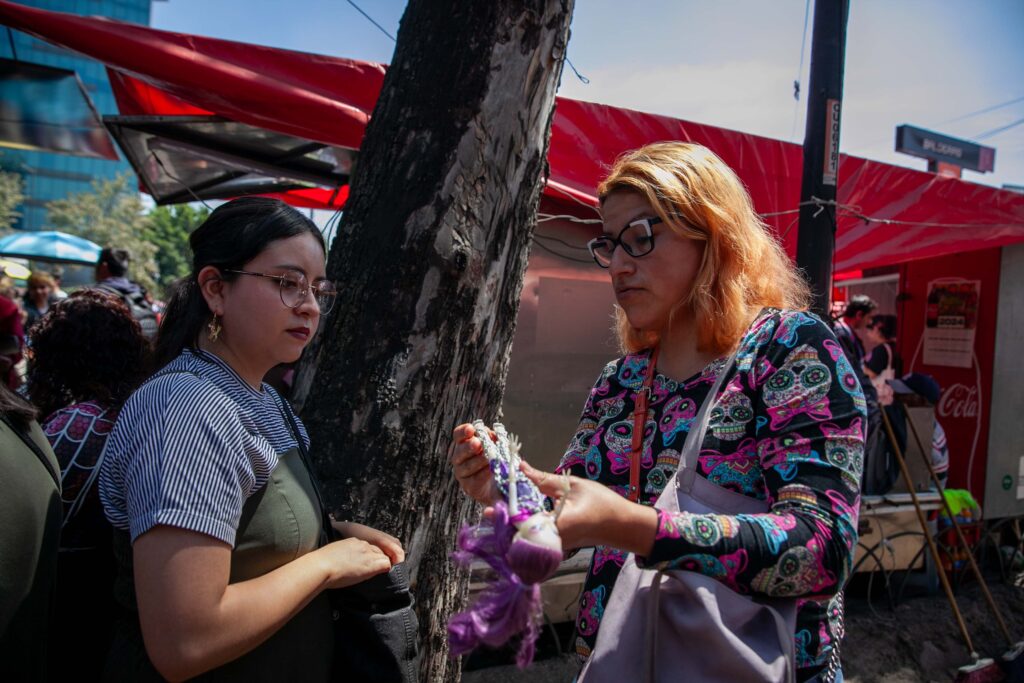
In the last year, she managed to get two jobs, both two hours from her home. Today she is unemployed and is getting by by selling her doll collection at a street market outside a subway station.
Angela

Angela Pineda began sex work almost at the same time she entered University City to study Accounting in 2001. And at the same time that her sister kicked her out of the house to avoid any kind of gossip.
She managed to find a place to live with a trans friend's family, along with her youngest sister, whom she has raised as her own daughter since her father abandoned the family. Encouraged by her friend, who works in the sex industry, she saw an opportunity to provide for her daughter and continue her studies.
She managed to find a place to live with a trans friend's family, along with her youngest sister, whom she has raised as her own daughter since her father abandoned the family. Encouraged by her friend, who works in the sex industry, she saw an opportunity to provide for her daughter and continue her studies.
Nearing the end of her degree (fifth semester), she began searching for a job related to her field. By then, her name no longer matched her physical appearance, and she was met with rejection everywhere she applied. "These are things that gradually destroy your self-esteem, hurt you, and clip your wings."
It was said that her studies had been useless if society couldn't accept her for who she truly was. She left university and later enrolled in the School of Fine Arts in Chimalhuacán. She faced transphobia but managed to graduate with a degree in Folkloric Dance.

She began the process to change her gender identity, but unlike today, where it is an administrative procedure, it took Ángela nearly four years and an expense of fifty thousand pesos to achieve it, despite the fact that the procedures were free of charge.
Between hormonal and psychological treatments, the help of a public defender and the favorable resolution of expert reports, on May 8, 2014 she managed to obtain the ruling to begin the process of obtaining her new birth certificate where she is recognized as a woman.


Dance gradually gained emotional and financial stability. Sex work continued only for a short time. After training, she now works in the laboratory at the Comprehensive Health Unit for Trans People (USIPT), administering HIV tests. Ángela's dream is to earn a degree in education and a master's degree in dance.
We are present
We are committed to journalism that delves into the territories and conducts thorough investigations, combined with new technologies and narrative formats. We want the protagonists, their stories, and their struggles to be present.
SUPPORT US

FOLLOW US
Related notes



We are present
This and other stories are not usually on the media agenda. Together we can bring them to light.