

Anastasia Benavente: “Six years after the Gender Identity Law, there are no trans people on Chilean television”
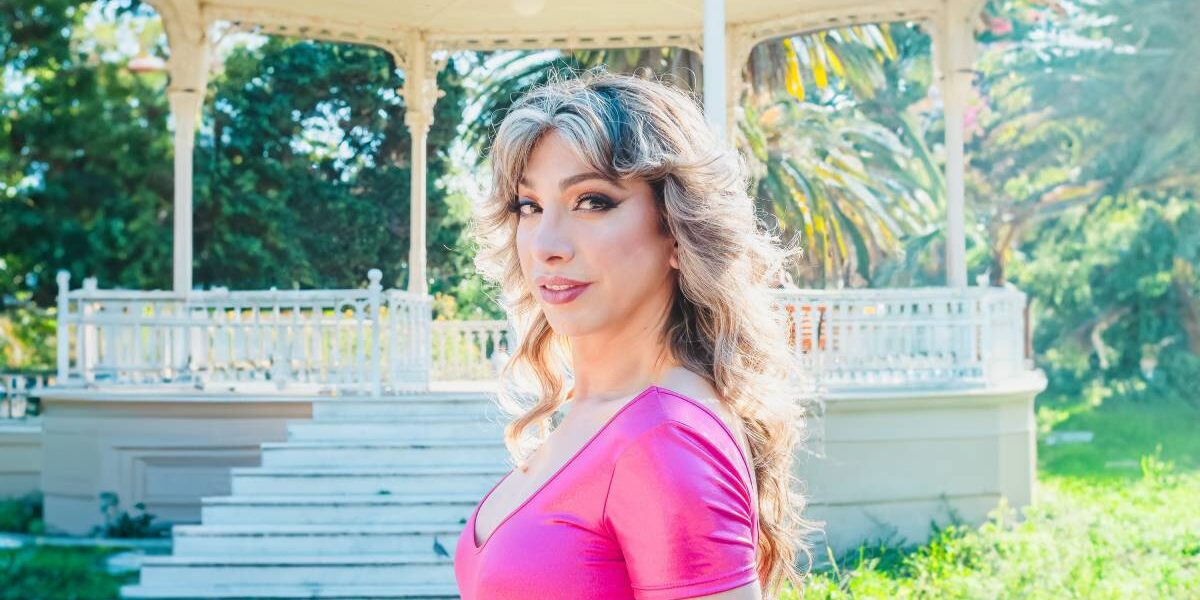
Anastasia Benavente was fined for a 2021 performance under the slogan "Church and State, Separate Matters." She has now launched a campaign to highlight the lack of diversity representation on Chilean television.


Share

BUENOS AIRES, Argentina. Chilean trans artist Anastasia Benavente was fined and ordered to remove content for a performance on Chilean public television in 2021 under the slogan "Church and State, separate matters." The Supreme Court ruled that it was an offense against the Virgin Mary. In response, the actress launched a "counter-offensive" to highlight the lack of diversity representation on Chilean National Television (TVN) .
It was a call to generate complaints to the National Television Council against the morning show "Buenos Días a Todos" on the public broadcaster TVN , in its episode on Wednesday, March 13, 2024. The date was chosen at random since for her "it could have been any day" because "their programs do not guarantee pluralism."
With this action, Benavente and the people who supported his cause managed to make that broadcast register the highest number of complaints so far this year in the Council: 176.
Hate campaign against Anastasia
On August 21, 2021, Benavente performed a piece that was broadcast on the program “Las Gansas” on La Red TV . The broadcast received 685 complaints to the National Television Council . The event garnered widespread media attention, and the artist was subjected to harassment, online stalking, and death threats. As a result, she went into exile in Buenos Aires, Argentina, for two years.
“After the performance, a wave of accusations came out in many media outlets, along with hate messages on social media and death threats. Many job opportunities were also closed to me, including in some LGBTQ+ spaces. Because of this, I opted for sexual exile, which is the term we trans and travesti people use when we have to migrate from our territories precisely because of persecution, in this case ideological and sexual ,” she told Presentes .
Furthermore, on December 15th of that year, he received a writ of protection filed against him by lawyers Macarena Bustamante Sinn and Álvaro Ferrer del Valle. The document refers to Benavente using male pronouns, as did several Catholic media outlets of the case, in violation of the Gender Identity Law .
“With each notification, they would come back to my house to ask for me. The whole building knew I was in legal trouble. I was criminalized simply for doing a performance with clearly anti-clerical content , but in no way intended to directly offend the Virgin Mary. It was a critique of the institution of the Church, under the slogan 'Church and State, separate matters',” she explained.
The court's ruling
The case reached the Supreme Court, which ruled against Benavente. Throughout the legal process, Anastasia did not disclose the situation on the advice of her lawyers, but upon reaching this stage, she decided to make it public.
“Having exhausted all appeals, the case is lost. The Chilean state considers me guilty of offending the Virgin Mary. While I am not Catholic, my criticism has always been directed at the Church. I understand the cultural value of the Virgin as a woman and mother, and the importance she holds for many people in Latin America and the Caribbean,” explained Benavente , who received support from lawyers at the Corporation for the Promotion and Support of People's Rights (Codepu) during the legal proceedings.
“Although the State declares itself secular, we see how the Catholic Church still has influence on decisions and is still listened to as a valid and authoritative voice on certain issues. They show us that this is the path to follow, and if you deviate from that path you can get into trouble, as happened to me and so many other people who disagree with this model, which has to do not so much with religion itself, but with the institution of the Church,” he emphasized.
The artist and teacher decided not to take the case to international bodies due to the emotional toll it had taken. "My body and soul are begging for a break from so much violence ," she said.
For a television without gender stereotypes
Benavente will comply with the court's ruling, which includes a fine and the removal of content related to the performance from her social media platforms. However, she hopes this will not be repeated with future generations. In this regard, she launched a "counter-offensive" to ensure that "public television abandons its sexist approach and includes LGBTQ+ individuals in its various programs."
This campaign, Benavente indicated, is based on Law 18.838 , which regulates television in Chile. Article 1 of this law expresses the principle of pluralism: “respect for social, cultural, ethnic, political, religious, gender, sexual orientation, and gender identity diversity, and it is the duty of television service concessionaires and permit holders, regulated by this law, to observe these principles.”
TVN is Chile's public television network. According to the teacher, while the channel should "exercise leadership in pluralism," in reality, "quite the opposite" is observed. "Their content perpetuates gender stereotypes. They don't promote equality, nor do they contribute to the spiritual or intellectual development of children and young people with a gender perspective. By not including quality information about identity development in their programming, they violate fundamental constitutional rights, as well as international treaties ratified by Chile," the artist explained.
“Television is a screen where gender stereotypes continue to be perpetuated. The representation of trans people is practically nonexistent, or if it does exist, it's linked to celebrity gossip, entertainment, and even ridicule. That's far from what we really want as a community, which is to be included and integrated into society in different jobs and spheres. It's unacceptable that six years after the Gender Identity Law, we still have no representation on television,” she explained.
With this “counter-offensive,” Anastasia hopes that the mainstream media will reflect on the role of dissidents and sexual diversity within their platforms. “Also, that they include trans people on their various programs. That we aren’t just invited as a joke, but rather to give our opinions on these issues. We have much to contribute through our experiences of vulnerability and criminalization to help build a more just and dignified society,” she concluded.
We are present
We are committed to journalism that delves into the territories and conducts thorough investigations, combined with new technologies and narrative formats. We want the protagonists, their stories, and their struggles to be present.
SUPPORT US

FOLLOW US
Related notes



We are present
This and other stories are not usually on the media agenda. Together we can bring them to light.