

Counterimage: the exhibition that challenges gender stereotypes in art
Flor Capella—illustrator, designer, and teacher—conducted visual research on gender representations and roles in art history. Contraimagen is also a counter-narrative: she reinvents iconic works, such as portraits of historical figures and Madonnas, through drawing.


Share

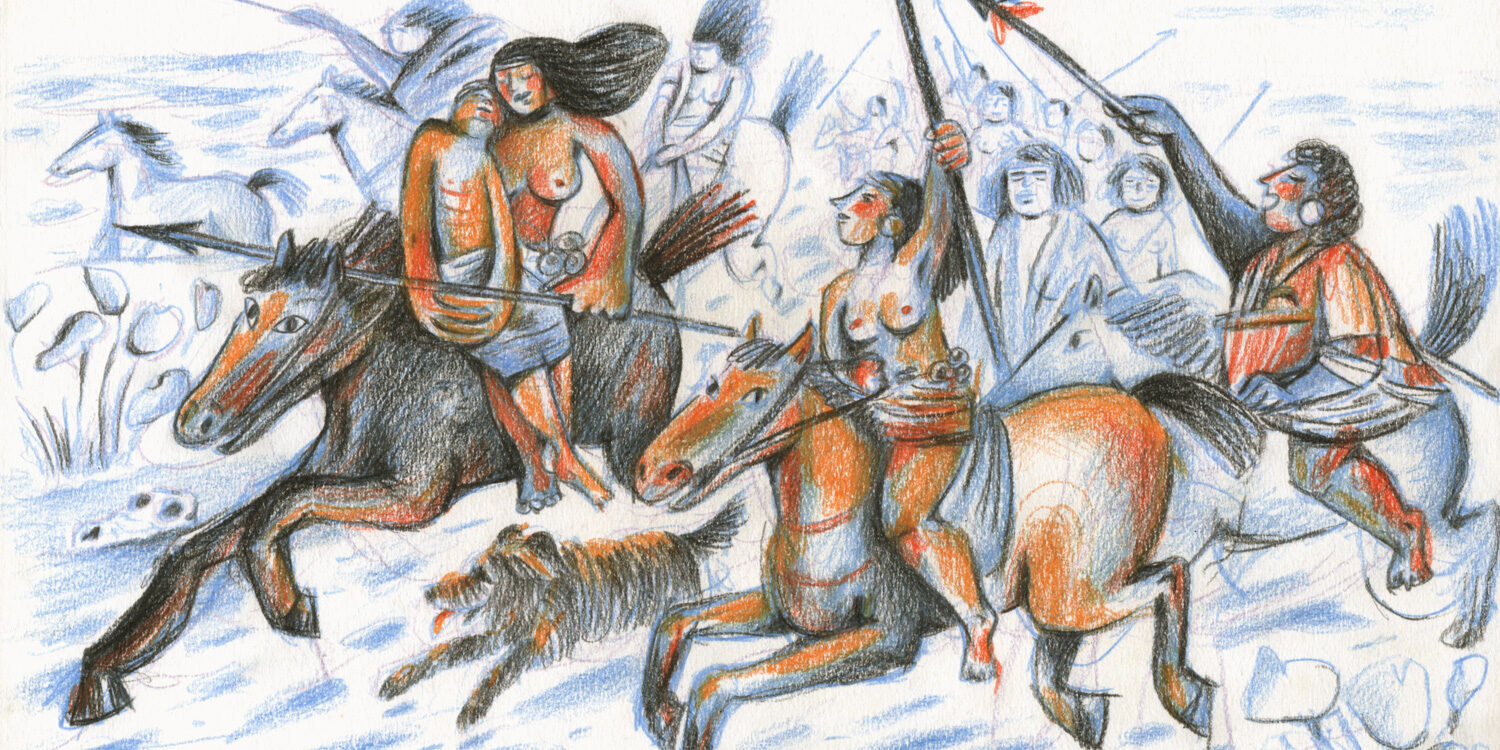
Imagine walking into a museum and finding an entire wall covered with images of "heroines" who fought for Argentine independence. A series of Madonnas carrying their children, or a Moses in drag. Difficult, right? That's the premise of "Counterimage," an exhibition of drawings and illustrations by Flor Capella, curated by Julia Masvernat, which has arrived at Microgalería to dismantle the gender stereotypes ingrained in traditional art representations.
The project was born in 2020, the brainchild of Capella, an illustrator—whose images are part of Presentes' identity—a visual artist, and an activist in Hay Futura, a collective of design workers with a gender perspective. The artist was exploring motherhood, and while reviewing some canonical works from art history, she realized she was unfamiliar with visual representations of fatherhood. Only Saturn devouring his children.
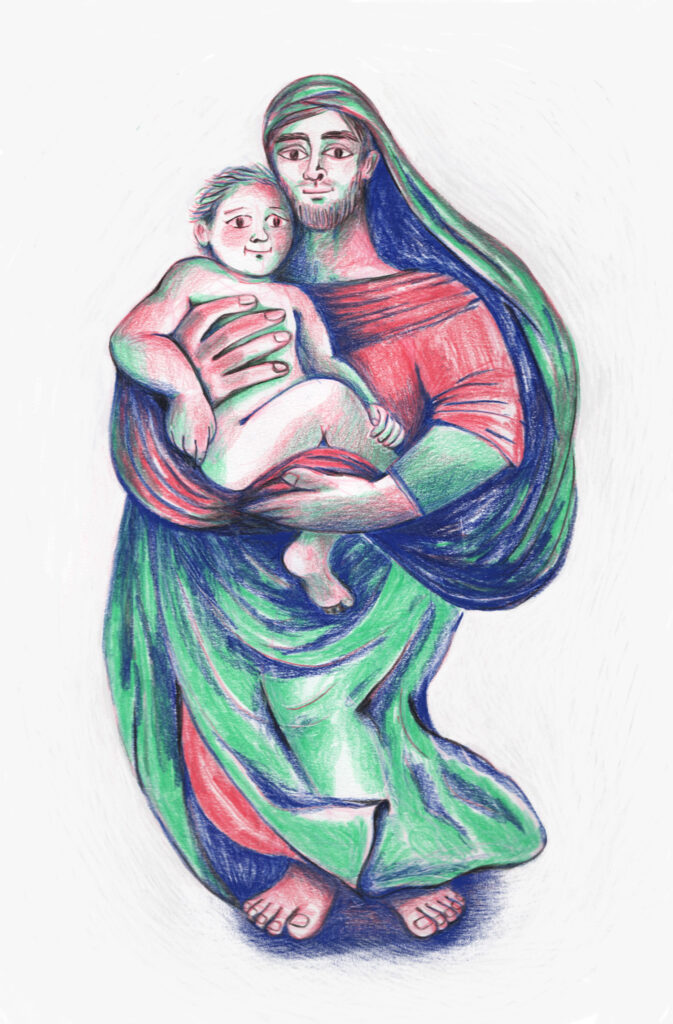
At that moment, she realized that there is a saturation of images of Madonnas, Virgins, and mothers carrying their babies, and that there is a great absence of fathers. For Florencia Capella, we are overpopulated with images, but they are always the same ones, repeated over and over again.
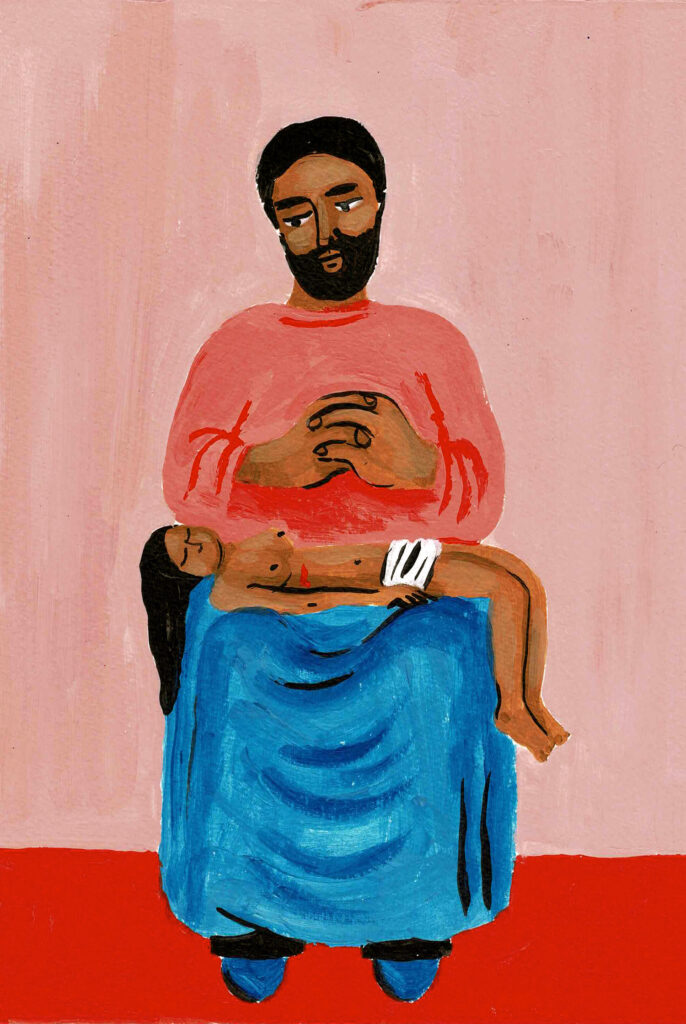
“Becoming aware of that was very violent. When I inverted Michelangelo’s Pietà [where a representation of the Virgin Mary carries her dead son in her arms, who, proportionally, appears larger than she is], it was very strange to see a father holding the figure of an adult woman. When I showed it to the public, there were only two interpretations: lover or femicide. It’s not a matter of conservatism or imagination, but rather that there is no representation,” Capella tells Presentes.
Heroines, Moseses and Madonnas: drawing as a space of emergence of the genre
Sistine Madonna, Madonna with Father-in-Law, Madonna with Child. These are some of the titles Flor Capella proposes in “Counterimage.” Her fascination with these works began in childhood, when she found the booklets from the Pinacoteca de los Genios (Art Gallery of Geniuses) on her living room table—artistic pamphlets that portrayed figures like Picasso and Bosch. “The image of Le Déjeuner sur l'herbe [by Édouard Manet] is forever etched in my memory, showing a kind of picnic on the grass with a naked woman and two men beside her, fully clothed, even wearing hats.”
As she grew up and trained as a designer and illustrator alongside figures like Eduardo Stupía, Carlos Gorriarena, and Julia Masverna, among others, Capella wondered how to intervene in these images to challenge gender roles and established representations . The goal: to open new windows for diversity to emerge in art. “Ultimately, these are images that span continents and centuries, that are connected to a social visual memory that underlies everything we see .”
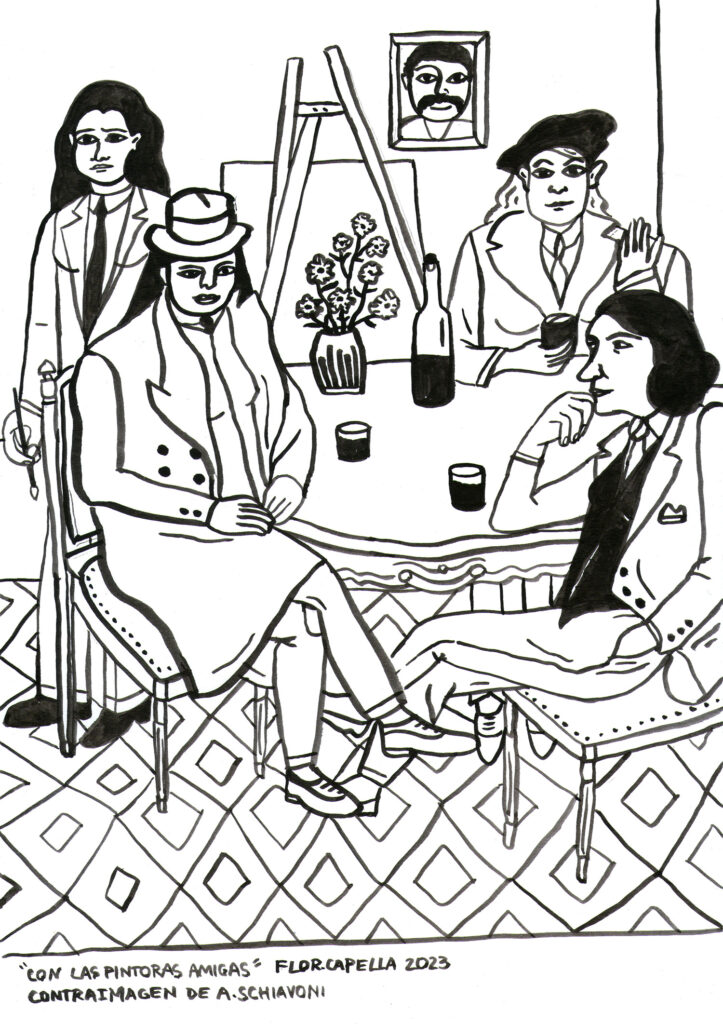
But inverting gender roles in works that transcend time and cultural space is no simple task. In doing so, Capella sets out to delve into the mind, culture, and context of each author to transform the character as they would have done. She searches their repertoire of works for representations of the opposite gender. She investigates. “The thing is, in some eras, no one drew a naked man, or a woman with a large nose and a furrowed brow,” the illustrator explains. “We know theoretically that gender is a construct, but the act of drawing it makes you truly realize that 'it's not in the body.' By thinking about the construction of gender that each artist creates, that construction materializes.”
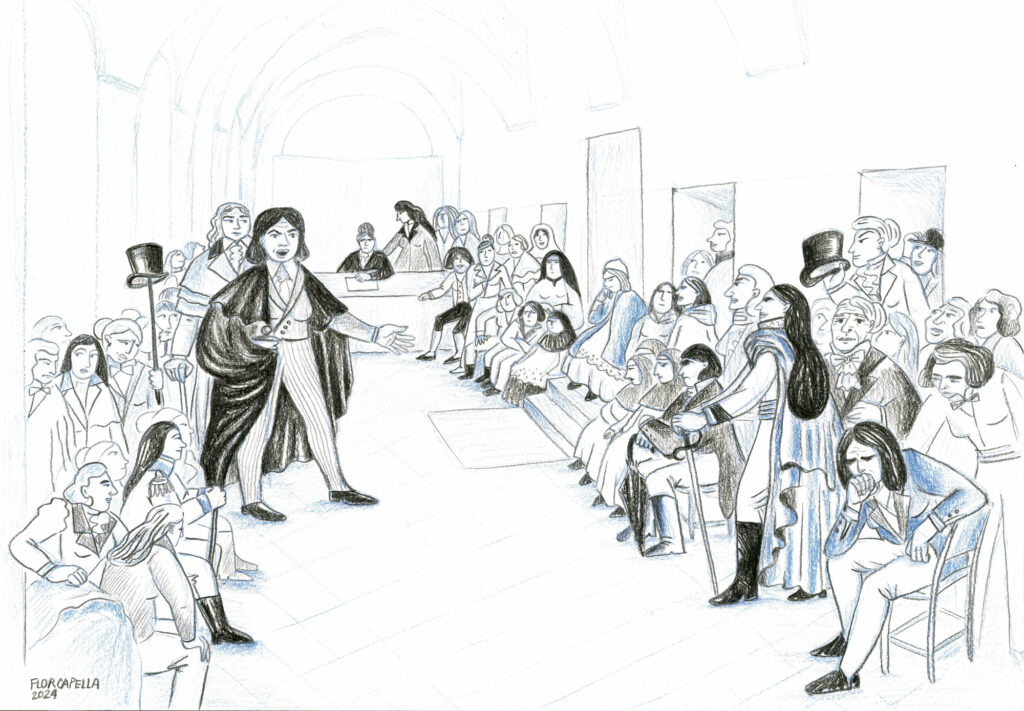
Something similar happens with the heroes of our history. In her book Public Portraits, Laura Malosetti analyzes the portraits of leaders from the Independence era and highlights the lack of female archetypes among them. That's why Capella decided to dedicate a wall to "The Heroines" of our Argentine and Latin American history, images of assemblies and an open town hall meeting filled with women, dissidents, and workers . "In this context, these images take on new meanings. They are updated."
For Capella, drawing is more than a technique: it is an experiment, the possibility of encounter and error, a constant search that awakens new curiosities and surprises by yielding results along the way.
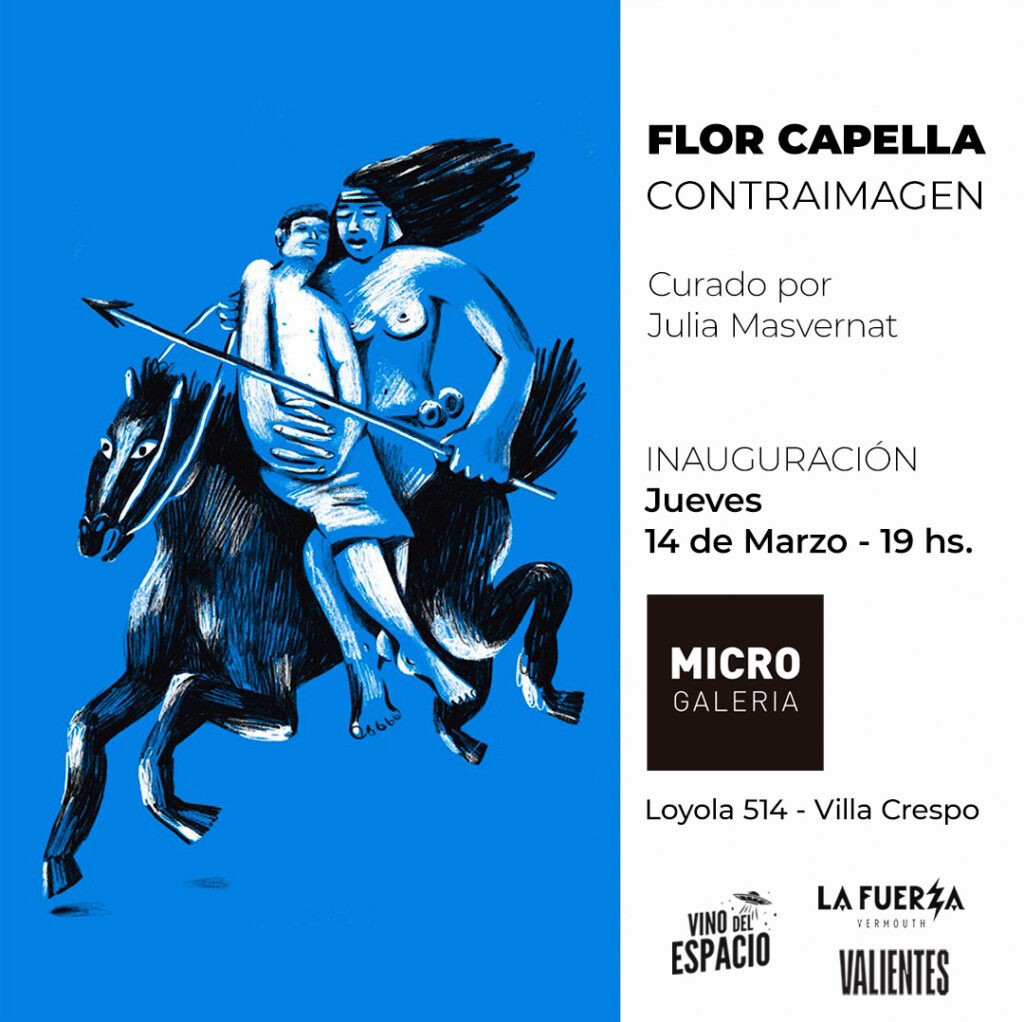
The exhibition “Counterimage” remains open at Microgalería , located at 514 Loyola Street in the Villa Crespo neighborhood of Buenos Aires, and can be visited on Thursdays, Fridays and Saturdays from 3 to 7 pm until Saturday, April 6.
We are present
We are committed to journalism that delves into the territories and conducts thorough investigations, combined with new technologies and narrative formats. We want the protagonists, their stories, and their struggles to be present.
SUPPORT US

FOLLOW US
Related notes


We are present
This and other stories are not usually on the media agenda. Together we can bring them to light.