

Life sentences for 10 repressors of the dictatorship: for the first time in the world, trans people are recognized as victims of crimes against humanity
Among the 610 total victims of the trial were 23 pregnant women, 10 grandchildren who were appropriated - 7 of whom recovered their identity - activists, students from the Night of the Pencils, a mother kidnapped along with her son and 8 trans women and transvestites.


Share

The Federal Oral Court No. 1 of La Plata yesterday sentenced 10 repressors from the dictatorship to life imprisonment for crimes against humanity committed during the genocide. This is the Brigadas Case, the largest human rights trial in the region. There was also a 25-year sentence. The reading of the verdict lasted four hours in a packed courtroom. Among the 610 total victims in the trial were 23 pregnant women, 10 grandchildren who had been illegally abducted—7 of whom recovered their identities —activists, students from the Night of the Pencils , a mother kidnapped along with her son, and 8 transgender women and transvestites.
This is the first time in Argentine history that military personnel have been convicted of the crimes of unlawful deprivation of liberty, torture, sexual abuse and enslavement of people from the transvestite and trans community.
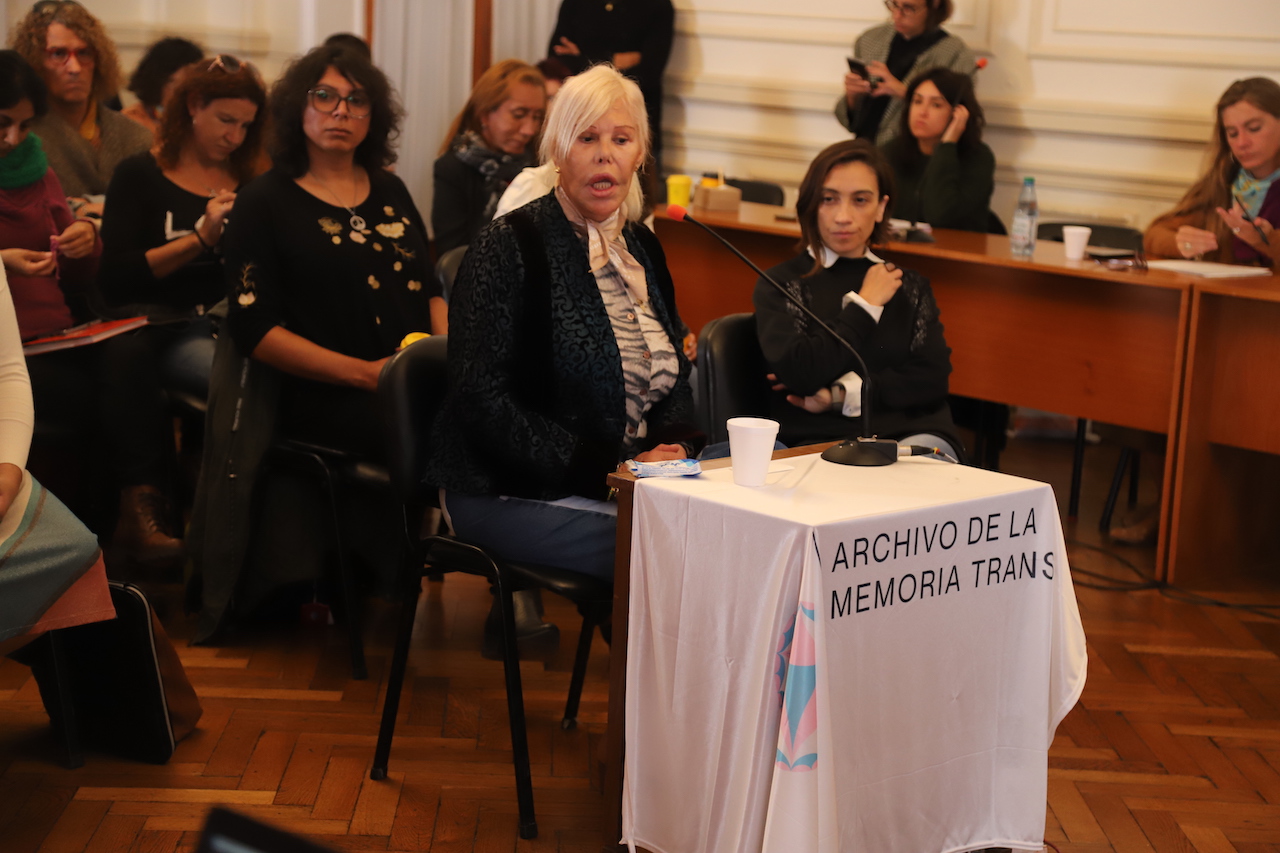
“This stage I’ve been waiting for so long is finally over, and at least I’ve gotten rid of this tension. This is a great satisfaction for me: that it can be concluded. Not only for me but also for my fellow activists. We’re happy that our wish came true,” Valeria del Mar Ramírez, a survivor of the dictatorship and the first trans person to be a plaintiff in a human rights trial, told Presentes.
Within the context of a genocide
In an event considered "historic" by the community and human rights activists, judges Walter Venditti, Esteban Rodríguez Eggers and Ricardo Basilico of the Federal Oral Court No. 1 of La Plata stated that "the events, in addition to being crimes against humanity, were within the framework of a genocide.".
They also recognized as victims of crimes against humanity the trans survivors Valeria del Mar Ramírez, Carla Fabiana “La Cañito” Gutiérrez, Paola Leonor Alagastino, Julieta Alejandra “Trachyn” González, Analia Velázquez, Marcela Viegas Pedro, Judith and Claudia, all detained at the Banfield Detention Center. The latter two died during the legal proceedings.
Unprecedented in the world
“The new point in this trial—it’s the first time this has happened not only in Argentina but in the world, there are no precedents—is that it addressed the violence to which a group of trans women were subjected when they were taken to the Banfield Well, one of the four clandestine centers analyzed in this trial,” explained Assistant Prosecutor Ana Oberlin, a lawyer specializing in Human Rights, Gender and Criminal Law, with a doctorate in Law and Social Sciences and a relative of the disappeared, to Presentes.
She also acknowledged that “for all these years, this violence had been rendered invisible on every level,” which is why this ruling marks “a milestone.” “I believe it brings a measure of justice, albeit late and fragmented, to an entire community that suffered violence not only during the State Terrorism but also before and after,” she added.
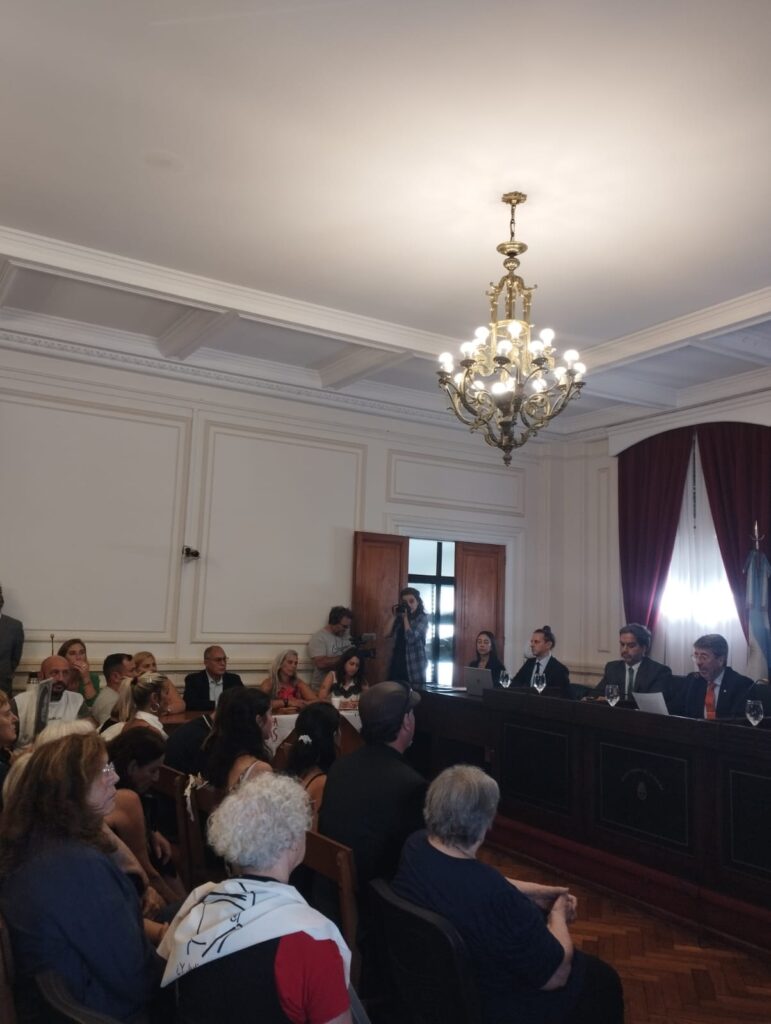
Around 2 p.m., Judge Basílico began reading a lengthy sentence that lasted four hours. The courtroom on the first floor of the courthouse was packed with relatives of the disappeared, survivors of state terrorism, human rights activists, and other interested individuals carrying signs to remember faces and demand “memory, truth, and justice.” Dozens more people waited outside the building, following the verdict on screens and through speakers thanks to a broadcast by La Retaguardia . Every so often, at key moments during the reading, the sound of car horns honking from the street could be heard inside the courtroom.
The convicted
The court sentenced Federico Minicucci, Jorge Héctor Di Pasquale, Roberto Armando Balmaceda, Jorge Antonio Bernés, Guillermo Alberto Dominguez Matheu, Carlos María Romero Pavón, Jaime Lamont Smart, Juan Miguel Wolk, Carlos Gustavo Fontana, and Horacio Luis Castillo to life imprisonment. Alberto Julio Candioti was sentenced to 25 years in prison, and Enrique Augusto Barre was acquitted.
The Brigadas Trial began in October 2020 with the aim of prosecuting crimes committed in four Investigation Brigades of the Buenos Aires Provincial Police: Quilmes, Banfield, Lanús, and later San Justo. Initially, the case involved 18 living defendants, of whom 12 are still alive and were tried. Among those who died were Miguel Osvaldo Etchecolatz, Miguel Ángel Ferreyro, Ricardo Armando Fernández, Carlos del Señor Hidalgo Garzón, Emilio Herrero Anzorena, and Eduardo Samuel De Lio.
This trial included testimony from almost 500 people.
This ruling sheds light for the first time on the persecution experienced by the transvestite and trans community during the dictatorship, something that remained invisible for many years in democracy.
“We waited 47 years for this”
“We waited 47 years for this. Honestly, no one can erase the wounds you have,” said Valeria del Mar. Similarly, survivor “Trachyn” stated at the end of the verdict: “Justice would have been if this had never happened, but I think it is still an act of justice, and it will remain in the memory of Argentine history.”.
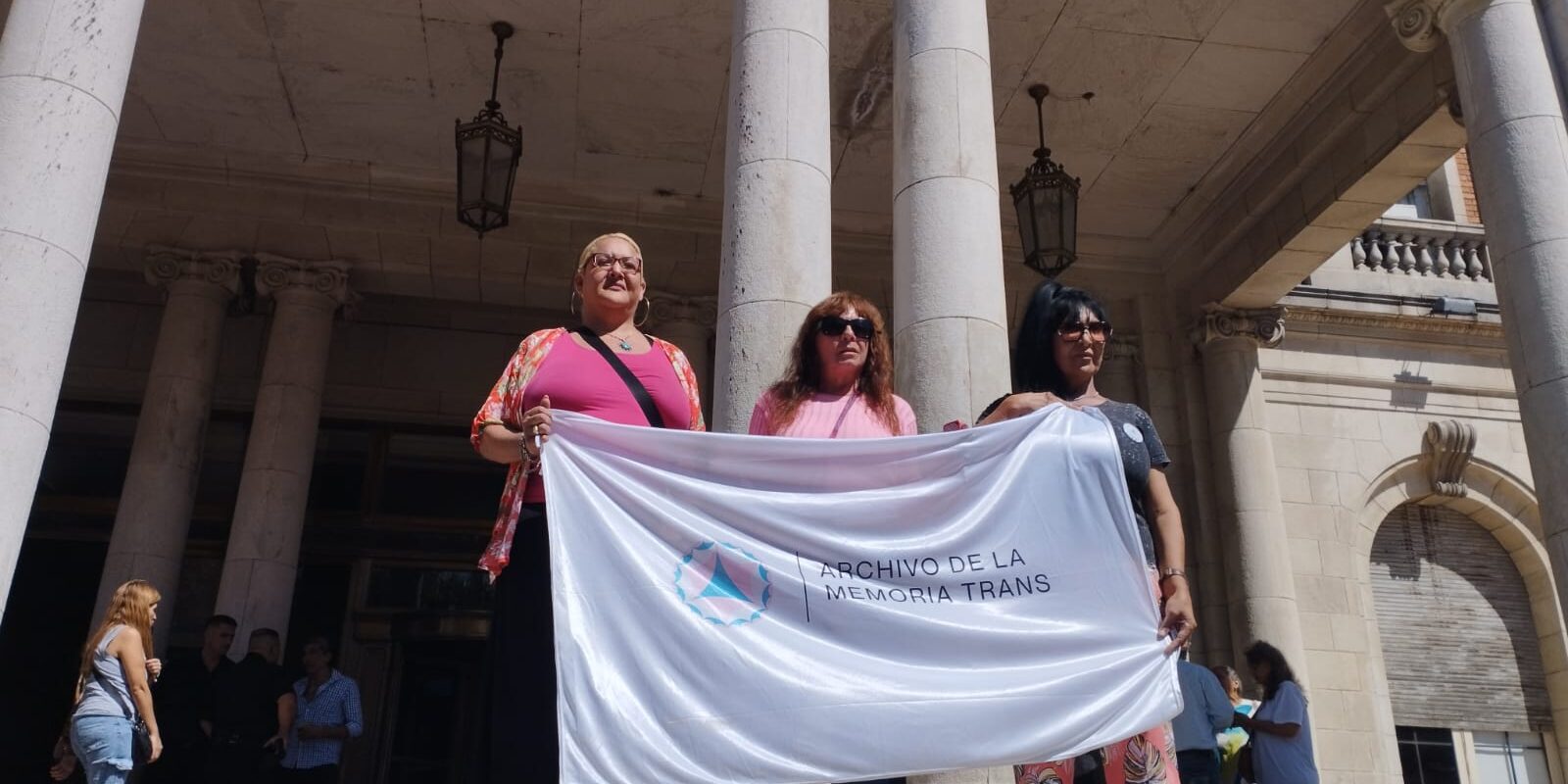
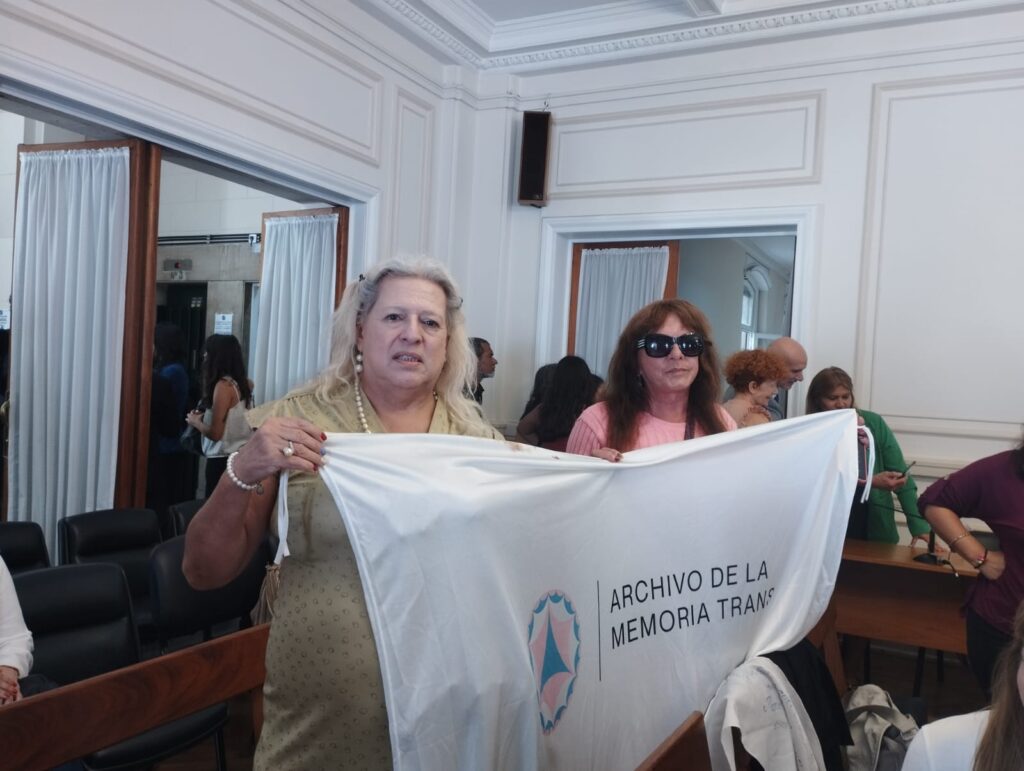
For trans activist María Belén Correa, founder of the Trans Memory Archive , who was present in the courtroom, it was “a historic day because for the first time the trans community is included in these trials, marking that genocide was not only heterosis and that memory, truth and justice are not only hetero cis.”
“The testimonies of our trans sisters, four of whom were added thanks to the Trans Memory Archive and the commitment of the prosecutor (Ana Oberlin), were fundamental for us to be here today at this historic moment,” she added. In this regard, she hopes that the ruling “will be the starting point so that the rest of our trans sisters can also begin to testify, so they can understand that they can be heard, even though for a long time memory was a privilege.”.
Throughout the trial, the systematic violation of basic human rights experienced by the transvestite and trans community during the dictatorship was demonstrated : from physical and psychological torture to sexual abuse and forced labor.
The testimonies
“Systematically and methodically, every day they came to get me. They put a hood over my head. I don’t know where I was going. We had a blindfold, and I could peek underneath. They threw me on a bed. They tied me up. And they applied 220 volts (electricity) to me. (…) They wanted me to tell them the names of the boys I was seeing, their addresses, and what we talked about, but my only relationship with them was sexual; I didn’t know their names. Besides that, they also raped me. And then they took me back to my cell,” Marcela Viegas Pedro described, her voice trembling during her April 2023 statement.
They were also picked up off the street and taken to "parties" thrown by the Brigades. "When they wanted, they would take us out of the cell and make us do stripteases ; they wanted us to dance for them, sometimes they were drunk. I remember being with a friend and they were taking pictures of us and asking us which of the two of us was prettier," said Analía Velázquez.
“Death was constantly felt”
“We are devastated by the things that happened to us and what was done to us. That justice is being done for us today is something we have won after so many years of knowing that the girls are no longer here,” Fabiana added, her voice breaking.
Julieta González was recognized in the ruling as a victim of the crime of forced labor, among others. Regarding this, she testified: “They put Negro (Claudia Gómez) and Judith to work breaking rocks. In the morning we saw that the place was big. They had like two pits where they made us wash the cars. They were muddy, but many had blood inside. I always remember a lot of blood in a yellow Falcon. They made us cook, wash clothes, polish boots.”.
The survivors' testimonies also helped to understand what was happening to the other detainees. “Death was constantly felt; you could hear the screams of people being tortured with electric shocks. Men, women, ladies, and children were crying. 'Mom, don't abandon me,' they cried,” Velázquez shared.
“At one point we heard a girl crying. And then we heard a baby crying. And then we didn’t hear the girl anymore, and neither did the baby. It was like the baby was born. It had huge lungs because it was crying so loudly. To think that we were there for that birth, we kept saying afterward ,” said “Trachyn,” who to this day admits that he remembers that girl’s face every day.
Right to life and reparation
In its closing argument, the prosecution requested, in addition to life sentences, reparations for the victims and their families. This issue was not addressed during the sentencing hearing, as it will be handled administratively, Oberlin clarified. Trans and travesti activists are calling for reparations for all elderly women who experienced institutional violence.
“We have a right to life, to legitimate, desirable, and kind life projects. We have a right to memory, truth, and justice. For all the dead women, who don't even have a headstone, I ask that they be recognized for what they wanted to be,” concluded activist and social psychologist Marlene Wayar, cited as an expert witness, in her statement.
We are present
We are committed to journalism that delves into the territories and conducts thorough investigations, combined with new technologies and narrative formats. We want the protagonists, their stories, and their struggles to be present.
SUPPORT US

FOLLOW US
Related notes
We are present
This and other stories are not usually on the media agenda. Together we can bring them to light.