

March 24: Argentina says yes to Memory with a historic march
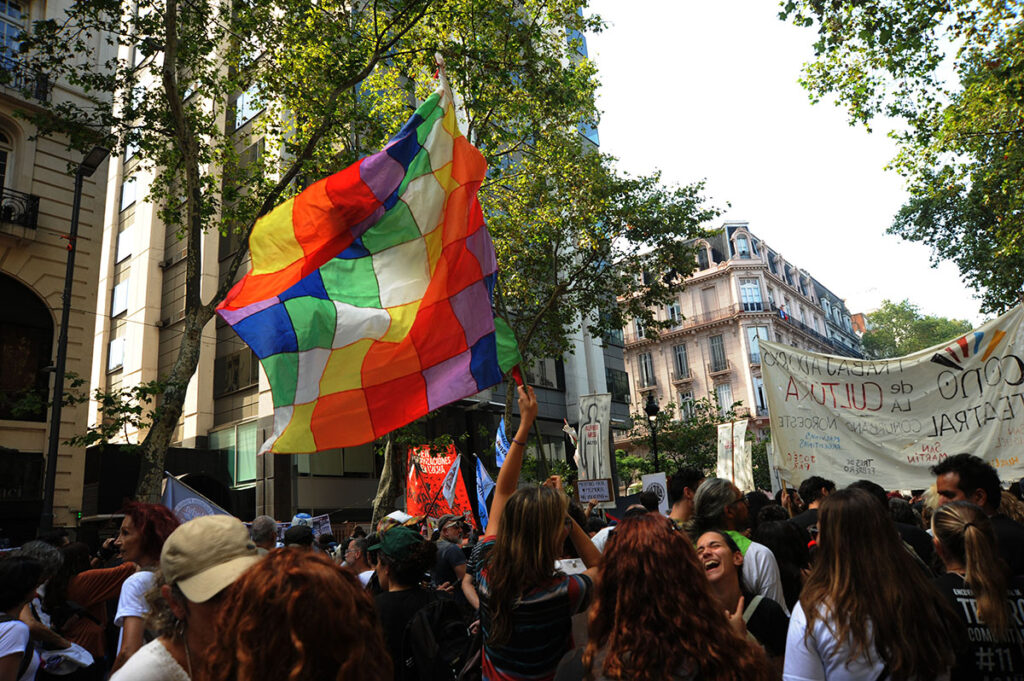
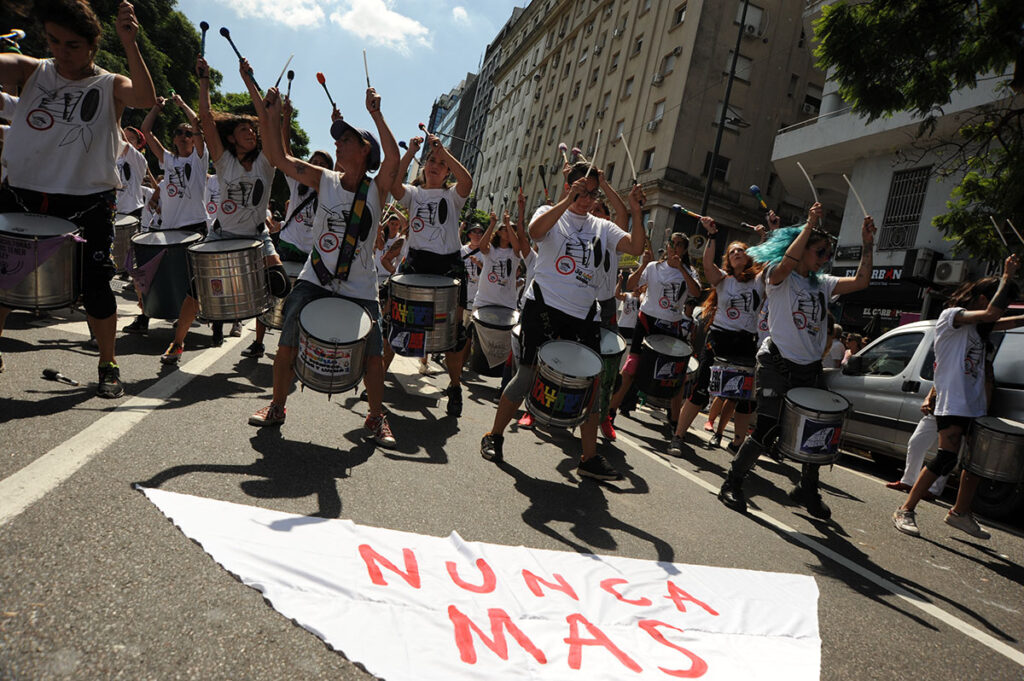
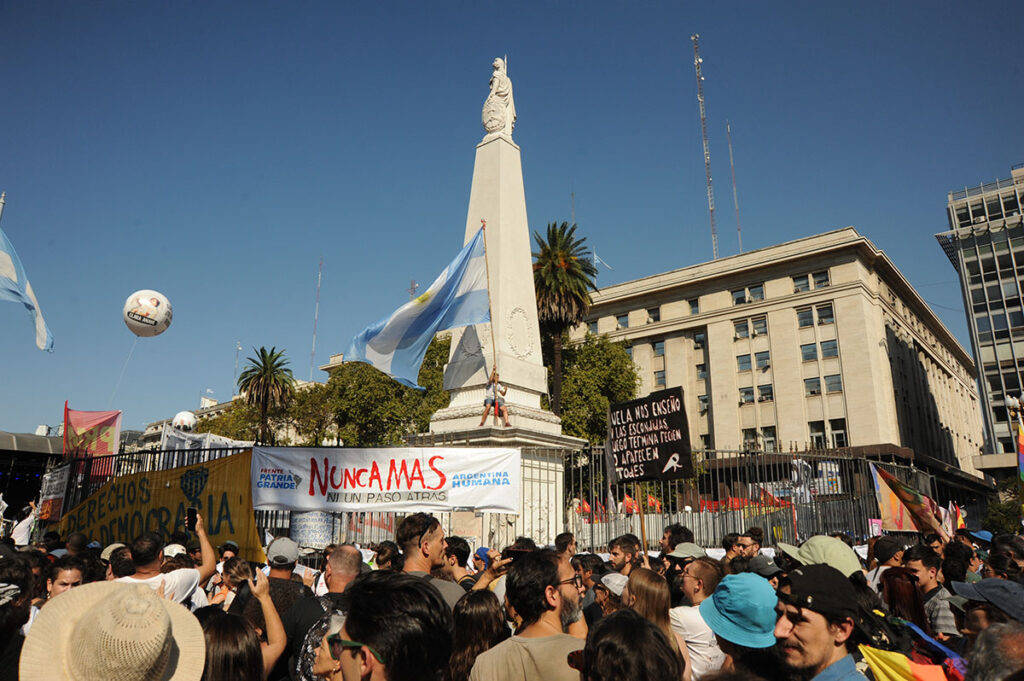
It was the largest march ever held on March 24th. Hundreds of thousands in squares and streets said "Never again means never again" on the National Day of Remembrance for Truth and Justice.


Share

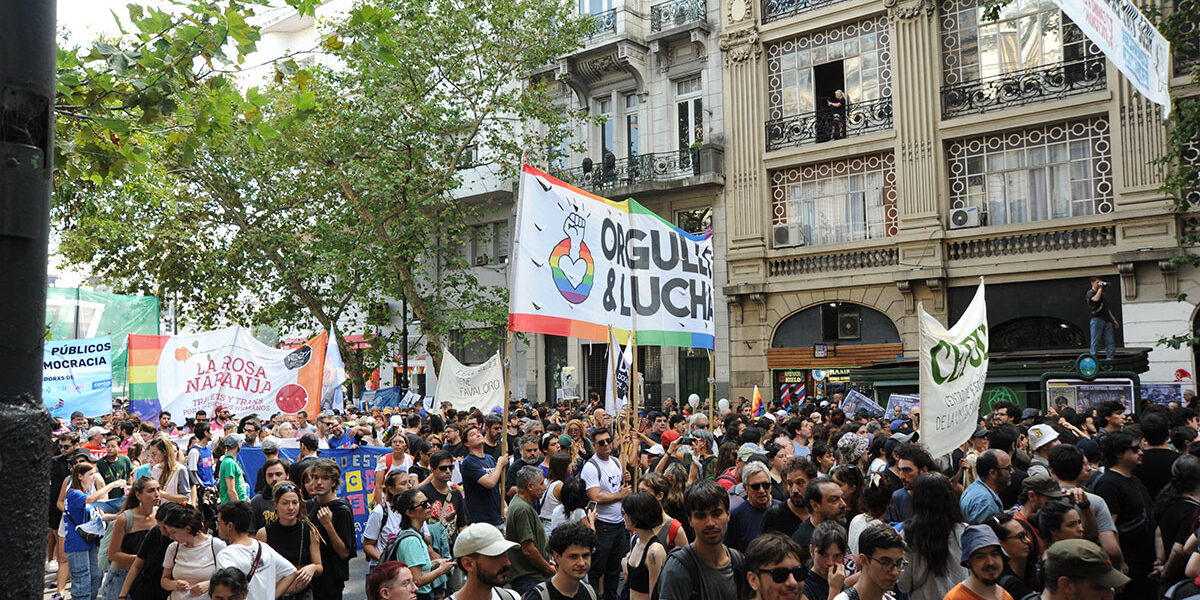
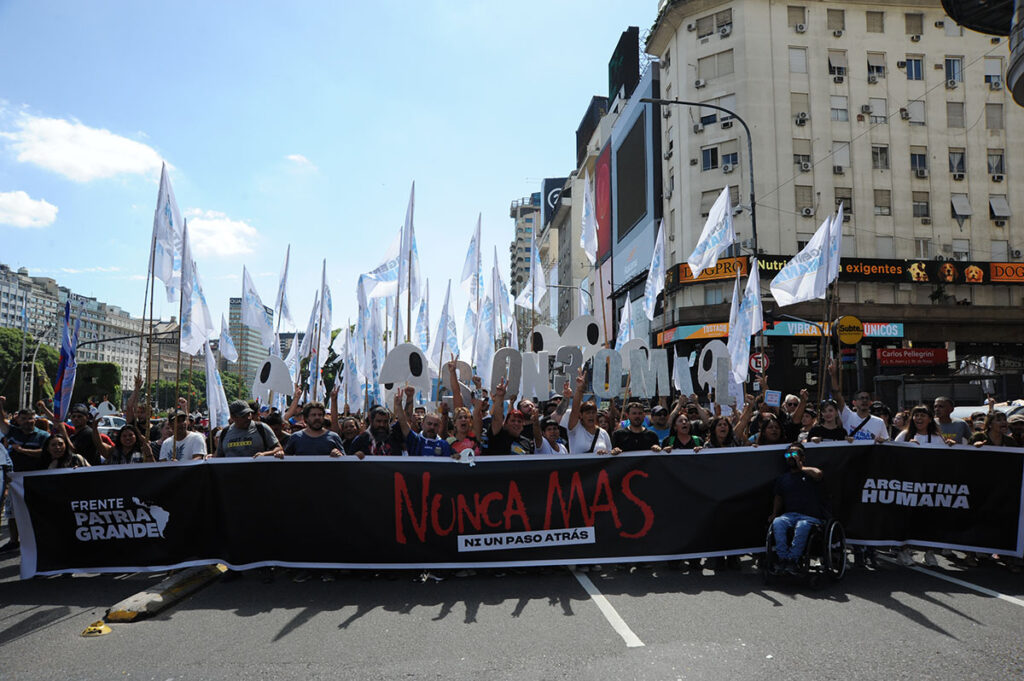
BUENOS AIRES, Argentina. Forty-eight years after the genocidal coup, the Argentine people affirmed their commitment to memory and to all the struggles for greater rights for everyone , with demonstrations in streets and squares throughout the country and a massive march in Plaza de Mayo. It was the largest March 24th march in the history of this National Day of Remembrance for Truth and Justice. It was led by human rights organizations: Mothers and Grandmothers of Plaza de Mayo, HIJXS (Children for Identity and Justice Against Oblivion and Silence), family members and survivors, and hundreds of people holding the blue flag with the photographs of the disappeared.
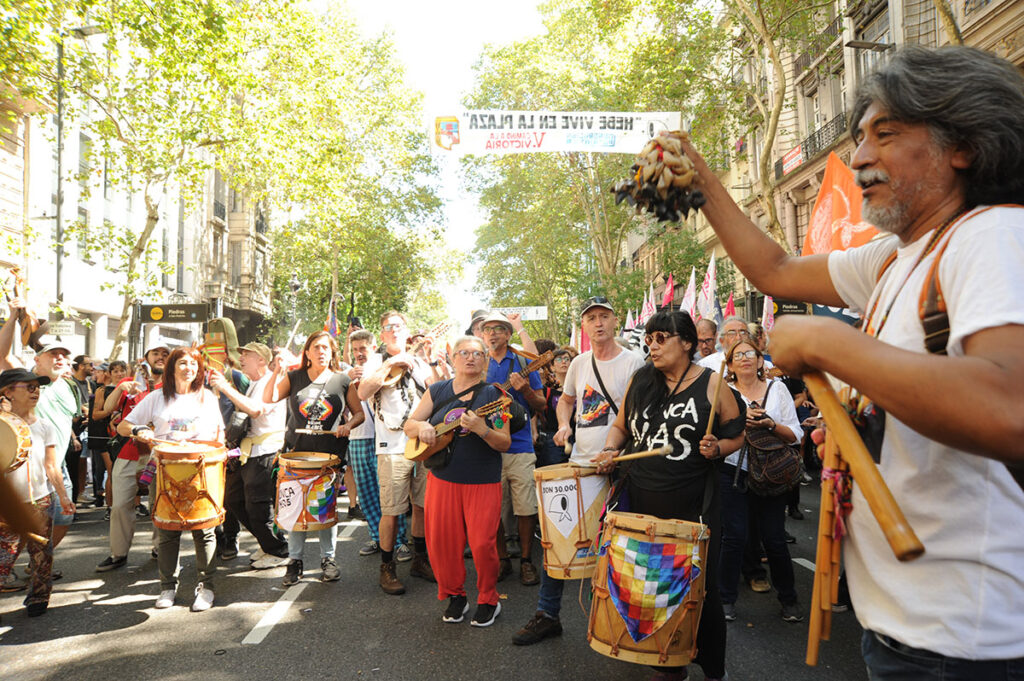
At noon, it was difficult to get around Avenida de Mayo; by 1 p.m., it was nearly impossible. Those who arrived at the Plaza by subway sang, "What happened to the Nazis will happen to them, wherever they go, we'll find them." It was one of the most repeated chants throughout the afternoon. The day continued with another march organized by the Encuentro Memoria Verdad y Justicia (Meeting for Memory, Truth, and Justice).
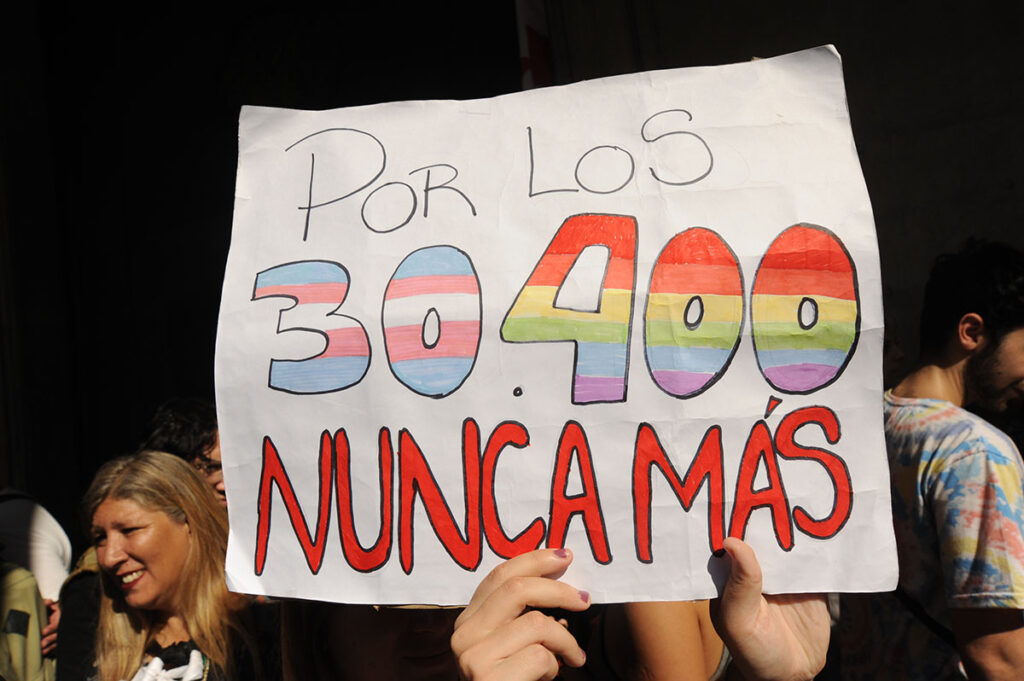
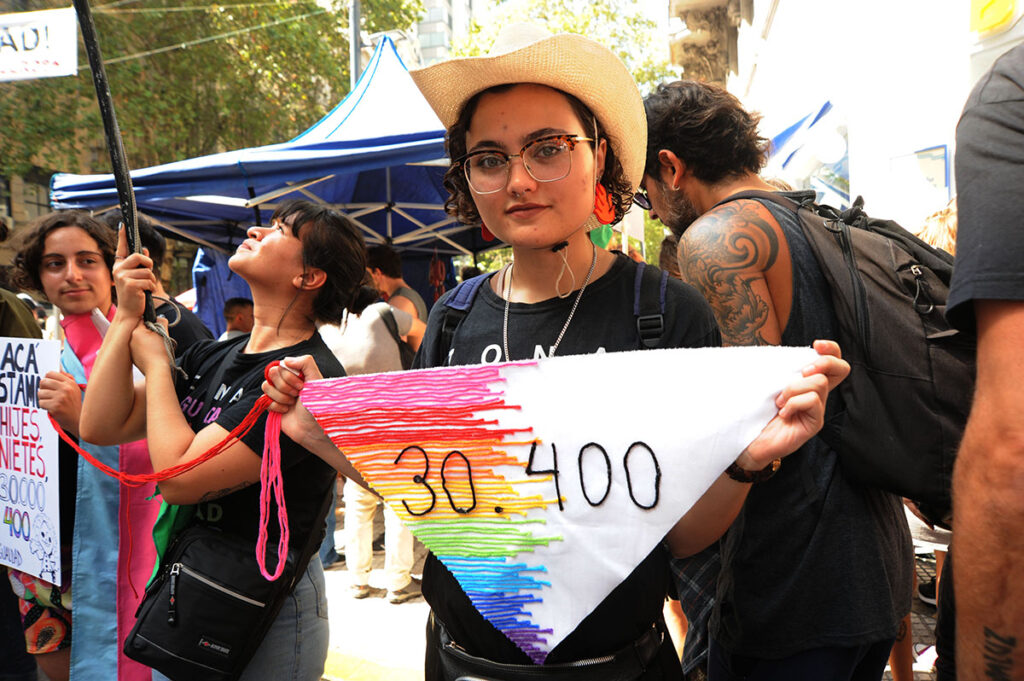
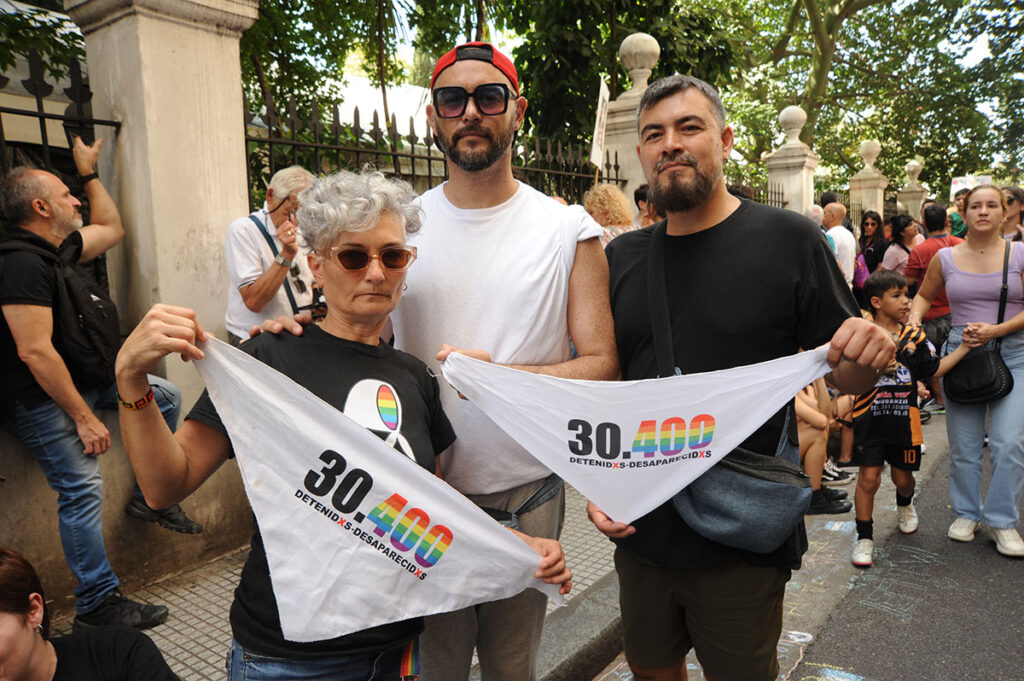
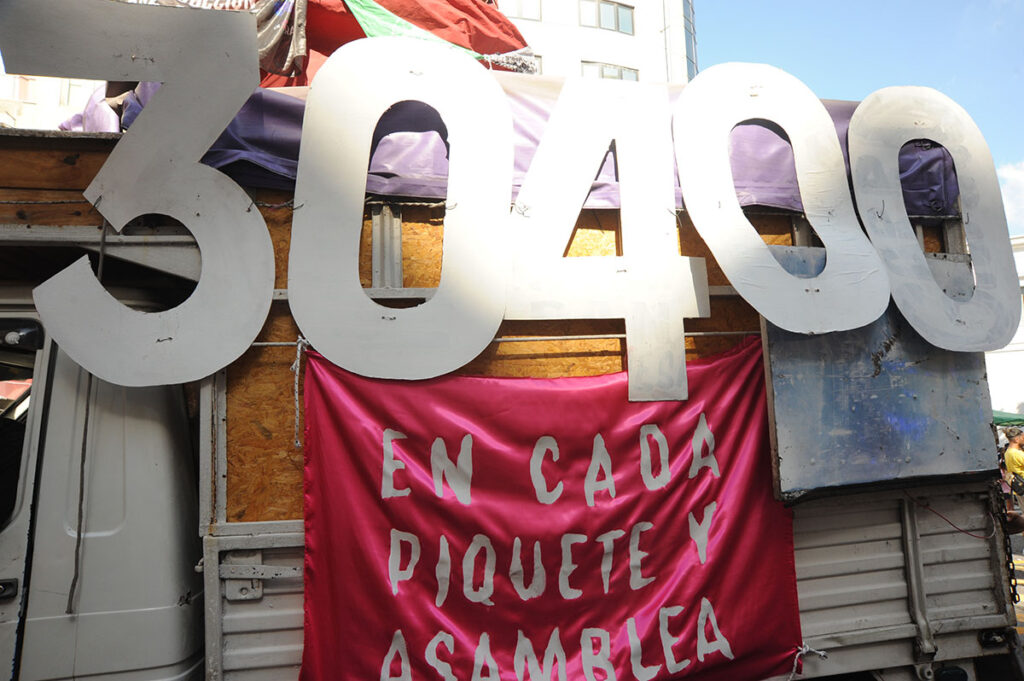
In response to the denialist government of Javier Milei and Victoria Villarruel, which defends the dictatorship and yesterday published a video talking about "complete memory", thousands marched with signs saying "They are 30,000".
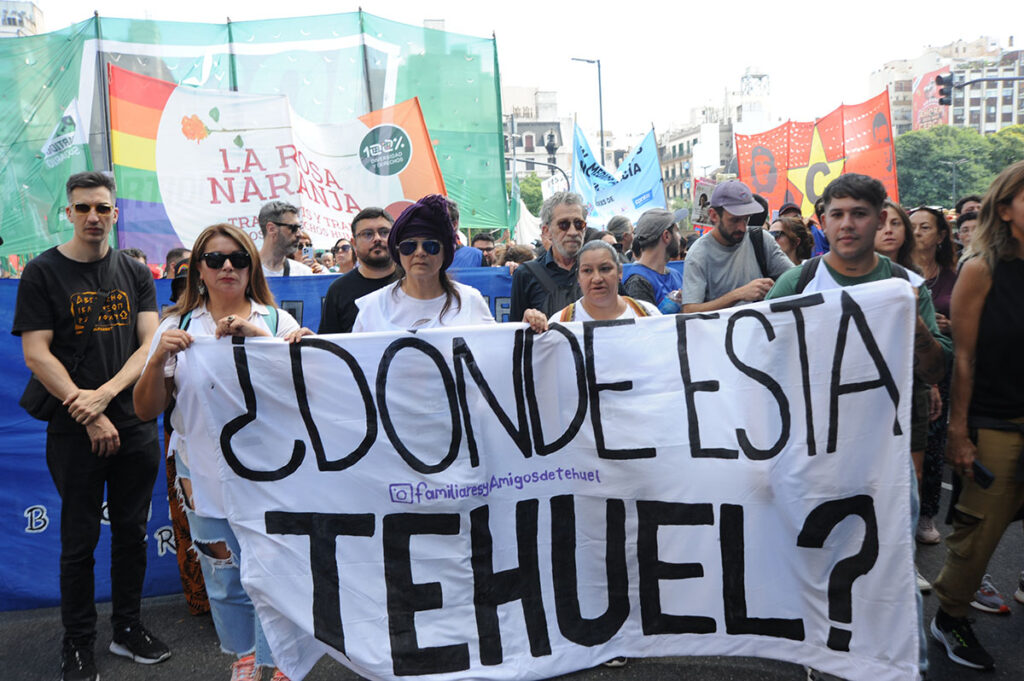
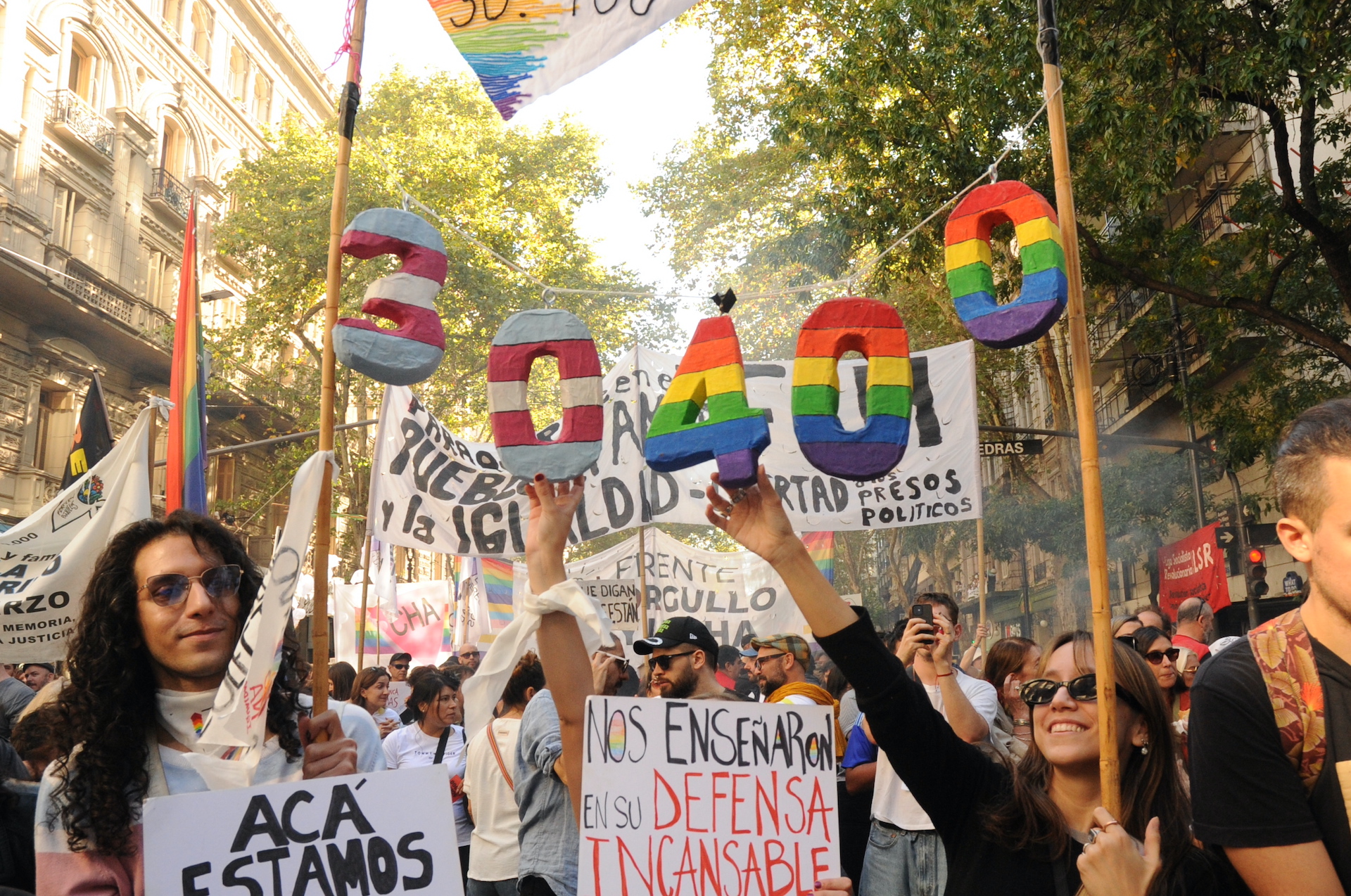
There were also many demonstrations aimed at highlighting the figure of 400 missing LGBT comrades . The question that hovers over so many marches was also present: Where is Tehuel?
Yesterday, on the International Day for the Right to the Truth concerning Gross Human Rights Violations and for the Dignity of Victims, the Inter-American Commission on Human Rights (IACHR) and the United Nations Special Rapporteur on the promotion of truth, justice, reparation and guarantees of non-recurrence (UN Special Rapporteur or Expert) called on States “to comply with court judgments that convict those responsible for serious human rights violations and international crimes.” They urged States not to grant “pardons, humanitarian pardons, or undue benefits to the perpetrators and masterminds of these types of crimes.”
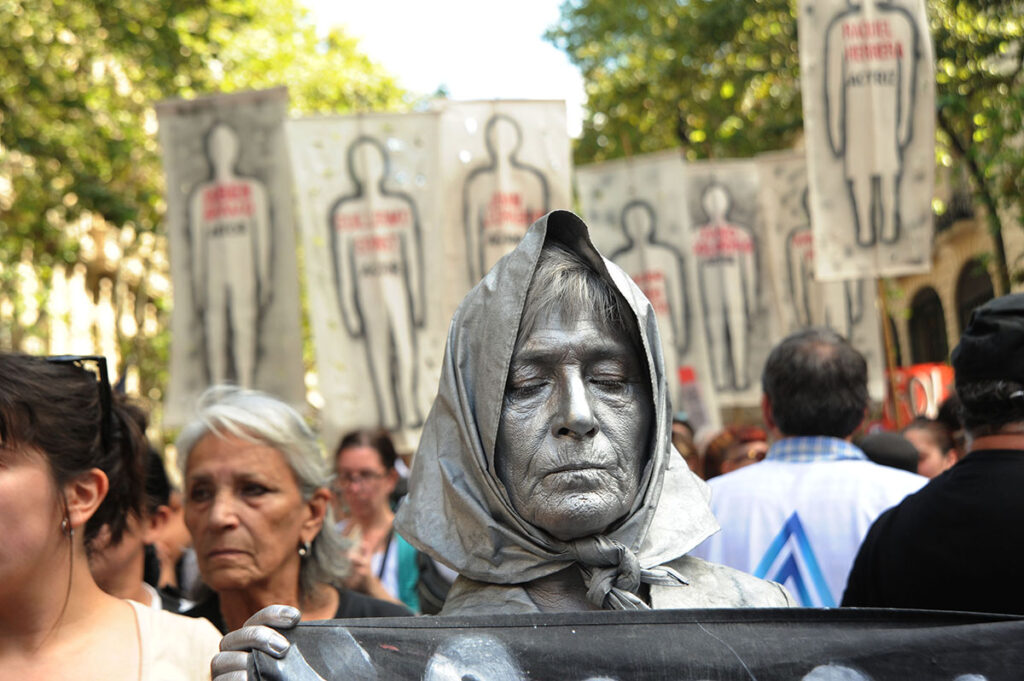
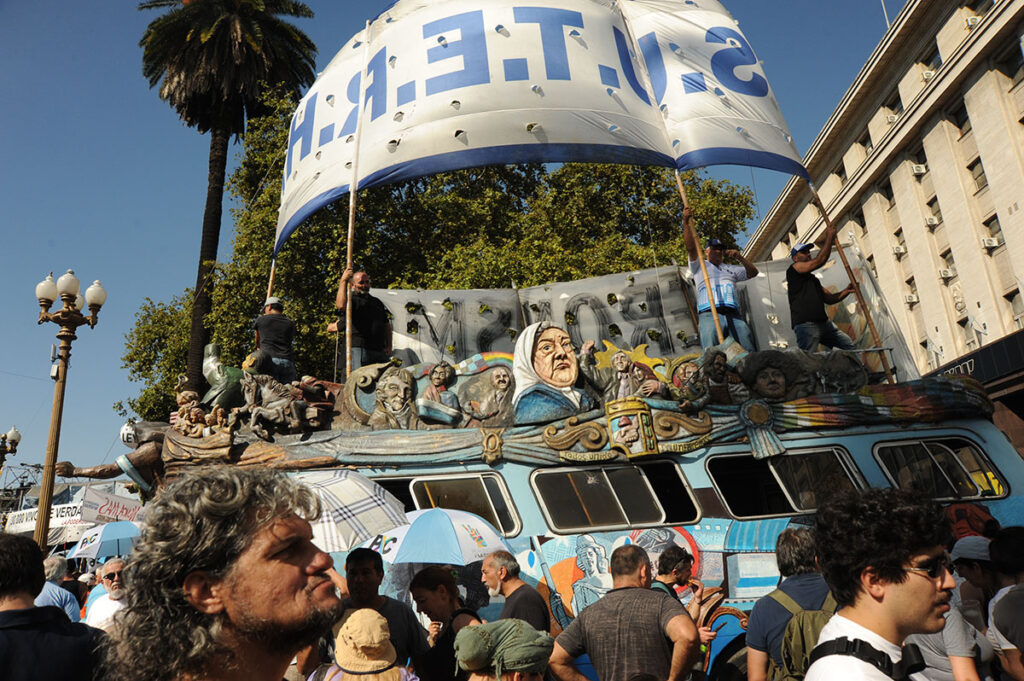
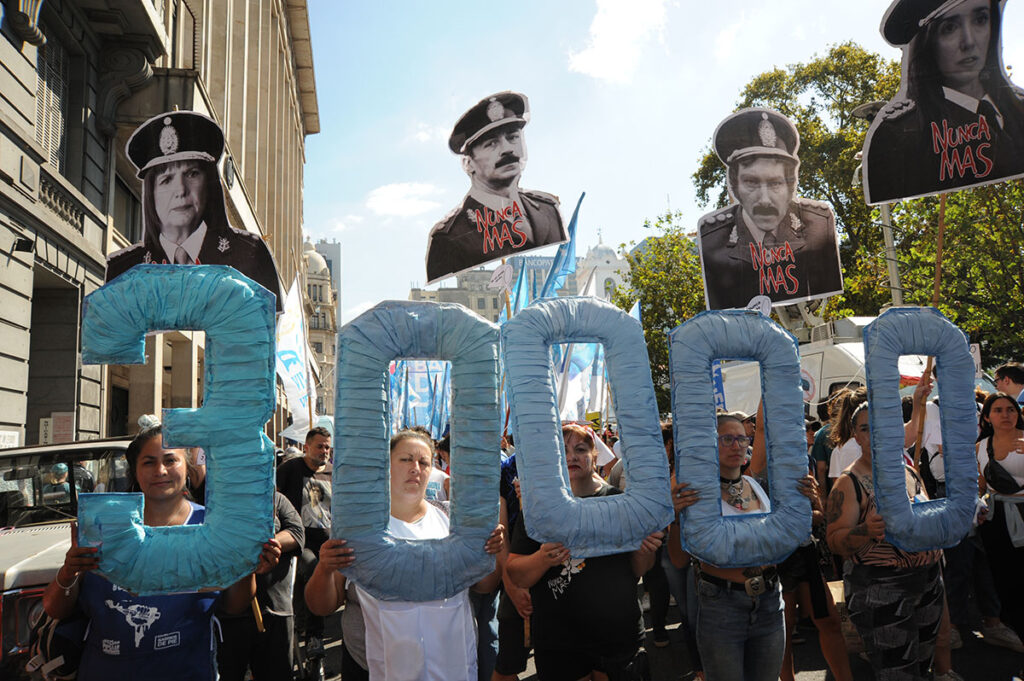
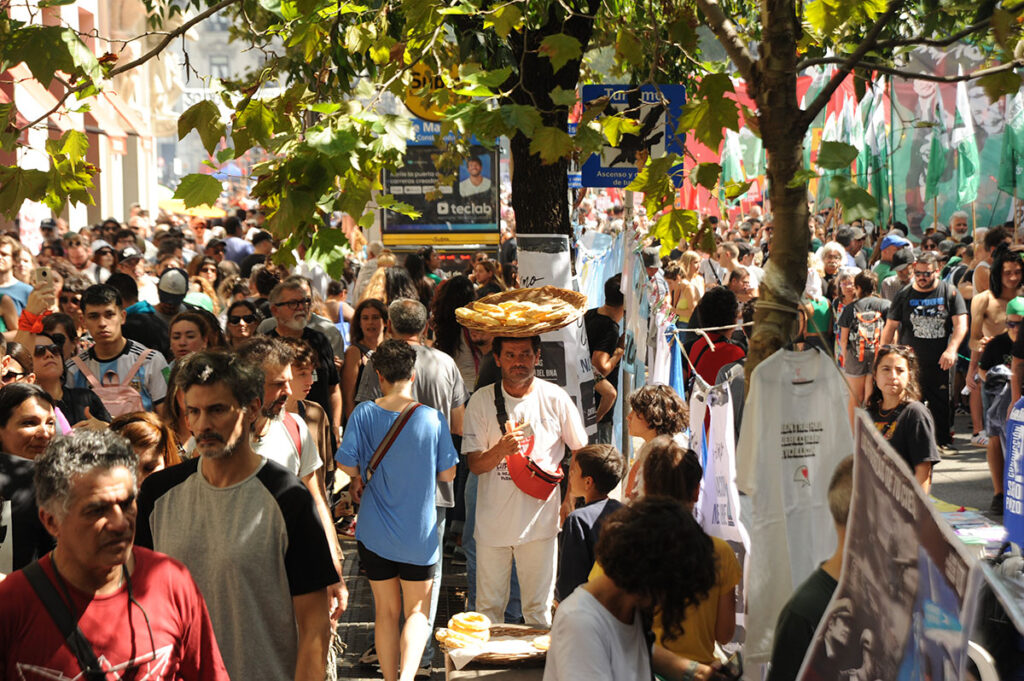
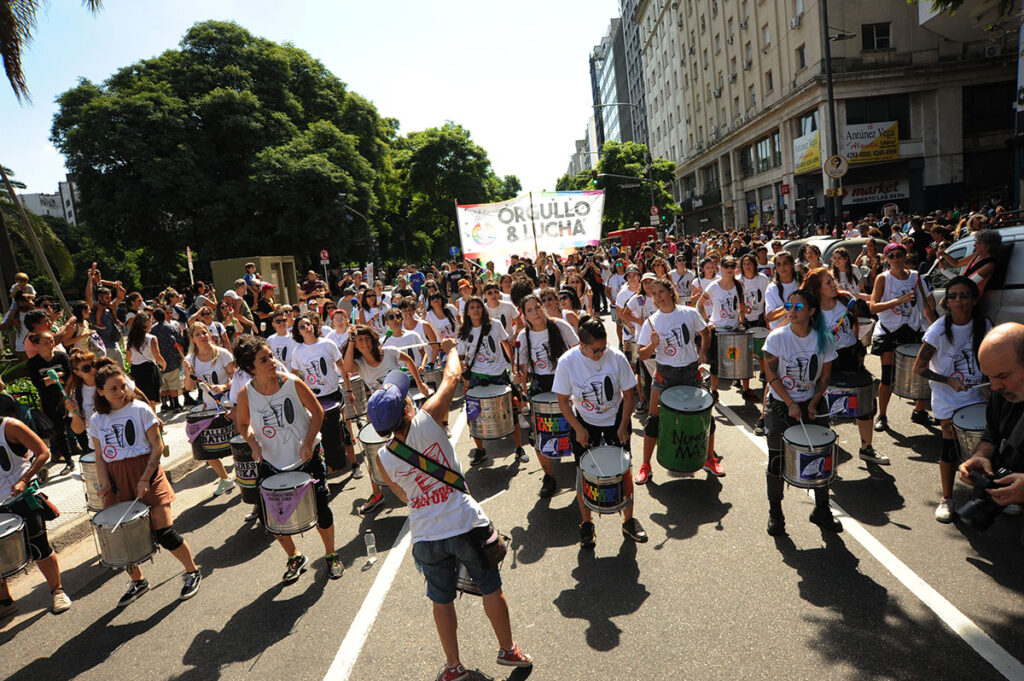
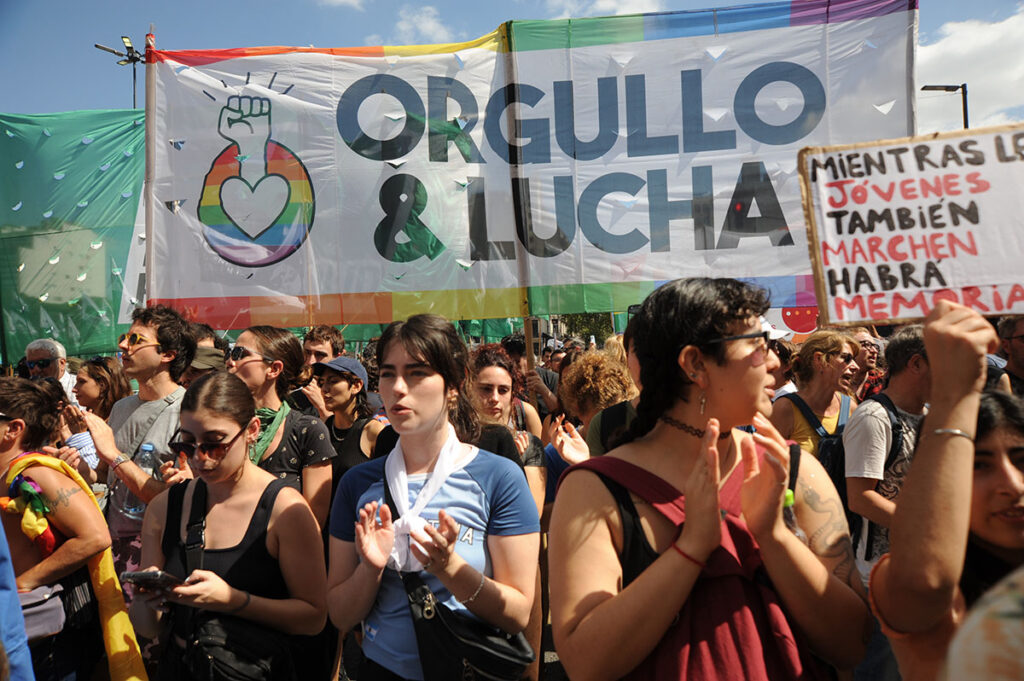
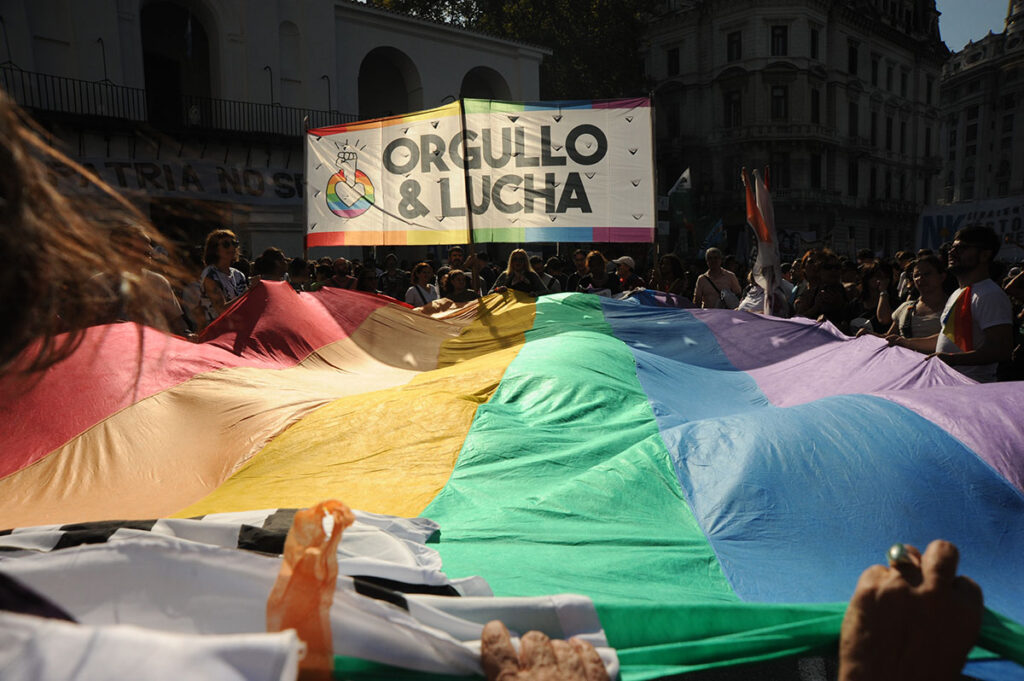
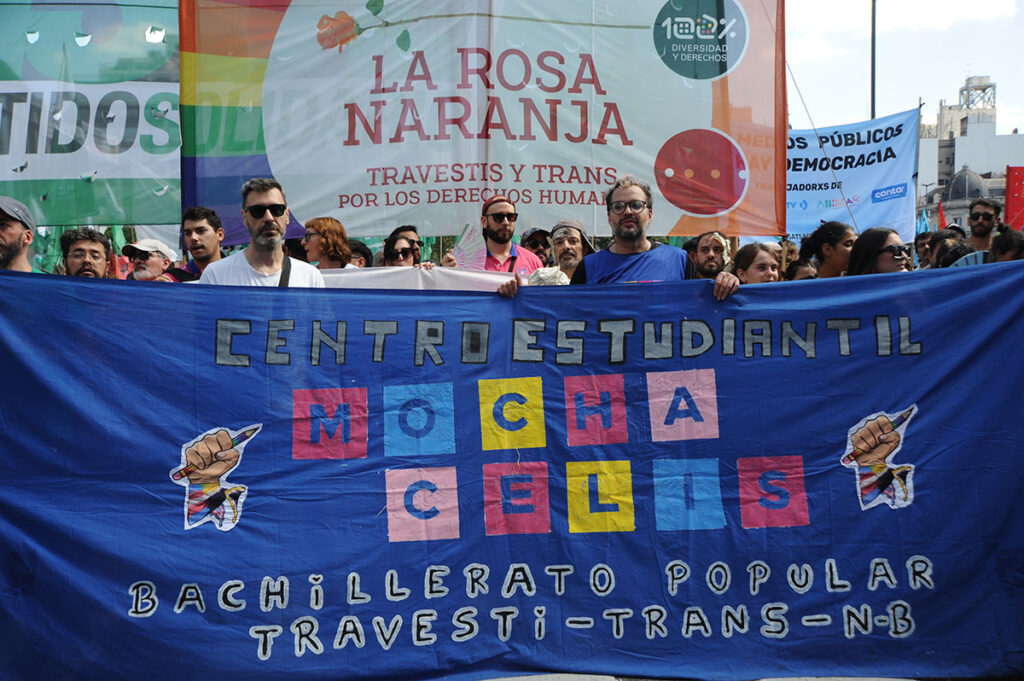
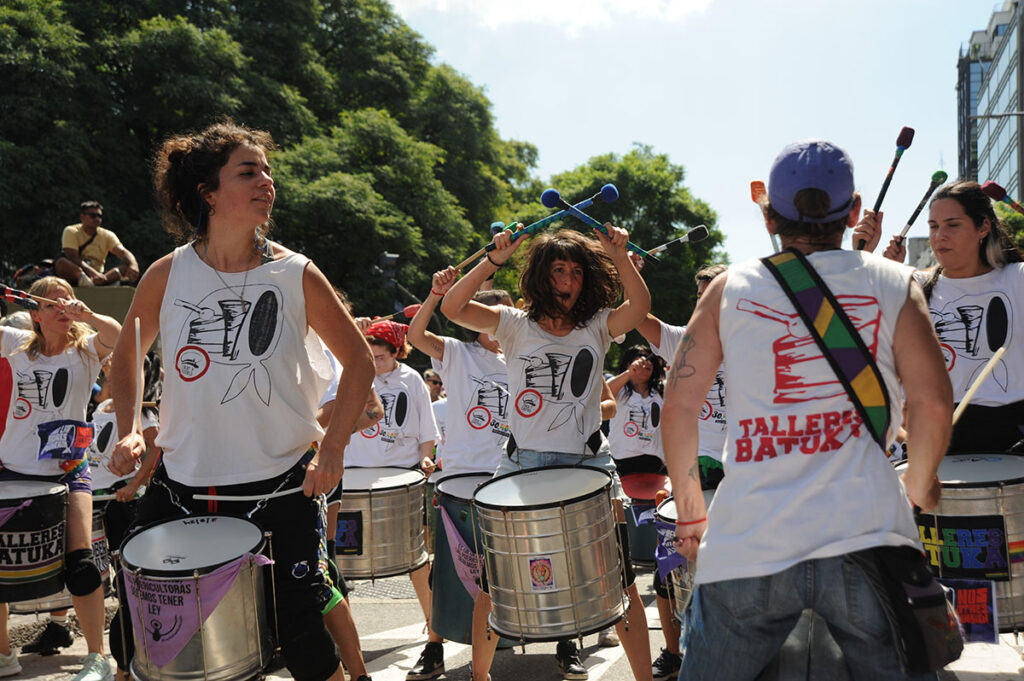
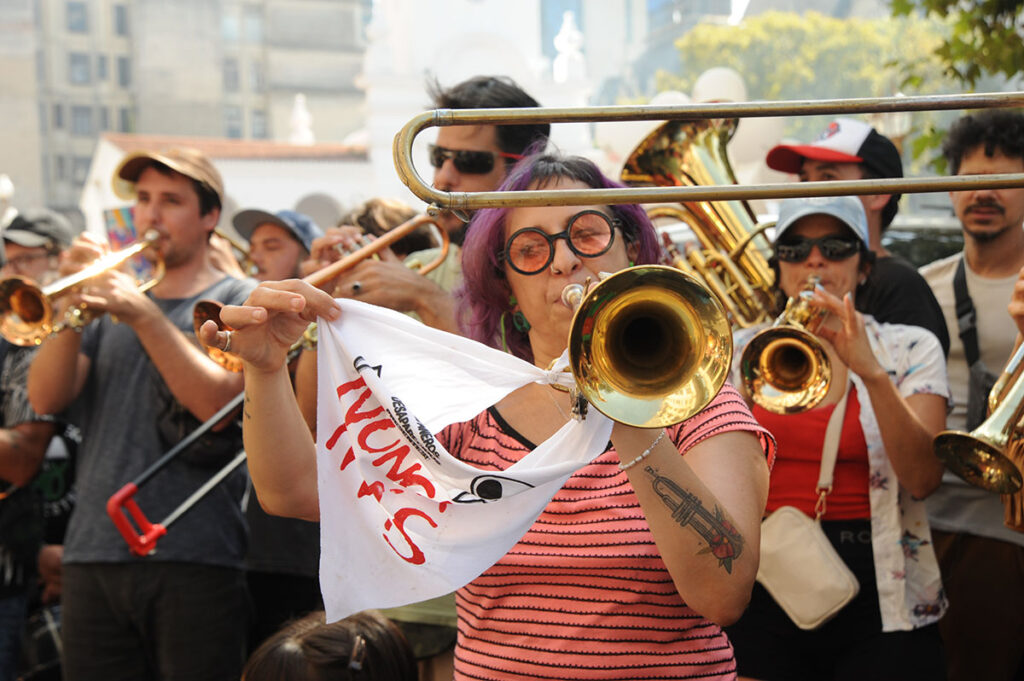
The LGBTQ+ community marched in organized groups, but also independently and spontaneously. Orgullo y Lucha (Pride and Struggle), a coalition of many organizations, convened at the corner of 9 de Julio and Rivadavia. From there, marchers accompanied by a batucada (percussion band) included the Mocha Celis High School, Cien por ciento Diversidad y Derechos (One Hundred Percent Diversity and Rights), Conurbanes por la Diversidad (Suburbanites for Diversity), Ciervos Pampa (Pampa Deer), the Argentine Homosexual Community (CHA), and others.
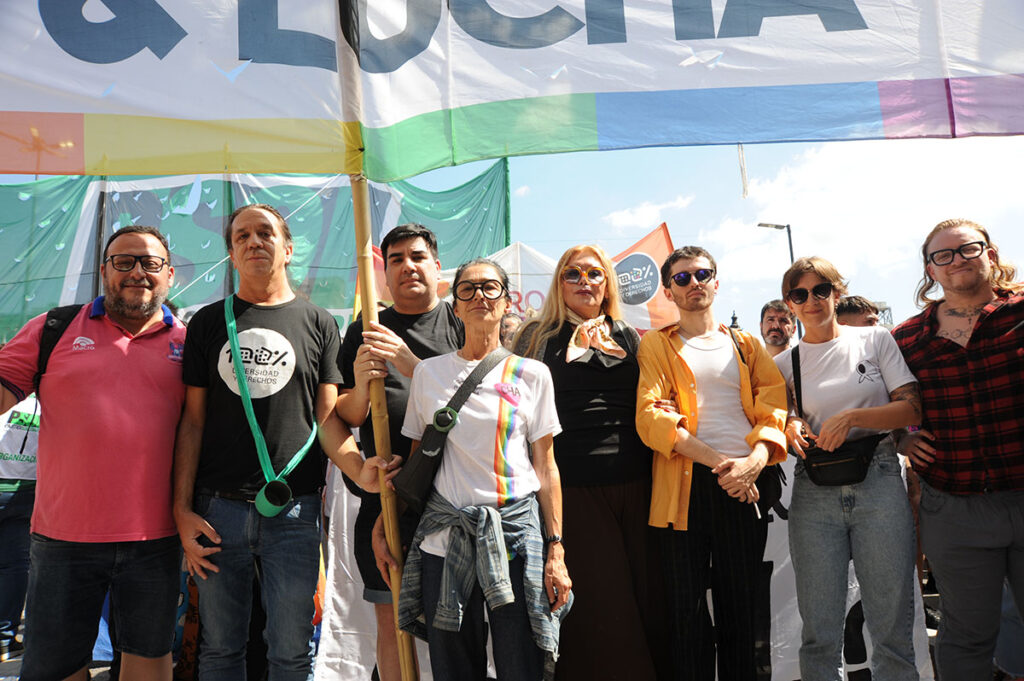
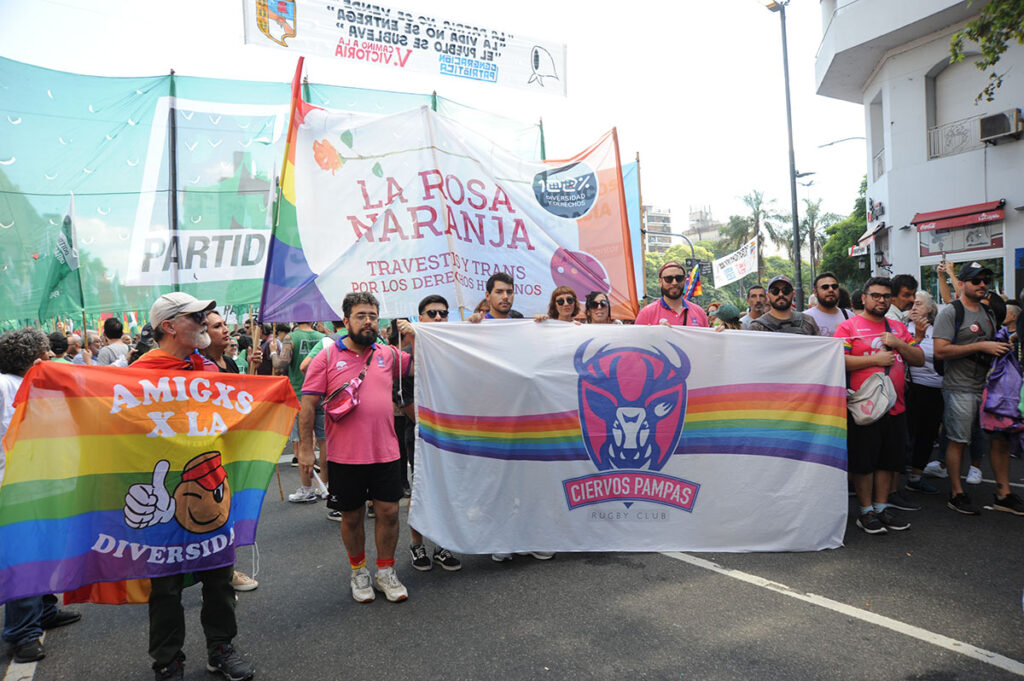
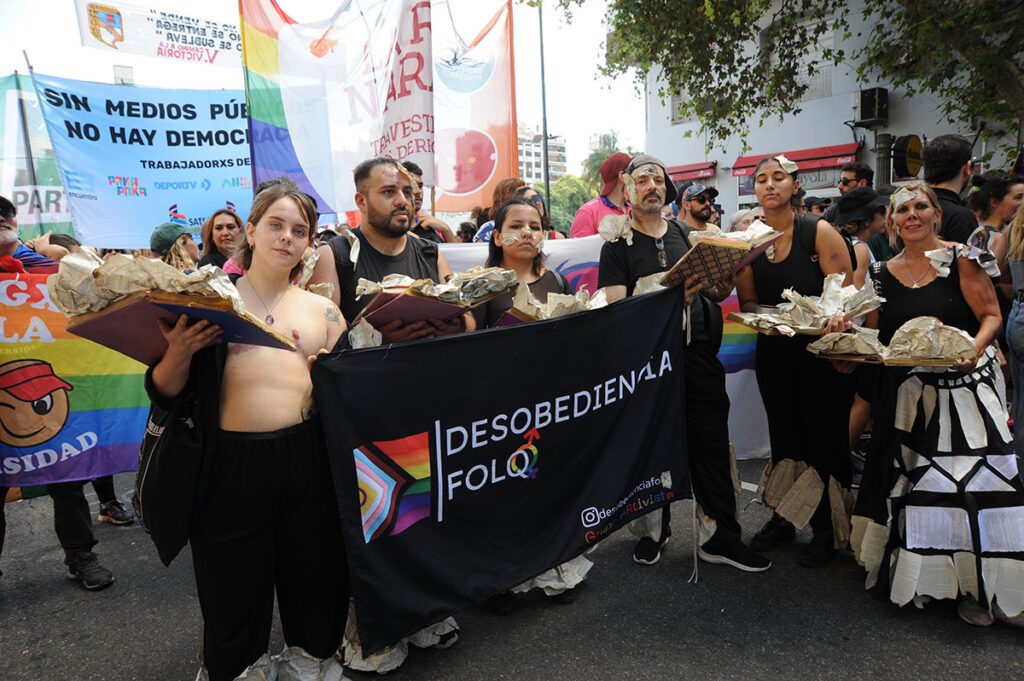
“Never again planned misery! The unity of political and social forces, trade unions and human rights movements, feminisms and diversities must be an urgent mandate to organize resistance and generate the necessary alternatives to put an end to so much suffering ,” said the document read on the stage above Plaza de Mayo by Taty Almeida, Estela de Carlotto and Adolfo Pérez Esquivel.
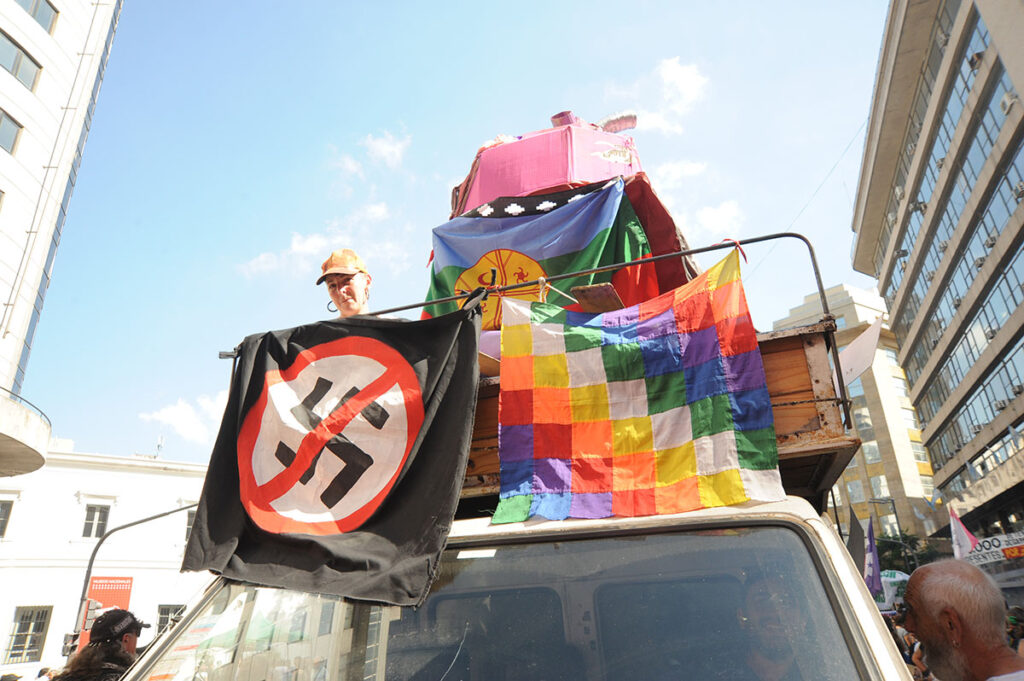
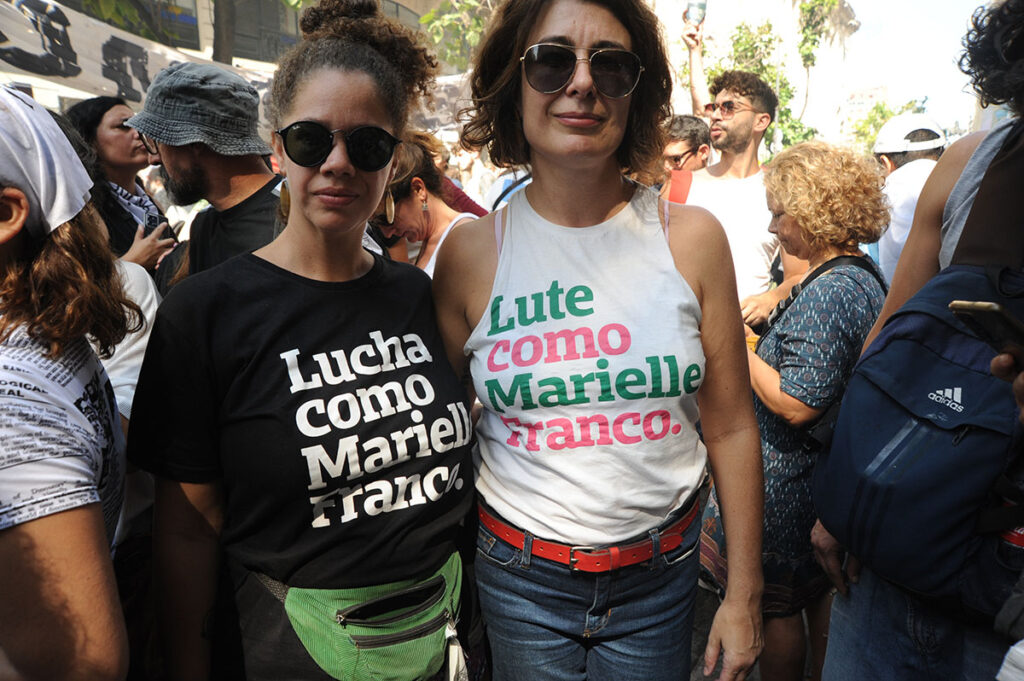
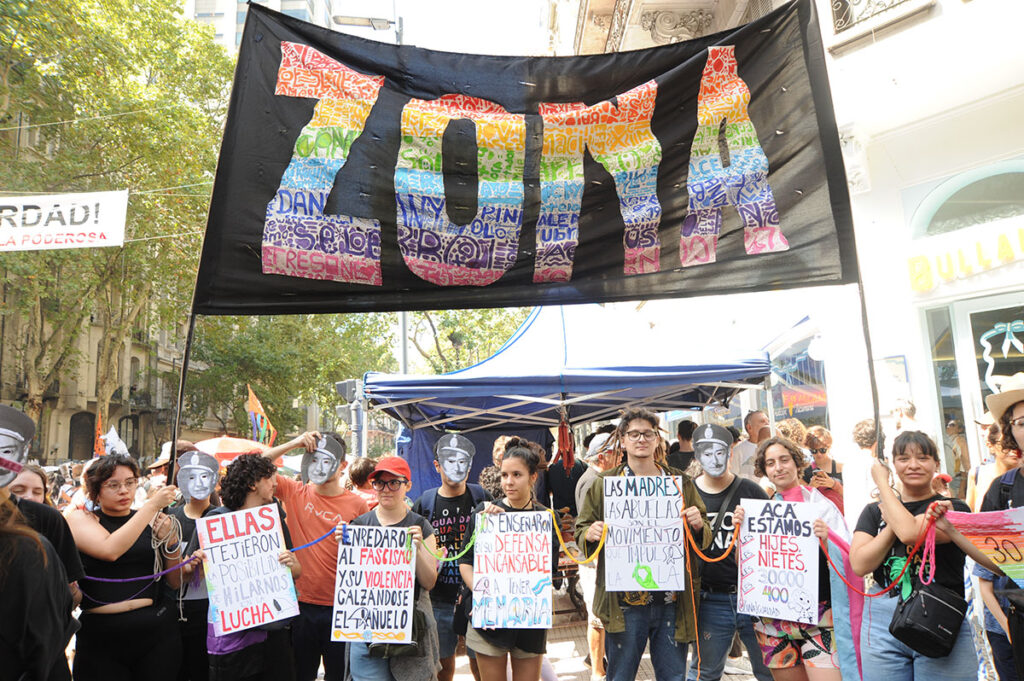
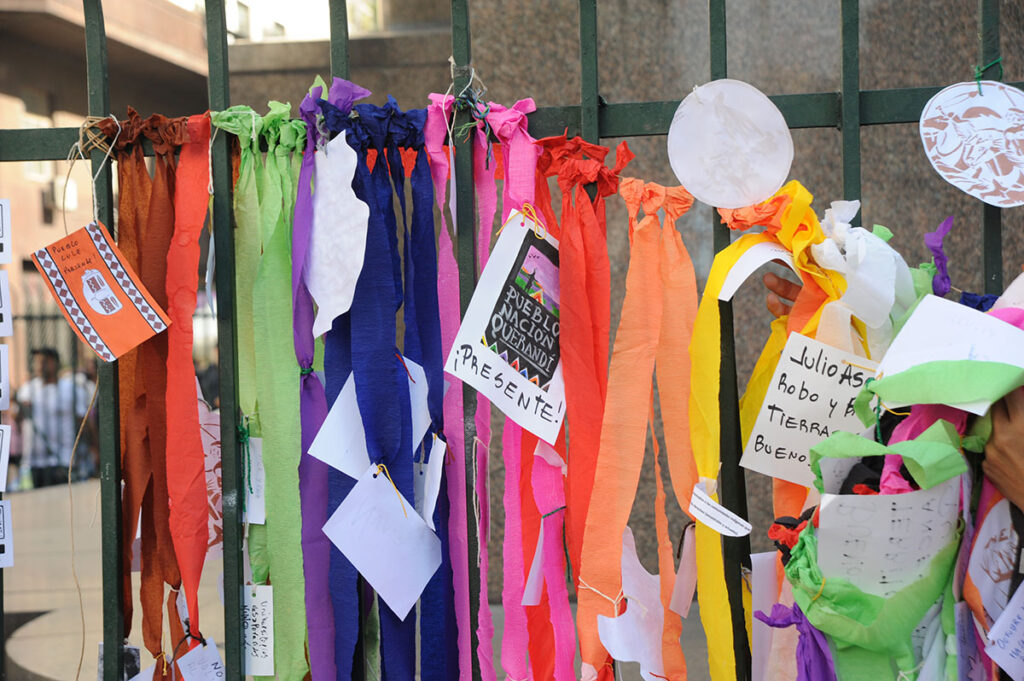
It was a historic and massive day with numerous marches across the country. Hundreds of thousands gathered to strengthen the process of Memory, Truth, and Justice, and to reiterate time and again the commitment that is part of our identity: Never Again means Never Again.
We are present
We are committed to journalism that delves into the territories and conducts thorough investigations, combined with new technologies and narrative formats. We want the protagonists, their stories, and their struggles to be present.
SUPPORT US

FOLLOW US
Related notes

We are present
This and other stories are not usually on the media agenda. Together we can bring them to light.