

Sentence in Santa Fe: life imprisonment for the transfemicide of Alejandra Ironici
For the first time, a court in Santa Fe has used the legal concept of transfemicide. It did so to convict the murderer of activist Alejandra Ironici.


Share

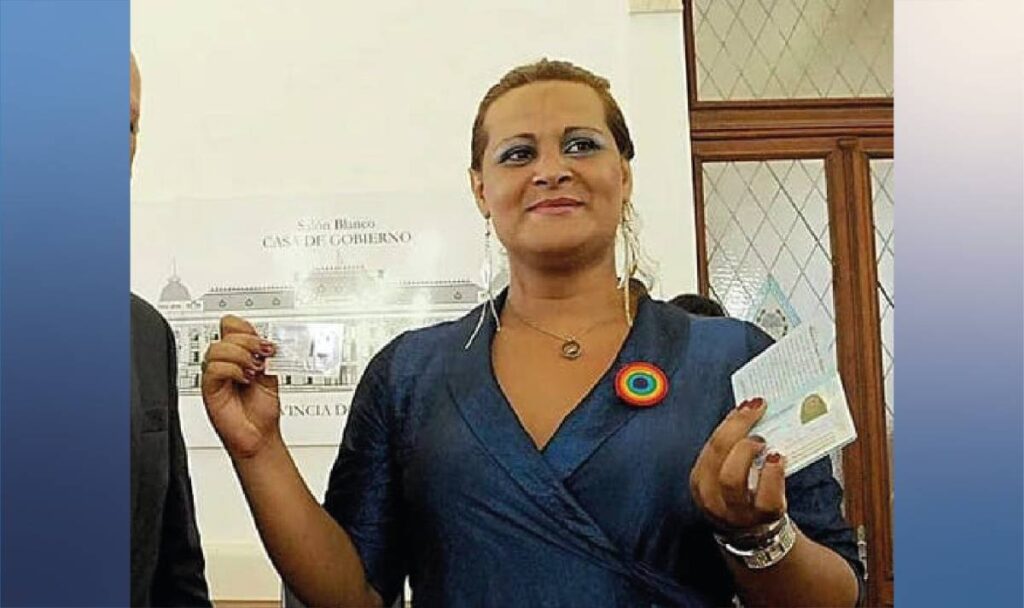
SANTA FE, Argentina. Alejandra Ironici's life was marked by struggle and triumph. Above all, by paving the way and making history. She was the first trans woman to receive a national identity document (DNI) –before the Gender Identity Law–, the first to teach in a school, the first to undergo vaginoplasty in a public hospital, and the first in many other things.
Therefore, the conviction for her murder was nothing short of historic. For the first time, the Santa Fe justice system recognized the murder of a trans person as a transfemicide. Furthermore, it also upheld the demands of the Translesbian Feminist Lawyers Collective —along with the LGBT Public Policy Institute—for the recognition of the State's responsibility and urged other branches of government to take measures to provide redress for the trans community.
The court, composed of judges Pablo Busaniche (presiding), Sebastián Szeifert, and Susana Luna, unanimously sentenced Héctor Barrero—Ironici's partner—to life imprisonment. He was convicted of aggravated transfemicide (due to the relationship between the perpetrator and the victim, and because it was committed by a man against a woman in the context of gender-based violence) and sexual abuse with penetration.
The sentence was announced during the oral and public trial that ended on March 22 in the courts of the capital of Santa Fe.
It's transfemicide.
“The greatest achievement was securing the classification of transfemicide,” said prosecutor Alejandra del Río Ayala, of the Special Prosecutor's Unit for Gender, Family, and Sexual Violence (GEFAS) in Santa Fe, after the verdict . “It's not only complex and novel, it implies a paradigm shift in traditional interpretations of criminal offenses, especially section 4 of article 80 of the Penal Code. It was also challenging in terms of evidence because it wasn't easy. We are satisfied,” she added.
He also emphasized that the sexual abuse charge was proven because it was one that the convicted man systematically denied, even after admitting to the murder.
The case also involved two lawsuits. One was filed by the Center for Access to Justice, representing Ironici's family, and the other by the Collective of Women Lawyers and the LGBT Policy Institute . Lawyer Sofía Basso, representing the latter group, expressed in an interview with Presentes . She was particularly pleased that the Court granted their request to acknowledge state responsibility and order reparations for the entire trans community.
“Today we only learned the outcome, the operative part of the ruling; but we still need to know the full scope of the reasoning, to understand how we convinced the Court of the State’s responsibility in the context of social transvesticide ,” she explained. She insisted that this is a historic precedent in the country .
The voice of all
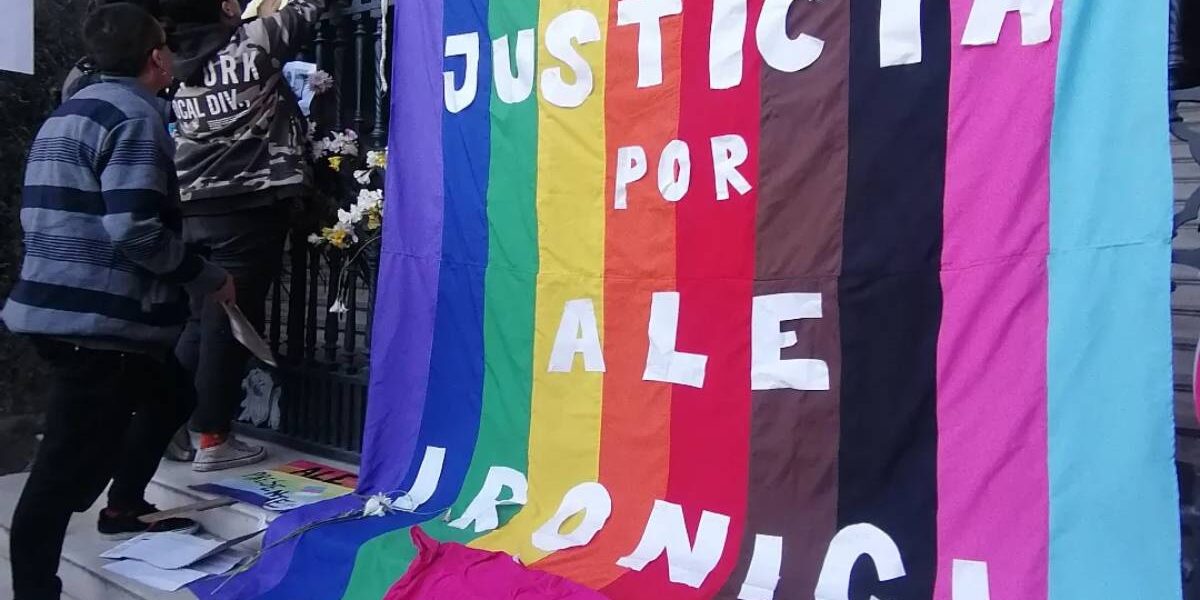
In Plaza 25 de Mayo, in front of the Santa Fe Courts, Alejandra's fellow activists joined with their flags, along with representatives from different political groups and NGOs.
With their eyes glued to their cell phone screens, the group followed the live stream of what was happening inside the courthouse. “Life imprisonment,” came a voice breaking the silence. Seconds later, tears flowed, followed by a bittersweet celebration: “Alejandra Ironici… Present! Now, and forever.” Nothing can bring back one of their key leaders, but justice was served.
Noly Trujillo, a trans survivor and friend of Alejandra, was one of the first to express her agreement with the sentence, stating: “We are satisfied. But now pay attention to us, there needs to be a gender perspective in the police stations. We are part of society and they are killing us . We will remember Alejandra with affection, with love, as a companion, as a sister and friend, with all our hearts,” she added.
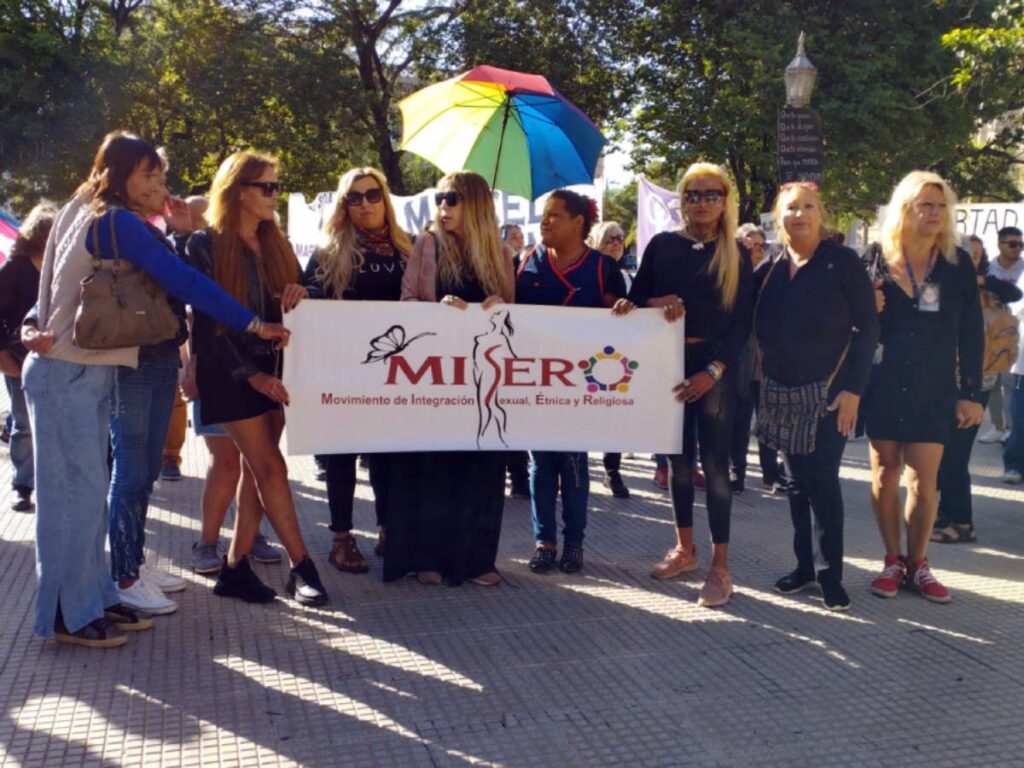
Priscila Martínez, president of the Board of Directors of the Movement for Sexual, Ethnic and Religious Integration (MISER), added: “From now on, we will continue Alejandra’s legacy. This organization, which she presided over, will work for all of society.”
Inside the courthouse, Mercedes and José Luis, Alejandra's siblings, listened to the verdict. They had traveled from Tostado, in the far north of Santa Fe province, the town Ironici left many years ago fleeing discrimination. Only José spoke after the hearing—his sister was still deeply moved—and expressed his satisfaction with the sentence. He recounted that he, at least, only became aware of Alejandra's extensive work and life after her death, when he connected with dozens of people close to her in Santa Fe.
The crime
Alejandra had met Héctor Barrero five months before the trans femicide. He arrived at her house looking for work, and she hired him to do some painting. Jesús, Ironici's nephew, who lived with her, told the court that they became a couple within a week.
The woman didn't find a partner in Barrero. He didn't introduce her to his family or friends, he took advantage of her financially, and when someone came to pick him up, he would walk a block away from the house they shared. This was compounded by a series of incidents of gender-based violence prior to the murder.
From the very beginning of the trial, Barrero admitted to the murder, but always denied the sexual abuse . This stance, according to both the prosecution and the plaintiffs, was yet another example of his contempt for Alejandra's identity and activism. The same could be said of the viciousness with which he attacked her that last time. He accepted being a murderer, but "didn't want his manhood questioned," the plaintiffs stated.
On August 20, 2022, Alejandra and Héctor had dinner at the home of a couple of friends. Around 1:00 a.m. (August 21), they left. They took a walk along the waterfront and returned home. According to a neighbor whose house was next door to Alejandra's, something happened around 3:00 a.m. There was a loud thud, like someone falling to the floor, and then screams. Alejandra was begging them to stop, yelling for help. No one responded, and her voice faded away.
Héctor hit her and threw her to the floor. Then he went to the kitchen to get a butcher knife. He attacked her with the weapon 46 times. The forensic examination determined that only two of those wounds were fatal. The assault occurred almost simultaneously with the murder. When she could no longer endure it, Barrero cleaned the knife, put it away, took Alejandra's money, cell phone, and car, and left the house.
When Jesús returned home, it was late, and he didn't notice anything unusual. His aunt's bedroom door was closed. The next day, he left the house without suspecting anything. That Sunday, Barrero manipulated Alejandra's cell phone to show activity. Around noon, he returned to the house they had shared and set fire to the Santa Fe activist's body (the burns were concentrated on her buttocks). He left the room and closed the door, but the lack of oxygen caused the fire to go out.
That afternoon, Jesús returned home. Alerted by the smell of burning, he opened Alejandra's bedroom door and found his aunt's body. The police determined it was a murder and began searching for Héctor. They quickly found and arrested him at the home of a sex worker. Alejandra's car was parked outside. Her cell phone was on her occasional companion's pillow.
Throughout the trial, Barrero's defense pointed to his cocaine use as the primary reason he committed the crime. However, both the prosecution and the plaintiffs repeatedly emphasized that this was a stigmatizing interpretation of problematic substance use.
Furthermore, they noted that Barrero had been dealing with this situation since adolescence. Throughout that time, he had other partners (cis women), even married and had children, and in no case did he commit gender-based violence. He only did so with Alejandra, a trans woman.
The call for state responsibility
During closing arguments, the prosecution, representing social organizations, requested the same sentence for Barrero for the crime of transfemicide within the context of social transvesticide . They emphasized the importance of the court declaring the province of Santa Fe responsible and urging it to implement a series of measures that promote access to housing and employment, as well as the enactment of laws and the creation of programs to facilitate access to justice.
Specifically, he requested the Court to declare state responsibility and issue the following reparative measures:
1- That the Legislative Branch be recommended to declare a social emergency regarding violence against transvestite and trans people , this being a historical debt to the collective.
2- That it urges the three branches of the provincial State to fully comply with Law No. 13,902 on the inclusion and job stability of transvestite, transsexual and transgender people , promoting their hiring and employment in the public and private sectors.
3- That it request the Legislative Branch to approve the Comprehensive Trans Law project and the Executive Branch to immediately implement the Historical Reparation Law for Transvestite and Trans Persons.
4- That it urge the Legislative and Executive branches to design and implement concrete public policies to address the housing problem faced by trans people, also promoting from that position their employment integration and the attainment of full autonomy and their own housing.
5- That it impose on the Provincial Ministry of Equality, Gender and Diversity, and/or the body that has been formed in its place, within the period of one year from the notification of the sentence, to carry out a diagnosis on the context of violence faced by trans people in the province of Santa Fe and to create a program of access to justice and assistance to people of the transvestite trans collective.
We are present
We are committed to journalism that delves into the territories and conducts thorough investigations, combined with new technologies and narrative formats. We want the protagonists, their stories, and their struggles to be present.
SUPPORT US

FOLLOW US
Related notes
We are present
This and other stories are not usually on the media agenda. Together we can bring them to light.