

A Mexican citizen was arrested in Qatar for being gay.
Manuel Guerrero Aviña was arrested on February 4th. He has been held incommunicado ever since. He is living with HIV, and his family reports that he has been denied access to his antiretroviral medication for the past 20 days.


Share

Manuel Guerrero Aviña is 44 years old and a Mexican citizen. He is being held in Doha, Qatar, for being gay. According to his family, for more than 20 days—since his arbitrary arrest on February 4—he has not received the antiretroviral medication he needs as he lives with HIV. They also claim he is being held in solitary confinement, almost completely cut off from communication, and deprived of sufficient food.
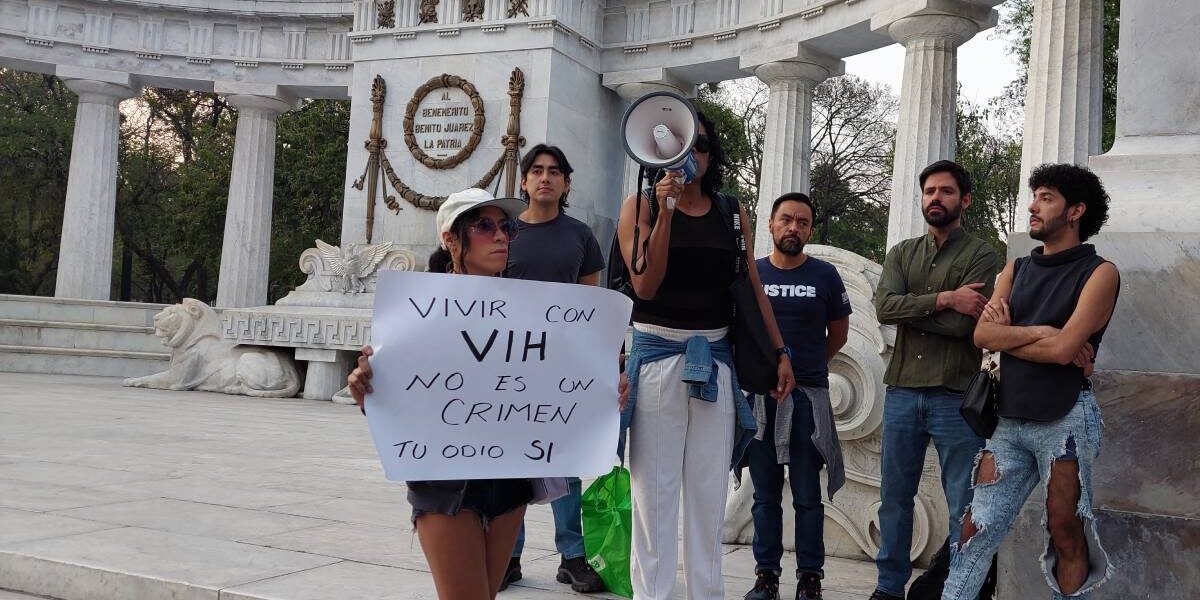
From Mexico City, activists and people living with HIV joined Enrique Guerrero, Manuel's brother, in calling for the Ministry of Foreign Affairs (SRE) to take more decisive action and repatriate him.
Standing in front of the Hemiciclo a Juárez monument in downtown Mexico City, Enrique recounted how his brother was arrested. “The Qatari police created a fake profile on the dating app Grindr to arrange a meeting with Manuel. When Manuel went down to the reception area of his apartment building to meet this supposed date, they arrested him.” Since then, his health has deteriorated. “They are torturing him and condemning him to death,” he said.
For its part, the Manuel Guerrero Committee , made up of sexual diversity activists, detailed that the Qatari police also planted drugs at the time of the arrest.
Time is of the essence
Enrique, a human rights defender, has twice managed, and only for fifteen minutes, to get Qatari authorities to allow him to have contact with his brother.
After being received by Mexican diplomatic authorities, in a dialogue that Guerrero described as positive, it was agreed to have more effective coordination and response. At that time, the Ministry of Foreign Affairs had only been in contact with the family.
By March 13, Qatar could decide whether to formally charge the Mexican citizen with any crime. According to his brother, Qatari law allowed authorities to detain Manuel for nearly a month without filing charges. If legal proceedings are initiated against Manuel at the initial hearing, his health could deteriorate significantly due to his inability to access the medication he needs.
Manuel requires specialized care. There are indications that his viral load is high, meaning the number of copies of the virus in his blood has increased. He needs medical tests before he can resume antiretroviral treatment.
Qatar: arbitrary arrests and criminalization of homosexuality
In Mexico, everyone living with HIV has the right to receive free antiretroviral treatment provided by the state to maintain their health. And same-sex marriage is a reality in all 32 states of the republic. In Qatar, it's different.
Qatar is a Middle Eastern country with just 2.6 million inhabitants. Its population is concentrated in its two main cities, Doha and Al Rayyan. In 2022, the international community focused on the country as it hosted the FIFA World Cup.
A Human Rights Watch report documented “six cases of severe and repeated beatings and five cases of sexual harassment of LGBT+ people in police custody between 2019 and 2022.” The organization asserts that Qatari security forces arrest people in the streets and in public places “based solely on their gender expression and illegally search their phones while they are detained.”
Enrique explained that his brother was forced to identify other gay people using his phone. He was also made to sign documents in Arabic without a translator. According to Human Rights Watch, the six LGBT+ people they interviewed said that the police forced them to sign pledges stating that they would “cease immoral activity.”
Article 285 of Qatar's penal code punishes consensual sexual relations between men over the age of 16 with up to seven years in prison. Furthermore, Article 296 punishes, with one to three years in prison, any man who "instigates" or "incites" another man to "commit an act of sodomy or immorality."
They demand firm action from the Foreign Ministry
The protest in Mexico City followed a statement from the country's embassy in Qatar. The statement explained that the British embassy is handling the diplomatic aspects of the case, as Manuel also holds British citizenship.
“Because the person concerned has registered his residence in Qatar as a UK national, the UK consulate in Doha has been the entity responsible and recognized by Qatari authorities to carry out consular procedures on his behalf,” the embassy explained.
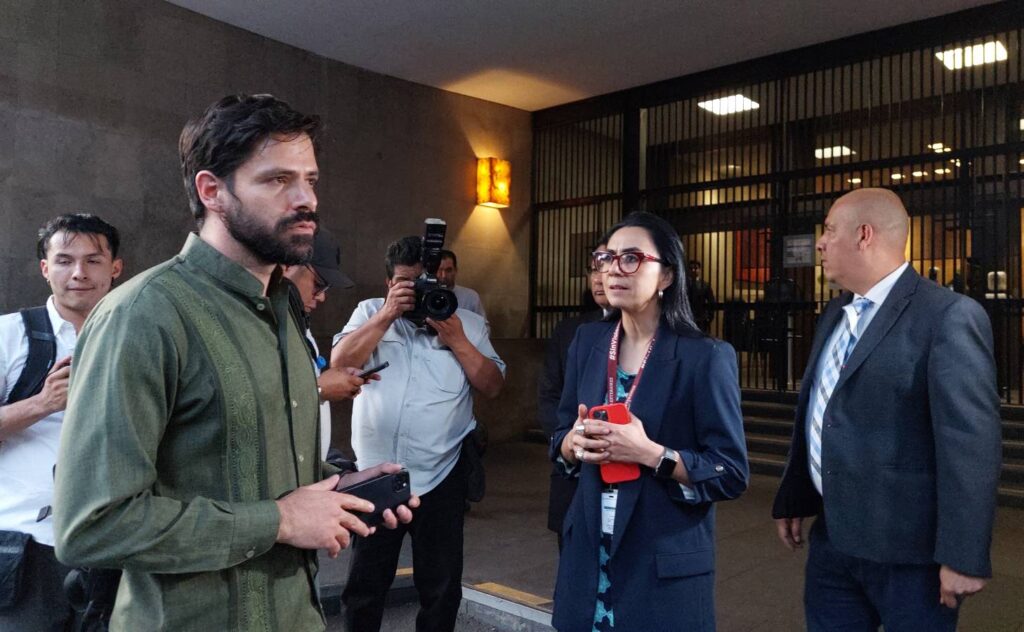
Minutes before meeting with the Foreign Ministry authorities, Enrique Guerrero expressed his displeasure.
“To have a Mexican citizen being tortured and for the Mexican state to respond that it is in contact with the family… and they aren’t in contact with the Qatari government? That’s what we want to hear. They haven’t even issued a diplomatic note, which would be fundamental and urgent. The life of a Mexican citizen is in danger; in fact, his health is deteriorating,” he told the media.
However, after the dialogue, Guerrero said that the Foreign Ministry officials acknowledged that the communication had not been adequate. They committed to coordinating a more effective response, aimed at ensuring that Manuel receives medical attention.
Enrique Guerrero is calling on the government to provide financial assistance for expenses, as he has paid for his trip to Qatar to visit Manuel out of his own pocket.
Also a call to action for Mexico: living with HIV is not a crime
Alaín Pinzón, an activist and person living with HIV, explained that after a somewhat tense start, the authorities were receptive during their meeting. The founder of the civil association VIHve Libre called on the Mexican state to also stop criminalizing living with HIV through the crime of “risk of contagion,” as outlined in Article 199 Bis of the Federal Penal Code, which most states in the country have adopted.
“There is a very unsustainable situation in many states of the republic, especially in conservative states. While there are much more complicated situations (in Qatar), we shouldn't fall behind in the demands here in Mexico. We do need to improve the living conditions, the existence, the health, of people living with HIV. We need to look to cases like these for inspiration,” he explains.

In Mexico City, this same crime was repealed from local legislation just last January 9th. Colima is poised to become the second state to eliminate the corresponding penal article in 2024.
Pinzón also sent a message to people living with HIV who may feel distress or fear upon receiving such news:
“Living with HIV doesn’t make us dangerous, it doesn’t make us criminals. If we want to travel, if we want to work in another country, we should have the necessary resources provided by the State to make that a reality. While Mexico isn’t Qatar, society needs to understand that the Mexican state does have a debt to people living with HIV, the right to exist fully. I think that’s what this country owes us.”
We are present
We are committed to journalism that delves into the territories and conducts thorough investigations, combined with new technologies and narrative formats. We want the protagonists, their stories, and their struggles to be present.
SUPPORT US

FOLLOW US
Related notes

We are present
This and other stories are not usually on the media agenda. Together we can bring them to light.