

“By prohibiting inclusive language in the State, the Argentine government is violating the Gender Identity Law.”
Trans activist and former official Alba Rueda provides legal data and international treaties to argue why the government's decision violates human rights.


Share

The Argentine government's announcement to prohibit inclusive language and a gender perspective in public administration comes on the heels of last week's announcement of the closure of the National Institute Against Discrimination, Xenophobia, and Racism (INADI) . It also follows a resolution issued by the Minister of Defense that prohibits inclusive language and a gender perspective in language use. The resolution states that it only recognizes the Royal Spanish Academy (RAE) as the sole competent authority on language use. Of course, the RAE does not represent the language usage of all Spanish-speaking countries. It represents their position, meaning that this claim of authority is also questionable.
Among other issues, this position of the Minister of Defense has a strong whiff of a colonial stance on the use of language. On the one hand, that's one thing. On the other hand, what does today's announcement mean? It's a prohibition against state instruments taking into account inclusive language or language with a gender perspective. But it's also a denial of a citizenship that is already recognized in Argentina and that the State itself recognizes with the Gender Identity Law . The recognition of non-binary identities is something contained in the Gender Identity Law. But it also relates to the position of court rulings that have recognized this position since 2016.
A direct path to discrimination
So, on the one hand, non-binary identities are already recognized by the courts. Furthermore, the National Executive has a decree, Decree 476 of 2021, which remains in effect and recognizes non-binary identities. This decree also refers to the use of the letter X for people who do not wish to declare their gender to the State or who have a fluid gender. Therefore, one of the serious problems with denying the use of inclusive language is that the Executive reinforces a binary position and, moreover, selects which citizens it is referring to, thus excluding them not only from the use of language but also from access to services. Because if you don't name them, what you are doing is restricting their access to goods, services, and products that the State provides for that population group.
This is not only a position that denies gender diversity and the expressions of our genders, but also a denial of the use of citizenship by exclusively selecting citizens who register in a binary way . This is clearly a violation of the Gender Identity Law, specifically Decree 476 of 2021, which is currently in force, as well as many international treaties that recognize gender identity and its expressions as fundamental human rights.
Prohibition of the exercise of citizenship for the tribune
In this sense, not only have the Yogyakarta principles referred to the importance of recognizing gender expression, but also other international instruments that recognize identity.
The serious problem with Argentina's position is that, in addition to being a setback in human rights, it prohibits the exercise of citizenship. When you remove certain citizens from the nomination process, what you are doing is restricting them, and this is the current position of the national government, which is clearly at odds with gender and diversity.
I believe this stance of human rights violations is fueled by the echo chamber of social media, which celebrates it among a segment of the population. But human rights cannot be judged by likes, and this is a clear violation of human rights.
Take action through the Justice system
The judicial system needs to raise its voice and initiate legal action against the non-compliance with current decrees and regulations. Furthermore , I believe that all human rights organizations must express their condemnation of this position. It's not just about the use of language; it's also about the creation and recognition of citizenship.
The announcement of INADI's closure only exacerbates this situation. Among other issues, this is because the State's own oversight body must be an autonomous institution, an independent entity like INADI, which the Ministry of Justice, where these functions were supposedly transferred, does not fulfill.
This is further proof that when an independent institute is shut down, there's no way to defend people's rights autonomously, without complicity. Because Milei's employee, who is the Minister of Justice, is the one who should be investigating or reporting his boss. And that's not going to happen. So, that's where transparency and autonomy in human rights matters are shattered.
It is crystal clear that Milei's project is not a libertarian project but a conservative, repressive one that nullifies people's citizenship. True freedom does not violate human rights, and this is a fundamental point.
This also demonstrates that the cultural battle surrounding Milei's language is nothing more than an attack on people's rights.
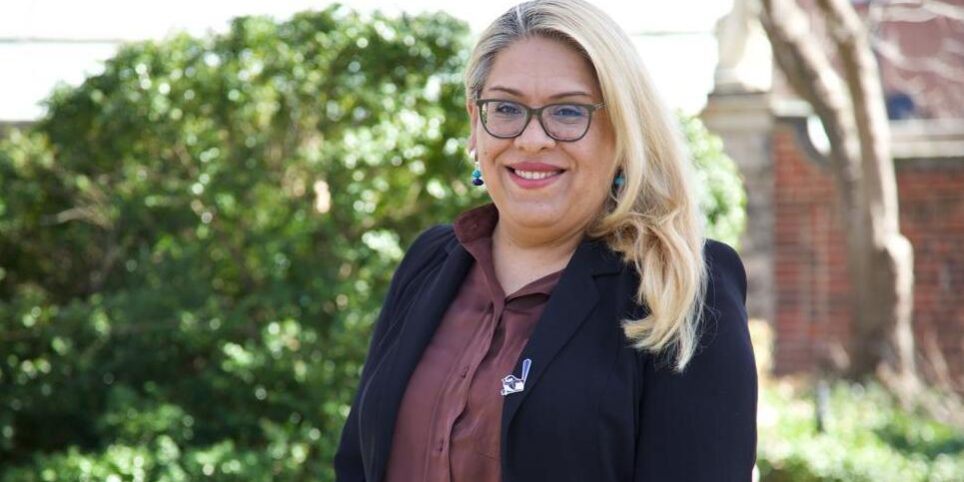
Alba Rueda is a trans activist and former government official. She served as Undersecretary of Diversity Policies at the Ministry of Women and Diversity, and as Special LGBTI+ Representative at the Ministry of Foreign Affairs during Alberto Fernández's presidency.
We are present
We are committed to journalism that delves into the territories and conducts thorough investigations, combined with new technologies and narrative formats. We want the protagonists, their stories, and their struggles to be present.
SUPPORT US

FOLLOW US
Related notes
We are present
This and other stories are not usually on the media agenda. Together we can bring them to light.