

Internet for all: 5 key findings on the digital divide and LGBTI people
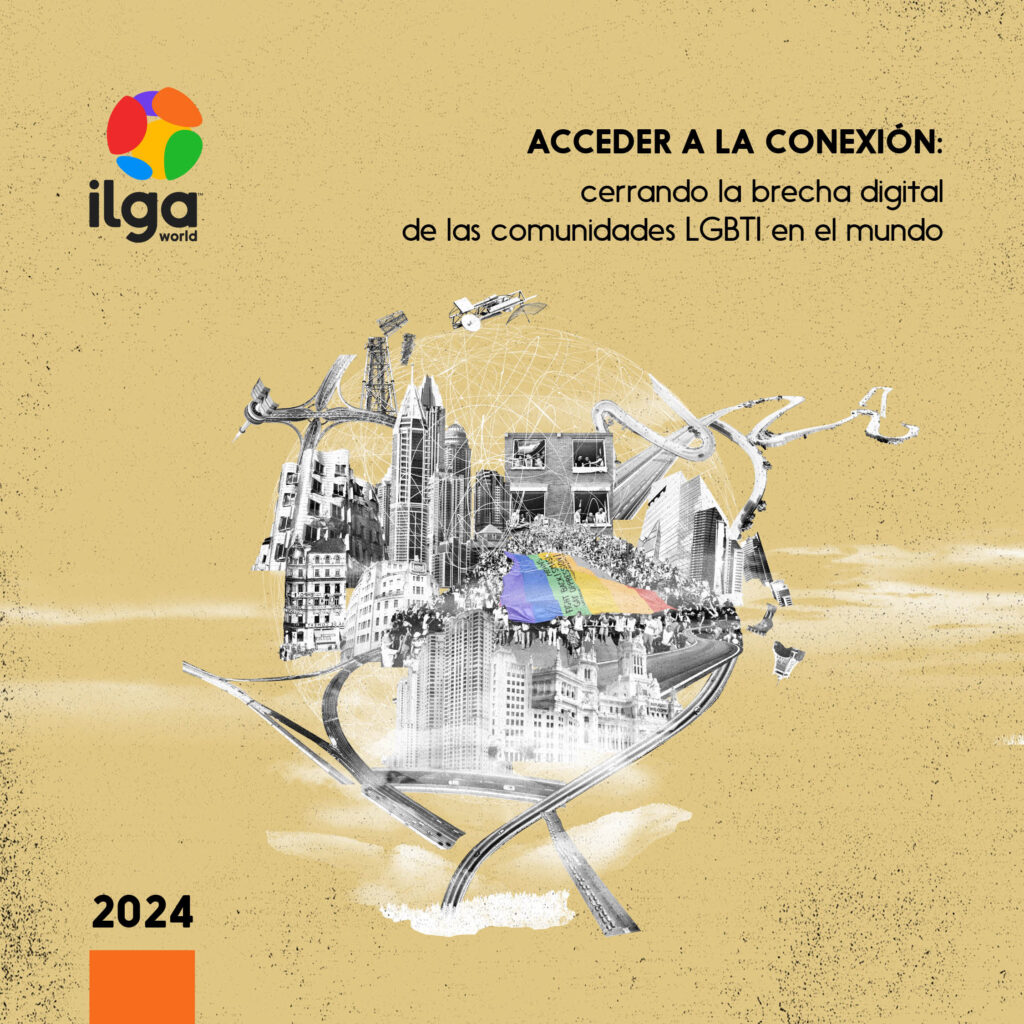
Accessing the Internet: Closing the Digital Divide for LGBTI Communities is a research project by ILGA Mundo and The Engine Room. It analyzes how inequality and identity affect access to technology and what needs to change to achieve an internet for all.


Share

The digital divide—how new technologies are riddled with inequalities of all kinds—is rarely discussed. Even less is said about how this divide affects lesbian, gay, bisexual, transgender, and intersex (LGBTI) people. A pioneering research project, spearheaded by ILGA World , decided to address this issue and presented its findings globally today.
Accessing the Connection: Closing the Digital Divide for LGBTI Communities Worldwide is the title of the publication written by Olivia Johnson and Jeff Deutch of The Engine Room. This non-profit organization, dedicated to supporting the use of technology in civil society, produced this work at the request of ILGA Mundo. It was edited by Daniele Paletta (communications manager at ILGA Mundo, working in media and communications) along with Helen Kilbey (The Engine Room).
This analysis, viewed through the lens of intersectionality, focuses on LGBTI people and examines internet access in different regions of the world, applying a gender approach and considering variables such as race, migratory status, geographic regions, urban-rural contexts, cultural diversity, and disability.
“ LGBTI people have found the online space to be revolutionary . It has helped to create community, lead movements, and provide tools to make themselves heard, even in very hostile environments,” explained Daniele Paletta at the presentation of the report released today. “However,” she added, “these possibilities are not equally accessible to everyone. To date, 2.6 billion people worldwide remain offline. For the rest of the global population, access to digital resources depends on overcoming barriers based on the intersectional aspects of their identities .”
The research compiles stories that illustrate the diverse ways in which LGBTI people access the internet. One chapter details the challenges of internet access in different regions and through various means. Through data and accounts from human rights defenders, the report analyzes how this is intertwined with other conditions that, in the case of LGBTI identities, also shape and/or hinder access. These include the economic situation of those unable to find employment due to their gender identity or sexual orientation, social stigma, hostile legislation, harassment, and persecution. The report emphasizes that these difficulties are amplified for LGBTI people living with disabilities, due to a lack of inclusive design practices.
LGBT content filters, the preponderance of some languages over others, all of this " makes it extremely difficult for our communities to fully use the sites, access information and use it to defend their rights ," ILGA World stated at the report's launch.
“Connectivity transformed us.”
“ Online connectivity has transformed our work as LGBTI organizations and our presence as individuals ,” said Julia Ehrt, Executive Director of ILGA World. She warned, “But it also creates a vicious cycle: those who are most vulnerable and economically disadvantaged are also the hardest to reach and support. They are the most affected by the harms of censorship, blocking, and online harassment. This deprives them of crucial opportunities to advocate for their rights and build community.” ILGA emphasizes that despite the challenges posed by connectivity, “ grassroots LGBTI organizations continue to implement ingenious ways to serve their communities , including the least connected.”
Five key findings on the digital divide and LGBTI people
Key findings of the investigation include:
-The internet is essential for LGBTI organizations (fundraising, solidarity, etc.)
-Financial barriers translate into a lack of access to technology and internet connectivity.
-Inclusion of disability and digital accessibility must be greater.
-It is necessary to address the online violence and harassment suffered by LGBTI people
Social and legal barriers limit the full expression of LGBTI people online. Legislation that criminalizes and monitors LGBTI communities prevents people from fully enjoying the many benefits the internet offers.
What needs to change
The research also makes a series of recommendations about what needs to change for a world without a digital divide. It suggests:
-Increase cooperation between movements and borders.
-Improve virtual experiences through education and awareness.
Legal reforms are key to addressing the digital divide for LGBTI people. And she emphasizes: protecting the lives of LGBTI people is a priority in order to reduce the digital divide.
-Strengthening internet access requires greater support and funding
What's happening with connectivity in Latin America?
The second chapter, Accessing Connection, addresses access to technology and internet connectivity in different regions. “Among the main barriers listed by ILGA office members and interviewees are limited access to smartphones, computers, and digital devices due to financial difficulties. At the organizational level, both LGBTI organizations and those that represent or work with LGBTI people often face significant funding shortfalls,” the report states.
Regarding the specific situation in Latin America and the Caribbean, it highlights that “While service prices have decreased in recent years, income inequality, coupled with taxes associated with internet service (especially in Ecuador and Argentina), means that many people cannot afford it. Poor service quality, power outages, and high service charges are additional obstacles that contribute to the frustration caused by the price factor.”
The internet wasn't created for everyone.
In another chapter, Accessing the Connection focuses exclusively on the intersection of LGBTI, disability, and digital accessibility. “An important dimension of digital accessibility is recognizing that the internet was not created or designed for everyone. Access and content are limited, especially for LGBTI people living with a disability. People with disabilities are also more likely to face economic and access difficulties when it comes to connectivity,” she explains.
Digital harassment and discrimination
Later, in the section on Digital Violence and Harassment, the researchers state that “ harassment and discrimination are key factors preventing LGBTI people from connecting and impacting their everyday experiences . Fear of online safety is a key factor in the mobile data usage gap, which can, in some cases, be as influential as price and affordability. In Guatemala, safety and security are the main reasons why men and women do not use the internet (when they have access); in Mexico, women say the same. Cis and trans women, non-binary, gender-diverse, and intersex people face greater exposure to digital violence and harassment . This situation is further aggravated by factors such as Black misogyny and racialized forms of violence.”
The research includes a section on the social and legal barriers faced by LGBTI people. It concludes with a series of recommendations and success stories. The data was gathered from conversations with ILGA's regional offices and in-depth interviews with both members and non-members of ILGA World.
The full report can be read here.
On Thursday, February 22, 2024, ILGA is organizing a webinar to share the main findings of the report "Accessing Connection" on the LGBTI digital divide.
Share
We are present
We are committed to journalism that delves into the territories and conducts thorough investigations, combined with new technologies and narrative formats. We want the protagonists, their stories, and their struggles to be present.
SUPPORT US

FOLLOW US
Related notes



We are present
This and other stories are not usually on the media agenda. Together we can bring them to light.