

The court orders the Buenos Aires City government to facilitate access to housing for transgender people
A ruling, described as "historic", orders the presentation of a program and a survey of the housing situation of the trans community.


Share

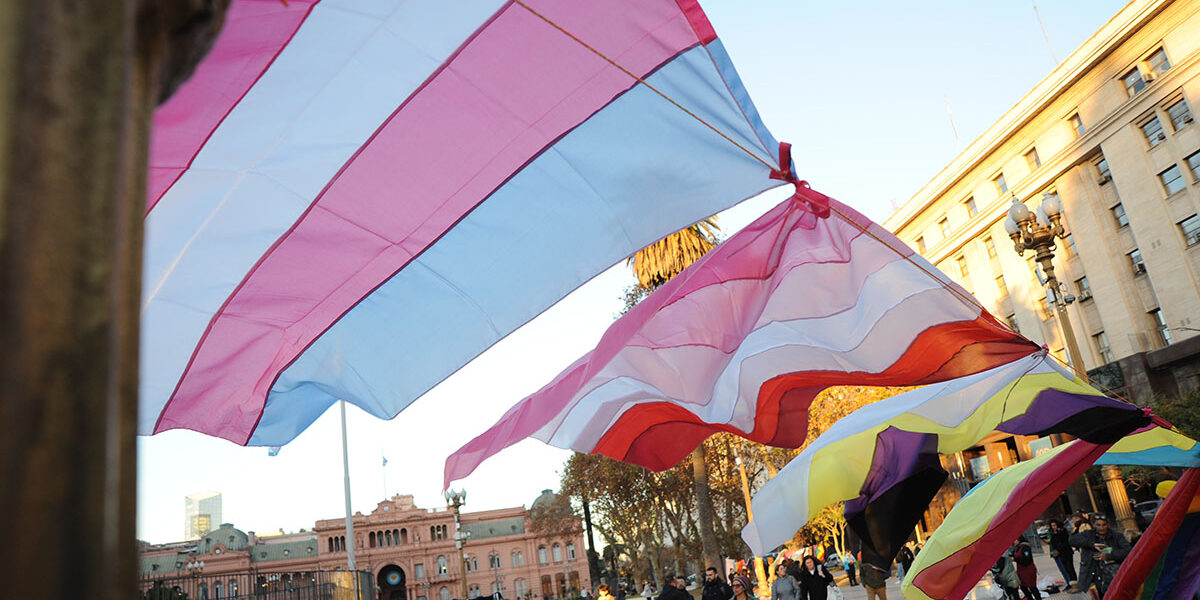
BUENOS AIRES, Argentina. In a decision hailed as “historic” by activists, the Buenos Aires City Judiciary ordered the City Government (GCBA) to present a housing program for transgender people within 90 days. It also urged the government to conduct a census of this population residing in the city. Evidence, a 65-page report from the prosecutor, and persistent pressure from LGBTIQ+ organizations were key to the decision.
This is a ruling by Chamber 3 of the Court of Appeals of the Administrative Litigation Court that took place on February 1, 2024. It was signed by judges Horacio Guillermo Aníbal Corti and Hugo Ricardo Zuleta, with the dissenting vote of judge Gabriela Seijas.
“The housing programs of the GCBA do not take into account the difficulties of the actor group in accessing them, which means that these policies are not adequate and do not provide a minimum threshold of guarantees required of the local State,” the document states.
A victory for activism
The Argentine Federation of Lesbians, Gays, Bisexuals and Trans ( FALGBT ) and the LGBT Ombudsman celebrated the sentence .
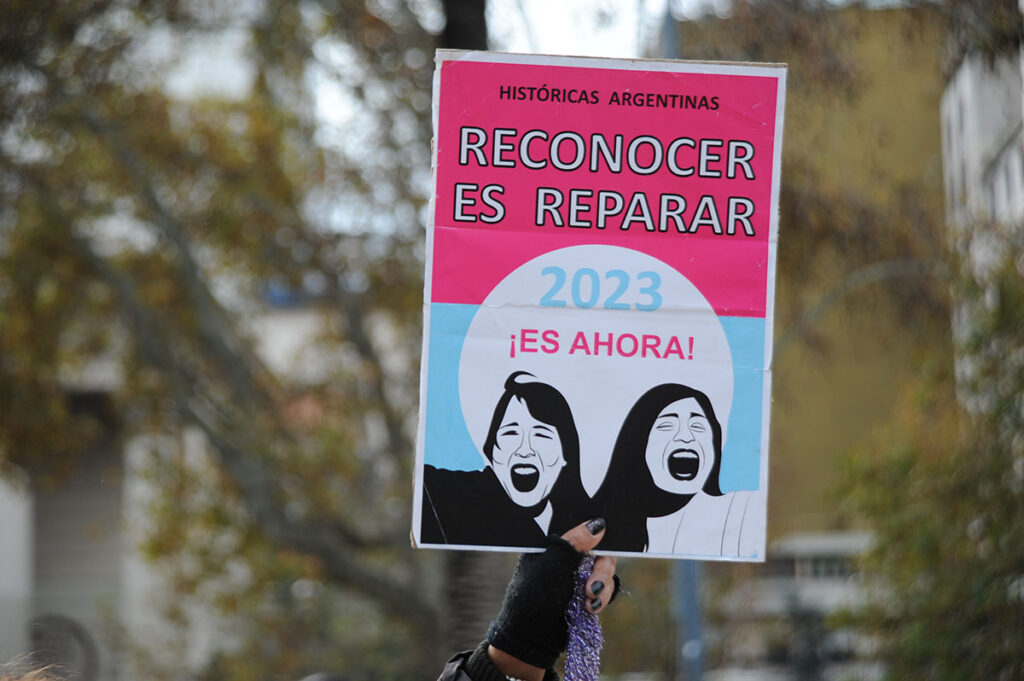
“After a few years of legal battles, we achieved this court ruling that orders the City Government to develop a housing plan for trans people in the City of Buenos Aires,” said María Rachid, head of the Institute against Discrimination of the Ombudsman of the Autonomous City of Buenos Aires (CABA ) Presentes
“We have already asked the City Government of Buenos Aires to let us start working on this plan as soon as possible, and we hope that will happen. Hopefully, the City will not appeal. Ultimately, that is what a government has to do: work to ensure that all its residents have access to their rights,” Rachid continued.
The case began in 2018 based on an injunction filed by the Public Defender of the first instance and the Argentine Homosexual Community (CHA) against the GCBA to obtain adequate accommodation.
The process was transformed into a class-action lawsuit following a decision by Judge Roberto Gallardo. FALGBT and the LGBT Ombudsman joined the case, while the 100% Diversity and Rights Civil Association was admitted as amicus curiae.
On that occasion, the Buenos Aires city government rejected the lawsuit, and then, in August 2022, Dr. Martín Converset rejected the injunction. In response, the Public Defender's Office , FALGBT, and the LGBT Ombudsman appealed.
The helplessness of a large population
The judges reached their current decision based on the evidence submitted in the case. This evidence illustrated “the negative experiences of transgender people when trying to obtain adequate housing assistance.” In addition, socio-environmental reports, a survey of hotels, and interviews conducted by the Public Defender's Office were included.
Judges Corti and Zuleta agreed with the arguments presented by prosecutor Juan Octavio Gauna, who prepared a 65-page report. In it, he detailed the problems obstructing the right to housing for the transgender population in the district and the need to modify or create appropriate policies. He also requested that the ruling rejecting the injunction be overturned and that the petition be partially granted.
“(Trans people) in vulnerable situations who reside in the City do not obtain mortgage loans from the local Housing Institute (IVC) , as they do not have the required stable income, nor do they qualify within the priority scheme stipulated by said authority that promotes the benefit for families with children and people with disabilities ,” said Dr. Gauna.
The prosecutor also demonstrated that the housing subsidy provided by the Buenos Aires city government "does not effectively solve the housing deficit suffered by members of the community, as there are barriers to accessing the hotels and boarding houses that are usually used in this type of program."
Furthermore, she warned that there is no official data on the trans population in the district. “This lack of information is a factor that helps explain why the social programs implemented by the City regarding housing have not provided an adequate response for members of the trans community ,” she asserted.
Ninety days to submit a plan
The judges granted the appeal and overturned the ruling that had rejected the organizations' injunction. They also ordered the Buenos Aires City Ministry of Social Development to present a program for access to housing for vulnerable transgender residents of the City within 90 days. This program must "include dissemination, implementation timelines, and the responsible agency," they stated.
They also ordered the GCBA to conduct a survey of the trans community in the district in relation to housing and social programs within the same timeframe.
Judge Seijas dissented, arguing that it was not proven that the State "left people in a state of extreme vulnerability in a state of helplessness, unable to provide for their basic and urgent vital needs."
When contacted by this agency, Pamela Malewicz, Undersecretary of Citizen Culture and Human Rights for the Buenos Aires city government, said, “We are aware of the housing problem currently faced by people living in the City of Buenos Aires.” She also acknowledged that “the trans population has historically experienced significant disadvantages regarding housing.”
In this regard, she shared that the Directorate of Coexistence in Diversity of the Undersecretariat coordinates with the Ministry of Human Development and Habitat to "give an immediate response to the spontaneous demand for shelter" in the shelters for people in street situations or situations of violence.
And he pointed out that this work “is not focused solely on the immediate response to the emergency”, but “on access to rights for trans people to improve long-term prospects”.
Current policies are insufficient
Throughout his opinion, Prosecutor Gauna had warned about the shelter and hostel policy offered by the City of Buenos Aires government. “Even limiting the examination to those facilities that admit trans and travesti people on a quota basis, it is not adequate as it does not represent a sustainable solution. These are environments where people's privacy is not properly protected, they provide for temporary stays, and daytime stays are exceptional,” he stated.
According to the prosecutor, “while the GCBA currently has various regulations, programs and agencies that address the problem of lack of access to decent housing in its jurisdiction, focusing on the most vulnerable people in the population, (…) with regard to the trans community in a vulnerable situation residing in the City, these public policies, when they can reach their recipients, do so in a disjointed manner and without considering their particularities.”
“This leads to a situation of systematic ineffectiveness of the aforementioned actions, as they fail to provide timely protection to the group, at the minimum threshold of guarantees required of the local State,” he concluded.
We are present
We are committed to journalism that delves into the territories and conducts thorough investigations, combined with new technologies and narrative formats. We want the protagonists, their stories, and their struggles to be present.
SUPPORT US

FOLLOW US
Related notes



We are present
This and other stories are not usually on the media agenda. Together we can bring them to light.