

El Salvador: Bianka Rodríguez, the first trans woman to vote using her gender identity
Bianka Rodríguez voted for the first time with a validated identity in El Salvador's elections. Aldo Peña, a trans man, voted despite not being registered to vote, as the state has refused to recognize his name change based on gender identity. Legislation protecting the right to identity of the trans population in El Salvador is lacking in institutional processes such as voting.


Share

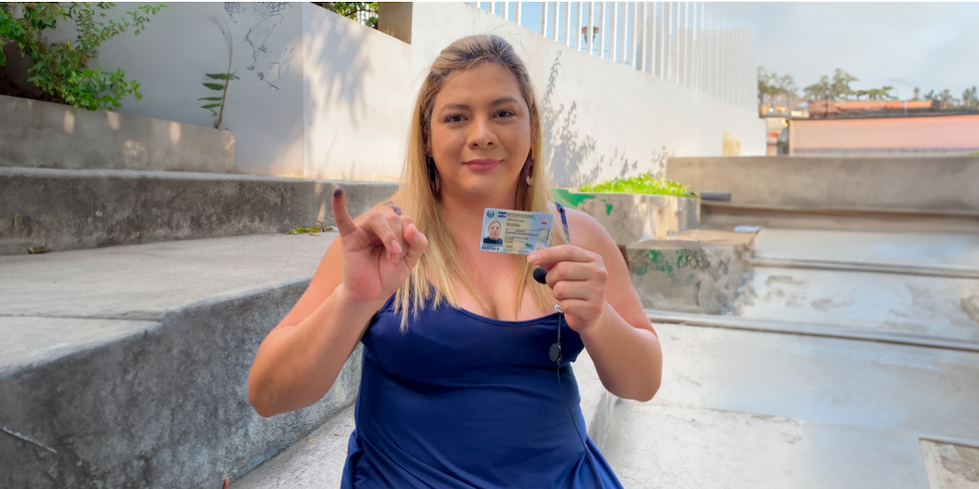
SAN SALVADOR, El Salvador. The February 4 elections are the first in which Bianka Rodríguez votes using her chosen name. Rodríguez, executive director of ILGALAC , is the first transgender woman in El Salvador to have her name legally recognized on her National Identity Document (DUI).
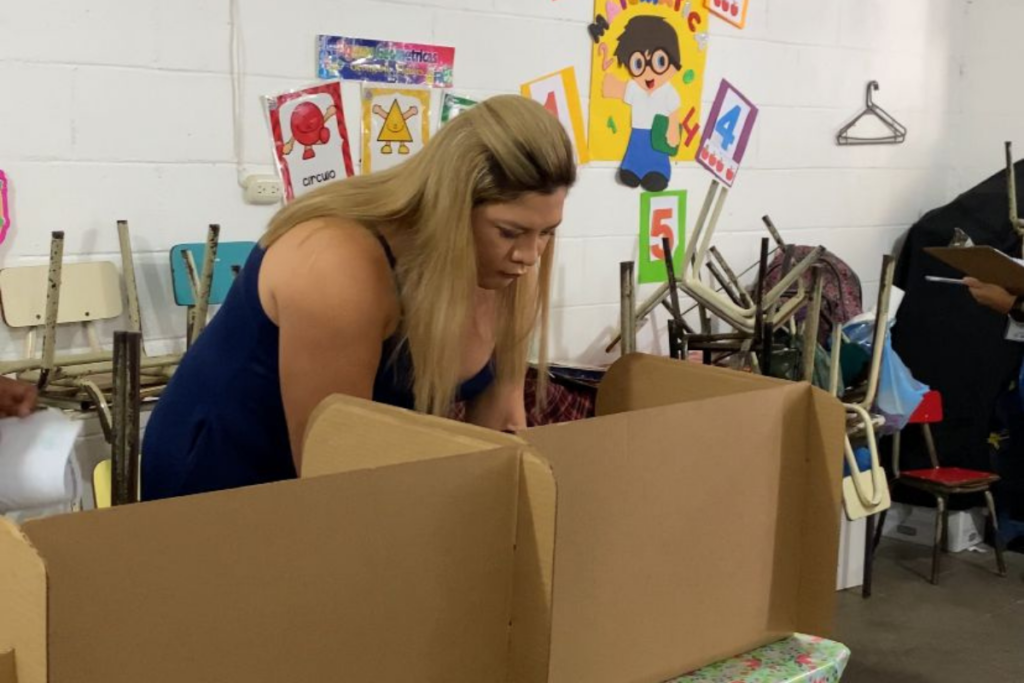
On Sunday afternoon, she went to the polling station at the "Alberto Masferrer" Early Childhood Education School in Cuscatancingo. There, she met with representatives from the Human Rights Ombudsman's Office (PDDH), who were monitoring the process remotely to ensure it ran smoothly. Her name on the voter registration list matched the name on her national identity document (DUI).
“This is the first time I’ve voted with an identity that truly represents me ,” Bianka emphasized. She noted that this achievement was a challenge, acknowledging the privilege of having changed her name in contrast to other trans people who are still fighting for recognition of their identity.
“For me, as Bianka, this is a pivotal moment in my life because it marks the beginning of the elimination of the institutional violence that permeates public institutions and so greatly affects our enjoyment and fundamental freedoms of human rights.” Bianka hopes that the Legislative Assembly will comply with the Constitutional Chamber’s ruling to reform the name law.
However, the Legislative Assembly, during the 2021-2024 term, has caused significant setbacks in human rights and for the LGBTIQA+ population . In May 2021, the Legislative Assembly's Women's Commission rejected 29 proposed laws, including the draft Gender Identity Law submitted by LGBTQ+ organizations . That same year, the organizations updated the proposal and resubmitted it to the Assembly, but did not receive a response from all political parties. For this proposed law to be approved, 43 votes were needed, a simple majority. Nuevas Ideas, the ruling party, holds 56 of the 84 seats, a qualified majority .
Although the rights of the LGBTIQA+ population, including gender identity recognition, are not fully recognized, Bianka emphasizes the importance of participating in political processes and the need to exercise the right to vote. She highlighted that we are not far from seeing trans women elected in the country and stressed the importance of running for these positions to ensure the representation of this segment of the population.
"We cannot continue voting for people who have forgotten us or kept us in the dark of democracy. LGBTIQA+ people are part of this democracy, of the citizens of this country, and we must exercise our right to vote, and that right must be free from violence and discrimination."
The fight for a name
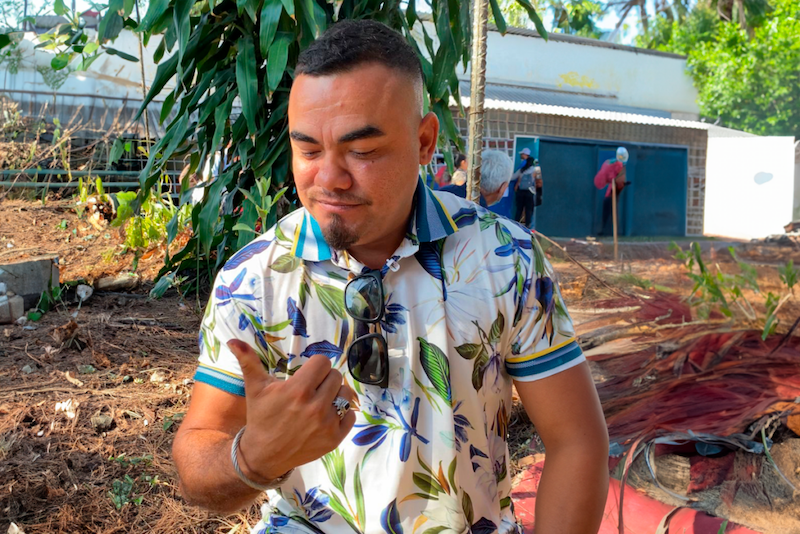
Aldo Peña, a 40-year-old trans man, went to vote on February 4th despite not being registered to vote. His absence is due to the fact that the State does not recognize his name change for reasons of gender identity. The name that appears on his National Identity Document (DUI) does not reflect his gender identity or expression. And it does not match the name he uses and is recognized by others. Since turning 18, he abandoned that name and, if it had been possible, he would have started using his real name, Aldo, at the age of 8.
At 9:05 a.m., Aldo arrived at the Juana López School in Ciudad Delgado to cast his vote. He was discreetly accompanied by a representative from the Human Rights Ombudsman's Office (PDDH), ensuring that his right to vote was not violated.
These elections aren't Aldo's first. Carrying out official procedures and being the object of puzzled stares is nothing new. However, with a touch of amusement, he remarks that there's always surprise at the polling stations when he shows up, since his name doesn't match his appearance.
On this occasion, the person receiving his document didn't pay attention and called out his previous name. Aldo politely asked them to refer to him by his last name.
“Coming to vote is like going to the Social Security office for a checkup. It makes me a little nervous because I worry about what kind of people I’ll meet and whether I’ll face discrimination,” Aldo shared, after noting that, generally, people at the polling stations receive training to respect voters’ privacy. “But this time, she seemed very nervous. I could tell she was more anxious than I was, even though I came with the fear of being discriminated against.”
In 2022, a judge ruled that his name should be changed on his official documents to reflect his gender identity ; however, city hall staff ignored this ruling. Despite the systematic violation of his right to identity through the refusal to recognize his name, Aldo is exercising his right to vote.
“I am now legally Aldo Alexander Peña, I am legally Aldo. Unfortunately, they didn't comply with the judge's order. She ordered my birth certificate to be changed, but the order was invalid for the city hall staff who refused to give me my documents ,” Aldo recounts. He affirms that he will continue fighting to ensure that this change is made and that he, like the rest of the population, is guaranteed the right to his identity.
The Supreme Electoral Tribunal (TSE) states in its instructions for members of the Polling Station Boards (JRV) that LGBTIQA+ individuals must exercise their right to vote in an environment free from discrimination. It emphasizes that transgender people will not be denied the right to vote if the photograph on their National Identity Document (DUI) does not match their physical appearance (gender expression), explaining that it is sufficient to verify their physical features and that their name, ID number, and signature match the records in the electoral register.
According to TSE staff, those serving on the polling station boards (JRV) are trained to ensure no one is prevented from voting based on their appearance and have conducted campaigns to encourage participation from the entire population, including the LGBTQIA+ community. During a training session for journalists organized by the TSE, Alharaca inquired about the implementation of this training. It was reported that since the dissolution of the Secretariat of Social Inclusion during Nayib Bukele's first cabinet meeting in June 2019, they have faced difficulties establishing contact with various organizations to create, validate, and implement protocols and training programs. Nevertheless, efforts continue to guarantee that everyone can exercise their right to vote without discrimination.
This article is published as part of a content partnership between Alharaca - where it was originally published - and Presentes.
Share
We are present
We are committed to journalism that delves into the territories and conducts thorough investigations, combined with new technologies and narrative formats. We want the protagonists, their stories, and their struggles to be present.
SUPPORT US

FOLLOW US
Related notes



We are present
This and other stories are not usually on the media agenda. Together we can bring them to light.