

“Repairing violence is a debt owed by states.”
How have anti-rights groups in El Salvador managed to remove everything related to comprehensive sexuality education from the education system? In this interview, Vilma Vaquerano, head of the Observatory of Violence Against Women at the organization ORMUSA, answers this question.


Share

This article is published as part of a content partnership between Pikara - where it was originally published - and Presentes.

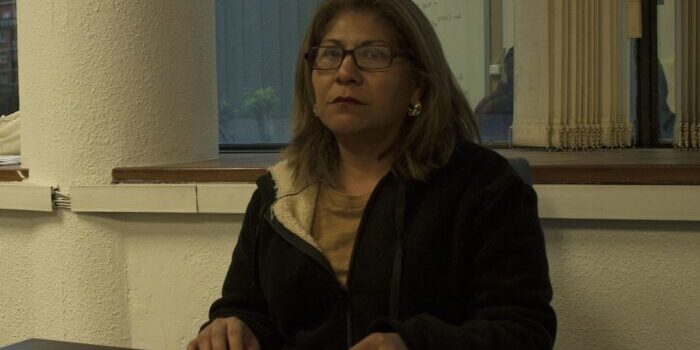
Femicide, physical and psychological violence, sexual violence, domestic violence, social violence, and economic violence. These seven types of gender-based violence are what the Salvadoran Women's Organization for Peace ( ORMUSA ) Vilma Vaquerano , with a serious face, measured words, and a calm voice, leads a permanent team of eight people that makes up the Observatory of Violence Against Women. This team monitors media outlets, conducts research, and seeks institutional data to understand the various manifestations of violence against women in El Salvador. " It's very important to have a comprehensive understanding of all the forms of violence and also to see what happens with the enforcement of the law," Vaquerano explains.
With a degree in Communications and Journalism, a master's degree in Strategic Communication Management, and postgraduate studies in non-sexist education, among many other gender-related topics, Vilma Vaquerano has 27 years of professional experience in communication for development, designing observatories, and creating information campaigns and research projects, 17 of them at ORMUSA. She recently visited the Basque Country at the invitation of the Assembly for Cooperation for Peace (ACPP), one of the organizations with which ORMUSA collaborates on projects to strengthen women's leadership, prevent violence, and provide support to women survivors.
You are doing a job that the State does not reach.
We are a feminist organization. ORMUSA has been contributing to the defense of women's rights for 38 years, and our mission is to strengthen women's capabilities. We also serve as a resource for some survivors of violence. Our role is to help ensure that municipal policies developed within local governments have a gender perspective and respond to women's agendas.
Nearly four decades of work, why is your work still necessary?
I believe the work of feminist organizations is fundamental in contributing to the recognition of different forms of violence against women , empowering women so that, from an ecological model of violence prevention, they can identify the support services available to them. Furthermore, we also serve as a resource for other women who want to feel supported, with psychological or legal assistance, during legal proceedings or after experiencing violence. And we offer technical assistance to government officials to foster a nuanced understanding of gender-based violence and to contribute, to the best of our ability, to strengthening public and local institutions.
Ecological model?
This means that we must consider the factors that can trigger violence against women: the availability of healthcare; the existence of specialized and sensitized institutions; and the measures that are not only aimed at victim support, but also at prevention, punishment, investigation, and reparation. This reparation must have an individual component for the victim, but also a collective component so that states take the necessary steps beforehand to prevent these acts from recurring. It involves revisiting concepts like due diligence in the care of women, derived from the Belém do Pará Convention , which outlines how to address the individual needs of the perpetrator and the victim, as well as the social factors involved. Our organizations emphasize identifying this rape culture, this culture of violence—all the elements in the environment that legitimize and justify it, and ultimately hinder efforts to find solutions to eradicate violence against women.
Your colleague from ORMUSA, Silvia Juárez, has denounced, in the Salvadoran media outlet Alharaca , “the closure of programs addressing violence by the Government and the reduction of the budget to programs such as Ciudad Mujer”; according to her, this causes women and civil society to be “the ones who are assuming that role that corresponds to the State to guarantee the rights of Salvadoran women.”
Organizations are demanding that all state policies have a gender perspective, which means adopting budgets that meet the needs and specificities of women, complying with the comprehensive special law for a life free of violence, and strengthening the institutional services created under this law, such as specialized units and municipal offices. It also means addressing women's needs, from providing support after an act of violence to implementing prevention and reparation measures, which have always been a debt owed by states. Most importantly, in cases of violence, not only should the perpetrator be punished, but all projects and actions aimed at repairing the harm done to women should also be guaranteed. States must take the necessary measures to prevent the recurrence of acts of violence and to enable women to rebuild their lives or create new ones after experiencing violence.
But has there been a reduction in policies and the allocated budget under Nayib Bukele's government?
I couldn't say about budgets because there isn't much public information available to identify specific programs or services offered to women. Access to information is quite limited. There's also little dissemination of information about the programs themselves, so I don't have any details. It 's important to make ongoing recommendations to ensure that all the programs that the State is obligated to provide, according to the Comprehensive Special Law for a Life Free of Violence and the Equality Law, are available.
You say that repairs are one of the most expensive issues.
It's difficult because it's not just about the resources allocated, but also about a traditional view of access to justice. And people often think that access to justice means that you were raped, the rapist is caught, convicted, and that's it. But it doesn't mean, for example, if there was harm done, how do I provide you with the services you need to recover? It also means considering that this situation of violence caused you to drop out of school or prevented you from having employment opportunities. In addition to providing psychological and legal support services, it means how do I provide opportunities or conditions for this harm to be repaired from a gender and feminist perspective? It means facilitating conditions so that this woman can rebuild her life, or if she hasn't had a life plan, how do I provide her with the necessary support, whether through loans, educational scholarships, housing programs, or other opportunities?
Is there any progress being made on the path to repair?
It is very difficult because of the budgetary issue, because of the vision issue, and because there is no tradition of access to restorative justice, but rather a punitive one for acts of violence.
Silvia Juárez also pointed out that sex education in El Salvador has regressed 60 years due to the relationship between the Salvadoran state and religious structures.
From our organizations, we have been pointing out the need to institutionalize comprehensive sexuality education. It has never been directly integrated into the curriculum, but efforts have been made, especially to train teachers and to guide its mainstreaming in some educational programs; however, there has been no process of institutionalizing comprehensive sexuality education. It has usually been through international cooperation and organizations that actions have been taken toward institutionalization, toward the Ministry of Education, or directly with both school-age and out-of-school populations. Since October 2022, there has been an intention to omit or remove everything related to comprehensive sexuality education from educational programs, which could have negative consequences. While there has been progress in reducing teenage pregnancy, it is a persistent problem; the most important thing is how to delay pregnancies in girls and adolescents, and to understand the role that education plays within these models. From our organizations, we have emphasized that comprehensive models for preventing and addressing violence against women not only attend to the victims, but also how to prevent it by modifying all the cultural patterns that legitimize violence.
And why do you say October 2022? What happened?
Educational programs were broadcast on public television, and protests began to emerge from anti-rights groups claiming that "gender ideology"—I'm going to use that term—was being included in the educational programs. This was the trigger used to remove everything related to comprehensive sexuality education from the education system.
In other words, these pressure groups have the ability to modify progress or cause setbacks.
Yes, there is a reactionary movement. And what's most interesting is that the entire movement originates in South America . When we looked at Twitter, when we saw the messages pressuring for these programs to be suspended, they came from groups in South America; this gives us an idea of how these groups are organized internationally , and how they exert pressure on states in a coordinated way to remove this essential content from our societies.
And have you identified any type of Church?
No, at least not on that particular occasion; it was mostly anti-rights groups. In the past, there was strong pressure from the Church to eliminate all the comprehensive sexuality education programs implemented by the Ministry of Education; it's been almost a constant. There is a lot of opposition, misinformation, and prejudice surrounding the feminist movement and issues that promote gender equality.
The most well-known struggle of the Salvadoran feminist movement outside your borders has been for the decriminalization of abortion . What is the current status of this issue?
There have been proposals to decriminalize abortion in four specific cases, but all of these initiatives were shelved after 10 years. It has been evident how, regardless of the government in power, the decriminalization of abortion is an issue that political parties believe could have electoral consequences; they believe that by aligning themselves with certain feminist demands they will lose votes or fear a loss of public image. Currently, there is no possibility of discussing any abortion; all intentional abortions are punishable by law. The Penal Code has not been amended since it was eliminated, around 1996, from some of the grounds under which abortion was previously permitted.
And meanwhile, there are women in prison.
Yes, women are still imprisoned. The Feminist Collective and some specific campaigns to free certain women and obtain pardons have had very positive results, but women remain incarcerated. There is a ruling currently before the Inter-American Court of Human Rights in the case of Beatriz , which was a landmark in this entire struggle. Beatriz's situation helped to put on the agenda, within the public consciousness, how the prohibition of abortion, the absolute criminalization of abortion, can have serious consequences for women, but also for healthcare systems. The most important thing is to understand the prejudice or stigma surrounding abortion, whether induced or spontaneous, and to analyze it from a rights-based perspective, but also from the perspective of the determinants of health, because there are specific situations such as malnutrition, lack of access to healthcare, age, or lack of knowledge that can lead to health complications for women.
We are present
We are committed to journalism that delves into the territories and conducts thorough investigations, combined with new technologies and narrative formats. We want the protagonists, their stories, and their struggles to be present.
SUPPORT US

FOLLOW US
Related notes

We are present
This and other stories are not usually on the media agenda. Together we can bring them to light.