

Mexico: Dissident groups protest against gentrification in Oaxaca
During the demonstration, the first against gentrification in Oaxaca, the police arrested community activists.


Share

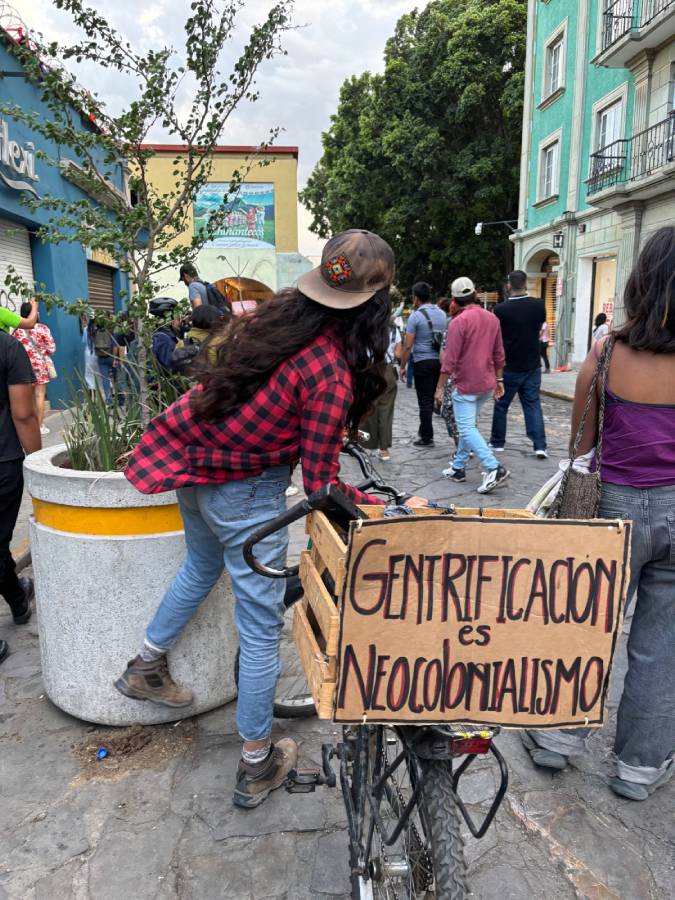
On Saturday, January 27, in the city of Oaxaca, various collectives called for the first march against gentrification in the city. At the end of the protest—a calenda (a type of traditional demonstration in this state)—police arbitrarily detained six activists, including women, non-binary people, and members of the Ayuuk community, who are dedicated to defending human rights and doing community work with vulnerable populations.
In Oaxaca, they have denounced that "gentrification and touristification is a process that has been occurring as part of the current and ongoing colonization," explains Lencholx, a non-binary person who attended the protest-calenda and who has been involved in community work with different collectives.
“The march sought to highlight not only gentrification and over-tourism, but also cultural dispossession, the displacement of Oaxacan people from the city and their communities, and the lack of water, because we see that all these problems are connected. Defending our territory isn't just about the communities; it's also about the cities,” Lencholx told Presentes .
In a press conference, the governor of Oaxaca, Salomón Jara Cruz, described the protest as "racist," downplayed the reasons for the demonstration, and compared the protesters to Hitler.
A government that does not protect
The six activists arrested dedicate their community work to the projects La Comedora Comunitaria Nkä'äymyujkëmë , which provides food to migrants and other vulnerable populations; the collective La Campamenta , which offers support for abortions and other sexual and reproductive rights; and the human rights collective COJUDIDI , which provides legal and mental health support to dissidents and elderly autistic individuals.
While the protest against gentrification and over-tourism in Oaxaca was taking place, the state's tourism secretary, Saymi Pineda Velasco, was signing a letter of cooperation in Spain to make the city a global LGBT tourism destination. According to a statement from the secretary, the agreement will place "special emphasis on collaboration with the Muxe community ."
In the last two years, Oaxaca has consistently ranked among the top five states in the country for reported LGBT-hating violence. This information comes from various activist efforts and hate crime observatories that document the violence, given the Mexican state's failure to collect data on these communities. Despite having laws such as the same-sex marriage law and the trans identity law, activists denounce the lack of protocols for their implementation.
Activists are beaten, arrested, and investigated
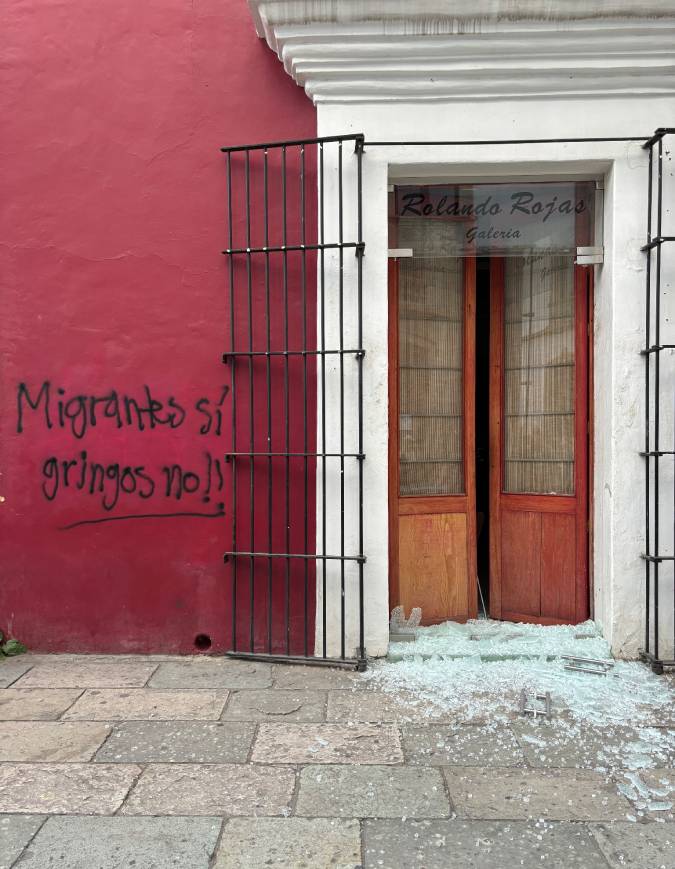
On Saturday night, after the protest-calenda, activist Meztli Jimenez, human rights observer Nizayeéjh Chavez, and members of La Comedora Filadelfo Desierto, Isla Céspedes, Ricardo Martínez and Antonio Díaz were beaten and illegally and arbitrarily detained by state police in Oaxaca.
Videos circulating on social media show four police officers subduing one of these individuals. Those who attempted to help and document the assault were also arrested. Authorities stated in a press conference that the officers were caught in the act. However, to this day, the activists remain unaware of the reasons for their arrest and the charges against them. They have not been granted access to their case files.
In an interview with Presentes , Meztli Jiménez, a member of La Campamenta, stated that during their detention, police officers subjected them to sexual harassment and psychological torture. They were told they would be disappeared. They were beaten, prevented from speaking to each other, and held incommunicado for nine hours without access to their lawyers.
“As women, as dissidents, I was worried that we would be sexually abused. We have physical and emotional injuries, post-traumatic stress, and there has been a lot of institutional harassment. There is a clear message to criminalize protest and those of us who support all forms of demonstration. We were released because they couldn't find any evidence in 48 hours, but we are still under investigation,” Meztli says.
Although all six individuals are under investigation, they also allege that armed police officers have visited their homes to verify the information they provided.
Political circles in Oaxaca continue to issue messages criminalizing protest.
The gentrification process in Oaxaca
“The issue of gentrification has been brewing for years. But this was the first time that society took to the streets to protest. It’s a citizen demand, because we feel the urgency more and more,” explains a member of one of the collectives that organized the protest, who prefers to remain anonymous for safety reasons due to police harassment.
“While the pandemic slowed things down a bit, we’re now seeing waves of tourists,” he adds. “We’re especially concerned about the people who come to live in Oaxaca, and how their presence displaces locals to the outskirts. We simply can’t compete with the dollars or the salaries they earn to make ends meet. And the displacement of Oaxacans is because in downtown Oaxaca we can no longer afford even housing. Life in the city’s outskirts is even more precarious in terms of services. Right now, there’s a serious problem with water and garbage.”.
In this article , Carla Escoffié, a lawyer specializing in housing law, commented that in Mexico there are no public housing policies because housing is seen as a market commodity, not as a need and a right.

The high cost of housing
In addition to the housing issue, the people we consulted for this article explained that downtown Oaxaca now features cafes, galleries, upscale hotels, and even signs in English. They also noted that the cost of living is rising, evident in the increased food prices and the disappearance of spaces that were once accessible to Oaxacans.
“We see that this wave of gentrification originates from the government. It also comes from the State when they remove migrants, precisely because of this idea that the city shouldn't be full of migrants and racialized people. The State is carrying out a whitening, a persecution and harassment that is not new to the collectives that do community work with these populations in the city's public spaces,” Lencholx adds.
Photos: Juan Elman
We are present
We are committed to journalism that delves into the territories and conducts thorough investigations, combined with new technologies and narrative formats. We want the protagonists, their stories, and their struggles to be present.
SUPPORT US

FOLLOW US
Related notes


We are present
This and other stories are not usually on the media agenda. Together we can bring them to light.