

Transvestite and trans reparations in Argentina: achievements and testimonies of survivors
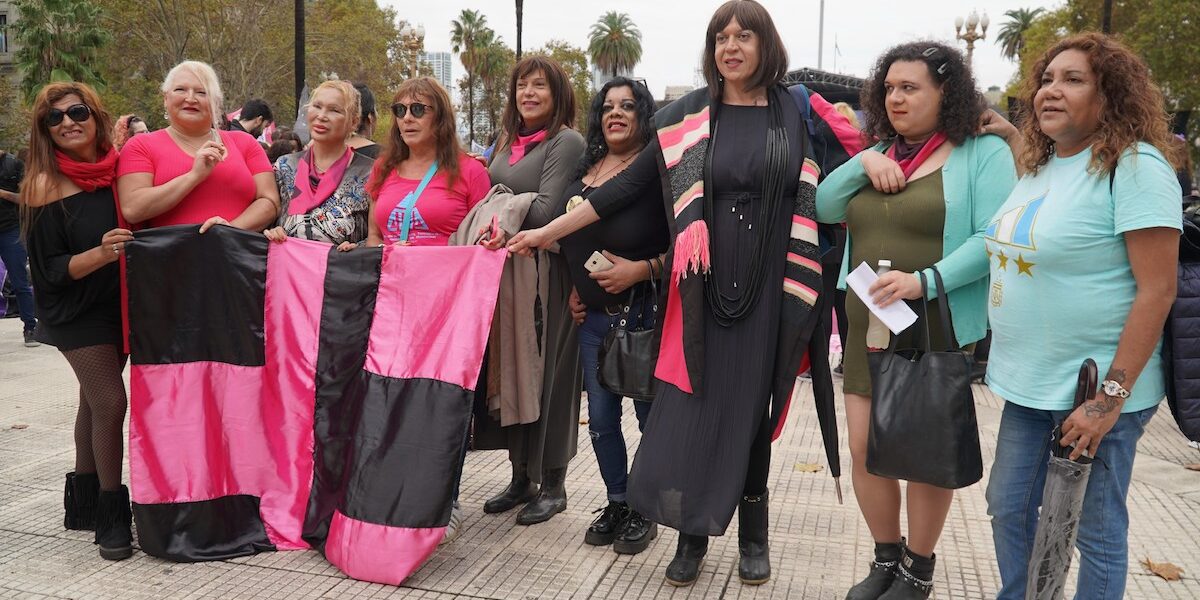
A decade ago, the transvestite and trans community began a tireless struggle for an Economic Reparation Law that recognizes the damages suffered during the military dictatorship (1976-1983) and the first 28 years of democracy.


Share

The history of the transvestite community is marked by decades of discrimination and marginalization, a painful reality evidenced by numerous testimonies from survivors and the research "The Butterfly Revolution", specifically the chapter "Aging and old age in transvestites and trans people, some pending issues", which account for the difficult situation that older transvestite and trans people have lived through and currently also suffer.
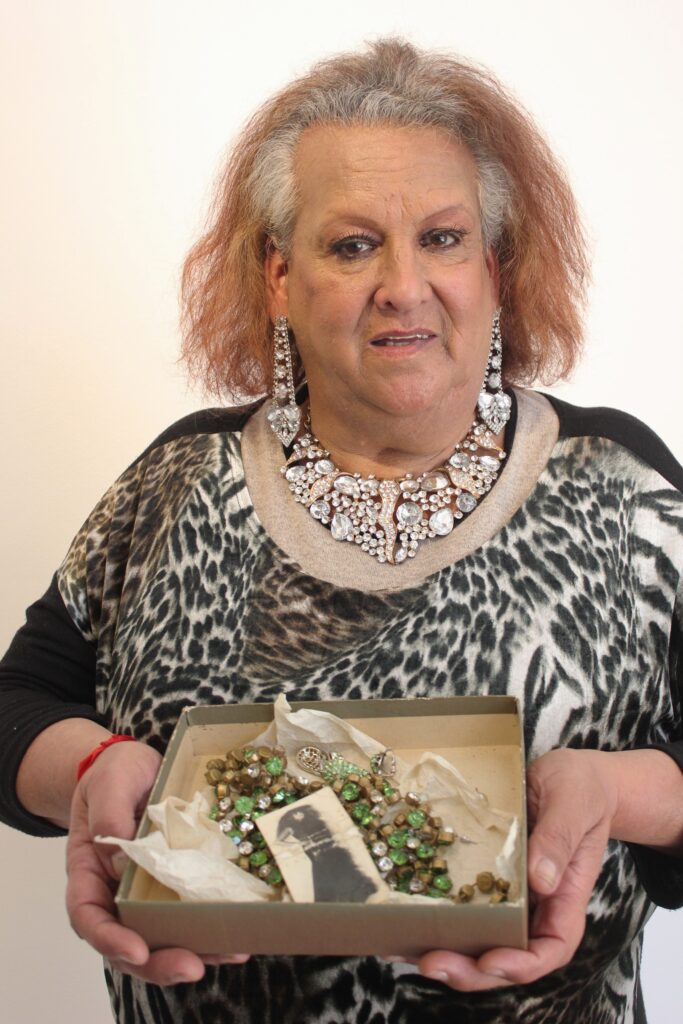
Norma Gilardi 10/28/2023 Interview Haroldo Conti Cultural Center for Memory. Photography María Eugenia Azar.
A decade ago, the transvestite and trans community began a tireless struggle for an Economic Reparation Law that recognizes the damages suffered during the military dictatorship (1976-1983) and the first 28 years of democracy, which, according to the collective, democracy for the transvestite and trans community began with the promulgation of the Gender Identity Law in June 2012.
Over time, the legislative path toward economic reparations has undergone significant changes. Initially focused on institutional violence, it evolved to encompass the violence suffered during the military dictatorship, including concepts such as compensation, reparations, and genocide. The following is an overview of various bills and efforts (some successful) in different regions of the country to achieve the long-awaited economic reparations or non-contributory pensions for the trans and travesti community, accompanied by moving testimonies from people over 50 years old, true survivors of a historic struggle that is still ongoing.
Over time, the legislative path toward economic reparations has undergone significant changes. Initially focused on institutional violence, it evolved to encompass the violence suffered during the military dictatorship, including concepts such as compensation, reparations, and genocide.
The various projects and policies
In recent years, several bills and efforts (some successful) have been explored in different regions of the country to achieve the long-awaited economic reparation or non-contributory pension for the transvestite and trans community survivors, accompanied by moving testimonies from people over 50 years old, authentic survivors of a historical struggle that has not yet concluded.
Legislator María Rachid presented a bill in the City of Buenos Aires to establish a monthly non-contributory pension for transvestite and trans people over 40 years of age; only those with incomes below 5810 could receive it. This bill itself lacked a restorative spirit, in addition to requiring a change of legal gender, contradicting the spirit of the Gender Identity Law.
Norma Gilardi, a survivor of the dictatorship, recounts: “ My family left a deep mark on me; I couldn’t believe they preferred me dead to alive. You couldn’t walk around under the dictatorship. I remember that on November 13, 1976, that very night they took me from the theater. From there I ended up in jail, and I regained my freedom when Alfonsín took office.”
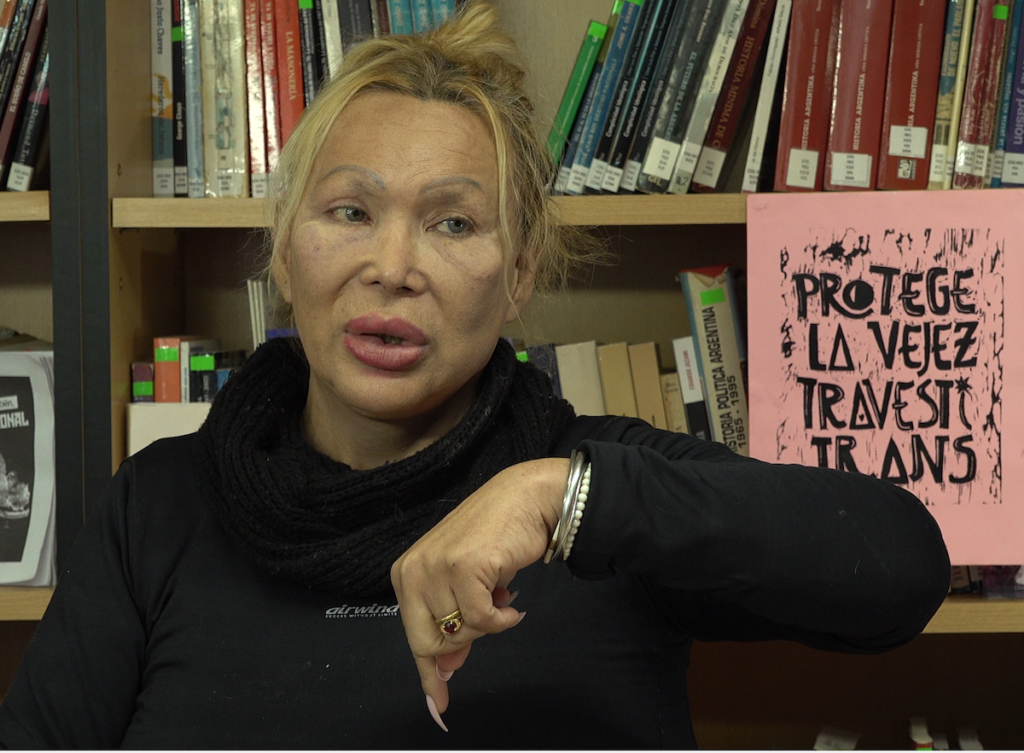
Nadia Natali Saavedra, survivor of the Pan-American War. October 28, 2023. Interview at the Haroldo Conti Cultural Center for Memory. Credit: Pili Cabrera
Congresswoman Diana Conti introduced a bill as part of the "Recognizing is Repairing" campaign. It aimed to specifically benefit victims of police violence. While it included improvements, such as a 30% increase in cases of sexual violence and compatibility with all contributory and non-contributory benefits, the amount was regulated according to Category D, permanent staff of the National Public Employment System.
In 2016, the campaign was launched to turn bill No. 8194 into law, providing pensions to transvestites and trans victims of police violence, but the file expired on 28-02-2019.
"The beatings I will never forget are those from my mother."
Nadia Natali, a survivor of the Pan-American Highway, shares her experience of abandonment and abuse: “My family found out and the beatings started, because it’s not like now where they accept everything. I’ll never forget the beatings my mother gave me. I got so tired of being mistreated by my mother, of being the family’s outcast, the black sheep. One day I left, saying I was going to school with some clothes in my backpack.” “Unfortunately, I was just a child, and to eat I had to have sex. There have always been degenerate men, before, now, and always will be. So I had to have sex for sandwiches, for things, for whatever. I was thirteen years old.”
In force since 2012, it originally established a pension for those who were detained during the last military dictatorship for political, union or student reasons, from that date sexual orientation and/or gender identity was incorporated and this law remains in force to this day benefiting some 30 transvestite and trans people.
Reparations for survivors of the dictatorship
In 2023, the Historical Reparation Law for Trans-Veterans Post-Dictatorship was enacted; around 140 transvestite colleagues will receive this benefit.
Fanny del Valle Chamorro Franco was one of those who received reparations under Law 13.298 of Santa Fe. This activist, who recently passed away, was known for her tireless fight for her fellow activists: “I did many reports, I went out with José de Zer, with Silvia Fernández Barrio, I filed many complaints, I went to the Pan-American Highway where I did the reports with the journalists, I went to magazines, everywhere I had to knock on doors, I knocked, for my fellow activists because every day two or three were killed, every weekend three or four were killed.”
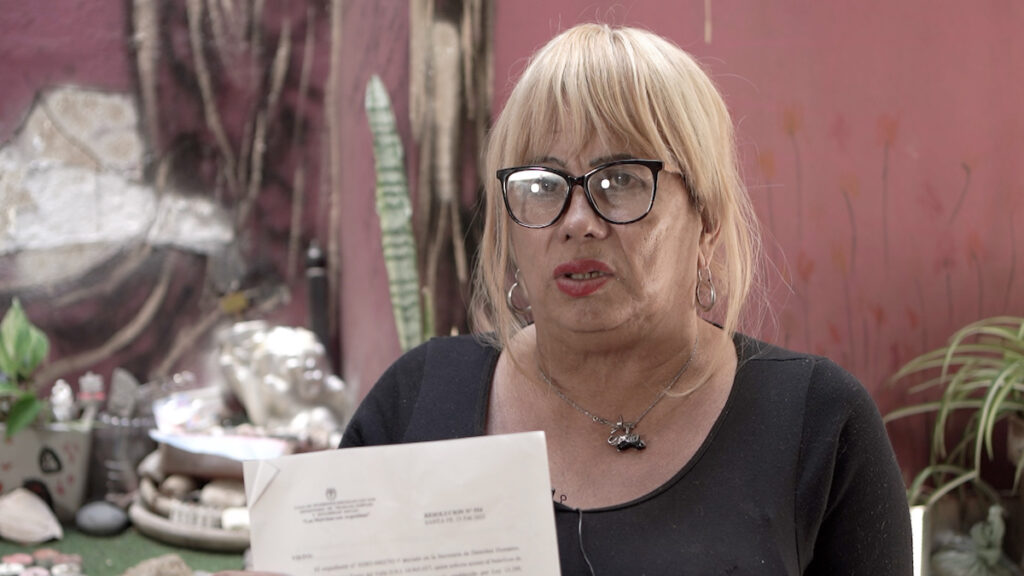
Fanny del Valle Chamorro Franco, photo from 27/10/2022. Credit: Pili Cabrera
Governor Axel Kicillof signed the bill establishing a benefit equivalent to three basic salaries. The amount is based on the entry-level category of the Administrative Group – Class 4. Unlike other bills, the pension is incompatible with the death of the beneficiary; however, it is compatible with all types of income received by the beneficiary, including salary, other pensions, and any other compensation or reparations.
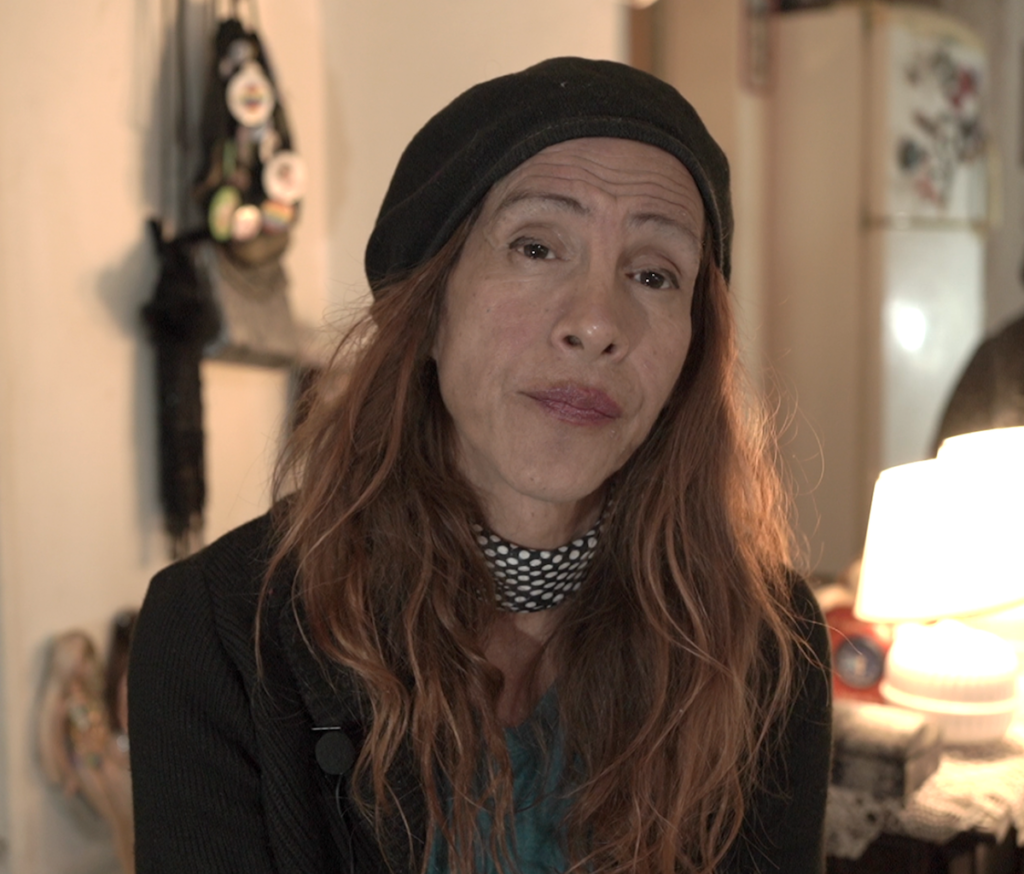
Karina Pintarelli, 65, recounts her experience and the struggle for reparations: "Only in 2018 was I able, with the support of Abosex, to begin the process of requesting reparations."
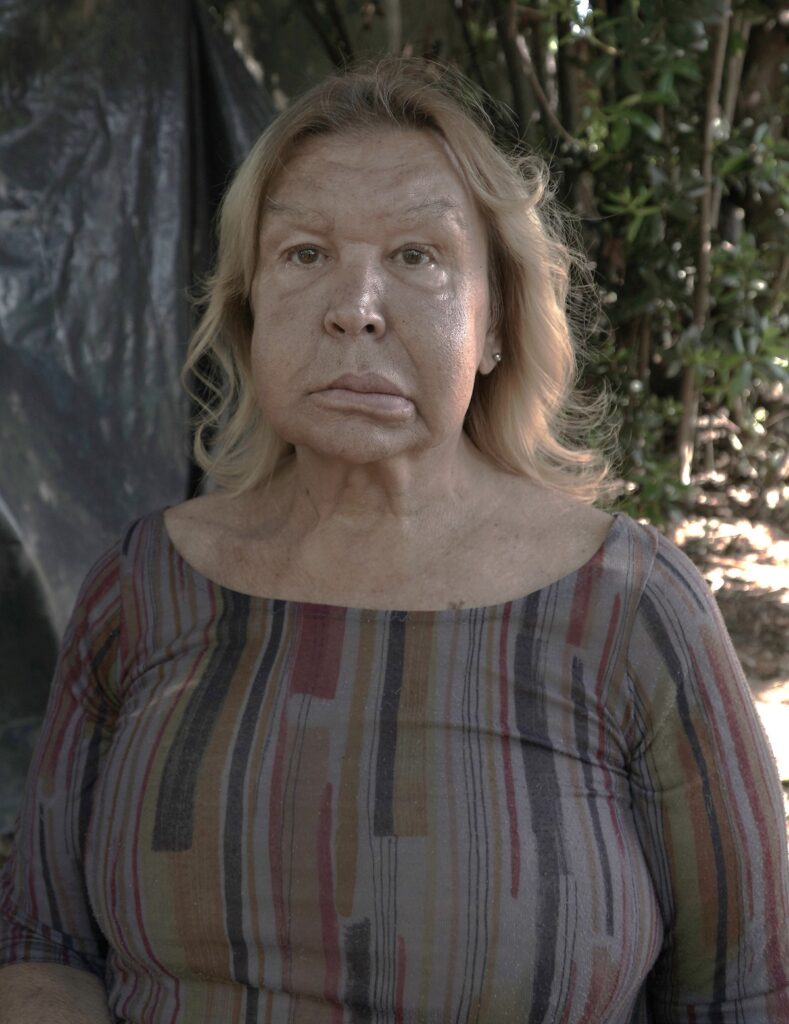
Karina Pintarelli, October 14, 2023, at Casa Leonor in Merlo, Buenos Aires Province. Credit: Pili Cabrera
How the reparation pension progresses
At the recent meeting between Representative Mónica Macha and the Argentinian Historical Society, the project agreed upon by trans and travesti organizations was discussed. A central aspect was the pension amount, a topic debated and resisted by older trans women, who felt that a minimum pension did not cover the needs of those facing extreme vulnerability.
The latest bill establishes that the "Reparative Pension for Elderly Transvestite, Transsexual and Transgender Persons" is equivalent to ONE (1) minimum pension paid by ANSES, with monthly receipt and subject to the schedule of increases thereof, however there is the possibility of requesting increases, said increase will be granted to the extent of the evidence that must be presented in each case.
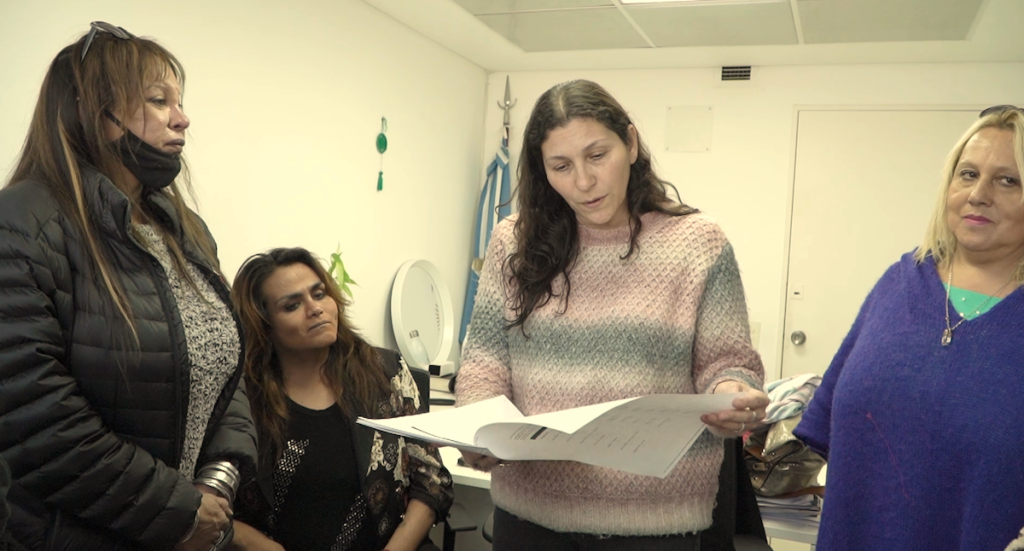
Noelia Luna, Alma Fernández, Representative Mónica Macha, and Sandra Igor from Bariloche in the representative's office. Credit: Pilar Cabrera
**Increases:**
– **Increased by 50%:** To individuals deprived of their liberty for reasons related to their gender identity, whether by federal security forces or by judicial or public prosecutorial authorities of national or federal jurisdiction. This includes those who have suffered under the provisions of the repealed Regulations for Contraventional Procedures of the Police Edict issued by the Argentine Federal Police, as well as those deprived of their liberty for similar reasons at the provincial level.
– **In an additional 70%:** To people who meet the 50% conditions and have also suffered very serious injuries according to the classification of articles 90 and 91 of the Penal Code, or have been victims of crimes against sexual integrity (arts. 118 to 133 of the Penal Code).
**Tests for the Increase Request:**
a) **Unequivocal Proof:** In cases where the persons covered by this Law have been subject to subsections “f”, “h” and “i” of article 2 of the repealed Regulation of Contraventional Procedures of the police edict issued by the Argentine Federal Police.
b) **Official Report:** Official bodies must provide the reports requested by the enforcement authority within a period not exceeding sixty (60) business days to facilitate the presentation of evidence.
c) **Additional Evidence:** The offering and production of testimonial, informative, documentary evidence and any other suitable means to prove the facts referred to are admitted.
d) **Official Evidence:** In case of lack of sufficient evidentiary materials by the applicant, the enforcement authority will proceed to the production of additional evidence ex officio.
e) **Admission of Additional Evidence:** The enforcement authority must admit the production of additional evidence ex officio when necessary.
This project represents a significant step towards historical reparations for the transvestite and trans community, addressing not only economic recognition but also the complexity of the experiences lived by the affected individuals.
We are present
We are committed to journalism that delves into the territories and conducts thorough investigations, combined with new technologies and narrative formats. We want the protagonists, their stories, and their struggles to be present.
SUPPORT US

FOLLOW US
Related notes
We are present
This and other stories are not usually on the media agenda. Together we can bring them to light.