

Misinformation in Mexico: It is false that HIV is transmitted by kissing
Christian Camacho, former advisor to the National Action Party (PAN), claimed that “homosexuals in Mexico City infected with HIV” organized an “AIDS-ridden kiss-in to infect other people.”



Share

On January 3, 2024, users of X (formerly Twitter) shared a post by Christian Camacho , a former advisor to the National Action Party (PAN). He claimed that “homosexuals in Mexico City infected with HIV” organized an “AIDS kiss-in to voluntarily infect other people.”
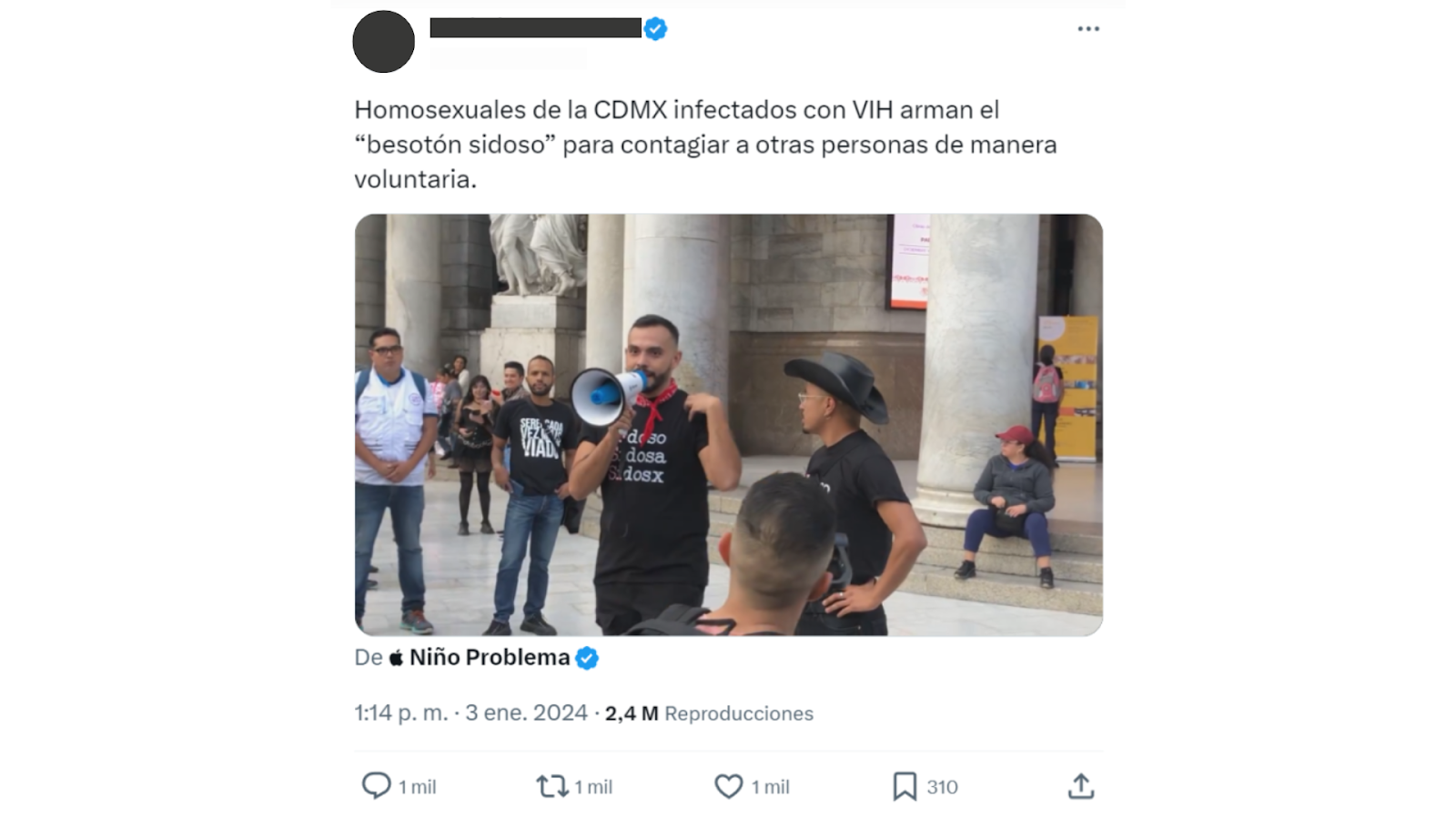
The post by the former PAN advisor who brought VOX to Mexico was shared over a thousand times. It includes a video showing spokespeople from civil society organizations participating in the Kiss-In for World AIDS Day at the Palace of Fine Arts in Mexico City.
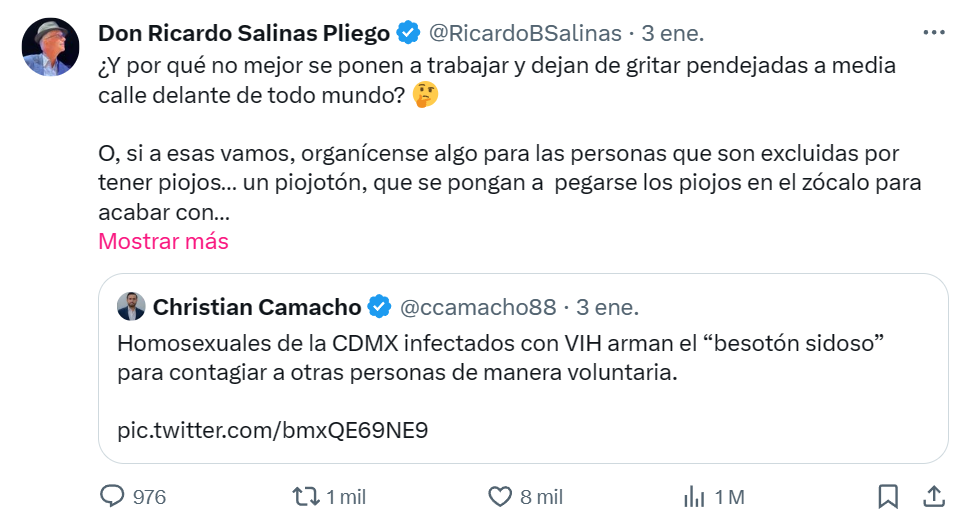
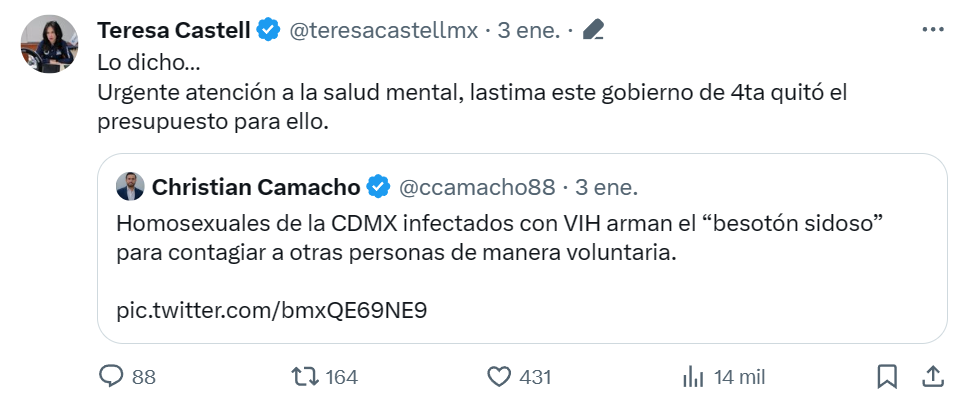
Anti-rights groups and well-known figures such as businessman Ricardo Salinas Pliego and PAN deputy María Teresa Castell used the video to launch stigmatizing messages against people with HIV .
Activist Axel Bautista explained that the intention of the kiss-in was to reclaim and demand public space in the face of the rejection and marginalization experienced by HIV-positive people simply for sharing saliva.
Furthermore, according to UNAIDS , there is no evidence to suggest that the virus can be transmitted through saliva when kissing.
The Centers for Disease Control and Prevention (CDC) indicate that transmission can only occur if both people have sores or bleeding gums and the blood of the person with HIV enters the bloodstream of the HIV-negative person.
But the reality is that of the 85.6 million HIV cases registered since the beginning of the epidemic in the 1980s, only one possible case of transmission through kissing between a heterosexual couple has been documented, in 1997 .
Even Misael Muñoz Calderón, HIV agenda coordinator at Inspira Cambio AC, confirmed that there were no cases of HIV transmission during the event.
Debunking the myths about HIV/AIDS
HIV is a virus that attacks the immune system. It can be contracted through blood, sexual contact, or vertical transmission—during childbirth or breastfeeding. If left untreated, it can cause acquired immunodeficiency syndrome (AIDS) and can eventually be fatal.
However, people on antiretroviral therapy (ART) keep the virus suppressed. They are untransmittable , as the slogan "undetectable equals untransmittable," which groups and activists constantly promote, states.
Other data from the CDC indicate that treatments such as PrEP (pre-exposure prophylaxis) reduce the risk of acquiring HIV through sexual intercourse or injecting drug use by up to 99%.
HIV in Mexico
In Mexico , 365,916 cases of HIV have been detected since the 1980s. By 2022, 121,835 people were reported to be receiving antiretroviral treatment.
In the third quarter of 2023, 13,489 new cases were diagnosed.
Data from the National Center for the Prevention and Control of HIV and AIDS ( CENSIDA ) show that the most affected populations are: men who have sex with men (12.6%), sex workers (7.7%), trans population (7.3%), people deprived of liberty (4.9%), heterosexual men (3.5%), drug users (3%), among others.
Serophobia in Mexico
The events in X sparked a wave of misinformation about HIV. But they also generated stigmatizing comments that highlight the importance of comprehensive sex education to understand this issue.
Activist Axel Bautista explained in a note published in Presentes that talking about serophobia has to do with personal experiences such as asking a person to reveal their diagnosis, demanding that a person living with HIV use a condom just because they live with HIV.
“It has to do with fear, discrimination, rejection, and hatred toward people living with HIV and AIDS simply because they live with it,” she explains. She adds that the State also plays a fundamental role in perpetuating or changing these stigmas.
“Serophobia also stems from the State, and that’s why the State is responsible, due to negligence. There is no comprehensive sexual health care; we have shortages of medications. There is no access to healthcare, nor to condoms; women continue to be subjected to violence because they don’t have the right to negotiate for condoms . Behind this lies complete abandonment by the State and a very precarious education system; the educational system must be restructured regarding sexual health, and there needs to be a very strong awareness and prevention campaign because there hasn’t been one for more than ten years,” argues Axel Bautista.
Stigmas and prejudices
HIV and AIDS continue to be surrounded by the misinformation and stigma that characterized the 1980s and early 1990s. Discrimination can increase fear of HIV and the risk of contracting it. Furthermore, it hinders early detection and treatment.
According to results from the National Survey on Discrimination ( ENADIS 2022 ), approximately 28.7% of the population over 18 years of age reported agreeing that living with people living with AIDS or HIV is a risk; the majority belong to the groups of older adults and people between 30 and 59 years old.
The same survey reflects the social and opportunity exclusion experienced by people with HIV, as 34.8% of people stated that they would not rent a room or house to people with HIV.
In Mexico, most states have articles in their penal codes that criminalize the "risk of contagion." These articles are often not based on biological evidence and have historically criminalized people living with HIV. Only Aguascalientes, San Luis Potosí, Nayarit, and Mexico City have repealed this type of crime.
We are present
We are committed to journalism that delves into the territories and conducts thorough investigations, combined with new technologies and narrative formats. We want the protagonists, their stories, and their struggles to be present.
SUPPORT US

FOLLOW US
Related notes

We are present
This and other stories are not usually on the media agenda. Together we can bring them to light.