

Militarization in Ecuador: "LGBTI people are considered suspicious"
Interview with Lía Burbano, a lesbian activist from Ecuador, about how the economic crisis, drug violence, and state of siege affect women and people of sexual diversity.


Share

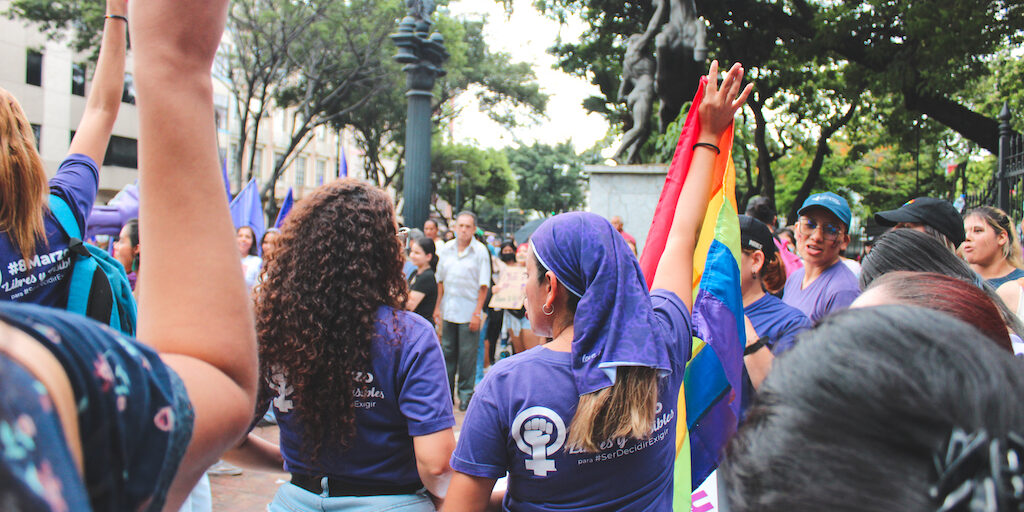
Lía Burbano is a lesbian activist, educator, and director of the Mujer & Mujer Foundation, a community organization of lesbian feminists and LGBTQ+ people. They have been working for over 20 years and are based in Guayaquil, the most economically active city and one of the most populous in Ecuador. In that city, on Tuesday, January 9, an armed and masked group stormed the TC television station, which was broadcasting live. They took hostages amidst shouts and gunfire and broadcast a message: "We're on the air so you know you don't mess with the mafia," said one of the masked men. The scene was broadcast on news programs around the world, while in the same city, an attempted takeover of the University of Guayaquil was underway, and gunfire loomed at the presidential palace.
The government responded with a military deployment and the declaration of a state of “non-international armed conflict.” After a peak in violence that left 14 dead and more than 375 people detained, and while the National Assembly decides how to proceed, we spoke with Lía Burbano to learn how this situation affects women and LGBTQ+ people, and to try to understand the conflict in that country from a gender and human rights perspective.
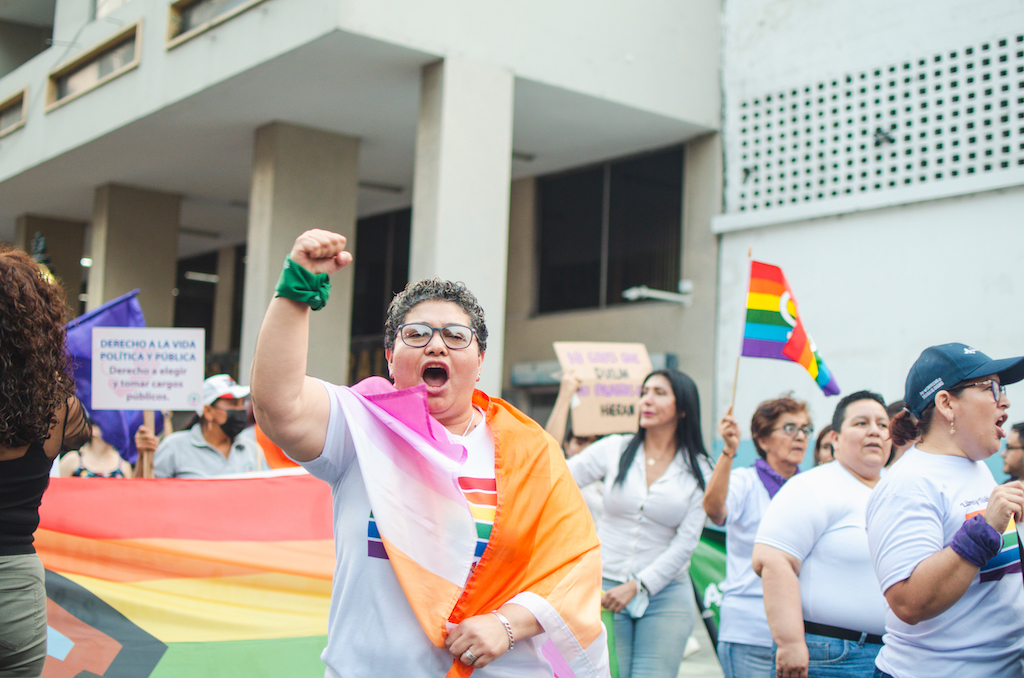
“I’m fine, safe and sound, with the whole team of the organization in constant communication, although some of my colleagues live in conflict zones and that is a constant concern, especially when we have to resume in-person activities,” says Lía.
-What is happening in Ecuador?
What is happening in our country is the result of years of neglect and disregard for the true needs and problems of the most vulnerable sectors. The government has opted for a formula that never fails for those in power: liberal and capitalist policies that have guaranteed the economic stability of certain sectors, and pacts with political elites that have allowed the country to continue to be run in a relatively democratic manner, amidst recurring outbreaks of violence within some of the country's prisons. In the process of forming these alliances, some sectors have broken down, while others have been permanently abandoned. This situation, which the current government has conceptualized as "belligerent non-state actors"—referring to criminal groups and organized crime that currently control the prisons—has been ongoing for several years without any political will to address it.
-How do you think this conflict, which became news worldwide and especially in Latin America, developed?
We have witnessed a severe prison crisis, a crisis to which the Moreno and Lasso administrations have failed to respond due to a lack of political will and intention. Only palliative, temporary measures have been taken to appease public opinion and maintain governability. The root of the problem has not been addressed. There are no investigations. The public is not informed. Thus, we have reached this point where there is no way to control the situation in the prisons, culminating in a simultaneous explosion on January 9th following the "mysterious" escape of one of the most wanted criminals. This situation did not begin today; neglect, repression, kidnapping, mistreatment, persecution, and human rights violations have been daily news for several months now in Guayaquil, Quito, Durán, Machala, Cuenca, and other cities. But the news coming from Esmeraldas in northern Ecuador is even more alarming. Mujeres de Asfalto and AMANDLA MEDIO have valuable and up-to-date information on the matter; they have been compiling what is happening there. Here in Guayaquil and surrounding cantons, these criminal acts of vandalism have been increasing and intensifying, as well as in Latacunga and Cuenca, around the prisons. Even the takeover of the television station clearly indicates what everyone knows: that the instructions were given from the Guayaquil prison, which is controlled by gangs from these organized crime and drug trafficking groups .
To summarize: what existed until the 8th was a clash of forces between the authorities who want to regain control of the prisons and the drug trafficking and organized crime groups that currently control them . Faced with the impossibility of taking control through a new state of emergency, the government resorts to this declaration of a “state of war” with the full deployment of the armed forces. This is not a problem that arose now. It has been brewing due to unemployment, the complete abandonment of impoverished areas, the total neglect of the people's basic needs such as health and education, the disregard for youth, the invisibility of those whom no one wants to see on the streets, etc. There is no money in homes, there are no jobs for young people, and they are the primary target of these organized criminal groups. There are three prisons that have been under the control of these groups for more than two weeks; not even the police can enter. In this context, the constitutional framework is being prepared so that the armed forces can storm the prisons and, as many people say, "do what they have to do to take them back"... with all that this implies.
-How does this affect LGBT+ people deprived of their freedom?
Like any crisis, this one has many facets to analyze. One of them is what happens in detention centers. When someone enters, they are forced to join the groups that control the prisons, and they are practically turned into servants/slaves of these groups. Our organization managed to get a young gay Venezuelan man out of prison who was being subjected to physical and sexual torture by these groups. Because he was young and gay, he was subjected to countless abuses. We filed a habeas corpus petition and managed to free him. Thanks to his testimony and that of his partner, we were able to learn about the lives of LGBTQ+ people, particularly gay men and trans women, in men's prisons.
-What information do you have on the situation of gay and trans people deprived of their freedom?
We know that when they aren't housed in facilities specifically designated for the LGBT population, they are subjected to all kinds of abuse and torture, regardless of what they've done. Through advocacy efforts, we've managed to get trans women transferred from men's prisons and gay men placed in separate cells, but there's no guarantee that this actually happens. Inside the prisons, there's another world, and although the Ecuadorian Constitution recognizes gender identity and sexual orientation, in practice this isn't respected. For example, if a trans woman who hasn't "officially" completed her transition is housed in a men's prison, she suffers violence and abuse of all kinds . And then there's the issue of family members. The women who sustain life also sustain their incarcerated relatives; they are the ones who bring food and "money" to buy protection, visit their male partners and bring them "whatever they can," and so on. It was the mothers, sisters, and wives who suffered the violence, abuse, and repression at the hands of law enforcement outside the prisons during the prison massacres. They experience this violence firsthand. They live in uncertainty, not knowing, even now, if their loved ones are dead or alive. For LGBT people, the situation is simply worse because, in the vast majority of cases, they are left to their own devices.
-In this context, what happens to human rights organizations?
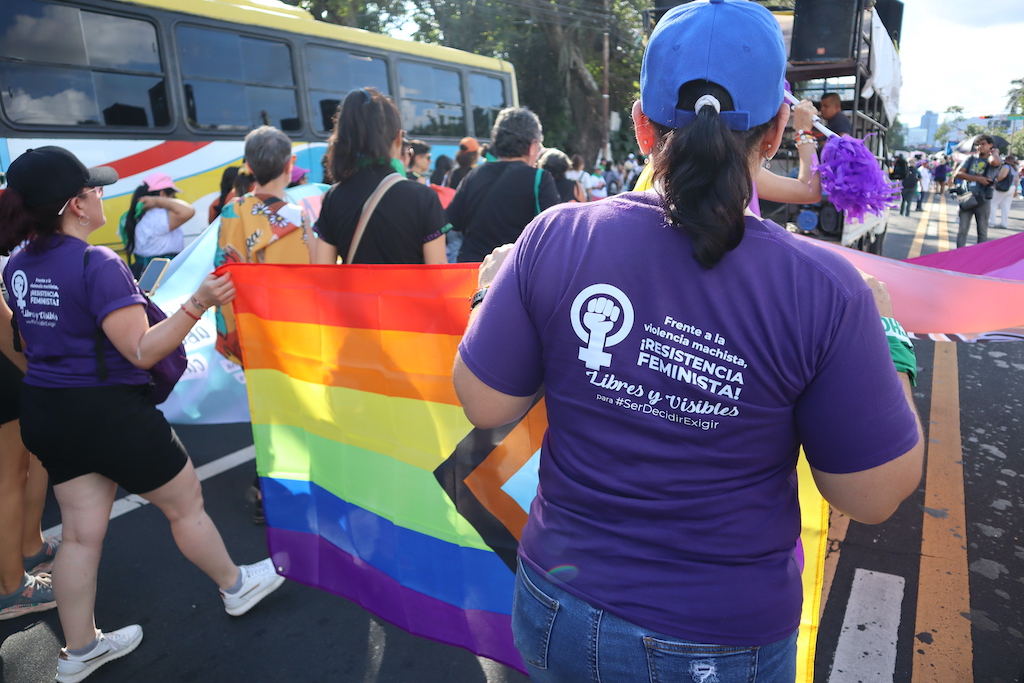
Human rights organizations like ours, working in these highly adverse contexts and maintaining a radical stance in defense of freedoms and life, are often accused of “protecting criminals.” This is how the defense of rights is demonized. It's easy in moments of upheaval to think that because these people are in prison, they deserve mistreatment, violence, and everything else. But that's not the case. And this complex scenario has been the norm for more than two years; it's not a recent phenomenon.
-What is the situation like on the streets?
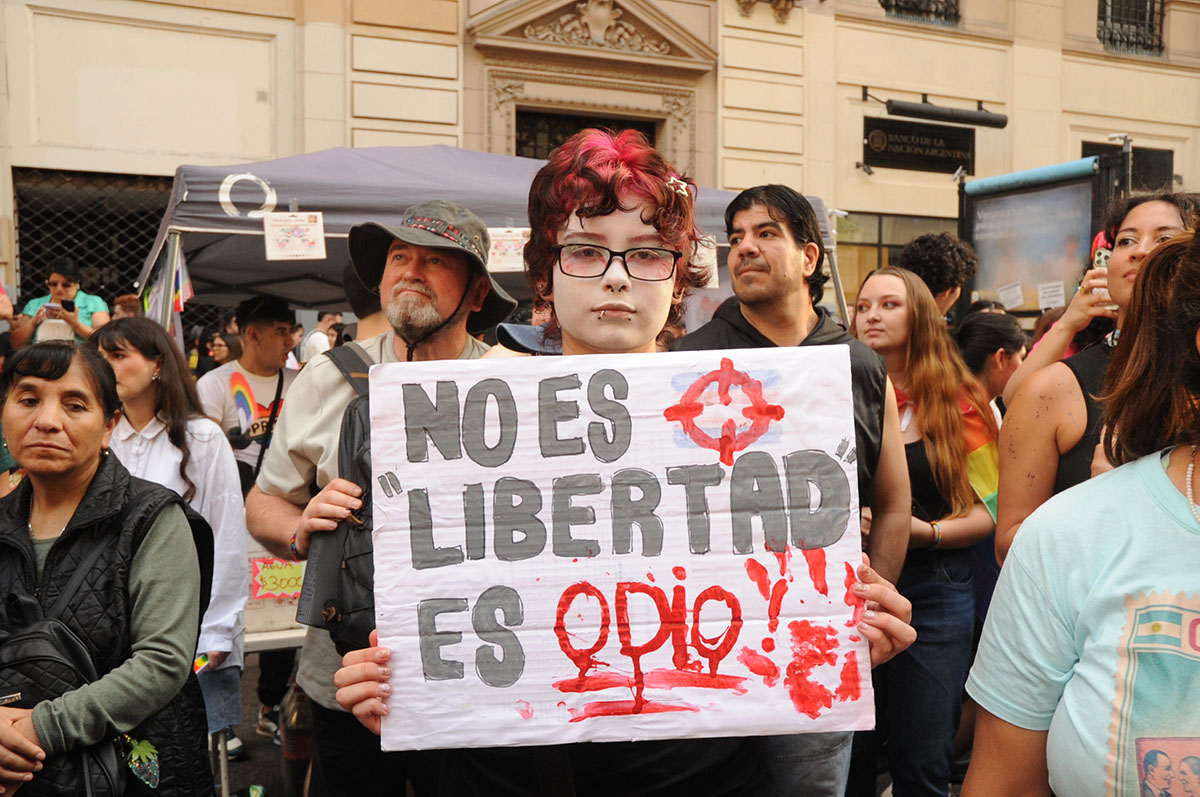
On the streets, the situation remains uncertain. The National Assembly continues to make decisions. It has shown support for the armed forces and the police, and stated it will grant pardons for excessive use of force to ensure "they do what they have to do." Because of this, we are fearful of what might happen. Women and men with piercings, girls and boys with diverse gender expressions, sex workers, queer and non-binary people—all of them are now considered suspects , subject to the "checks" that the military will carry out without warning on those they deem a threat. Similarly, they can enter homes, institutions, and associations, and raid and detain people without warning. My concern isn't just about car bombs, but also what will happen to my friends who have tattoos or whose gender expression is queer or non-binary. For example, what will happen to lesbians who, because of their gender expression, are more easily identified as such ? We already experienced this during the pandemic; there was a lot of violence against them. They were evicted from their homes because lesbianism was associated with religious issues. We were blamed for the pandemic. In these contexts of armed groups, there's a lot of false argumentation. Yesterday I spoke with one of my colleagues; she has many tattoos and is used to dealing with being judged, but I fear for her safety and her life. There are people who believe that lesbians are a threat. On the street, in front of a soldier or police officer, we will automatically be considered suspicious. My concern also extends to those who live their lesbianism freely, and to LGBTQ+ people who may feel they are not in danger, but are exposed. I think trans women sex workers and people with diverse gender expressions are more exposed to violence in the streets.
-How are you organizing yourselves in the face of this?
We are coordinating the implementation of care protocols. We are meeting amongst ourselves to prepare for this scenario, which has been applauded by a large part of the population. The manipulation is tremendous, and the spread of fake news is so easy. It has led many people to believe that the best course of action is for the military to take control. In terms of human rights, we are envisioning scenarios of regression, where women, girls, racialized people, and gender and sexual minorities will be, as always, the greatest victims. We already know where this leads. We are on alert, with concern and uncertainty. We are already in the midst of this declared war on organized crime, but we will all be exposed, especially the youngest among us, so we are analyzing, from a communications perspective, how to reach them with care recommendations.
-What is daily life like in Guayaquil today?
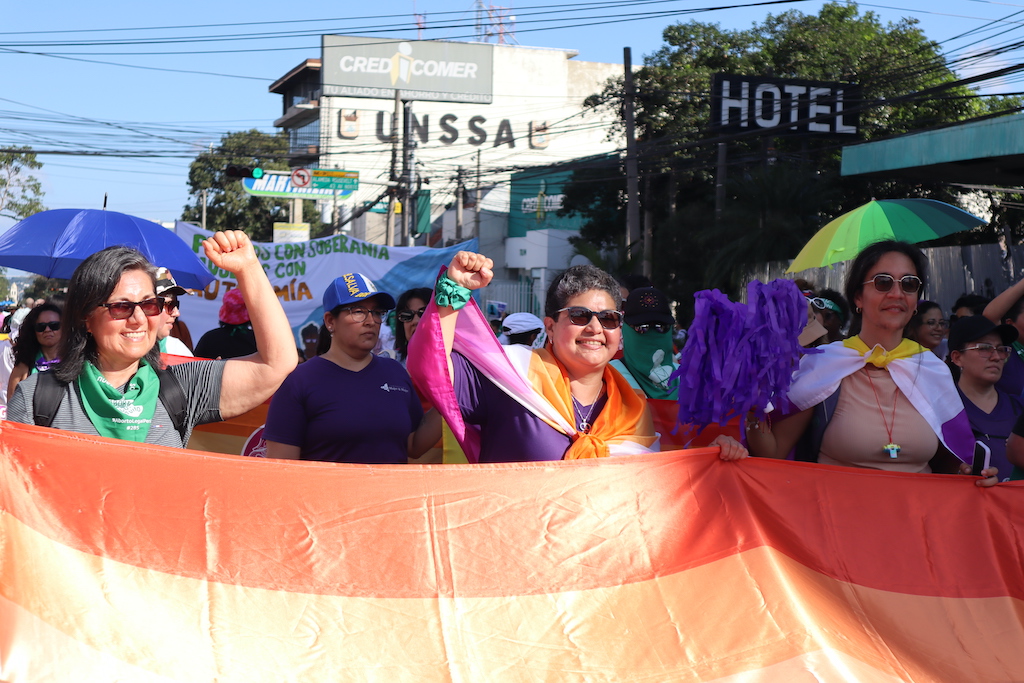
Guayaquil is a commercial city; life revolves around the streets and commerce. At night, there are very few people out and about; in some ways, it's like reliving the post-Covid era . Slowly, some activities are returning to a semblance of normalcy, but sales are very low, so hunger and poverty are felt more acutely. Our organization has gathered data showing that 80 percent of self-employed people are women , and without the ability to sell their goods or have access to safety measures, those women who are heads of household will see their ability to generate income diminished. If the situation was already precarious, this makes it even worse. It is women who are working independently on the streets, many of them migrants. All these conditions intersect, affecting women and other groups labeled as dangerous, such as the Afro-Colombian and LGBTQ+ populations. Also affected are people with drug use problems who are on the streets. Several videos are already circulating showing police practices involving drug-addicted youths who are thrown into the salt marsh in the middle of the night. This is how they are punished. There is an attempt to return to normalcy in the streets, but also a fear of going outside for fear of being exposed. These days we are constantly glued to the news and social media, which also carry their own dangers. We are experiencing all of this as a collective fear, in a city that is much more dangerous than before.
We are present
We are committed to journalism that delves into the territories and conducts thorough investigations, combined with new technologies and narrative formats. We want the protagonists, their stories, and their struggles to be present.
SUPPORT US

FOLLOW US
Related notes

We are present
This and other stories are not usually on the media agenda. Together we can bring them to light.
1 Comment