

Masculinity and confusion: a sex education guide for young men
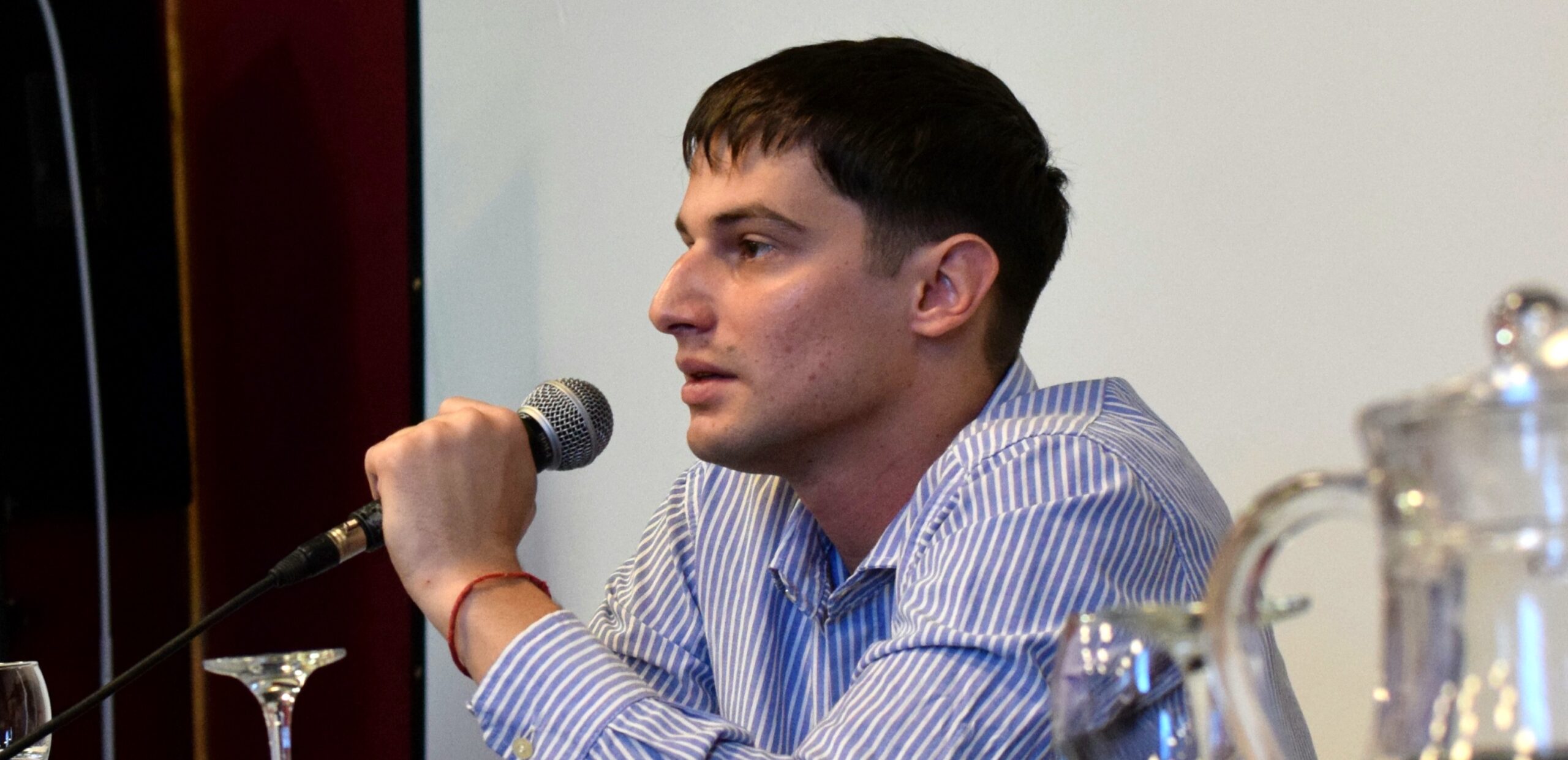
Interview with Leandro Cahn, one of the authors of the book "From Boys to Grown-Ups. A comprehensive sex education guide for working with boys in school and family."


Share

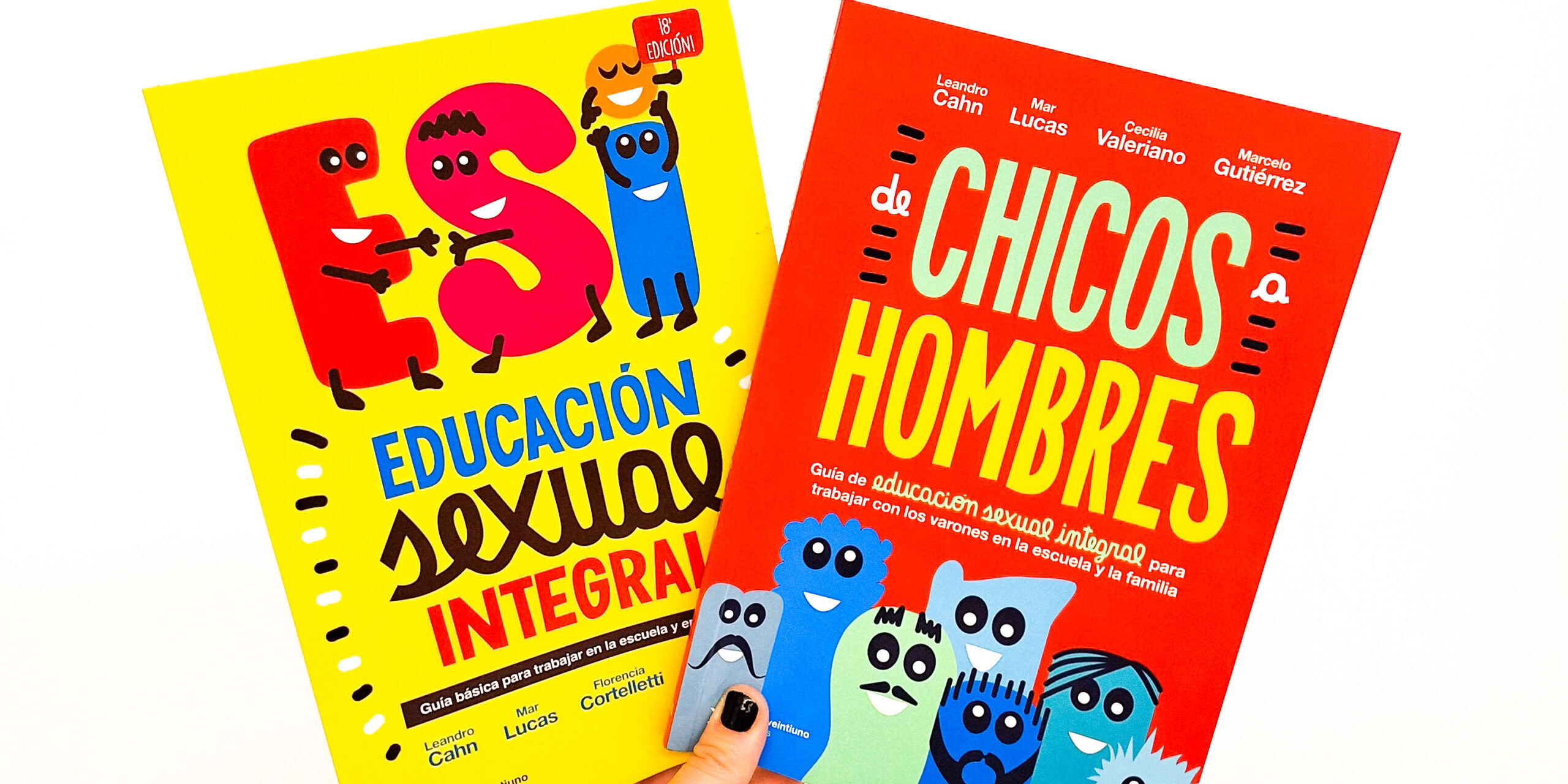
Working on the difference between responsibility and guilt, valuing emotional education, and “not dying of political correctness” are some of the actions that can lead to building freer masculinities. This is what Leandro Cahn , one of the authors of the book *From Boys to Adults: A Comprehensive Sex Education Guide for Working with Boys in School and at Home* , says in an interview with Presentes .
It's October 2018 in Argentina, and the green wave bringing a bill to legalize abortion to the floor, along with the Ni Una Menos movement that erupted in 2015, makes it impossible to ignore the feminist agenda. A group of female graduates publicly denounces authorities and teachers from the Colegio Nacional Buenos Aires for the abuse and harassment they suffered from the moment they entered high school. They also denounce the institutional apparatus for ignoring the violence perpetrated by male classmates. In December, actress Thelma Fardín accuses actor Juan Darthés of sexual abuse , and the pressure cooker explodes.
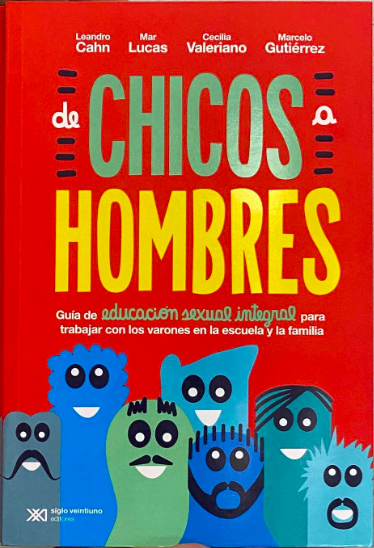
The genesis of the book by Cahn and the Fundación Huésped team, published in late 2023 by Siglo XXI, lies here. “In 2018, we began receiving inquiries from families who approached us because of a situation involving public shaming or a complaint filed against one of their teenagers. In these situations, we saw that episodes involving criminal offenses coexisted with others that reconstructed uncomfortable situations from the past, which were being reinterpreted in light of new ways of relating to others. And there was an inaction and lack of resources on the part of educational authorities and adults in general, which meant that the girls and boys themselves had to resolve the conflict,” Cahn told Presentes .
Men out of place
In this context, the authors questioned the place where adolescent boys found themselves. “They had ended up in a place where they didn't fit in, they weren't heard, they didn't have a positive way to be part of that conversation,” Cahn shared.
Based on this reasoning and seeking to bring the voice of young people to the scene, Fundación Huésped set out to develop a guidebook that can work with men on microaggressions, mandates, hate speech and consent, among other topics, from the perspective of comprehensive sex education (CSE).
To learn more about this proposal and its origin, Presentes spoke with its main author, Leandro Cahn, executive director of Fundación Huésped .
– The book starts from the premise that men are also affected by patriarchy. How can this be viewed?
One of the precepts we start from is how these mandates are part of our daily lives, of what we receive and what we transmit. Within these mandates, there is a very present hegemonic masculinity that includes everything from what emotions are considered acceptable for men, linked to anger, frustration, violence, and the promotion of competitiveness. We constantly have to demonstrate virility, be strong, not be afraid, be the head and provider of the household. All these issues are constantly at play. Men die three times more often than women from causes related to violence. This entire situation that prevails in masculinities is very present in everyone's lives from birth. The book's proposal is to begin by recognizing these mandates, the existing inequalities, the privileges, and to reflect on them.
– The logic of public shaming was a tool that various youth groups saw as necessary in the face of institutions, mainly educational ones, that turned a deaf ear to situations of abuse and harassment against women and LGBTQ+ people. What is your current interpretation of those public shaming actions?
– In a public shaming, someone is denounced, judged, and condemned all at once. This often leaves young people without the necessary tools. In consultations with families who approached the foundation about this issue, we observed that public shaming involves both criminal or reportable situations and situations of discomfort. Not every situation is the same. This doesn't mean we shouldn't address, work on, and improve situations of discomfort. But public shaming ends up leveling the playing field in how these situations are handled.
– Both the teenagers at the time, and you in the book, emphasize the need for institutional support.
That's the main objective of the book, both this one and the previous one from 2020. When these situations aren't addressed openly, they creep in through the window. It's impossible to say that sex education isn't being provided. Sex education also happens through what's kept quiet, what's hidden. In this particular situation, our feeling is that many times the educational authorities, the adults, not knowing how to resolve this issue, washed their hands of it, trying to let the boys and girls figure it out as they saw fit.
We believe it is important to identify and work with active listening, integrating the educational community, not just focusing on the punitive aspect and nothing more.
– A common request made to men is to take action when violent comments or material that sexualizes women are shared within a peer group. What recommendations do you have for someone who sees that type of material?
– In the book, we argue that in some situations, for example, receiving non-consensual pornographic videos, not all men in every circumstance will be able to speak up, reprimand this behavior, or break away from that group. Perhaps what a man can do is not forward it himself. We seek to move beyond the "should be" and be able to ask questions. And from those questions, to collectively arrive at some answers. I think it has to do with being able to listen to each other more, being able to create spaces for dialogue. School and Comprehensive Sexuality Education (CSE) are fundamental tools for this.
– What role does humor or jokes among peers play in the reproduction of certain mandates?
– We aim to critically reflect on how moving towards more equitable societies doesn't necessarily mean we have to succumb to political correctness. In this sense, humor is a fundamental and essential part of enjoying life. The book seeks to identify different everyday situations in people's lives and see how these issues linked to societal expectations operate or are present, and how these new ways of being a man can be constructed without losing sight of this issue. Humor often has this positive side, but it's also a more or less covert way of culturally generating silences, secrets, or issues that are best left unexplored. It can both open doors and be a disciplinary tool.
– How can we work towards building freer masculinities?
– On the one hand, by dismantling totalizing narratives (not all men have the same capacity to oppress, nor do all women and gender non-conforming people have the same conditions of vulnerability). We need to work on the difference between responsibility and guilt and delve deeper into emotional education: so that men can express other types of emotions beyond anger.
– What role does comprehensive sexuality education (CSE) play in this approach?
– Comprehensive Sexuality Education (CSE) is a phenomenal space for conversation, resolving differences, generating collaborative dialogues to listen to each other, to understand each other, to value diversity, and to integrate the entire educational community from the school.
Comprehensive Sexuality Education (CSE) is generally attacked for what it is not: fake news to attack it. In reality, CSE is a tool to be used at all levels, in all schools, across all subjects, and with the entire educational community, depending on age groups, to address these topics that help us build citizenship.
Sexuality is something that affects us from birth until death, and therefore, everything we can integrate into different spaces is phenomenal: clubs, sports spaces, non-formal education, holiday camps.
We are present
We are committed to journalism that delves into the territories and conducts thorough investigations, combined with new technologies and narrative formats. We want the protagonists, their stories, and their struggles to be present.
SUPPORT US

FOLLOW US
Related notes
We are present
This and other stories are not usually on the media agenda. Together we can bring them to light.