

Explainer: There is no scientific evidence showing an athletic advantage for trans women
Anti-rights groups insist on prohibiting or restricting the participation of transgender women in competitions. What does science say?.


Share

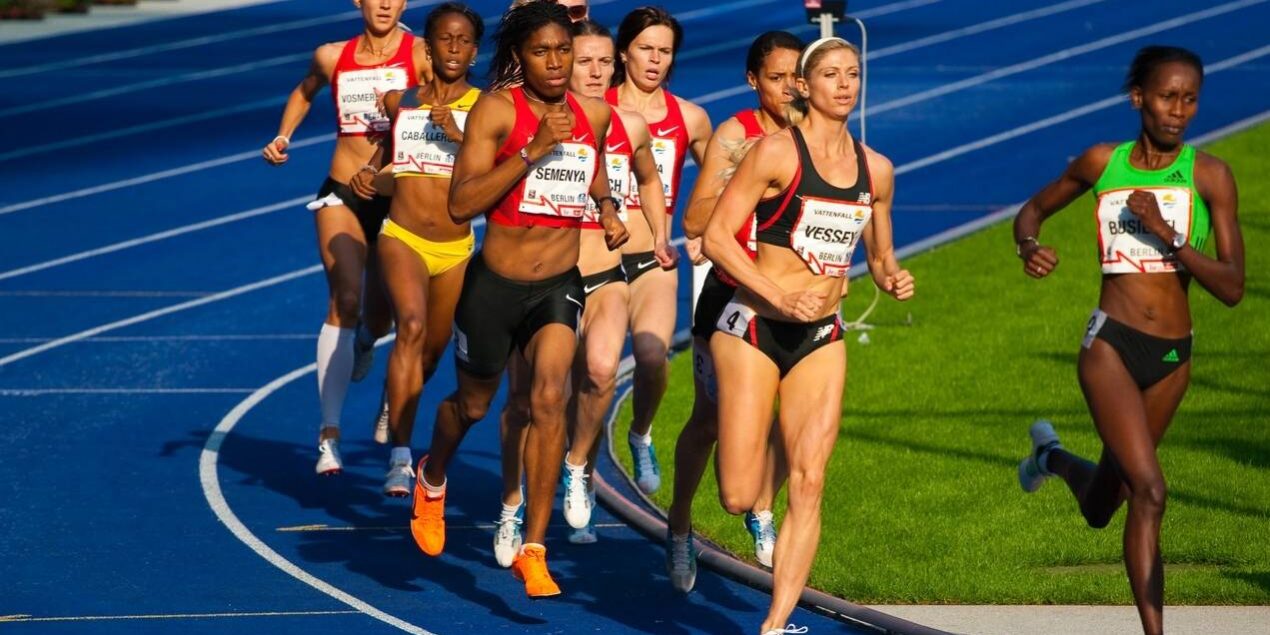
MEXICO CITY, Mexico. In recent years, it has been argued, without conclusive scientific basis, that the participation of transgender women in sports represents a supposed “unfair advantage” for cisgender women. This narrative has been used not only by elite sports federations but also by anti-rights groups in decision-making positions.
But what do human rights organizations and science say about this? How do these bans affect the human rights of women and girls?
Banning trans athletes without scientific evidence
A report published in 2021 revealed that transgender women have no biomedical advantage in elite sports as nutrition and training qualities are what affect their performance.
This report provides an in-depth review of the scientific literature published in English between 2011 and 2021 on transgender women in elite sports. It highlights that biomedical factors do not pose any threat to cisgender athletes. This is partly because there is little evidence seeking to identify the pubertal advantage experienced by transgender women, and studies on high-performance sports involving transgender individuals are scarce.
This report also concludes that trans women who have received gender-affirming medical care, suppressing their testosterone levels, have no biological advantage.
"The politics of elite sport is formulated within transphobic, misogynistic and racist geopolitical cultural norms," the document clarifies.
International Olympic Committee: “The role of testosterone in measuring unfair advantage is unclear”
The 2020 Tokyo Olympics (held in 2021 due to the COVID-19 pandemic) marked the first time that elite trans and non-binary athletes participated. However, the spotlight was on Laurel Hubbard, a New Zealand weightlifter and the first trans woman to compete in the Olympics. Her participation was brief, as she failed all three of her lifts in the women's heavyweight division.
Following Hubbard's participation, in November 2021 the International Olympic Committee (IOC) published a new “ framework on equity, inclusion and non-discrimination on the grounds of gender identity and sex variations ” with an emphasis on eligibility criteria in the female categories.
The document states that “there is no scientific consensus on how testosterone affects athletic performance. Its role in measuring an unfair advantage is unclear, because performance is measured differently in each sport.”
Finally, the IOC determined that each sports federation must establish its own eligibility criteria. These must be “commensurate with human rights, based on sound scientific evidence that considers context and ensures the well-being of athletes.”.
As a result, the federations of athletics , cycling , swimming , chess , and recently the US boxing federation, have created policies prohibiting transgender women from participating in the women's categories of their disciplines. These policies include requirements such as being on hormone therapy from the age of 12, maintaining a certain level of testosterone in the blood, or having undergone sex reassignment surgery.
In a statement , World Athletics (WA) asserts that the reasons for prohibiting the participation of transgender women are “guided by the general principle of protecting the female category .” They also argue that “there are currently no transgender athletes competing internationally in athletics and, consequently, there is no specific athletic evidence of the impact these athletes would have on the fairness of women's competition in athletics.”
"Intersexuality in the Construction of Racial Difference," trans psychologist Dau García Dauder explains that in eligibility rules, "high testosterone is framed as an advantage and, suddenly, as a health problem for women; it makes them sick. It must be regulated to protect justice and health. Thus, sex verification tests surprisingly become medical regulations 'for the athlete's sake,' to protect her from testosterone."
She adds, “The CAS (Court of Arbitration for Sport) speaks of discrimination that is necessary, reasonable, and proportionate to the objective of preserving the integrity of female athletes. Paradoxically, less privileged women (from 'developing' countries) are seen as a threat and have an advantage; justice and integrity seem to apply only to women from the Global North. It is important to emphasize that the interventions required by the regulation are the same ones that intersex activists have been denouncing.”
Anti-rights groups use the false argument of 'unfair advantage'
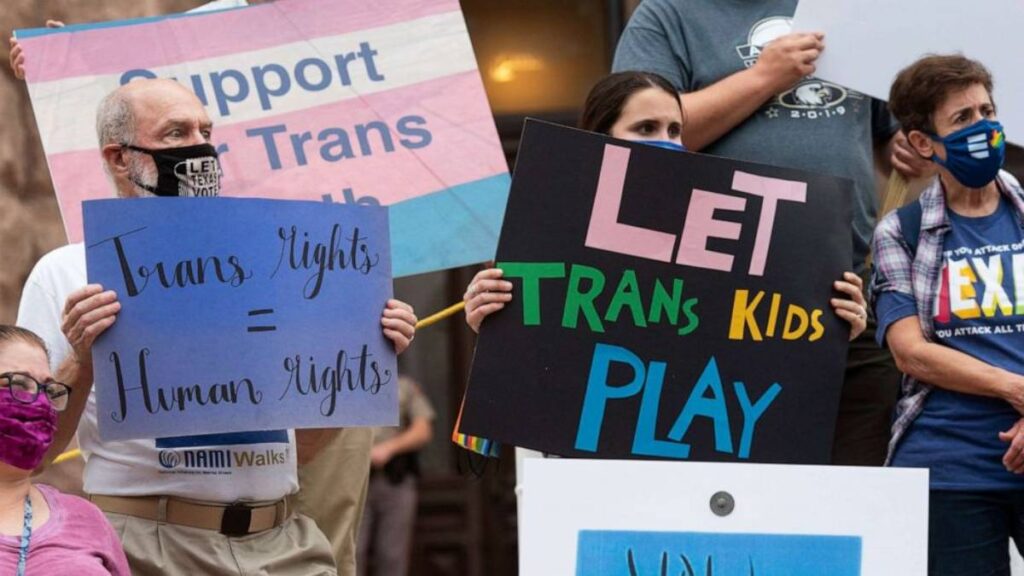
These narratives, lacking scientific basis, are also used to create laws that prohibit trans girls, young women, and women from competing at the student level in the United States.
To date, six states in the US have guidelines that exclude transgender and nonbinary students by requiring them to participate in sports according to their sex assigned at birth. Three other states prohibit transgender and nonbinary students from participating unless they have undergone surgery. And in 16 states, discriminatory policies create additional barriers to the inclusion of transgender and nonbinary students, according to monitoring by the organization Trans Athlete .
This wave of anti-trans legislation is reaching Latin America. In Mexico, congresswomen like Teresa Castell and aspiring candidates for elected office like Eduardo Verástegui are seeking to legislate and advance their political careers through disinformation and moral panics.

Sexist, racist and human rights-violating regulations
The UN has described these exclusionary mechanisms as “unnecessary, humiliating, and harmful.” It explicitly recognizes that there is a particular form of discrimination in sports against Black women and girl athletes from the Global South.
Since 1940, the world athletics federation has violated the human rights of female athletes with "sex tests" and "certificates of femininity" for "eligibility" purposes, according to the report " They are driving us away from sport: Human rights violations in sex tests of elite female athletes ," published by Human Rights Watch (HRW).
These measures are also racist, as the athletes banned from competing so far are Black and from countries in the Global South. They have also affected intersex women and those who naturally have high levels of testosterone.
HRW believes these practices cause physical, psychological, and economic harm to athletes. Furthermore, it states that “identifying athletes through observation and suspicion is a way of controlling women’s bodies based on arbitrary definitions of femininity and racial stereotypes.”.
We are present
We are committed to journalism that delves into the territories and conducts thorough investigations, combined with new technologies and narrative formats. We want the protagonists, their stories, and their struggles to be present.
SUPPORT US

FOLLOW US
Related notes


We are present
This and other stories are not usually on the media agenda. Together we can bring them to light.