

State layoffs: Transgender job quota is left out but at risk
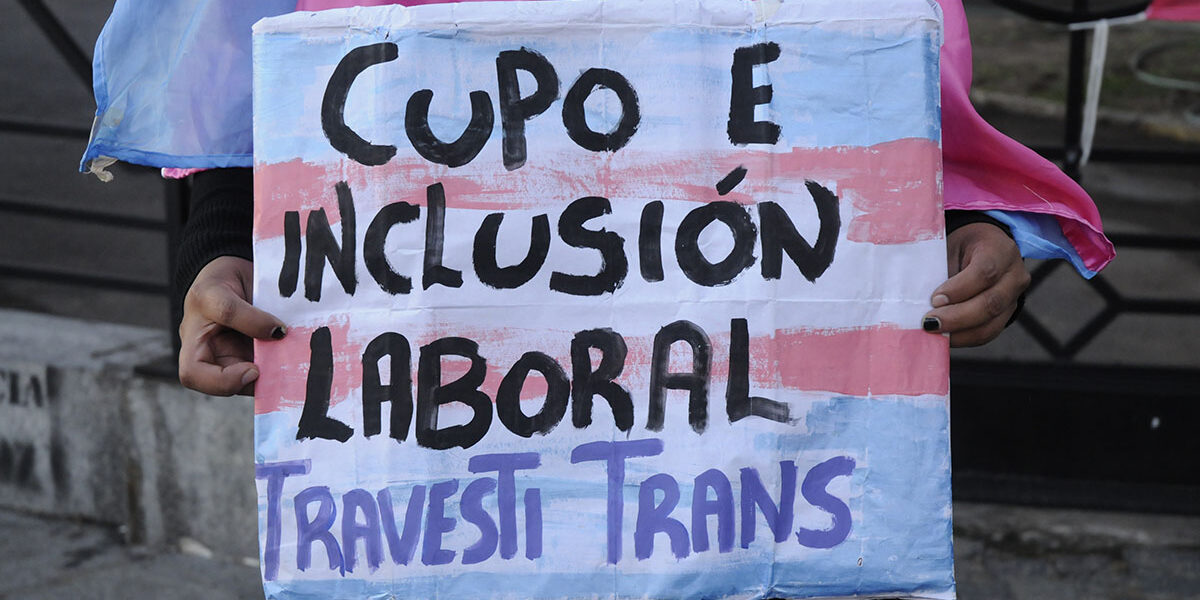
The decree halting government contracts awarded in 2023 excludes legally protected quotas, but these are not guaranteed. What does it protect, and what risks does it create?


Share

BUENOS AIRES , Argentina. A decree from the national government regarding public sector hiring, published today in the Official Gazette, confirms in its first article what President Javier Milei had already announced: the non-renewal of contracts initiated after January 1, 2023. In theory, it makes an exception for contracts "derived from quotas regulated by law or other types of special protections." However, this exception is not absolute and carries a risk: another article leaves the decision open to other individuals and factors .
This is Decree 84/2023 , published today in the Official Gazette, which bears the signature of the president, Javier Milei, and the Chief of Staff, Nicolás Posse.
What the decree says
The first article of this decree states verbatim: “ It is hereby established that the contracts of individuals who began providing services on or after January 1, 2023, in the agencies included in sections a) and c) of Article 8 of Law 24.156, will not be renewed .” This affects at least 7,000 people who will lose their jobs.
Article 2 then makes an exception for three types of contracts:
- Those derived from quotas regulated by law or other types of special protections;
- Personnel who have been performing tasks prior to January 1, 2023 and have changed their contracting modality;
- Personnel that the head of each jurisdiction assesses as indispensable for the functioning of the jurisdiction, in a restrictive manner and with the justification that their continuity is necessary for unavoidable operational reasons.
A third article establishes that contracts made under Article 9 of Law No. 25,164 and Decree No. 1109 of December 28, 2017, whose date of entry into the administration is prior to January 1, 2023, may not be renewed for a period greater than ninety (90) consecutive days.
The decree orders the authorities of the different sectors to conduct a survey of contracted personnel before January 1, 2023, "in order to evaluate the renewal of the aforementioned contracts. In the event that the authorities decide to renew said contracts, they must justify the decision by demonstrating the need to continue with the hiring."
The risks of the decree
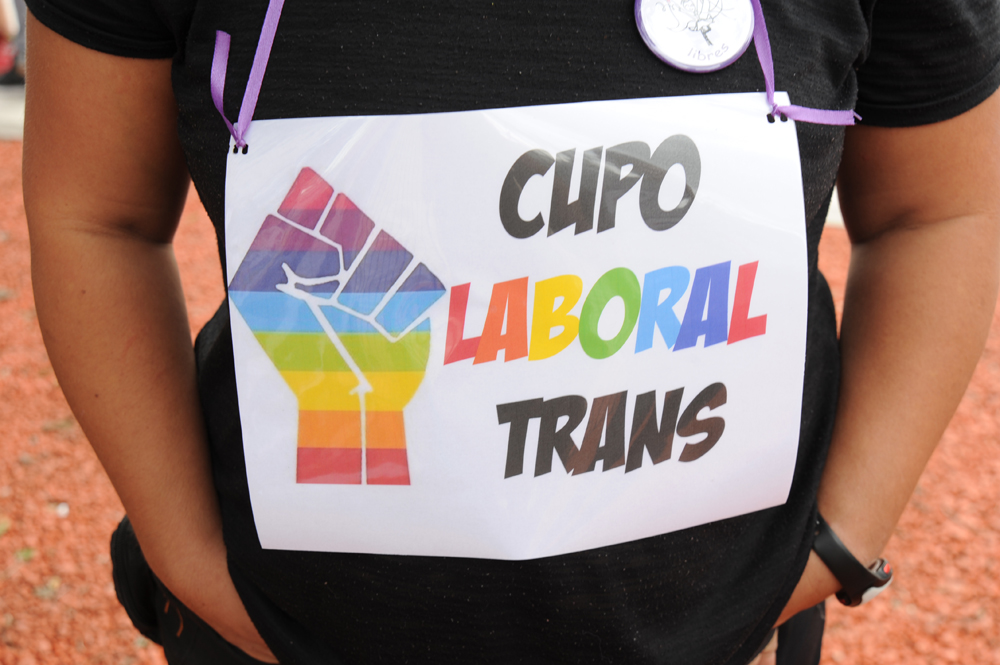
“The decree protects the two quotas, the trans and the disability quota, from the 2023 layoffs, but it allows middle and lower management to lay off people who are not 'essential',” warned activist Alba Rueda, who served as Special Representative on Sexual Orientation and Gender Identity at the Ministry of Foreign Affairs, International Trade and Worship until December 10th.
“That’s where the great risk lies, because it puts the idea of eliminating trans jobs in the minds of their leaders. And all the people who now occupy those middle and lower positions were appointed by Javier Milei since December 10th. In reality, it’s all his responsibility and a consequence of his political position. So, if there are trans layoffs, it’s because they also come from that sector. That’s one of the issues to consider,” she added.
Furthermore, the Employment Quota Law for People with Disabilities (No. 22,431) mandates that the State include people with disabilities in at least 4% of its total workforce. Presentes contacted the National Disability Agency (ANDIS) to inquire about the number of people hired under this quota in the past year, but as the agency currently has no officials available, it was not possible to obtain the information.
“Continuity is not guaranteed”

“While there is a safeguard in place for the quota, I don't see it as an absolute guarantee,” says labor lawyer Leandro Recalde. “Nor does it mean that these contracts will be renewed outside of what this decree mandates. Since it doesn't order rehiring, and given the lack of job security in Article 9, it doesn't mean that those who entered through the quota law are guaranteed continued employment.”
Furthermore, Recalde points out that the decree "reduced to 90 days the period for which these types of contracts can be made. This means that the job security of those hired under Article 9 is even lower. In terms of available positions, it also has an impact."
Regarding the decision of the managers or superiors of the hired individuals, the decree leaves them, on the one hand, constrained in terms of the timeframes for which they can extend contracts and justify the need to maintain contracts prior to 2023. “If they want to maintain the subsequent contracts, they will have to do so with more justification. And they are free to carry out a purge,” Recalde analyzes.
Quota enforcement authority
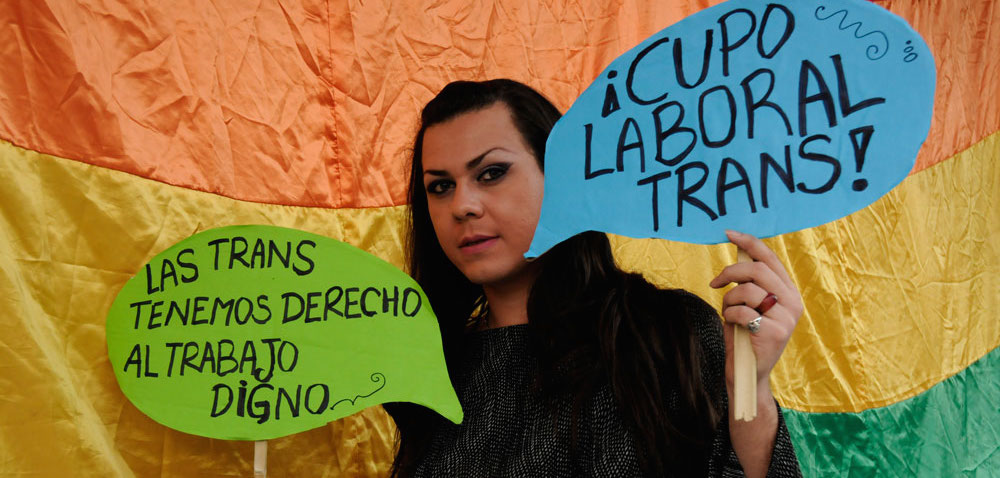
The Ministry of Women, Gender and Diversity, the implementing authority for the Transgender Quota Law, had not held transition meetings with the incoming government, unlike other ministries, until last week. The new government has now officially eliminated the Ministry (reducing the number of ministries from 18 to 9) and created the Ministry of Human Capital. The Télam news agency reported that the Ministry of Women, Gender and Diversity will become a sub-secretariat within the Ministry of Human Capital, reporting to Sandra Pettovello, the Minister of Human Capital.
A sense of anguish and alarm characterized the mood of those who entered the public sector in the last year, following the measures announced by Caputo. This was also due to various statements made by members of La Libertad Avanza (LLA) regarding the LGBTIQ+ community . “Now, I don’t know why they should be given a public position just for being transgender. We pay for that. Those who choose to be transgender should have to deal with it on their own; you can’t give a quota of state jobs to someone who belongs to a minority group,” Ricardo Bussi had said in reference to the Transgender Employment Quota Law. Bussi is a congressman-elect for LLA representing the province of Tucumán and the son of the genocidal Antonio Bussi.
An exemplary measure on a global level

“The employment quota is a unique, novel measure at a global level. It has no precedent in other countries and creates a new indicator in the area of human rights,” Rueda emphasized. He also recalled that “the house of democracy passed the law,” so “all three branches of government must implement it, and in the event of non-compliance, the judicial branch is the safeguard.” “The tools we have to modify this situation are through legal injunctions. In these injunctions, the role of unions is fundamental,” he maintained.
Since the enactment of the Diana Sacayán – Lohana Berkins Law Promoting Access to Formal Employment for Transvestite, Transsexual, and Transgender People (No. 27,636), some 955 transgender, transsexual, and transvestite individuals have entered the workforce of the national government. Of these, 381 were hired in the last year . For the vast majority of them, this is their first formal job after years of working on the streets, odd jobs, and facing exclusion.
The law was passed by the National Congress on June 24, 2021. It establishes that the national government at all levels "must fill, in a proportion of no less than one percent of its total staff, jobs with transvestite, transsexual and transgender people, in all current regular hiring modalities."
From affirmative action to a rollback of rights
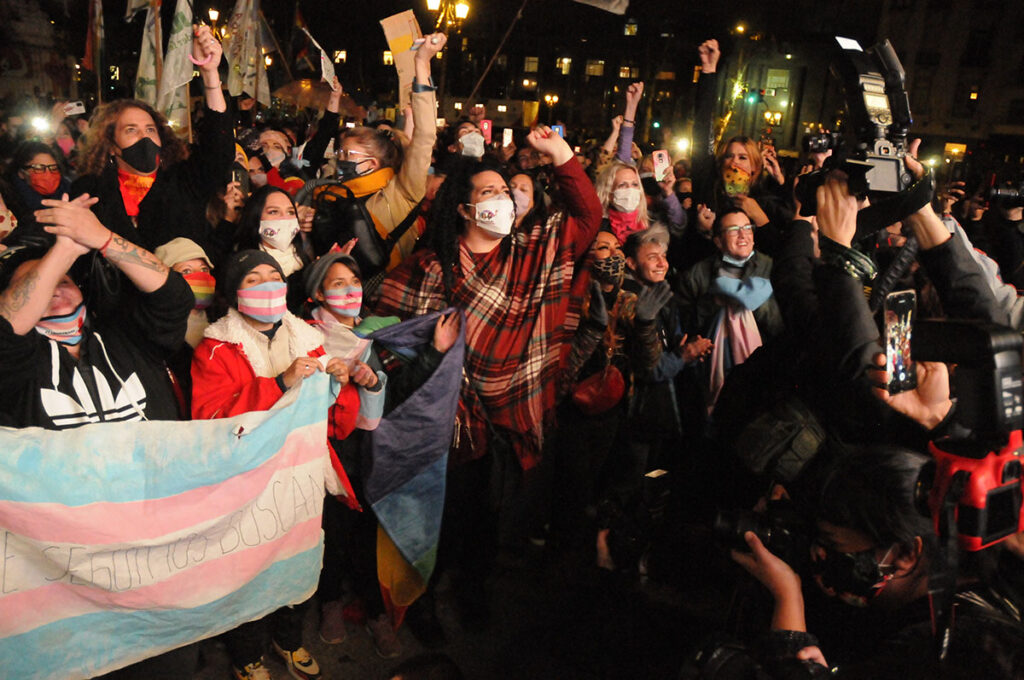
“The instability and uncertainty faced by workers in general is extremely worrying. This is particularly true for transgender workers, for whom it is becoming increasingly difficult. We know that affirmative action measures are needed to enable them to access the world of work ,” Agustina Ponce, former Undersecretary of Diversity Policies at the Ministry of Women, Gender and Diversity, told this agency.
She believes that “there is a significant setback coming to LGBTQ+ rights internationally due to the right-wing movements that people are applauding.” But she stressed the need to “remain united, continue finding spaces to resist, and choose the battles we want to fight.”
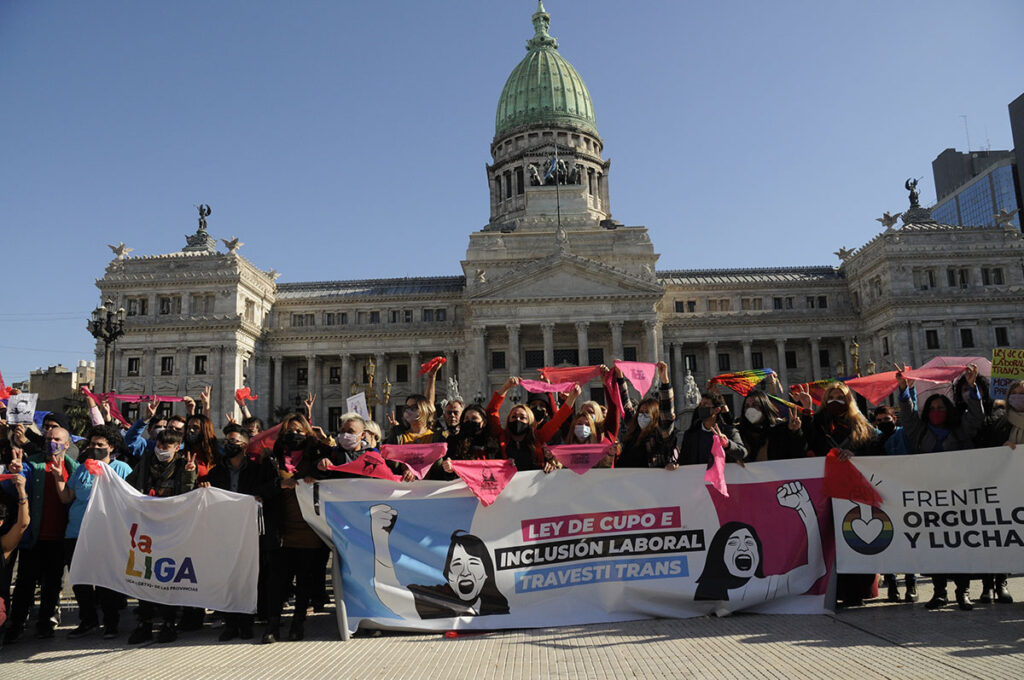
To defend workers' jobs, activism is coordinated with unions. “From the Employment Access Coordination office, we worked extensively with the internal committees of the unions, especially with ATE Nacional . We worked hard to support those hired under the Quota Law. We also worked with the Collective Bargaining Agreement,” Cintia Pili, former Employment Access Coordinator at the Undersecretariat of Diversity Policies within the Ministry of Gender, told this agency.
Rueda also highlighted the role that unions will play going forward. “This situation empowers and allows the union role to gain particular strength in this context of defending workers' rights. And one of the key points is knowing what to do in the face of potential layoffs. The first step is to identify your union sector to defend your rights,” he said.
Implementation of the transvestite trans quota: figures
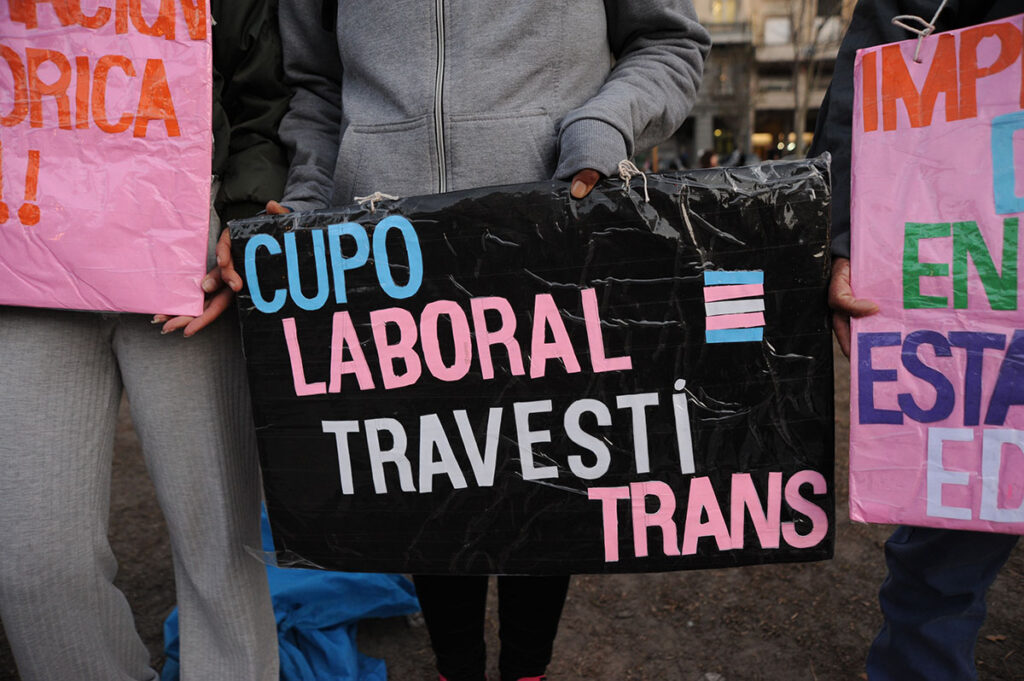
According to the report “Implementation of the Transgender and Non-Binary Employment Quota in Argentina” by the National Association of State Workers' (ATE) Gender and Labor Relations Union Observatory, published last week, the number of transgender and non-binary people employed in the public sector is “less than one-fifth of 1%.” The report states that this figure should increase from 955 to 5,551 to comply with the law.
This research also sought to describe the socio-demographic characteristics and working conditions of non-binary people employed by the government. To this end, a survey was conducted in mid-2022, which was answered by 91 people. Among its main findings, it was observed that for 38% of respondents, this was their first formal job, highlighting the importance of this legislation.
However, only 14% of those hired were over 40 years old. “Considering what is known about the average life expectancy of transgender people (35 years), this is a population whose overall life expectancy is very short, which is very important when considering this 14% of people over 39 years old,” the report states. The document also notes that only 16% of these individuals have permanent contracts .
We are present
We are committed to journalism that delves into the territories and conducts thorough investigations, combined with new technologies and narrative formats. We want the protagonists, their stories, and their struggles to be present.
SUPPORT US

FOLLOW US
Related notes



We are present
This and other stories are not usually on the media agenda. Together we can bring them to light.