

Anti-protest protocol in Argentina: why it's illegal and what lawyers and activists recommend
The background to Bullrich's protocol and what human rights organizations are saying. Activists and lawyers offer some recommendations and useful phone numbers for those who want to participate in protests.


Share

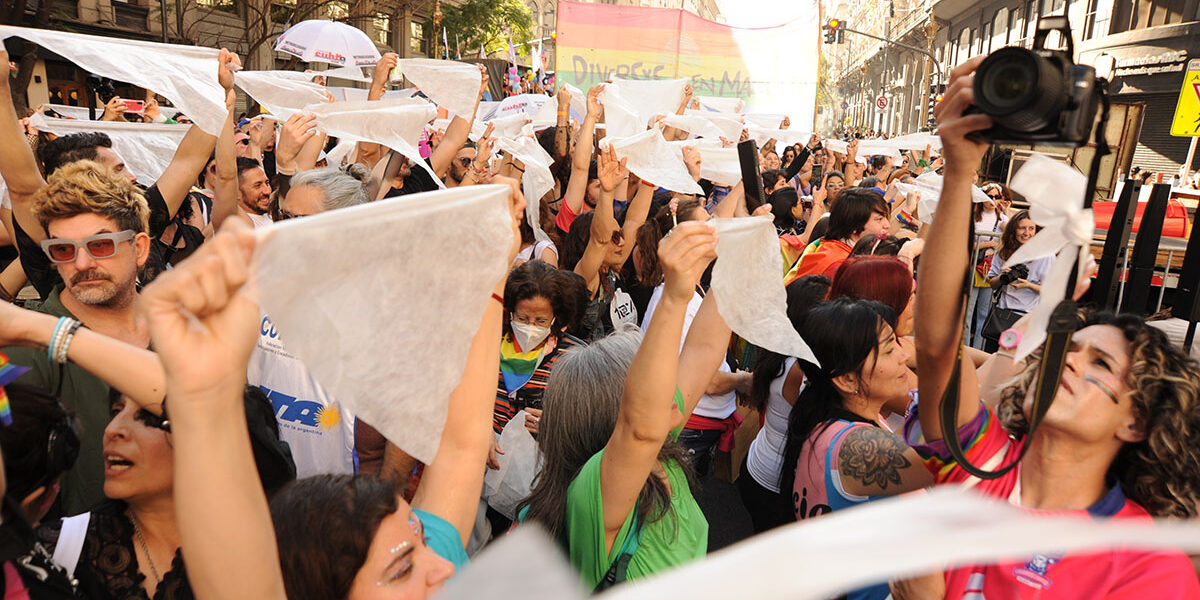
BUENOS AIRES, Argentina. Today, the City of Buenos Aires awoke to government posters reading "Those who block roads don't get paid." Since the announcement of the anti-protest protocol by the Ministry of Security, headed by Patricia Bullrich , warnings and threats from the Argentine government against those who wish to demonstrate in the streets have multiplied. Amid announcements of austerity policies that threaten the basic rights of the population, Minister of Human Capital Sandra Pettovello stated that those who march will lose their social welfare benefits.
This protocol has put human rights, political, student, and labor organizations on alert . It has also been denounced before the UN and the Inter-American Commission on Human Rights.
At Presentes, we consulted with lawyers and LGBTQ+ activists to understand the underlying issues, their technical challenges, and their scope. But also, and above all, to contribute to collective care through protection strategies against a series of measures that restrict the right to protest and freedom of expression.
Damage to the democratic and republican system
“The protocol is two and a half pages long, the same as the press release. It's practically campaign propaganda. It doesn't fulfill the true function of a protocol, which is to provide clarity on what to do or not to do in a given circumstance. Here, it refers to Article 194 of the Penal Code, which dates back to the Onganía dictatorship . It criminalizes blocking waterways, roads, and streets. This article doesn't clearly define what it's protecting: legal rights? Because it speaks of abstract dangers. A proper protocol defines when a danger exists, outlines negotiation methods, and proposes alternative solutions. This one says none of that. It's unclear to the police what they have to do, and that's precisely what a protocol should ensure,” says Iñaki Anitua, a criminal lawyer and professor of criminal law at the University of Buenos Aires (UBA) and the National University of Paz (UNPAZ).
“We are within a democratic and republican system that no party questions. I think it is essential to emphasize that these modifications harm this democratic and republican system. They call into question the human rights structure of the Inter-American system, to which we adhere through Articles 75 and 522. And in particular, it directly affects the LGBTQ+ population,” says lawyer Alejandro Joma Mamani, from the organization Brown Identity.
Persecution of organizations and background
“This protocol reminds me of the January 2016 protocol; it was similar. But this one is worse; it explicitly says to repress,” says Anitua, referring to the Security Ministry protocol under Mauricio Macri’s government. Patricia Bullrich was also in charge at that time.
“The protocol clearly targets organizations that are fighting for their rights; they don’t want them to organize. It’s important to remember that there were already similar persecutions many years ago during Macri’s administration, against political and social organizations like the People’s Assemblies. Leaders were charged for blocking a street, even though they weren’t present at the time. They’ve been trying this since 2010 and 2012,” Conder adds.
“It is very serious because it allows for the collection of information from people who exercise their legitimate right to protest, as well as the criminalization and persecution of leaders participating in public demonstrations and related social, trade union and political organizations,” says Manu Mireles, an LGBTI+ rights activist and academic secretary of the Mocha Celis Transgender Non-Binary High School.
Impact on feminisms and diversities
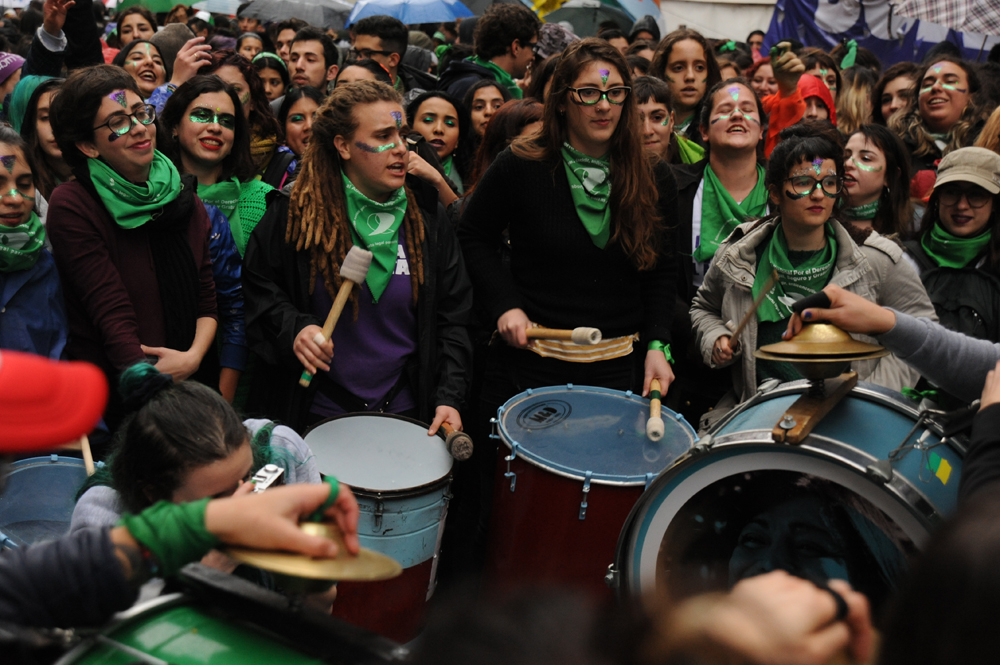
“For feminist movements and diverse communities, who have put our bodies on the line in the streets, facing the erosion of our hard-won rights is a devastating blow,” says Melisa García of Abofem ( Association of Feminist Lawyers) . The protocol “aims to curtail that possibility, to limit it, by criminalizing social protest. Taking to the streets is part of Argentine history, and the message is always to resist, to keep fighting, not to remain still, but also to think of new ways to protect ourselves even more. Many things are changing that directly affect our bodies and the movement itself,” she says.
“The right to protest has historically been, and continues to be, a key tool for guaranteeing the rights of the LGBTQ+ community worldwide, particularly for transvestite, trans, and non-binary people. Therefore, a return to repression is, at the very least, undemocratic,” Mireles adds.
“With this protocol, vulnerable sectors such as racialized people, members of the LGBTQ+ community, particularly trans women and migrants, are targeted. They are already a target for police violence, in the case of the City of Buenos Aires, due to the city's codes of conduct. But these codes are insignificant in comparison. Sex workers and trans women from the Constitución, Once, and Flores neighborhoods constantly report violence and mistreatment by police forces that do not respect the law or gender identity. They even go so far as to commit cruel, inhuman, or torturous acts against them. I think this protocol enables this to be amplified,” says Mamani.
“Unfortunately, institutional violence is nothing new for us sex workers; it’s something we deal with daily in our work, in our neighborhoods, and as we move through public spaces. Even though Argentina has had a gender identity law for over a decade, we still see police officers using male pronouns when we walk down the street. There’s still a transphobic and racist discourse, especially towards migrant women. What’s been happening in recent weeks is that many police officers have been telling our colleagues that the fun’s over, that enough is enough with the human rights talk. That Milei had taken office and that they risked being deported to their countries,” says Georgina Orellano of the AMMAR Organization .
Why don't they consider it legal?
“The issue of arrests or sanctions is ridiculous, because to be arrested you have to be violating a law; here it mentions article 194, but that has to be decided by a judge, not a protocol. Unless ordered by a judge, it's illegal,” says Anitua.
“The protocol is illegal. A fine is a penalty for something, for conduct; it’s personal. The protocol is meant to intimidate,” says Conder. She continues: “It aims to modify jurisdiction. It says it will allow intervention in places where the police cannot intervene. It wants to modify laws, not even with decrees, but with resolutions from the Ministry of Security. You can’t modify the Constitution or the laws like that. The protocol says that the forces can intervene without a court order. That’s not allowed. These are constitutional rights. To arrest someone, they have to have a court order. Yes, these aren’t illegal arrests,” says lawyer Gabriela Chiqui Conder.
These measures, he argues, are inseparable from the economic measures they accompany. “The violence inflicted through economic means must be accompanied by physical violence and repression; otherwise, it cannot be imposed,” Conder says.
“I believe it is totally incompatible with the rule of law, and in particular with the right to free assembly and association, freedom of expression and social protest, recognized in the National Constitution and in international human rights treaties,” says LGBT+ rights activist Manu Mirelles, academic secretary of the Mocha Celis Transgender Non-Binary High School.
What to do? How to protect yourself?
“I would tell organizations to be imaginative and take care of themselves. Follow the example of the Grandmothers of Plaza de Mayo, of the Mothers, who were told to keep moving and they kept moving. You can invent marathons, processions instead of demonstrations,” says Anitua.
“We sex workers deploy community strategies, our own organizational strategies, to put a stop to the advance of police violence. Civil society and activists can look around and see that there are many sectors that have been resisting the onslaught of institutional violence for a long time. It is important to have class consciousness and union organization. In our case, it was and always will be the essential tool to stop normalizing police violence,” says Orellano.
“We have to do what we’ve always done: keep going. We have to be very careful, very alert, and very organized to face so much violence. The more violence, the more organized we need to be. Protests aren’t stopped with decrees, and we have the school of the Mothers who fought against the dictatorship,” says Conder. And she recounts an anecdote about Nora Cortiñas. “Norita remembers that she used to go to Plaza de Mayo on Thursdays, and the police would take her away, just like they did to other Mothers. They’d fine them for marching. Let’s say it was 7 pesos. Nora would tell them: ‘Charge yourself 14 because we’re coming back next week,’” Conder adds.
From Abofem, Melisa García suggests:
-Go out with your ID and have the contact information of lawyers or organizations handy, so that in case of arrest, the appropriate actions can be taken immediately. There is a support network with many organizations that provide assistance.
-It is advisable to carry the cell phone numbers of trusted contacts on a piece of paper so that you can notify them.
-Keep people in our inner circle informed that we are going to a march.
-Share your location in real time as much as possible to generate precautions, when it is being said in some way that going out on the street today and from now on will not be safe.
Useful Phones
Public Defender's Office: 0800-Defender. 0800 33 336 337
APDH (Permanent Assembly for Human Rights) (11) 4372-8594
(11) 2483-4233
CELS (Center for Legal and Social Studies) (11) 3018-4890
CORREPI (Coordinator against police and institutional repression) (11) 3251-0081
Ombudsman's Office of the City of Buenos Aires: 0800 999 3722
Office of the Attorney General against Institutional Violence (PROCUVIN) (11) 6089-9054/9058/9059
SERPAJ (Peace and Justice Service) (11) 4361-5745
Recommendations for journalists
The Buenos Aires Press Union (SiPreBA) shared recommendations for media workers covering protests and demonstrations. Today, a special team will be on duty at the union office, staffed by lawyers from CORREPI . For emergencies, call 1123988904.
Complaint and request for repeal to the UN and IACHR
The new protocol issued by the Argentine Ministry of Security in Resolution 943/2023 criminalizes social protest. It establishes that any demonstration involving the blocking of streets or highways constitutes a crime in flagrante delicto and authorizes the security forces to evict or disperse the protest. It adds that judicial intervention is not necessary "since it is a flagrant crime punishable under Article 194 of the Argentine Penal Code."
Yesterday, the Center for Social and Legal Studies (CELS) sent a complaint to the United Nations and the Inter-American Commission on Human Rights, requesting that they take the necessary measures to repeal the protocol. This was done with the support of more than 1,700 signatures from organizations and 15,000 individual signatures.
“We explained that most of the provisions of the National Ministry of Security establish guidelines for police and state action that are incompatible with the rights to free assembly and association, freedom of expression, and social protest , recognized in local laws, the National Constitution, and international human rights treaties and standards,” they explained in a statement. The CELS warns: “It contains provisions to gather information and stigmatize the leaders and participants of public demonstrations, as well as the political, social, and labor organizations involved.”
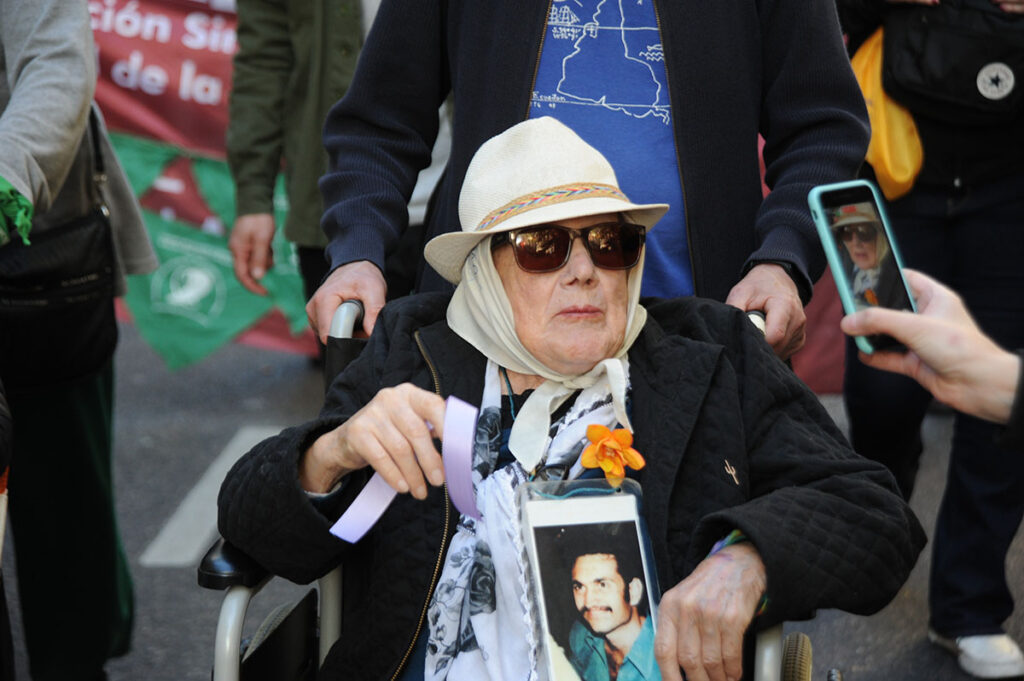
Yesterday there was also a public hearing in the National Congress , convened by members of the Left Front-Unity (FIT-U). In addition to members of that party, participants included Nora Cortiñas (Mothers of Plaza de Mayo Founding Line), Adolfo Pérez Esquivel (Serpaj), and members of CELS, among others.
“Activists, human rights NGOs, and civil society organizations must challenge the implications of enabling institutional violence by the State, which undermines the human rights consensus. And particularly those of us in organizations working on diversity and anti-racism issues, such as Identidad Marrón and Abosex, believe it is essential to use legal and technical tools to challenge this. We will be very vigilant and actively engaged in this effort. Finally, I don't think it's a minor point to discuss facial recognition. We, along with various organizations, have denounced the implications of facial recognition, especially for non-white, trans, and gender-diverse people. We must also emphasize the use of technology that this protocol enables.”
We are present
We are committed to journalism that delves into the territories and conducts thorough investigations, combined with new technologies and narrative formats. We want the protagonists, their stories, and their struggles to be present.
SUPPORT US

FOLLOW US
Related notes



We are present
This and other stories are not usually on the media agenda. Together we can bring them to light.