

The Third Malón returned to Jujuy after 4 months: they presented a report of human rights violations
After maintaining a peaceful occupation of Buenos Aires for more than four months, and before returning to Jujuy, the Third Malón presented a report. They worked with an independent expert commission investigating human rights violations suffered in the province of Jujuy.


Share

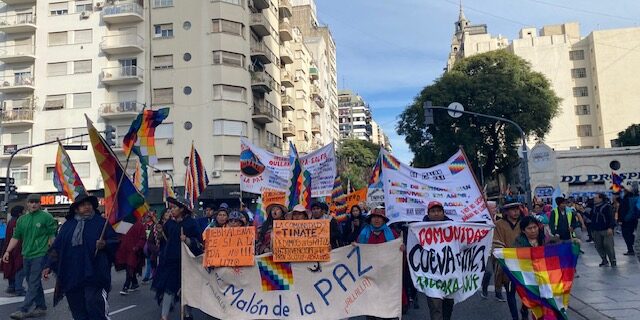
After four months of peacefully occupying the courthouse in Buenos Aires, the Third Peace March announced on Friday, December 15, that it was returning to Jujuy. That same Friday, its members, as a final act, delivered a report to Congress and the Supreme Court of Justice of the Nation—which, despite their demands, never received them—detailing the human rights violations resulting from the constitutional reform approved by Gerardo Morales without prior consultation with the people of Jujuy.
The fake eviction
When the Malón group was ready to leave Buenos Aires, the bus that was supposed to take them back was delayed. At 6:00 a.m. on Saturday, the Buenos Aires City Police tried to clear the area, harassing and rushing the Indigenous people who already had their bags almost packed, in a display of racism and an overreach of power. The number of police vehicles and officers stationed in the area was striking.
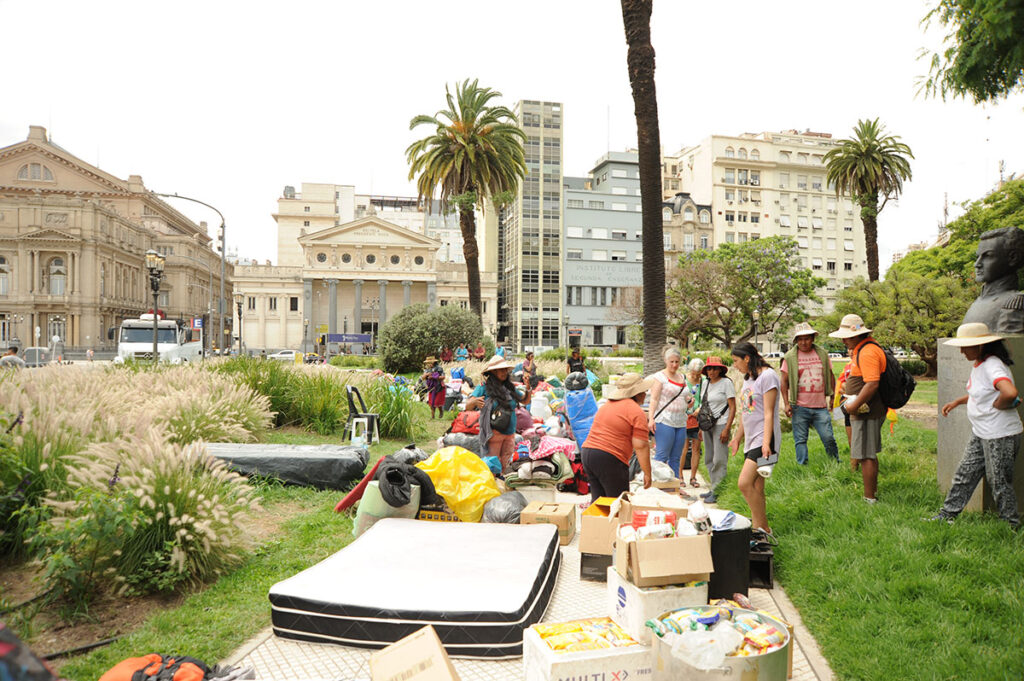
On Saturday afternoon, the Buenos Aires City Government itself published a misleading statement on its website: “After four months of illegal occupation, the squatters in Plaza Lavalle were evicted. This morning, the City Government peacefully evicted the makeshift settlement located in Plaza Lavalle where dozens of people were illegally occupying public space.” The text included statements from the new Mayor, Jorge Macri: “It’s not the same to trample on the rights of others as it is to strive for respectful coexistence. We will continue down this path of order.”
«We leave happy«
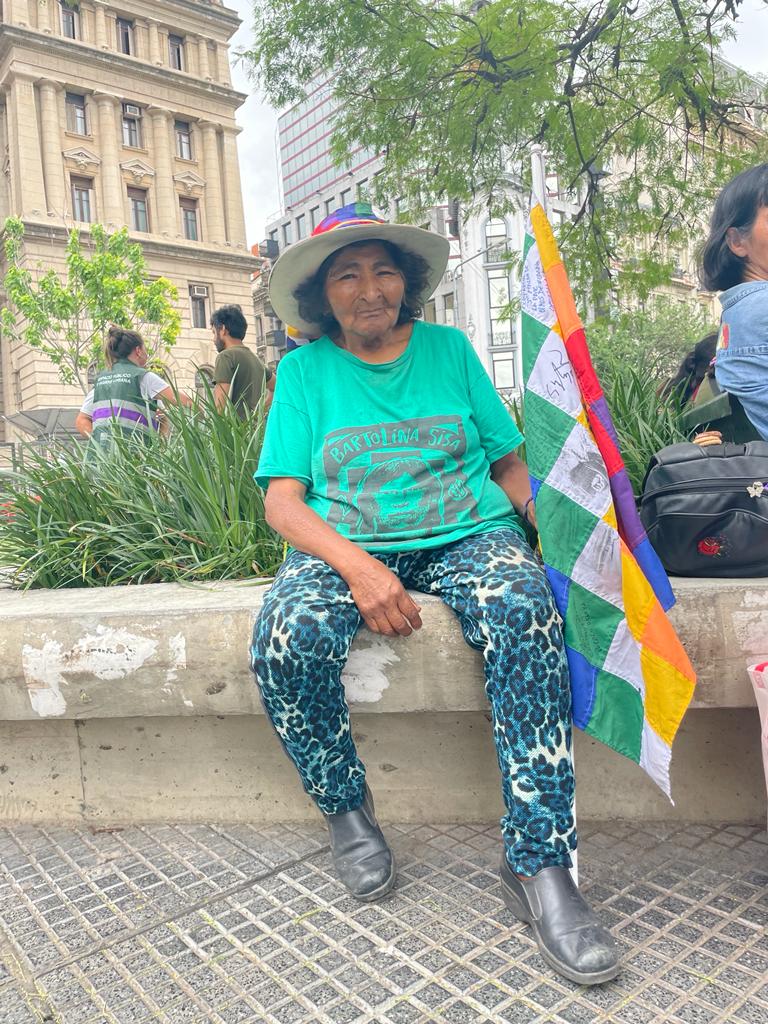
On Saturday, before boarding the bus that would take her back to Humahuaca, Sabina Yurquina told us: “What happened this morning hurt. Last night we were supposed to be packing our things. We had a contract with a bus company, but they called to say the driver had been in an accident and that we were going to leave this morning. By 6:00 a.m. we had almost everything ready, the tents were half-taken down, we were about to leave. We wanted to leave voluntarily, without the police coming to repress us, to surround us like criminals. We are not thieves. We only came to demand our rights, our land, our water, our culture.”
During the over-the-top eviction, Sabina, wearing a green t-shirt with Bartolina Sisa on it—a gift from her daughter—walked around in front of the police with a flaming bowl. “When they arrived, I lit the fire and carried it everywhere. A policeman came up and asked me what it was. They don't know anything!”
More than four months ago, Sabina told her daughter she was coming to Buenos Aires for a few days. It turned out to be more than 120. “We arrived on Pachamama Day , we honored her, and she gave us strength. We spent four months here, sleeping under plastic sheeting. We've faced discrimination here too. And many generous people came bringing water and supplies. Many people helped us. The first rains soaked us, we froze, and people asked us, 'What do you need?' They gave us mattresses and blankets. We didn't come here to live, to stay in the plaza; we came here to find a solution , a way out,” she says.
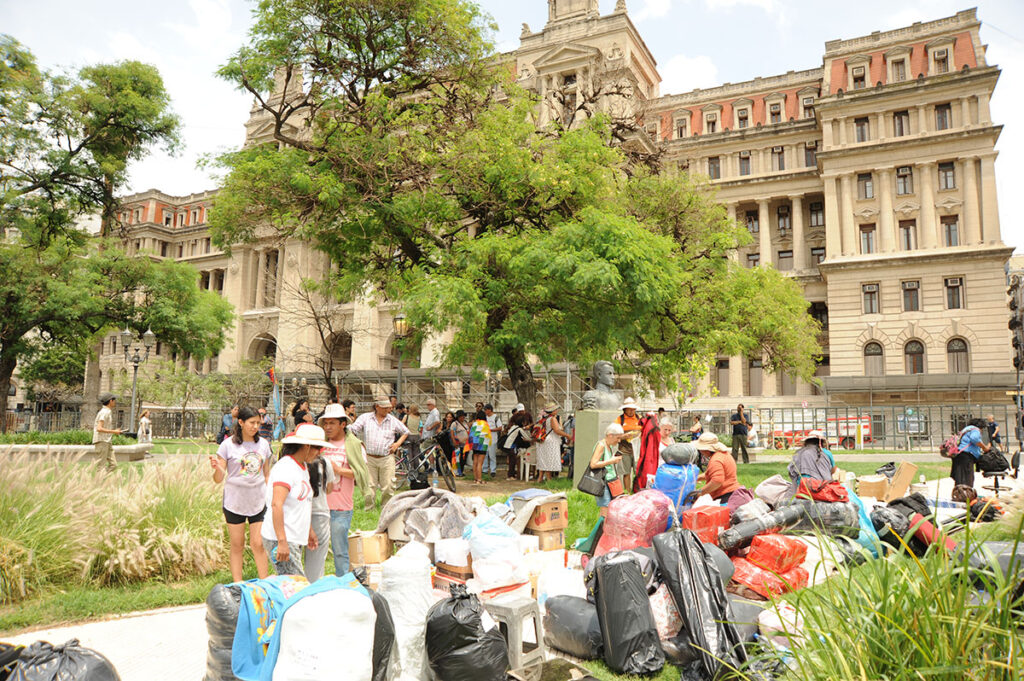
“We leave with the joy of having endured that struggle. March after march, we went out every day knocking on doors . They, blind to our plight, wouldn't listen to us. They treated us terribly. We are all happy and joyful because our Pachamama gave us the energy and strength to spend four months here. We didn't get sick; we had our nurse from the Malón. We were able to live through the rain, the cold, and the wind that battered us. Lately, even rats started appearing. And now this rain is the weeping of our ancestors from the Malón of 1946. They are sad, but I say: I leave happy. We didn't let Morales become president.”
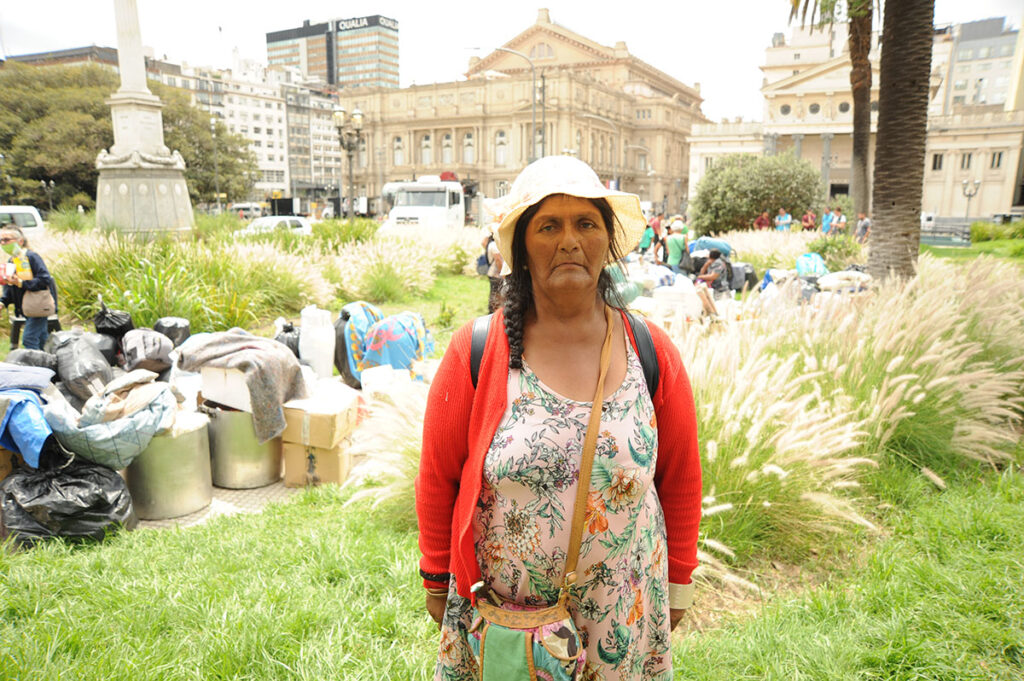
Vivi, who was about to return to Perico, agreed: “We’re leaving with our heads held high.” She also recounted how the police arrived very early. “You have to vacate now!” they told us. “We explained that we were just settling in. I was scared; we come from Jujuy, we suffered that kind of mistreatment.”
Today, the Third Malón, now operating from communities in Jujuy, responded with a statement: “Six months after the fierce repression in Purmamarca; a shameful staged scene for a photo op with excessive and unnecessary police intervention (infantry, motorcycles) under the command of the Minister of Security of the Autonomous City of Buenos Aires and the Head of Government of the City, Jorge Macri, on Saturday, December 16, 2023, in Plaza Lavalle . They are so cowardly and incompetent that they did it after the Third Malón of Peace had already announced the previous day in a press conference that we were returning to the territory; it was all a charade to score a point and try to instill fear of the iron fist and dictatorship that will come.”
Report: Human rights violations in Jujuy
The Third Malón, as Sabina and so many of its members pointed out, did not leave defeated. It left with several achievements and a struggle that continues. One of those achievements is the report they delivered on Friday, the product of several months of work, which documents in great detail, including legal records and testimonies, the human rights violations suffered by the people of Jujuy and members of Indigenous communities as a result of the repression unleashed by the protest against the constitutional reform.
This Report of the Commission for Receiving and Analyzing Complaints of Institutional Violence in the Province of Jujuy is an 85-page document, signed by those who acted as independent experts for the investigating commission: Adolfo Pérez Esquivel, from the Service for Peace and Justice (SERPAJ), Pastor Leonardo Schindler, anthropologist Diana Lenton, constitutional lawyer Eduardo Barcesat, and Humberto Podetti. Members of the Third Malón, along with lawyer Mariana Katz, and a team of individuals (Leonardo Pérez Esquivel, Joel Sverdlik, Alicia Montoya, Florencia Díaz Peccinetti, and Alexis Papazian) collaborated in its preparation.
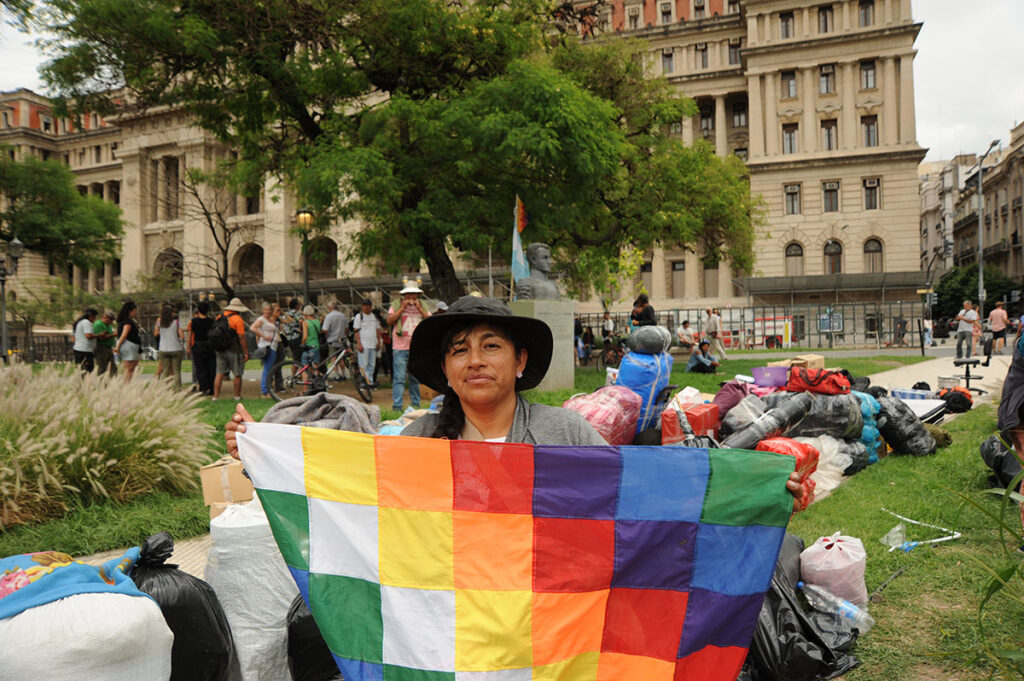
Mariana Katz explained to Presentes that SERPAJ has been supporting the Third Malón since June. Adolfo Pérez Esquivel arranged for former President Alberto Fernández to meet with them. On August 18, after a six-hour meeting, it was proposed to form a commission to investigate the human rights violations suffered in Jujuy. The independent experts were coordinated by Mariano Przybylski, National Director of Policies against Institutional Violence at the Secretariat of Human Rights.
The commission traveled to Jujuy twice, in November and December. “ A series of human rights violations suffered by the people of Jujuy were raised, not only in June. Even today, pressure persists in the workplace, for example, against teachers who oppose the reform and have been victims of repressive violence by the province, preventing them from demonstrating. Furthermore, communities are suffering from the encroachment of those who seek to appropriate the natural resources of the territories they inhabit. The report details all of this,” said Katz.
Community ownership of land
“Currently, there is no national legislation regulating communal land ownership, nor is there any regulation guaranteeing the recognition of indigenous territorial rights. This creates a framework of legal uncertainty that violates other rights of indigenous peoples enshrined in the Constitution and other national and international regulations,” the report states.
The Commission found and compiled “numerous testimonies from representatives of indigenous peoples who participated in the so-called 3rd Malón for Peace, to express their rejection of the constitutional reform about which they had not been informed or consulted.”
The report also details, in various sections—for example, in the one concerning Purmamarca—the repression suffered by young people, women, and the elderly. “There is agreement that the repressive force increased, seeking to clear the road, but above all to instill fear and make an example of the protesters. The cruelty with which they beat elderly women, women with children, and the beatings of defenseless young people attest to this.”
Finally, she makes recommendations to the Argentine State. Among them, she proposes comprehensive assistance for victims of repression, emphasizing the needs of children and adolescents suffering lasting effects. “We recommend that the State enact the law on Indigenous communal property in accordance with the terms ordered by the Inter-American Court of Human Rights. And that a free, prior, and informed consultation process be implemented to guarantee the right to participate,” Katz summarized.
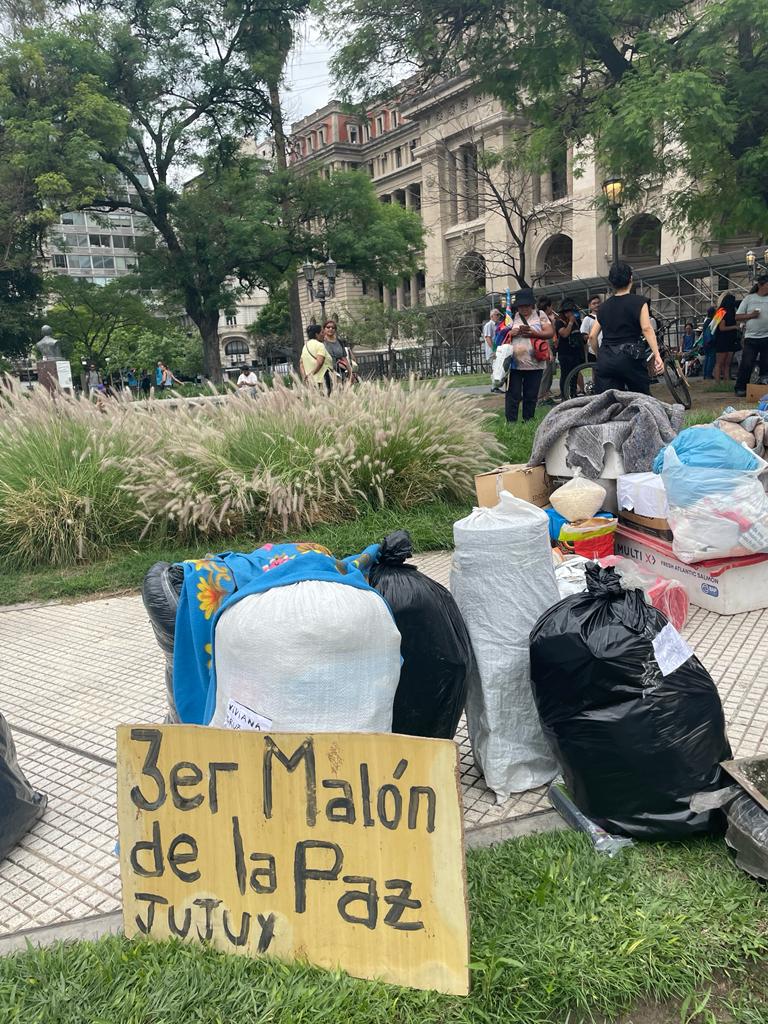
The right to protest and what comes next
Today, the Third Malón highlights, among its achievements beyond the report and the visibility given to the issue, "the exercise of the right to social protest, a fundamental tool of democracy, autonomy and self-determination; highlighting the great solidarity for the cause, collaboration and support of multiple organizations, media outlets and the Argentine people in general, among many others."
How does the struggle continue? The Third Malón continues working with the investigative commission and is monitoring the progress of the report and its findings. Furthermore, as its members stated today: “We will continue with the Indigenous Peoples' Promotion Commission, addressing four main issues: the annulment of Jujuy's unconstitutional reform, the formation of a federation of Indigenous Peoples and Communities, the creation of a political tool, and the implementation of the Indigenous communal property law . The Third Malón fights for the defense of water, territory, the rights and sovereignty of Indigenous peoples, and for the annulment of Jujuy's unconstitutional reform. Standing tall, never on our knees; free, never enslaved. The struggle continues and belongs to everyone. Long live rights, down with the unconstitutional reform!”
We are present
We are committed to journalism that delves into the territories and conducts thorough investigations, combined with new technologies and narrative formats. We want the protagonists, their stories, and their struggles to be present.
SUPPORT US

FOLLOW US
Related notes
We are present
This and other stories are not usually on the media agenda. Together we can bring them to light.