

Job quota: in two years the placement of transvestites and trans people increased by 900%.
Monitoring carried out by the Ministry of Women, Gender and Diversity revealed a significant increase during this year.


Share

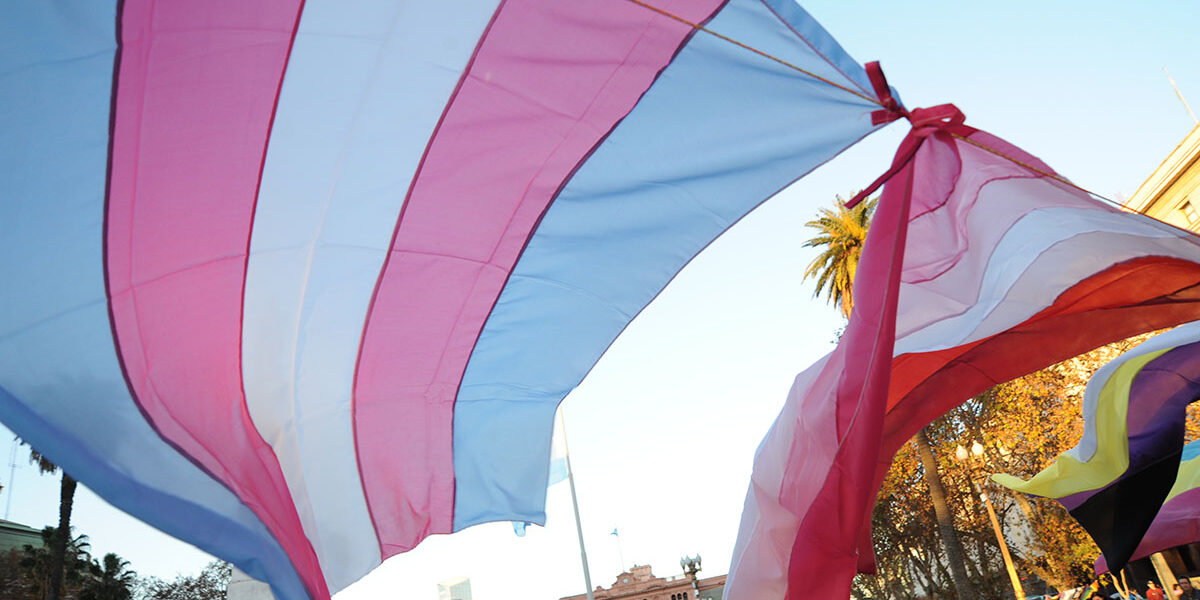
BUENOS AIRES, Argentina. Some 955 people have transformed their lives by finding employment in the national public sector thanks to the Diana Sacayán – Lohana Berkins Law Promoting Access to Formal Employment for Transvestite, Transsexual, and Transgender People (TTT) . Since its enactment in 2021 , the employment rate of this group in the public sector has increased by more than 900%.
"It's a policy that must be nurtured, strengthened, protected, and its implementation continued. Those 955 are not just numbers, they are souls," said Agustina Ponce, Undersecretary of Diversity Policies at the Ministry of Women, Gender and Diversity .
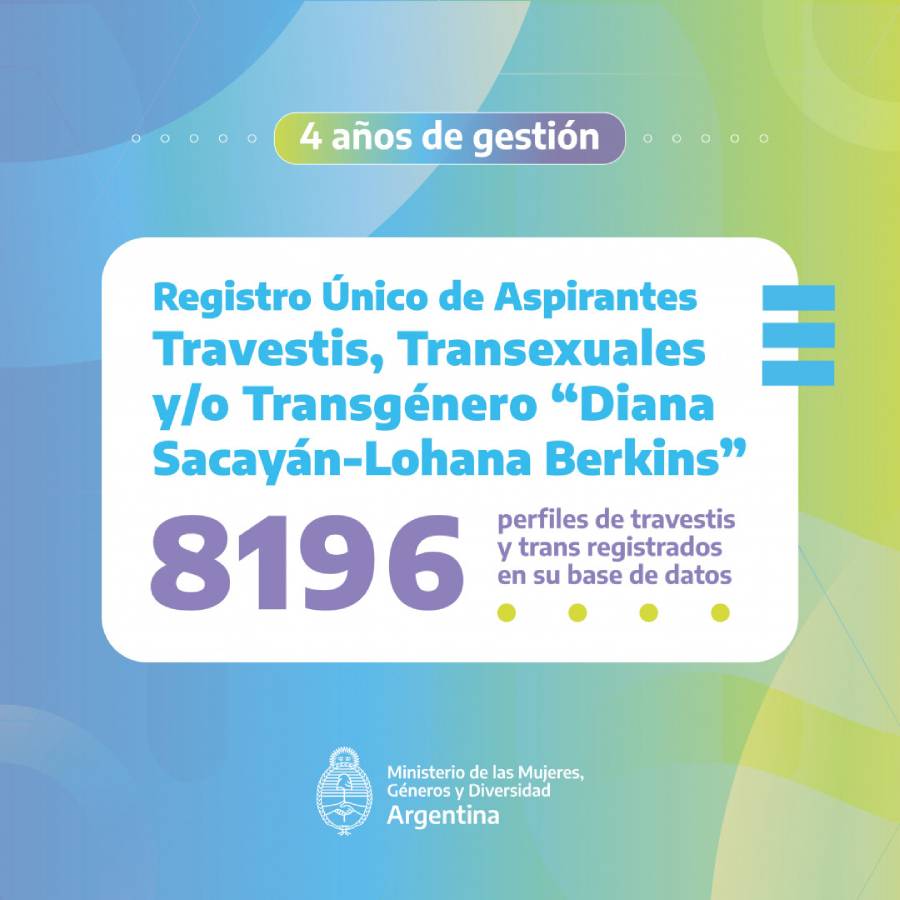
The data from the ninth monitoring of Law No. 27,636 were provided this Monday at a meeting with journalists where Ponce participated; the coordinator of Access to Employment for Transvestite, Transsexual and Transgender People, Cintia Pili; and the head of the Single Registry of Applicants, Laura Cardozo.
This regulation, which was sanctioned on June 24, 2021, establishes a minimum quota of 1% of the positions and posts of the National State for the transvestite trans community, with the objective that they can access formal work under equal conditions.
It also stipulates that awareness and sensitization campaigns should be promoted in the workplace and provides incentives for the private sector that complies with these regulations. Furthermore, it promotes access to credit lines from the National Bank of Argentina for this population.
Why is a quota necessary?
The transgender population faces greater vulnerabilities than the rest of the population. From an early age, upon assuming this identity, transgender people are exposed to various types of discrimination, ranging from familial to social and institutional.
The first form of exclusion occurs within families that do not accept this identity, forcing them to leave their homes. Many even come to Argentina from their countries of origin seeking greater protection under national law. The second form of exclusion occurs in the school system. Due to harassment from students and teachers, and a lack of support, most of them end up dropping out of school.
The lack of education, coupled with workplace discrimination, leads a high percentage of transvestites and trans women to see prostitution as their only means of survival. This brings with it greater vulnerability: exposure to the streets, the cold, sexually transmitted infections, and violence from the police, society, and the healthcare system.
In this regard, the First Survey on the Trans Population (2012) in Argentina revealed that only 64% had completed primary school or basic general education (EGB). Furthermore, 50% lived in substandard housing, while 85% of trans women reported being or having been involved in prostitution.
Meanwhile, while a cis woman in Argentina has a life expectancy of 78 years (according to data from the INDEC census in 2022) , that of a trans woman or transvestite is 40: less than half.
Results of the ninth monitoring
Before the enactment of the Transgender Employment Quota Law, 101 people from this community held jobs in the public sector. This represents a 946% increase in hiring.
“We’ve seen how it changes our own lives. It’s another possibility that opens up, in addition to the only one we’ve had: prostitution,” Ponce said. Besides being a public servant, she is a trans activist and has also worked as a sex worker.
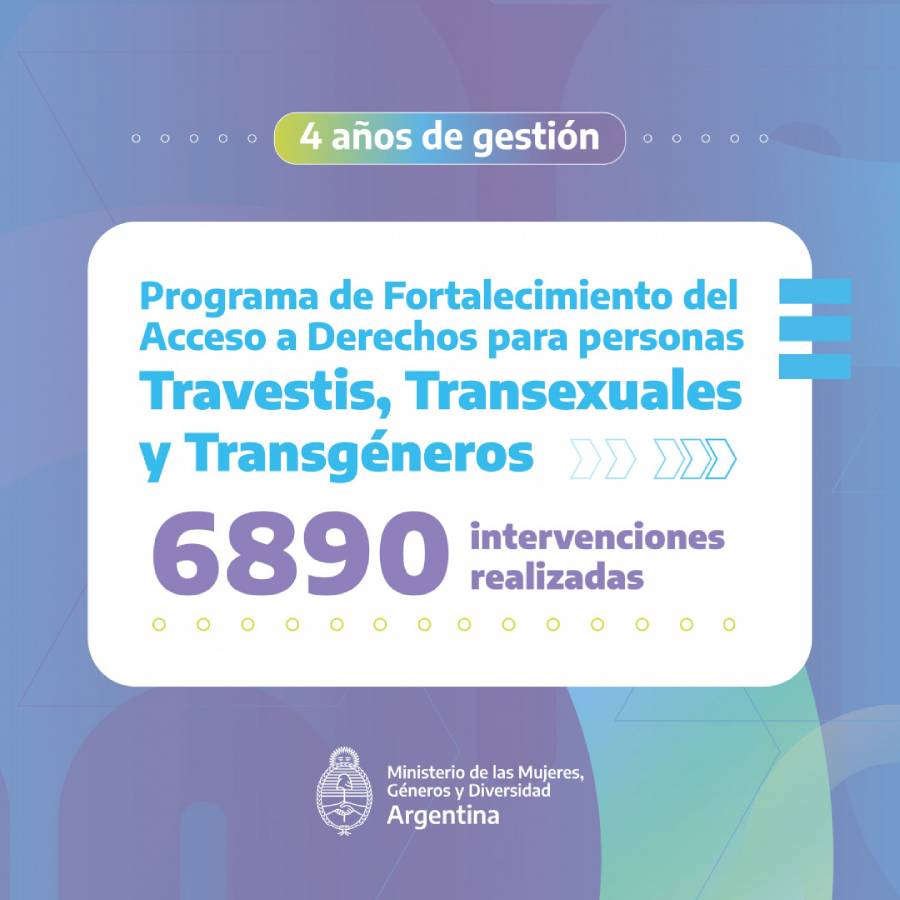
Within the framework of this legislation, more than 500 training and technical assistance activities on access to and retention in employment were also carried out for this sector. This initiative reached 12,058 workers in the public sector at all three levels, as well as those in the private sector, unions, and universities.
Regarding the type of employment that transgender and transvestite individuals accessed through the quota, almost 40% entered under the hiring system established by the Framework Law. Meanwhile, 22% are on permanent staff.
Of the total number of organizations surveyed in the monitoring, 22% increased the hiring of TTT and 13.91% already meet or exceed the 1% established as a minimum.
Regarding the federal nature of the regulations, each monitoring period recorded increases in hiring at the federal level. To date, the jurisdiction with the highest percentage of TTT (Transferable Workers) hired remains the Autonomous City of Buenos Aires, with 58.32% of positions. However, a drastic change has been observed since the first monitoring period, when hiring in the rest of the country represented 14%, compared to the current 41.7%.
The private sector
Furthermore, while the law does not mandate that the private sector meet the 1% quota, it provides incentives for this sector to hire transgender and transvestite individuals. Through the National Program for Gender Equality in Work, Employment, and Production, known as "Igualar," the aim is to reduce gender gaps in the workplace. "They can have all the tools available to the public sector," Ponce explained regarding the private sector.
Regarding the three branches of government, the executive branch has the highest percentage of hiring, followed by the legislative branch. "After two years of the Quota Law, the Supreme Court issued a ruling stating that it will begin hiring transgender and transvestite people according to its own guidelines," the undersecretary reported.
The 1% quota for transgender and transvestite people in the public sector must continue to be implemented, as it is a national law . The authority responsible for enforcing this law is the Ministry of Women, Gender and Diversity, a ministry that the incoming government of La Libertad Avanza , led by Javier Milei, does not consider necessary . In fact, in the current context of the transition from the outgoing to the incoming administration, this ministry has not yet been convened.
“We come from a time of state repression. The boys and girls who are young today may have taken for granted the basic rights we have today, such as the Gender Identity Law. Faced with a future scenario that seems adverse, with figures reminiscent of that era, I think today’s young people are going to have a difficult time,” Ponce said.
However, all those present emphasized the importance of defending the rights won in the streets. "It is necessary to remain organized and continue our political education. We must strengthen dialogue and deepen the policies we have thanks to people who gave their lives fighting," the undersecretary concluded.
We are present
We are committed to journalism that delves into the territories and conducts thorough investigations, combined with new technologies and narrative formats. We want the protagonists, their stories, and their struggles to be present.
SUPPORT US

FOLLOW US
Related notes

We are present
This and other stories are not usually on the media agenda. Together we can bring them to light.