

ILGA Report: In 2023, arrests and persecution of LGBT people increased worldwide.
In 2023, arrests and prosecutions of LGBT people increased. This is shown in "Identities Under Arrest," the report by the International Lesbian, Gay, Bisexual, Trans and Intersex Association (ILGA). The actual figures are even higher.


Share

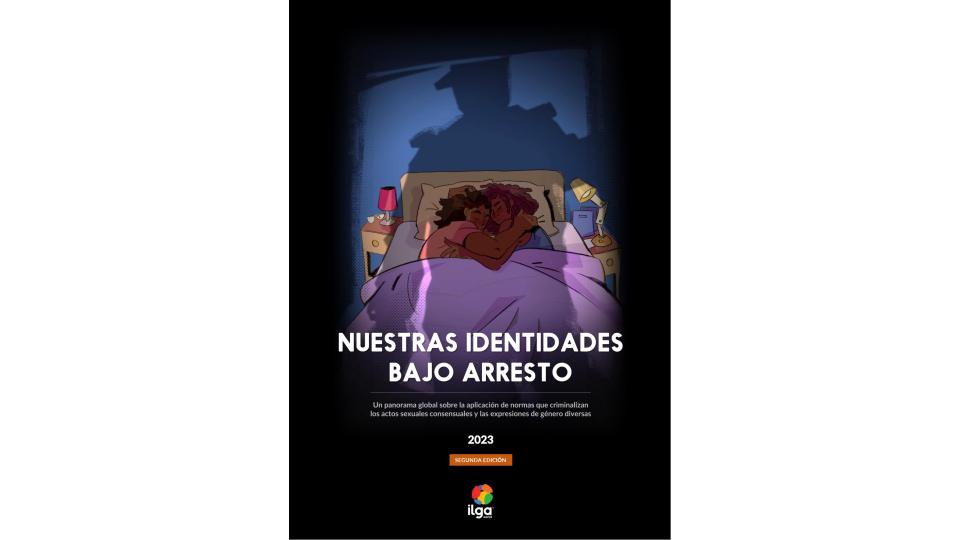
As 2024 approaches, 63 UN member states still criminalize consensual same-sex sexual acts. Since 2021, only five countries have decriminalized them: Antigua and Barbuda, Barbados, Saint Kitts and Nevis, Singapore, and Mauritius. This is according to the report "Our Identities Under Arrest ," published by the International Lesbian, Gay, Bisexual, Trans and Intersex Association (ILGA). This edition compiles more than 1,300 cases of criminal law enforcement against sexual diversity in 72 countries worldwide . It also notes more than 600 new cases of arrests and prosecutions of LGBTQ+ individuals in countries where laws criminalize these identities, primarily in Asia and Africa.
The collected data is much less than the actual data.
This is the second edition of the report. And compared to the first, published in 2021, this study “presents a substantial expansion in the collection of cases.” For example, with the inclusion of 600 new arrests and prosecutions.
“The data collected represents only a tiny fraction of the actual cases,” stressed Lucas Mendos, research manager at ILGA World. He added: “It is imperative that states immediately stop applying these laws.”
“It is crucial to emphasize that obtaining and documenting this information is extremely difficult. What has been collected represents only a tiny fraction of the actual cases. Many are never reported, not recorded, or are lost in incomplete records ,” Mendos warned.
Regressive changes
In 2023, Uganda adopted aggressive new legislation, with a negative impact on the entire region. Kenya, Tanzania, Nigeria, Ghana, and Senegal also attempted to strengthen their existing legislation, while Niger, Mali, Iraq, and Indonesia saw increased efforts to formally criminalize LGBTIQ+ people.
“Furthermore, the significant change is striking in countries where there were no records of arrests and prosecutions in the last five years, and now there are documented instances . These are the cases of Burkina Faso, Burundi, Comoros, the Democratic Republic of Congo, Equatorial Guinea, Jordan, Libya, the Maldives, and Papua New Guinea,” Mendos explained.
Of the 72 countries included in this report, only 53 have explicit laws criminalizing consensual same-sex sexual acts between adults. However, there are countries—such as Egypt and Iraq—where de facto criminalization due to the systematic and institutionalized use of seemingly unrelated or ambiguous laws to persecute LGBTQ+ people.
Diversity as a scapegoat
To better understand how these laws and data impact global politics and our region, we asked Mendos a few questions.
-What analysis do you make about the political situation of the countries you analyzed and the violence that unfolded?
Lucas Mendos: A recurring pattern is the combination of political figures, religious leaders, and media outlets aligned in anti-diversity rhetoric that often sends shivers down the spine . From political, religious, and community leaders, there is a systematic instrumentalization of diversity as an almost constant scapegoat . It is used to mobilize and scandalize public opinion and often as a distraction strategy from other issues on the political agenda. In many of these countries, sexual and gender diversity ends up being the victim of manipulation that creates fertile ground for the proliferation of extremely high levels of hostility, magnified in public debate, on social media, in churches—which wield enormous influence—and in the streets. While not the main focus of the report, the phenomenon of disinformation and its potential impact on public perception and political dynamics is evident in several countries .
-How might the collection of this data have an impact?
This report is necessary to demonstrate that criminalizing LGBT individuals is far from being dormant laws that "sleep" in penal codes , which is what many states still claim when the UN asks them to be held accountable. Furthermore, in countries receiving refugees, courts typically have very high standards for recognizing that an LGBT person is at risk of persecution. The mere existence of a criminalizing law is not considered sufficient grounds for granting asylum. They often demand information on how these laws are applied in practice. And obtaining this information is so difficult that many applications end up being rejected because refugees cannot prove that they are at risk of being arrested, prosecuted, and convicted because of their identity. With this report, ILGA aims to help reduce these information gaps.
How can the media contribute?
-What recommendations does ILGA make to States, societies and the media regarding the persecution of LGBTIQ+ people?
It is imperative that states immediately cease applying these laws. The urgency lies in protecting the fundamental rights of the LGBTIQ+ community and ending persecutory practices. As a necessary consequence, the hundreds (if not thousands) of people currently imprisoned for these “crimes” must be released. These recommendations were made at the UN Universal Periodic Review level, but to date, the countries that criminalize these practices have rejected them without exception.
As an interim measure, some argue that countries could consider implementing moratoriums until these regulations are effectively repealed. This would provide a window of opportunity for the review and elimination of discriminatory laws.
The media plays a fundamental role in the application of these regulations in many countries. It is essential to redefine its role to avoid contributing to repressive practices, by ceasing to identify potential victims of persecution and by refraining from disseminating information that could stigmatize or expose individuals based on their sexual orientation. At the same time, the media can contribute with inclusive and respectful narratives that embrace sexual and gender diversity.
Institutional violence in Latin America
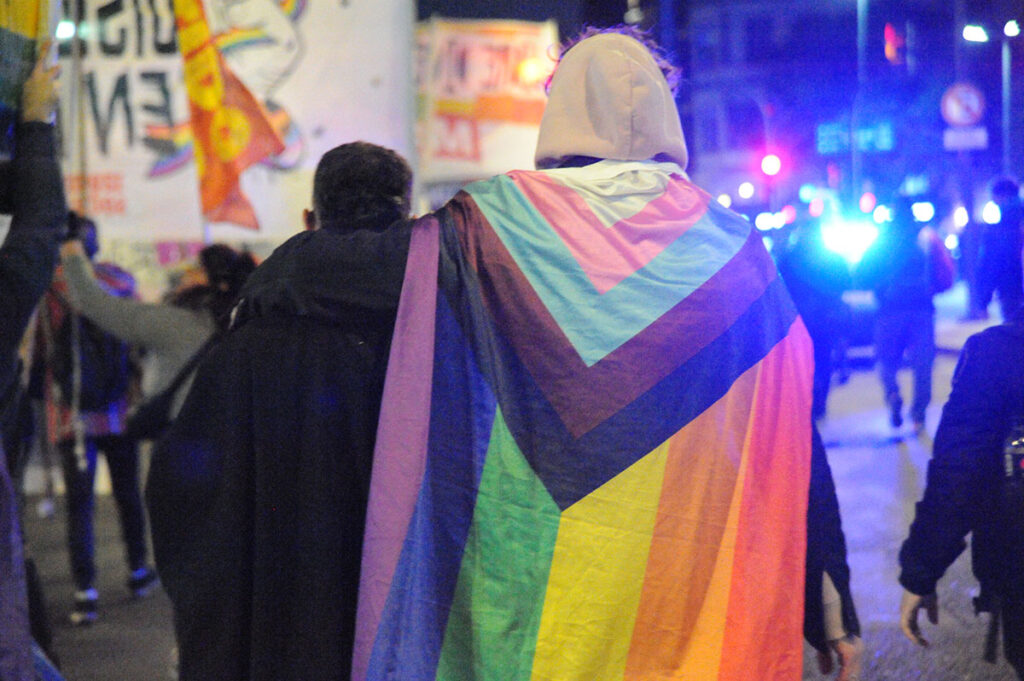
–Although it is not included in the report, are you aware of the situation in other Latin American countries?
What is common in Latin America is the documented high levels of institutional violence that persist even in countries with laws that no longer explicitly criminalize such acts. The report focuses on countries where these oppressive laws criminalizing consensual same-sex sexual acts and diverse gender expressions do exist, and that is the primary reason why no Latin American countries are included. If we had more resources, we would like to expand the scope of the report in the future to cover all countries.
The situation in Argentina
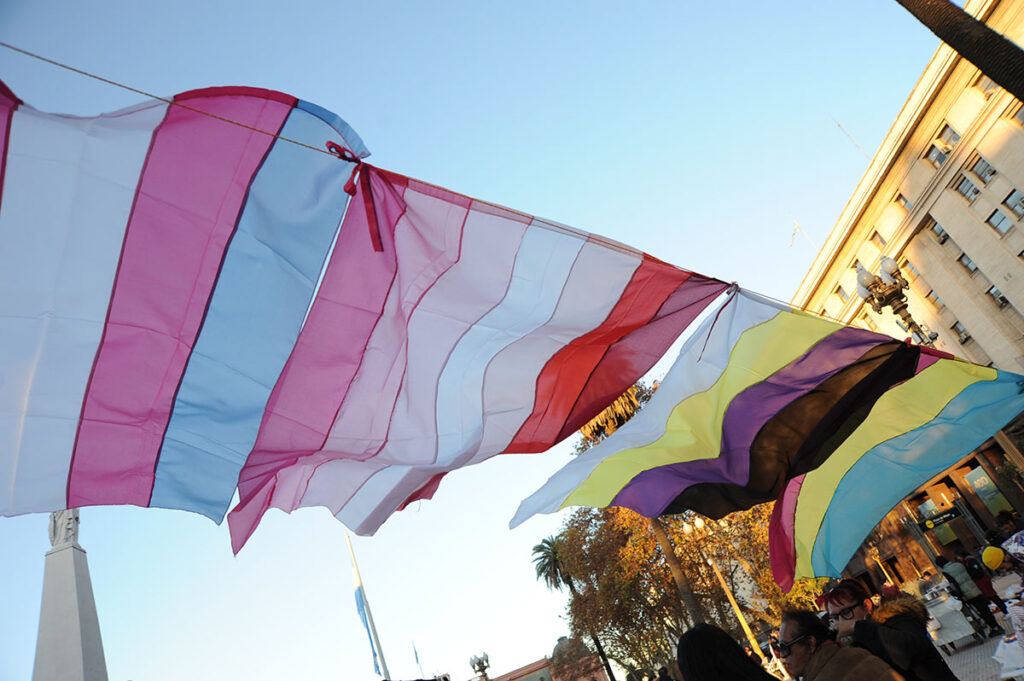
-What do you think about the rise of the far right in different countries like Argentina and how this might impact the LGBTIQ+ population?
From a global perspective, one of the most immediate concerns is the legitimization of hate speech . We have observed this in many countries around the world where these political spaces have gained power. It could be very harmful for people who promote discriminatory messages to occupy leadership positions because this has the potential to normalize and legitimize this type of discourse. Specifically, a critical point is how this can permeate law enforcement agencies, where prejudice against diversity is already widespread, and this can easily and quickly translate into even greater levels of violence and institutional discrimination against our communities.
The executive branch defines the country's foreign policy. This can have a tangible impact on Argentina's position as a key player on human rights and diversity issues internationally, both at the UN and the OAS, two crucial forums where diversity issues need more than ever constant support given the increasingly strong opposition to them. Argentina currently not only supports but often leads these initiatives internationally, and any lapse in this role would be extremely concerning.
We are present
We are committed to journalism that delves into the territories and conducts thorough investigations, combined with new technologies and narrative formats. We want the protagonists, their stories, and their struggles to be present.
SUPPORT US

FOLLOW US
Related notes

We are present
This and other stories are not usually on the media agenda. Together we can bring them to light.