

Rafael Nahuel murder: The five accused prefects were sentenced
Although the plaintiffs had requested life imprisonment for the prefects, the five were sentenced with light sentences for the murder by shooting Rafael Nahuel, a young Mapuche man, in the back in 2017.


Share

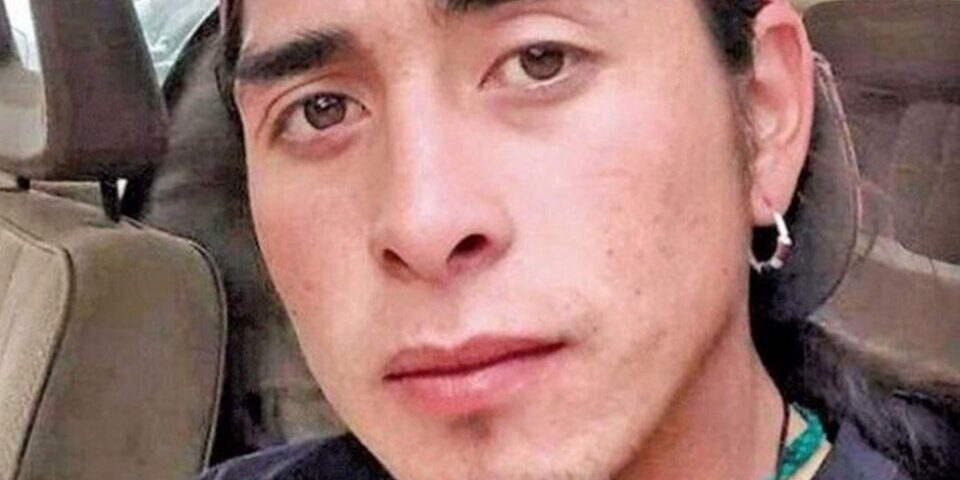
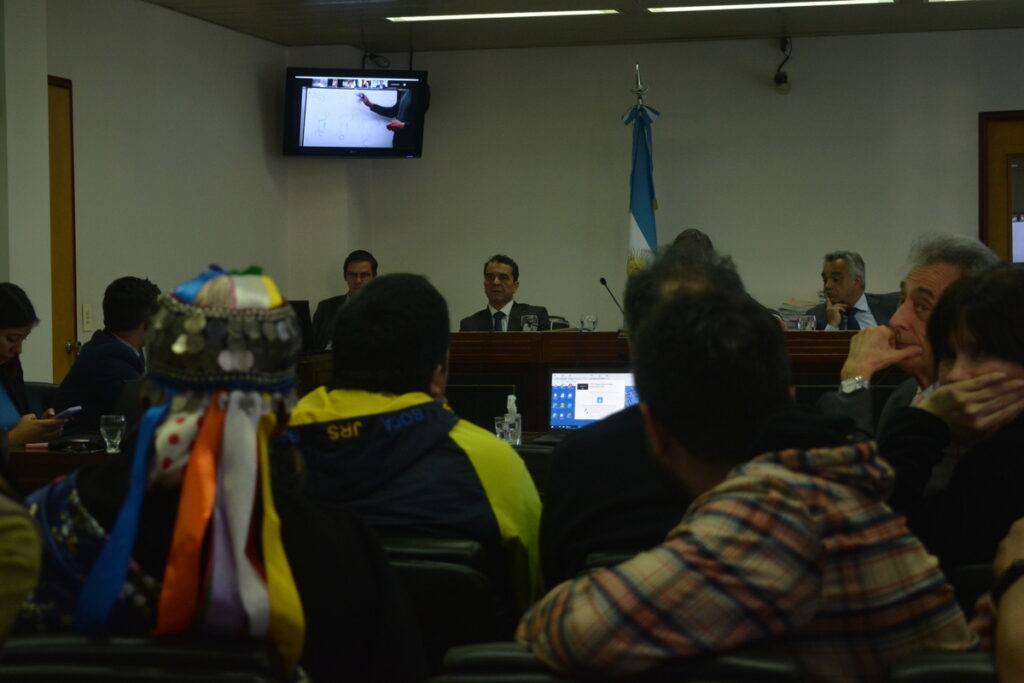
The Federal Oral Court of General Roca (Río Negro) sentenced Naval Prefecture member Sergio Cavia to five years in prison in the trial for the murder of Rafael Nahuel. The prefect was found guilty of aggravated homicide with the use of a firearm, committed in excess of self-defense. This was the verdict in the public trial that had been underway for three and a half months for the murder of the young Mapuche man, Rafael Nahuel , who was shot in the back on November 25, 2017, two days after the eviction of his community, Lafken Winkul Mapu , an eviction for which Cavia was the perpetrator.
Light sentences for the accused
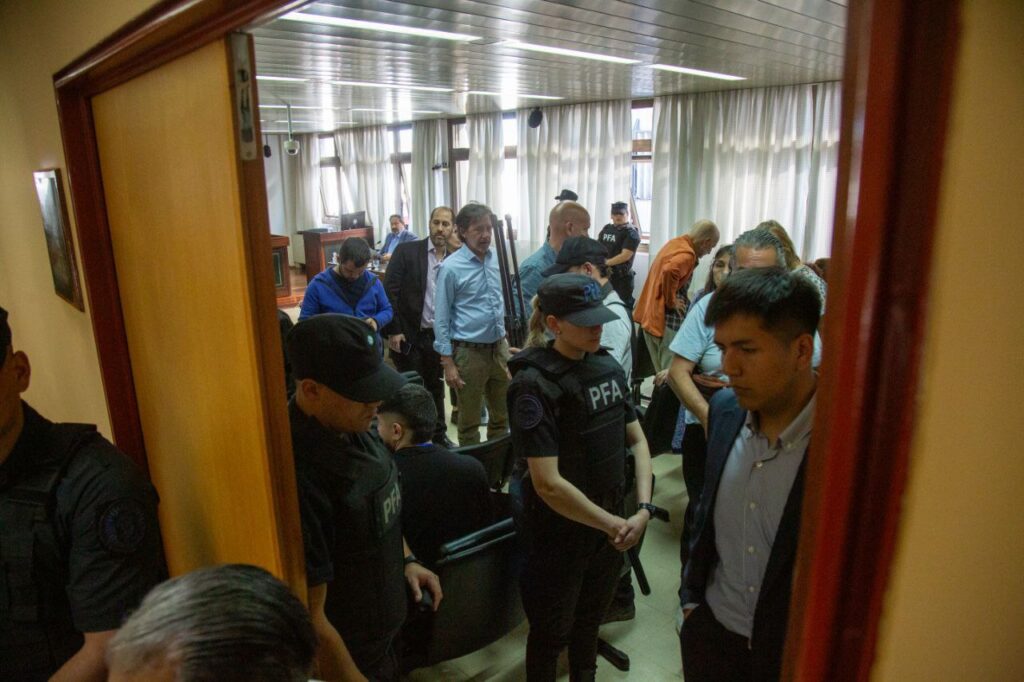
The other four defendants who were part of the elite Albatros group — Francisco Javier Pintos, Juan Ramón Obregón, Sergio García and Carlos Valentín Sosa — received a four-year sentence for being considered necessary participants in the same crime.
The lawyers representing the Nahuel family, the Permanent Assembly for Human Rights, and the National Secretariat for Human Rights will appeal the ruling. They had requested life imprisonment for the five defendants .
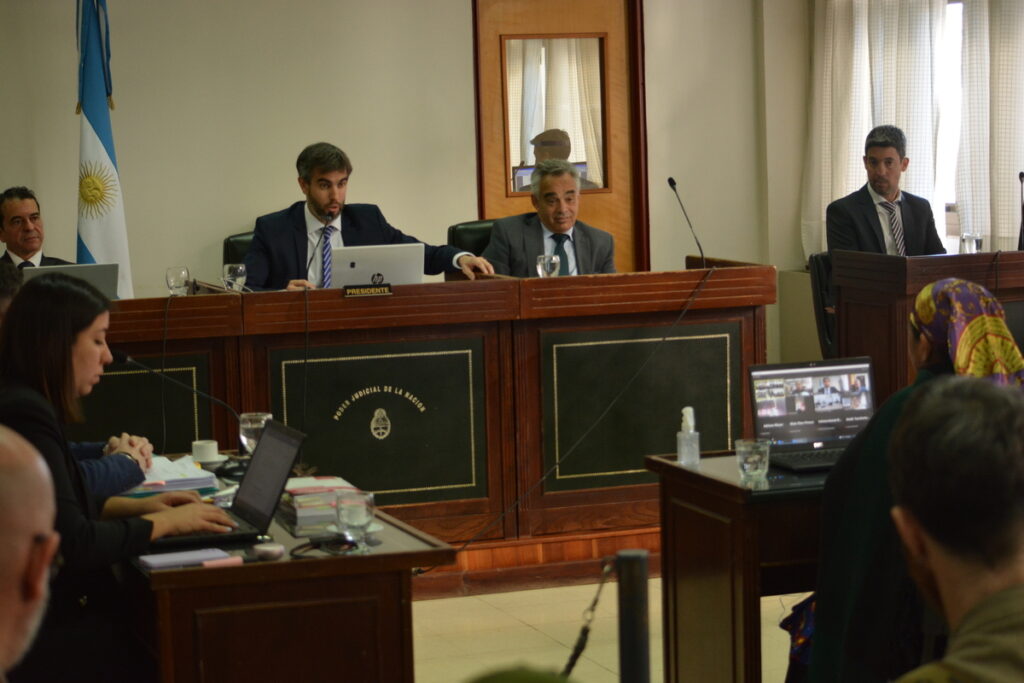
The court, composed of federal judges Alejandro Silva, Simón Bracco, and Pablo Díaz Lacava, accepted the prosecution's case, led by Rafael Vehils Ruiz. According to the prosecution, the Mapuche were armed, and a confrontation ensued in which the officers acted in self-defense. The forensic analysis determined that the gunpowder residue on the hands of the victims—Nahuel and his companions Lautaro Curruhuinca and Fausto Jones Huala—came there through transfer, not from handling any weapon. This was deemed insufficient by the judges, despite the lack of any other concrete evidence indicating that the Mapuche community was armed.
151 shots fired with lethal weapons
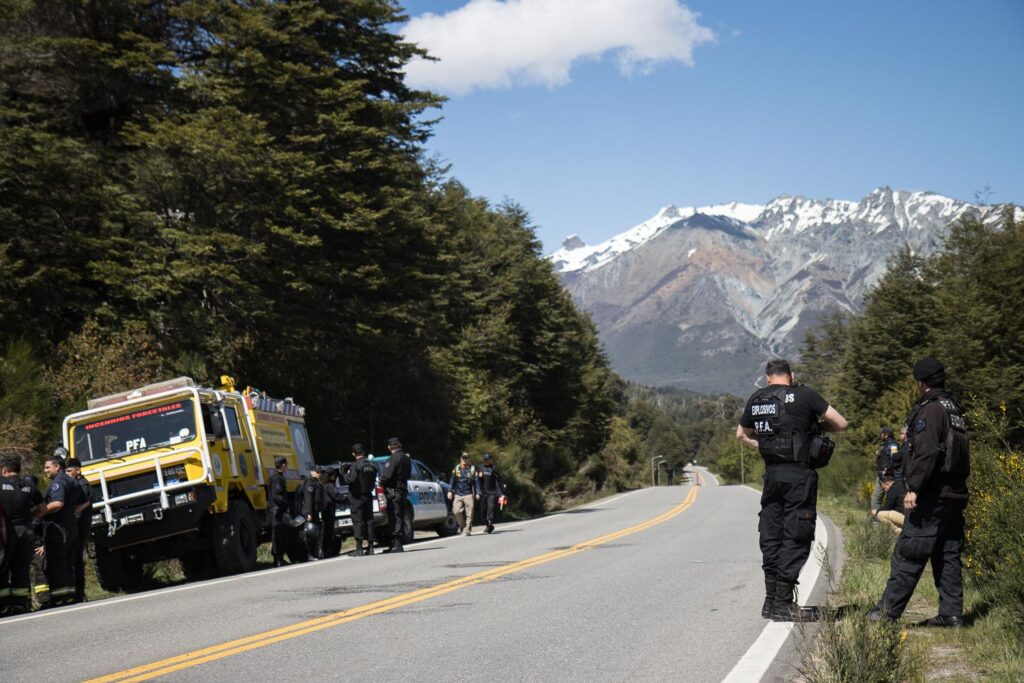
The lawsuit filed by the National Secretariat for Human Rights, led by lawyer Mariano Przybylski, argued that it was proven there was no armed confrontation , but rather a pursuit that extended beyond the community's property, and that the officers fired 151 shots with lead ammunition . According to the lawyer, the accumulation of evidence and testimonies demonstrates that the defendants "disobeyed orders to wait for reinforcements and went up the mountain with lethal weapons ," in "search of the Mapuche." Przybylski noted that the third ballistics analysis conducted during the investigation determined that the fatal shot was fired by Albatrossist Sergio Cavia, but maintained that the commando group acted in a coordinated manner to commit the murder and then to cover it up.
“Rafita needs true justice”
“I am disillusioned; nothing good can be expected from this justice system. Rafita needs true justice to rest in peace. Those murderers must receive life sentences; they destroyed a family, crushed a community, and didn't care about anything,” said Nahuel's mother, Graciela Salvo, in front of the court.
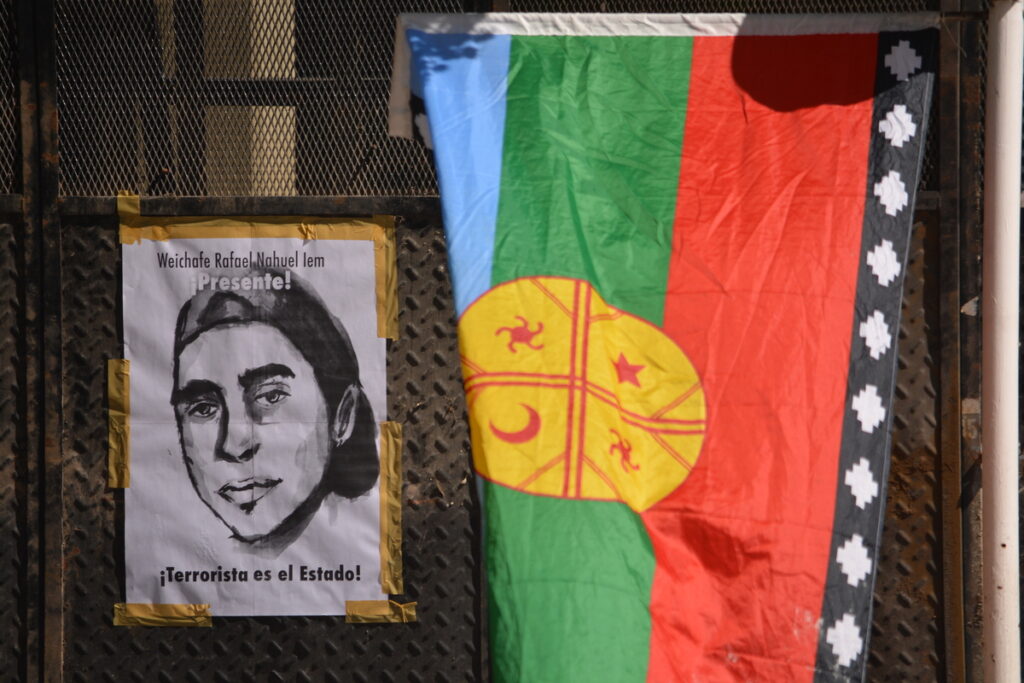
“We are going to appeal. We regret this ruling by the prosecution, which was more of a defense for the Albatros. And this judicial response encourages the existence of institutional violence,” the family's lawyer, Rubén Marigo, told Presentes. In his opinion, during the months of the oral proceedings they were able to prove “Rafael's murder by shooting him in the back, the near-fatal injuries of Johana Colhuan and Gonzalo Coña, and the existence of 150 rounds of 9mm ammunition fired by the Albatros.”
For Marigo, although the sentence condemns them, by stating that they acted in self-defense, “it justifies this type of repression; it’s an insufficient response.” The lawyer, who represented the family along with Ezequiel Palavecino, mentioned that today is Rafita’s mother’s birthday.
“This crime began during the administration of Mauricio Macri and Patricia Bullrich (then Minister of Security) with the fight against what they called the internal enemy, referring to the Mapuche people. Now Bullrich is back in the spotlight, and it is regrettable that this encourages institutional violence, a debt that democracy owes to the most vulnerable sectors ,” he added.
For his part, Orlando Carriqueo, spokesperson for the Mapuche Tehuelche Parliament of Río Negro, stated that “theories of conflict stem from the era of the military dictatorship. Despite 40 years of democracy, there are governments that continue to deploy state terrorism, as was the case with Patricia Bullrich and Mauricio Macri, and there is a society that does not recognize the genocide of Indigenous peoples, even though the State occupied this Patagonia 140 years ago.”
At the opening of the hearing, the defendants exercised their right to speak and argued that they acted "in accordance with the law".
How the day unfolded outside the courthouse
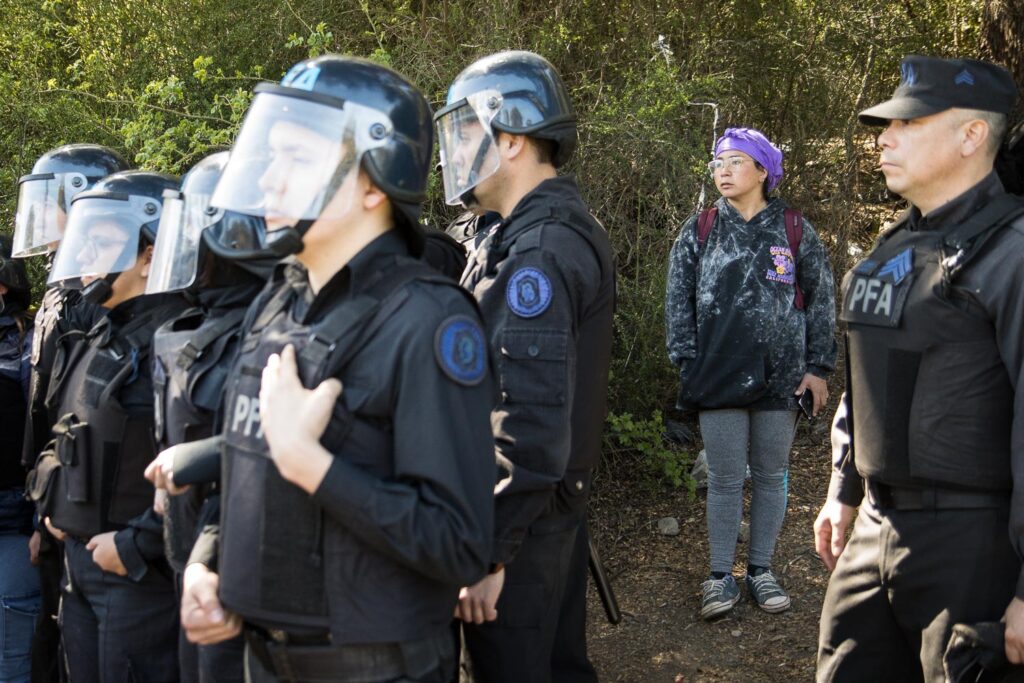
The courthouse was completely fenced off, with about 50 Federal Police officers guarding the entrance to the courtroom and the building. Nearly a hundred officers were stationed outside, reinforced by the National Gendarmerie. A large crowd of people from indigenous, social, labor, political, and human rights organizations had gathered in the street to support the family, as well as relatives of victims of state repression.
Who was Rafael Nahuel?
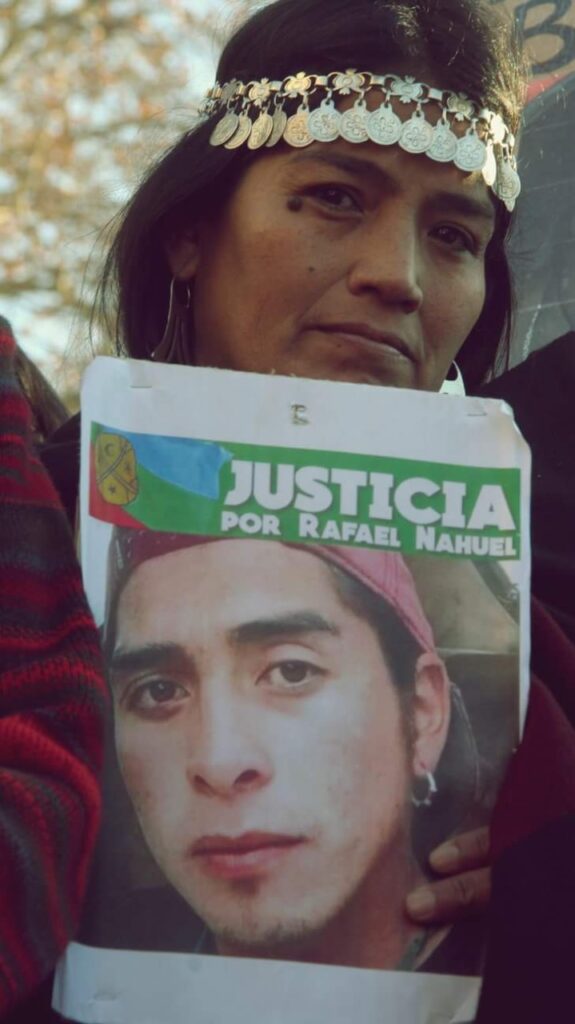
Nahuel was from Alto de Bariloche, from the Nahuel Hue neighborhood (“The Place of the Tiger”), at the foot of Cerro Carbón, on the southern slope of Mount Otto and the Challhuaco Valley. He was the middle brother in a very humble family. According to his aunt, María Nahuel (one of those arrested during the eviction), Rafael was not an activist in the Mapuche community, although his maternal family was. That day, he went to the Lafken Winkul Mapu community in Villa Mascardi to accompany family and friends who had been violently evicted two days earlier in an operation carried out as part of a land usurpation case initiated in 2017 following a complaint filed by the National Parks Administration.
Rafael Nahuel and Santiago Maldonado
The murder of Rafael Nahuel was committed on the same day that Santiago Maldonado's in his hometown of 25 de Mayo, in the province of Buenos Aires. Santiago disappeared on August 1, 2017, amidst the criminalization of Mapuche land reclamation. His body was found 78 days later in the Chubut River.
We are present
We are committed to journalism that delves into the territories and conducts thorough investigations, combined with new technologies and narrative formats. We want the protagonists, their stories, and their struggles to be present.
SUPPORT US

FOLLOW US
Related notes


We are present
This and other stories are not usually on the media agenda. Together we can bring them to light.