

Santa Fe is the first province with a post-dictatorship Reparation Law for trans and transvestite people
Santa Fe has approved the Post-Dictatorship Reparation Law for Trans and Transvestite People. A pension will be granted to those who suffered detentions between 1983 and June 10, 2012. A total of 147 people will benefit throughout the province.


Share

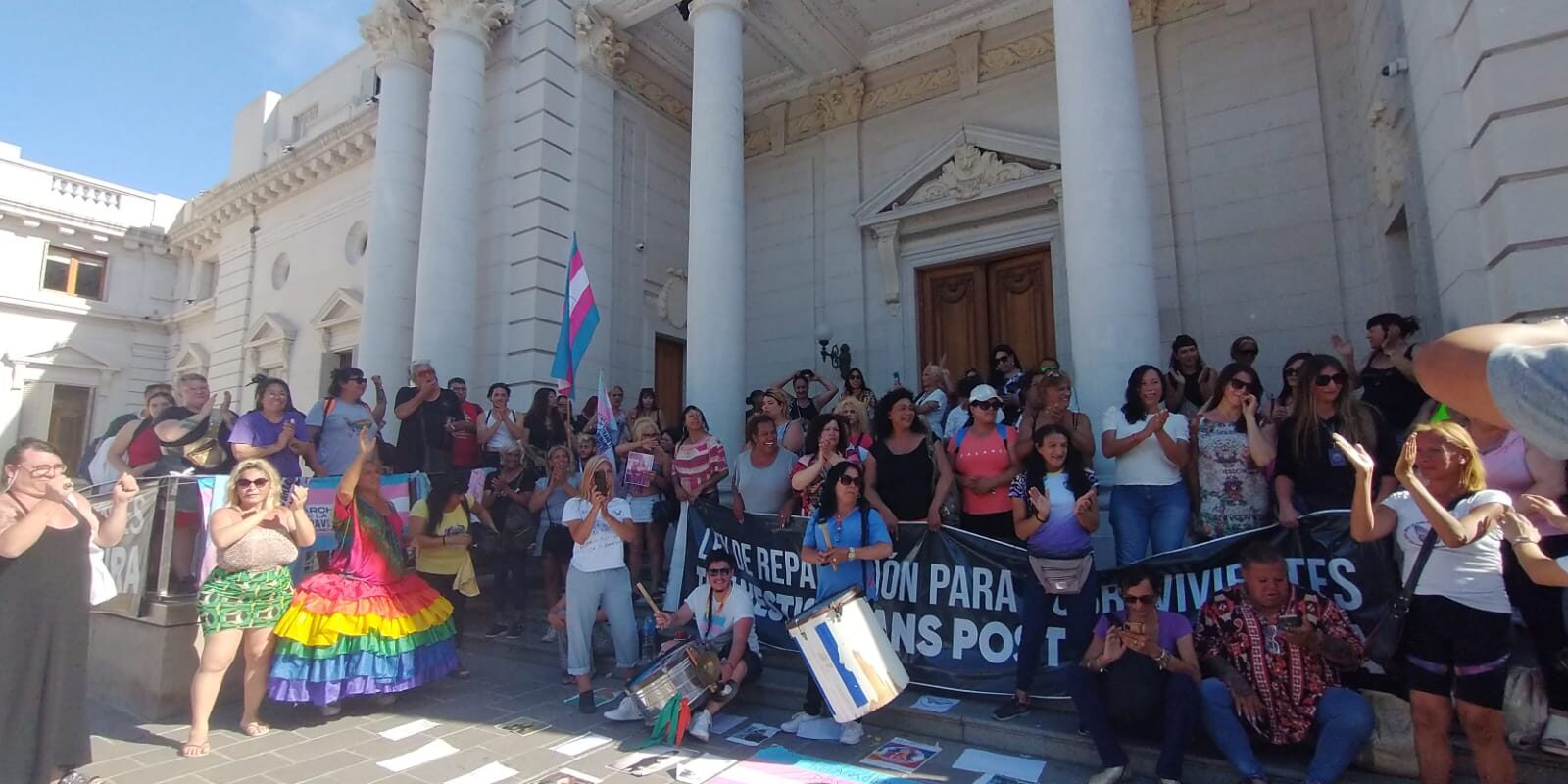
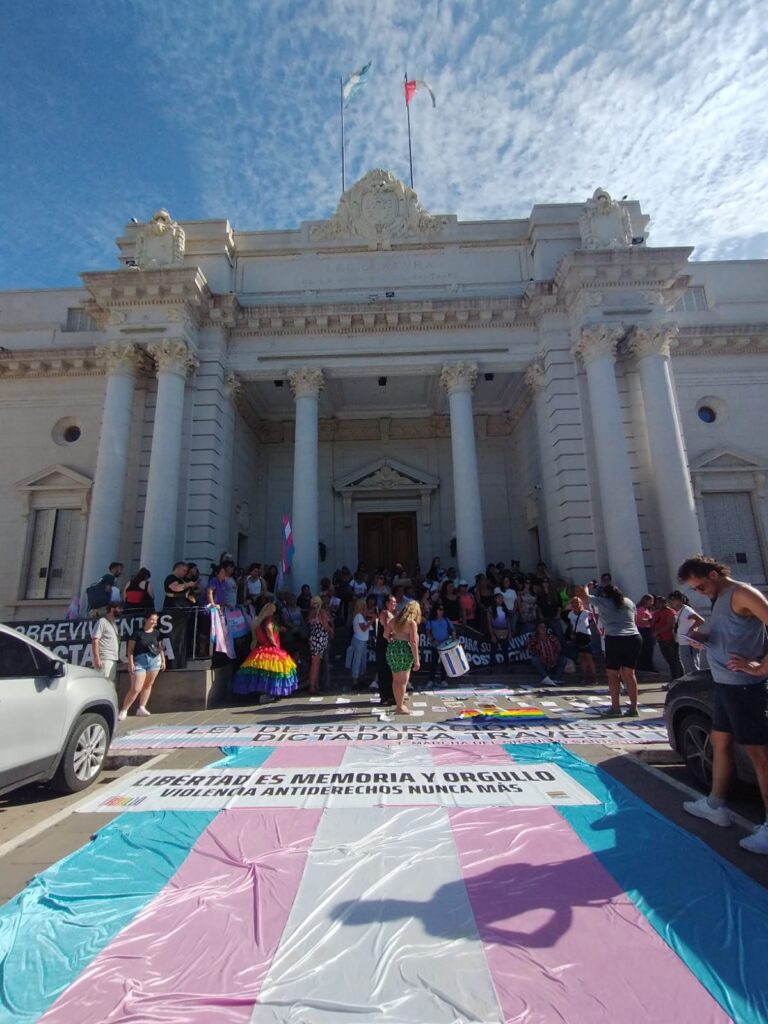
SANTA FE CITY, Santa Fe. The Santa Fe Senate passed the “Historical Reparation Law for Transgender Survivors of the Post-Dictatorship .” This made the province the first to have a law recognizing the violence suffered at the hands of a democratic state. It establishes a monthly non-contributory pension equivalent to two minimum wages . It is intended for those who were deprived of their liberty by security forces between December 10, 1983, and June 10, 2010. Providing reparations to transgender people who suffered persecution during the dictatorship and beyond is a national demand, and various bills have addressed this issue in Congress.
"The State acknowledges what it did"
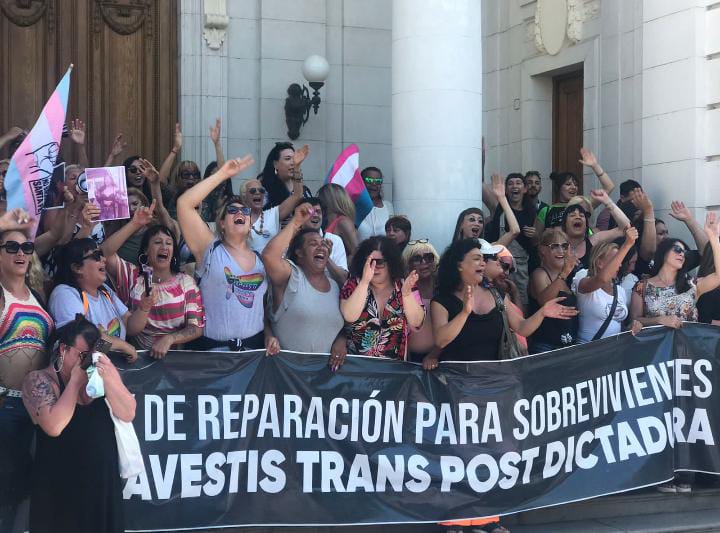
“It’s a great achievement, because trans women have always put their bodies on the line, fighting with perseverance and resistance, against violence perpetrated by society and the state, simply because of their gender identity,” Karla Ojeda, representative of the Transgender Rights Roundtable of Santa Fe, explained to Presentes. She added, “Now we need to request Governor Omar Perotti to enact the law. We hope it will be positive, because in this province alone, there are 147 transgender people who have suffered this persecution and who have documentation of their arrests and criminal records.” This figure comes from surveys conducted by the same organizations, which estimate that number of people are eligible to receive the pension.
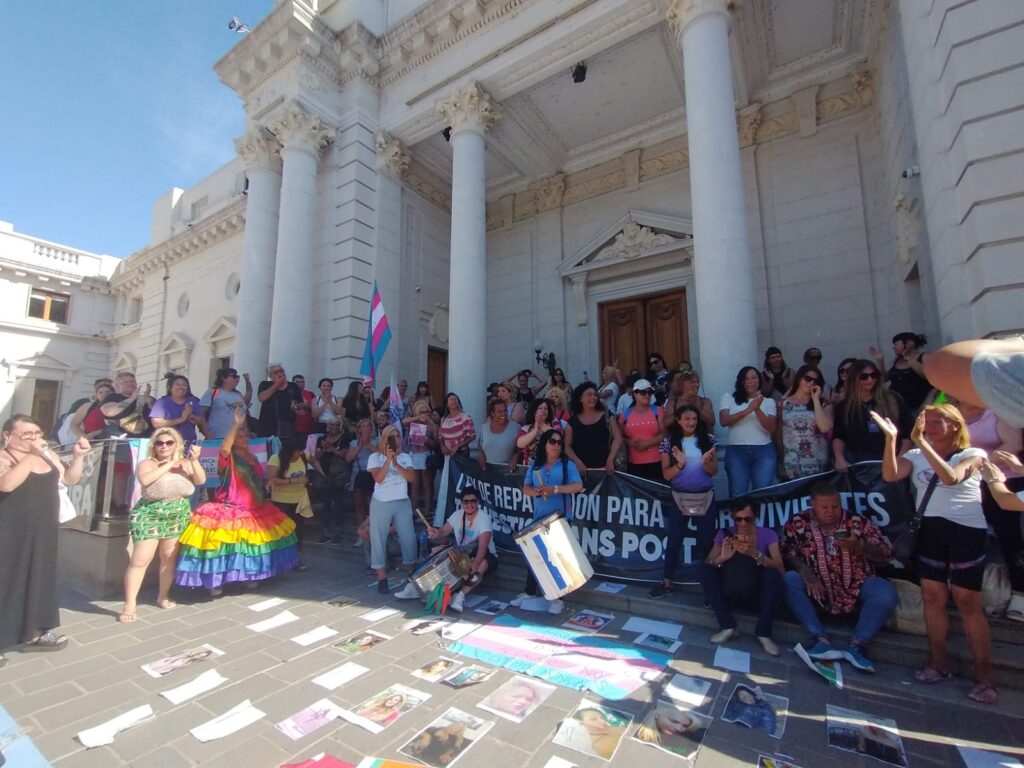
If it wasn't approved yesterday, the initiative would have lost its parliamentary status. That's why, for weeks, the trans and travesti community throughout the province had been mobilizing to raise awareness of their demands and insist on its consideration.
“I think the most important thing is that the State acknowledged what it did. It’s like a symbolic embrace for all the trans women. Justice was finally served for all the persecution and mistreatment they endured for so many years,” Fabiana González, a trans activist and one of the driving forces behind the law within the Mesa, told Presentes.
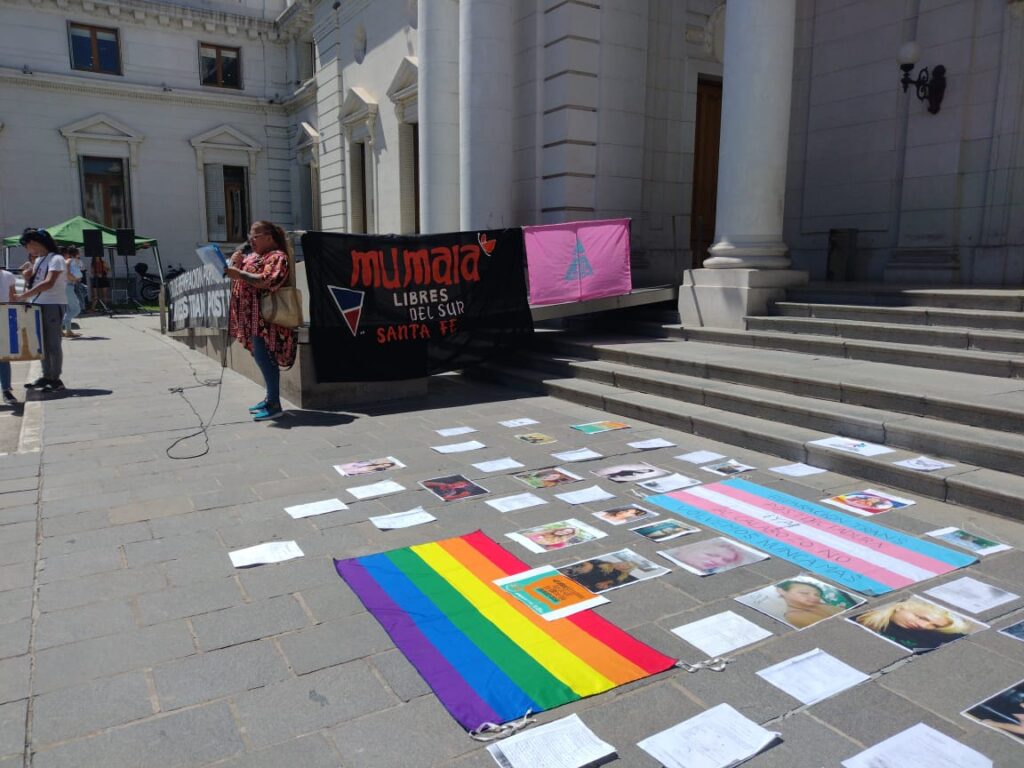
I call for democracy
“Transvestites and trans people, the transvestite identity, is a purely political identity of struggle. In the 80s, 90s, and up until 2010, we suffered systematic persecution from the oppressive arm of the Santa Fe police, with a unit called Public Morality. Transvestite and trans women, myself included, were persecuted and arrested at any time of day and night, knowing that our only means of survival was prostitution . We were persecuted, and human rights violations were committed against us,” says Karla Ojeda.
When she speaks of the systematic violation of the community's human rights, Karla also mentions the women who were unable to become fully integrated citizens. She speaks of those who didn't finish primary school (let alone secondary school), those who didn't have access to formal employment, and those for whom prostitution was the only option.
In those decades, she recalls, they were arrested and sentenced to seven, fifteen, twenty, and even thirty days in prison. Those who rented were charged three times the rent of other people because they didn't have a guarantor. “This happened to us starting in 1983, even until 2010. That's why the reparations law speaks precisely of a demand for democracy. During the dictatorship, we were arrested , but when the democratic spring arrived for many, it didn't arrive for us,” she explains.
Fabiana expresses herself in the same vein and speaks of the anguish she carries. “I tell everyone about the situation we lived through in the 90s and it seems like nobody listens, that everything always falls on deaf ears. This law came to heal that pain. That feeling we had, because justice had never been done .”
Karla points out an important fact: the reparations will not only bring a little symbolic justice, albeit belated, but also, for many of those receiving reparations, this economic income will mean a better quality of life.
Santa Fe: LGBT organization and collective struggle
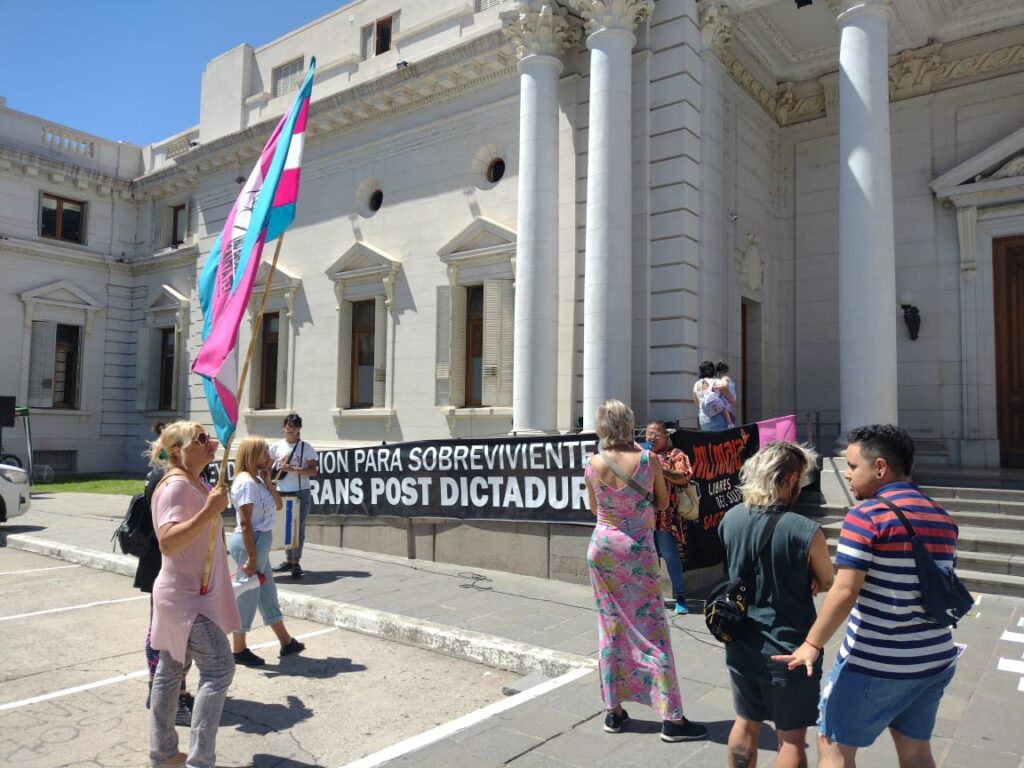
All the testimonies agree on this point: Santa Fe is a pioneer in LGBT rights. Pamela Rocchi, activist, trans advocate—and soon-to-be Director of Diversity for the province of Santa Fe—emphasizes that Santa Fe has an organized trans community . With people of different ages and political affiliations, they understand that the struggle is collective and that rights are won in the streets .
Collective struggle was key to achieving all the laws. In this case, the demands were not only expressed in the streets and on the steps of the Provincial Legislature, but were also managed through a Transgender Rights Committee of Santa Fe, made up of representatives from Rosario, Santo Tomé, Rincón, Santa Fe, Reconquista, Venado Tuerto, and other towns.
Fabiana highlighted the trans activism in the province of Santa Fe. “We have a very active movement in terms of winning rights. In Santa Fe, we have the trans job quota at the university, the provincial trans job quota, the municipal trans job quota, and the national trans job quota. And now there's the issue of reparations, the issue of historical reparations,” she listed.
“This law will save lives.«
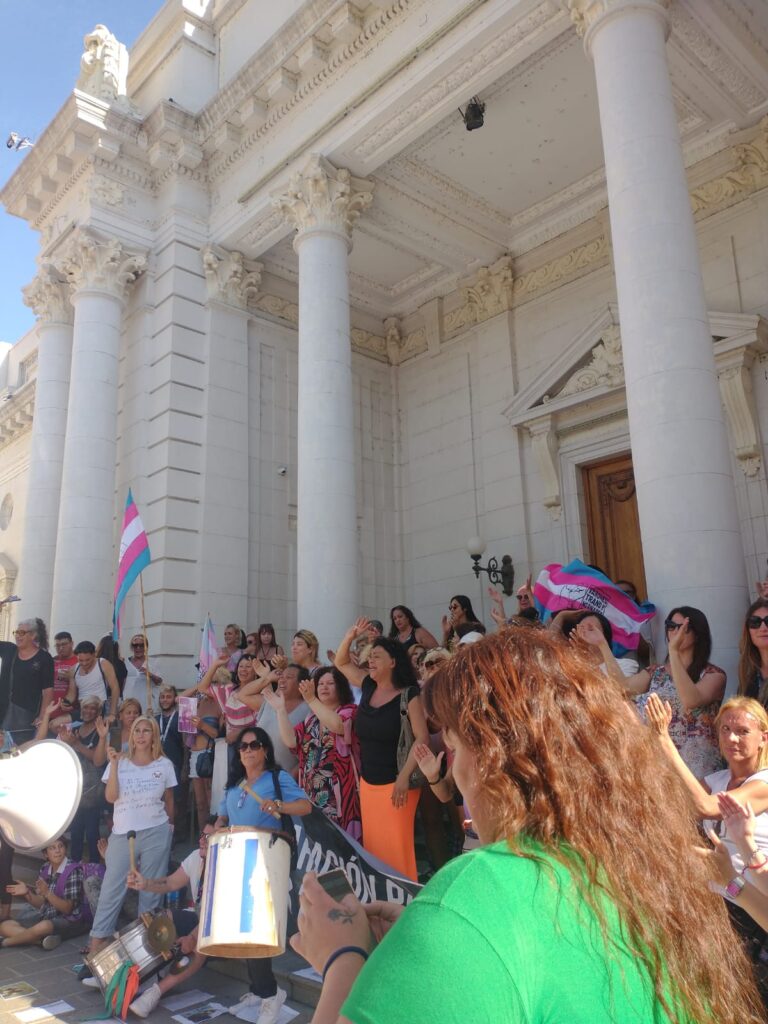
Pamela Rocchi framed the approval of this law within the current political context: “ This law is about saving lives. It shows the nation and the new politicians that politics is about changing people's lives .”
In its first article, the law states that its purpose is "to redress the serious and systematic human rights violations committed in a democratic context by security forces within the province of Santa Fe against members of the trans community ." To this end, it establishes the payment of a non-contributory, lifetime monthly pension equivalent to two minimum pensions.
It is important to note that Santa Fe was also the first province to repeal the articles of its Code of Misdemeanors that penalized and persecuted transvestism and prostitution. This achievement in 2010 was the result of the struggle of organizations such as AMyT (Association of Women and Transvestites), which laid the groundwork for the passage, two years later, of the Gender Identity Law.
Between 1983 and 2010, transgender and transvestite people continued to be persecuted, harassed, and subjected to violence by security forces simply for going out in public, trying to enter a hospital, or going to work. All of these actions directly impacted the victims' quality of life and their chances of survival.
Now, those who can prove they lived in Santa Fe during their detentions must present documentation from state agencies, police records, testimonies before judicial authorities, or a medical record detailing the treatment received for the events they suffered.
Furthermore, the law stipulates that the pension must be compatible with remuneration for any work performed . And that beneficiaries will have access to the provincial social security system, Iapos. In case of death, the benefit will be extended to their heirs.
Finally, Article 9 defines the Right to the Truth . It states that “the evidentiary material (…) will be incorporated into the Provincial Archive of Memory of Santa Fe, for the purpose of building a society with diverse identities and based on memory, truth and justice.”
We are present
We are committed to journalism that delves into the territories and conducts thorough investigations, combined with new technologies and narrative formats. We want the protagonists, their stories, and their struggles to be present.
SUPPORT US

FOLLOW US
Related notes



We are present
This and other stories are not usually on the media agenda. Together we can bring them to light.
2 Comments