

Argentina's Transvestite and Transgender Museum is created: memories and treasures from the last 100 years
Twenty thousand pieces tell the story of transvestite and trans life in Argentina over the last one hundred years in a traveling exhibition.


Share

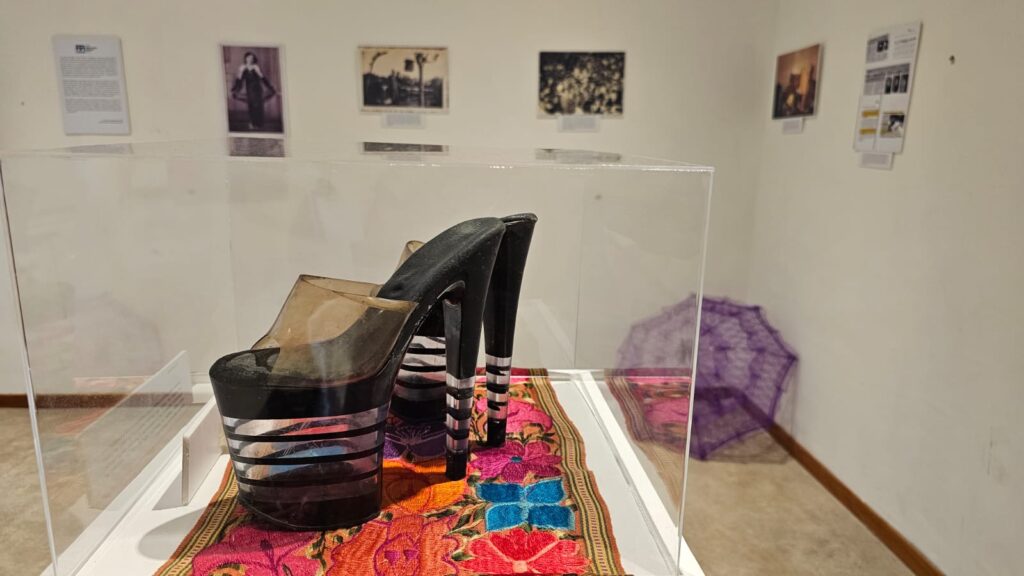
BUENOS AIRES, Argentina. The first thing you see upon entering the Transvestite Museum of Argentina are enormous, transparent platforms. They symbolize the comings and goings to Paris of Shirley Bombón, one of the many trans women who went to Europe to save themselves and live.
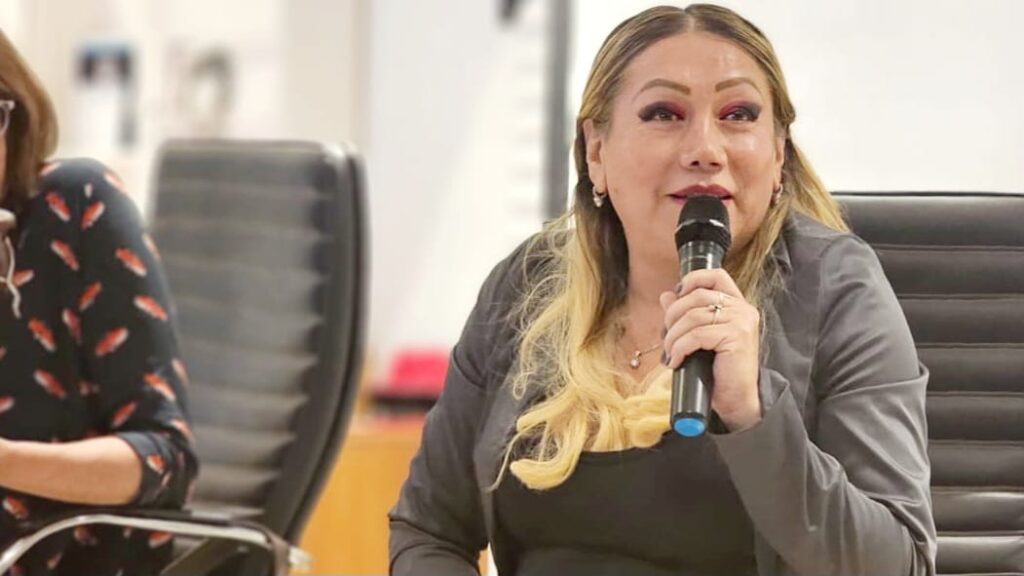
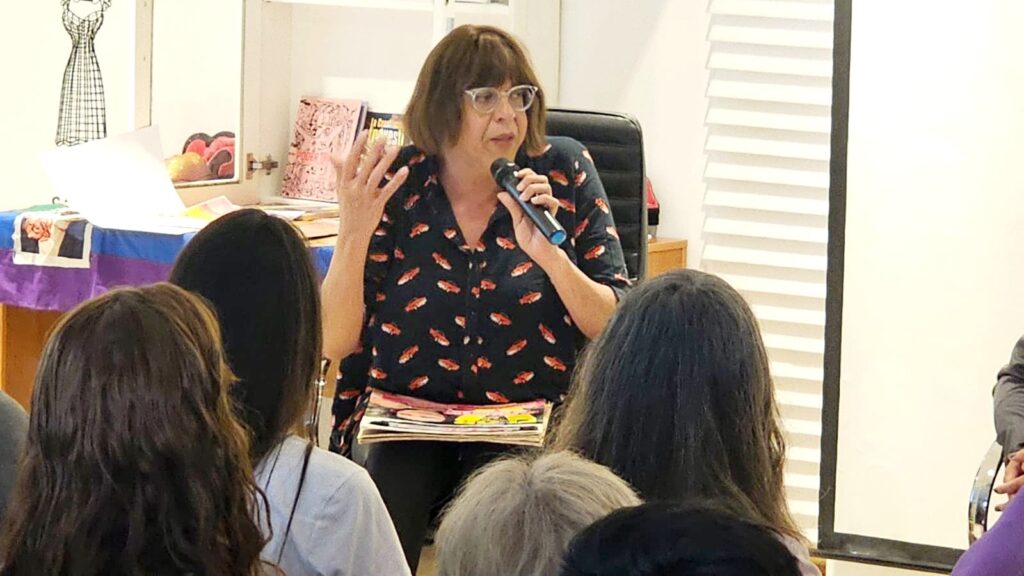
“This exhibition is conceived as the first presentation of an alternative and traveling micro-museum. It was built with what is not considered museum-worthy. It condenses almost 100 years of history of the transvestite and trans movement in Argentina,” says a plaque written by the museum's creator, Claudia Vásquez Haro.
The traveling museum has more than 20,000 pieces, but not all of them are on display here. For now, some significant pieces can be seen in an exhibit on the first floor of the Provincial Commission for Memory building, located at 487 Calle 54, La Plata, the capital of Buenos Aires Province. It will remain there throughout November, and then it will be exhibited in the Buenos Aires Province Chamber of Deputies, before touring the country. The museum is a space for collective memory inspired by the Travesti Museum of Peru, by Giuseppe Campuzano.
Shirley's Tacos
“Shirley was very well-known. She had returned from Europe. She was exuberant. We all wanted those heels. She gave them to Valeria, and Valeria gave them to me. Since I don't have daughters, I had no one to give them to. I decided to bring them to the museum because it was something historical. All trans women identify with those heels,” says Koral Flores.
Koral is part of the Otrans organization. She migrated 15 years ago from Peru to Argentina. Her "adoptive mother," the one who helped her come, was named Valeria Sangama Shupingahua. There's a photo of her in a white dress, about to get married. She, in turn, was the "adoptive daughter" of Shirley Bombón, the owner of the taco stand at the entrance.
In 2015, Valeria died. Her friends wanted to hold a ceremony for her at Osácar, a funeral home in La Plata that has hosted everyone from former governors to athletes. Those who were in Spain and Italy sent euros. Each of those who lived in the capital of Buenos Aires province contributed 300 pesos. That community and that life are also reflected here. You can see a photo of Valeria getting married, and also objects from the wake with her name and the date of her death.
The objects: jewelry and an altar
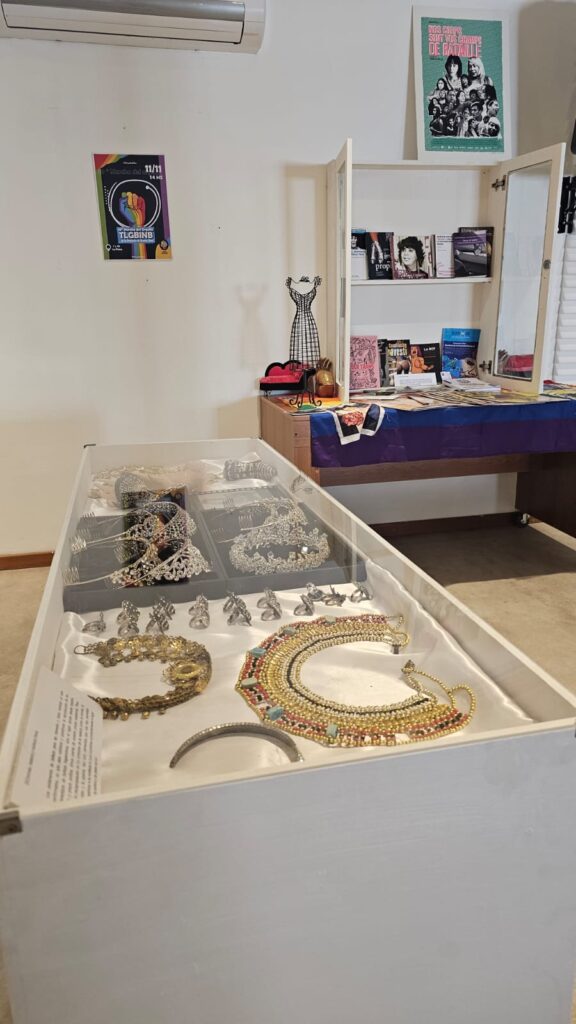
The museum tour is random; there's no set path. In another display case are jewels: rings shaped like spiders and owls, necklaces, and golden crowns. Symbols of royalty, of nobility. They are all real objects belonging to drag queens.
“Beauty pageants for transvestites and trans people involve a performative act, not only to make visible and question the reproduction of hegemonic beauty stereotypes, but also the place from which our political action and praxis are based. We made our own existence known,” says the sign that accompanies these objects.
At the center of the exhibition is a kind of altar with a statue of the Virgin Mary in the middle, called Saint Barbara. She is very important to trans women in Ecuador. There are also symbols of Umbanda deities. Peruvian trans women, Claudia Vásquez Haro explains, venerate the Virgin of the Gate and Sarita Colonia, who is similar to Gauchito Gil. This space in the museum demonstrates the appropriation of religious beliefs and their reinterpretation by migrant trans women.
The written archive: from arrests to literature
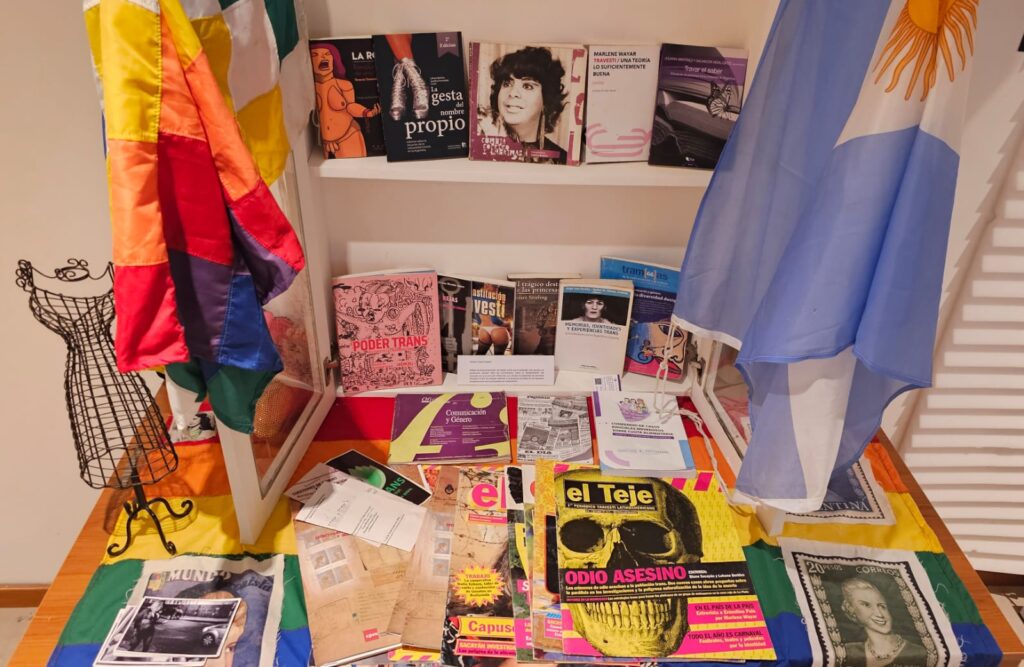
In another part of the micro-museum tour, visitors can examine copies of the Buenos Aires Provincial Police intelligence files. These files documented the arrests and murders of transgender women in the 1990s, with no regard for their identities.
“These homosexuals, who use women’s clothing and cosmetics, are in most cases minors, and addicted to drugs, and gather in groups of 4 or 5 every 1 or 2 kilometers” (sic).
Since 2001, a law has stipulated that the Provincial Commission for Memory (CPM) should hold the archives of the former Intelligence Directorate of the Buenos Aires Province Police. The building that housed this police agency, located at 54th Street No. 487 in La Plata, was designated as its headquarters, and it is now the site of this museum, among other activities and exhibitions.
For the CPM, this meant “safeguarding and making available to the justice system one of the most important archives of repression in Argentina and Latin America, an extensive and detailed record of political espionage and ideological persecution. The value of this documentary collection was recognized by UNESCO and declared a World Heritage Site in 2008,” they explain on their official website.
In this same section of the museum, there is also another type of text: transvestite literature. Key books for collective memory are on display, such as *La gesta del nombre propio* by Lohana Berkins, *Una teoría lo suficiente buena* by Marlene Wayar, and the magazines *El Teje*, which was the first Latin American transvestite newspaper. Also included are *Constitución Travesti*, *Trans las rejas*, *La Roy*, among others.
The fight for rights in images
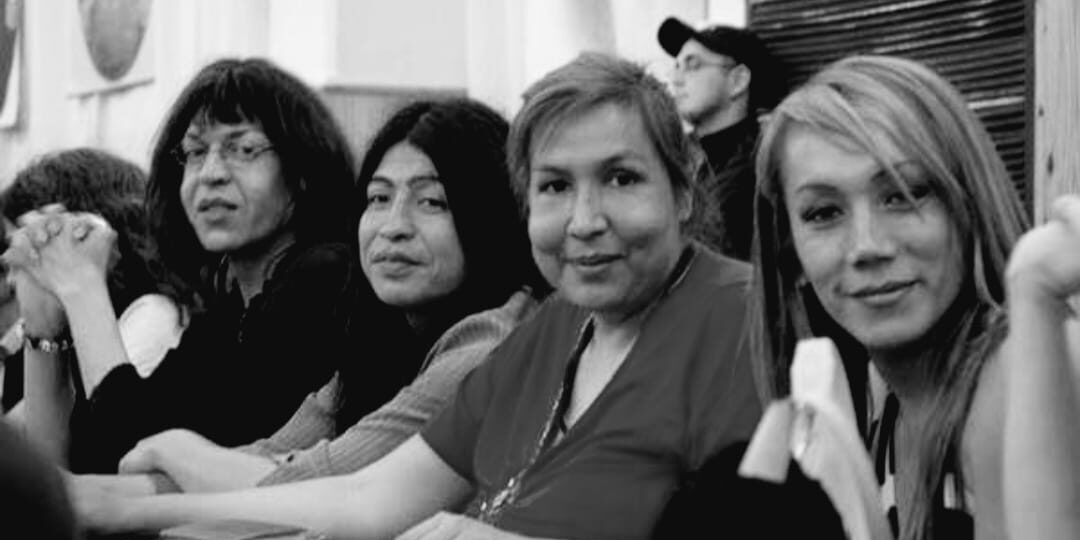
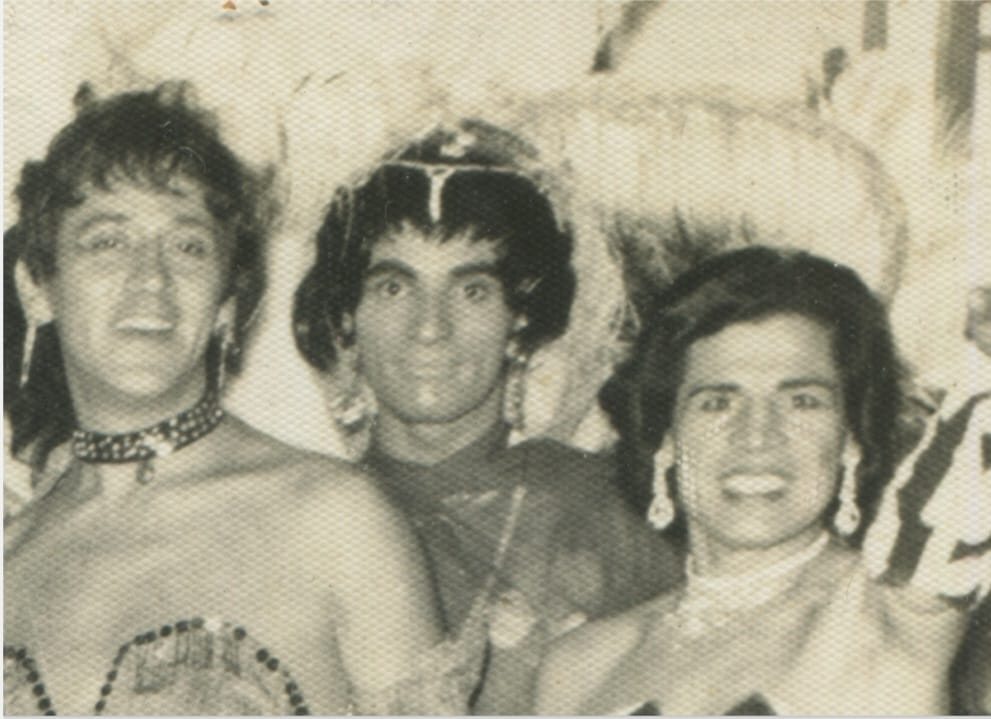
On the museum wall, you can take a historical journey through images that show the fight for rights: a photo where Diana Sacayán, Lohana Berkins, Marlene Wayar, and Claudia Vásquez Haro look at the camera. “Without having known these women, it would have been impossible for me to conceive of this exhibition,” says Claudia.
There are also photos from the day the national women's gatherings were renamed the Plurinational Gatherings of Women, Lesbians, Transvestites, Transgender, Bisexual, and Non-Binary People. Additionally, there are images from festivals, marches, and the presentation of the Lohana Berkins Bill for Formal Labor Inclusion of Transvestite and Transgender People at the Chamber of Deputies.
One photo shows Diana Sacayán with her group, the Anti-Discrimination Liberation Movement (MAL), during the passage of the Transgender Employment Quota Law. Other images show transgender organizations alongside Cristina Fernández de Kirchner and Hebe de Bonafini, a Mother of Plaza de Mayo.
Malva, the 90-year-old transvestite: the beginning and the end
Just inside the museum, next to the taco stand, hanging on the wall is a portrait of Malva Saez lying in bed, smoking. Carina Sama tells Malva's story in her documentary journalism thesis, " With the Name of a Flower ." For the museum's creator, discovering this story was like finding a missing link, being able to tell the missing part of trans history, to reach back to the 1930s and 40s and learn what had happened.
“She passed away in 2015 at the age of 90. Through the photographic archive donated to the Transvestite and Transgender Museum of Argentina, she documented the transvestite and transgender activism between the 1940s and 1980s. During the five dictatorships she lived through, she went into exile in Colombia, Venezuela, Ecuador, and Brazil, but she always returned to Buenos Aires,” says the text accompanying the photo.
In another image, Malva is seen posing in a photo studio, wearing a long black dress and elbow-length black gloves, holding a fabric scarf. The text explains that she was born in Chile in 1925 and migrated to Argentina in 1943, crossing the Andes Mountains on foot with two transvestite friends.
For Claudia, Malva is the framework: “It presents us with the place where we come from, and that what we receive in museum terms to new generations puts them in a position of guardians of a memory, but an active memory.”
We are present
We are committed to journalism that delves into the territories and conducts thorough investigations, combined with new technologies and narrative formats. We want the protagonists, their stories, and their struggles to be present.
SUPPORT US

FOLLOW US
Related notes
We are present
This and other stories are not usually on the media agenda. Together we can bring them to light.