

Forced sterilizations, a huge problem in Peru
How long will they have to wait for justice? This is the question thousands of women who suffered forced sterilizations in Peru during the 1990s are asking themselves.


Share

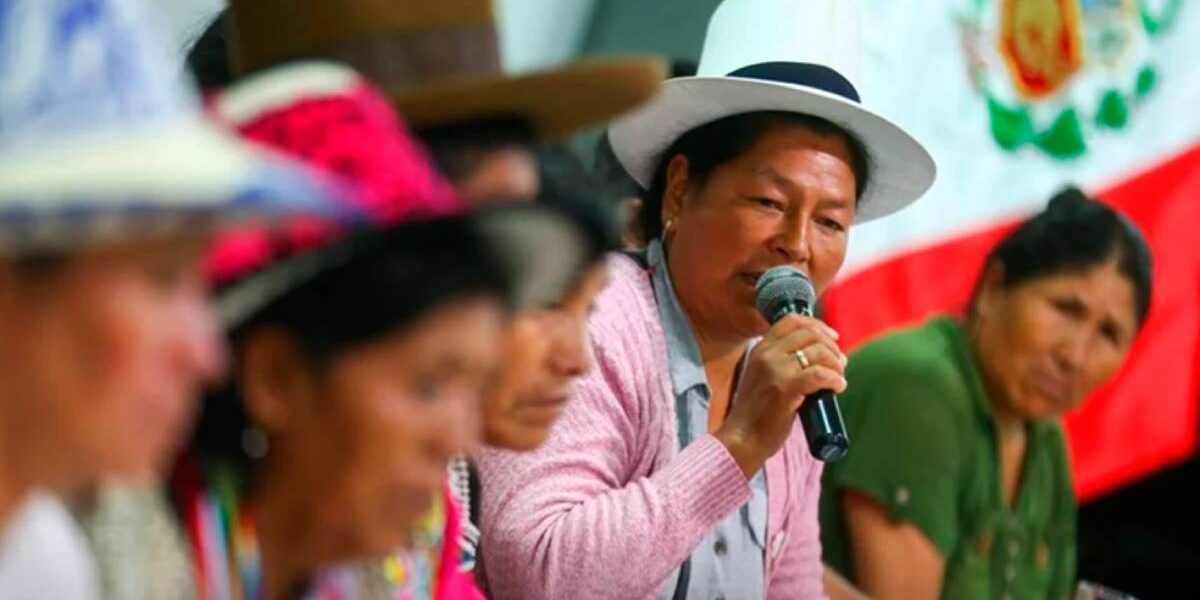
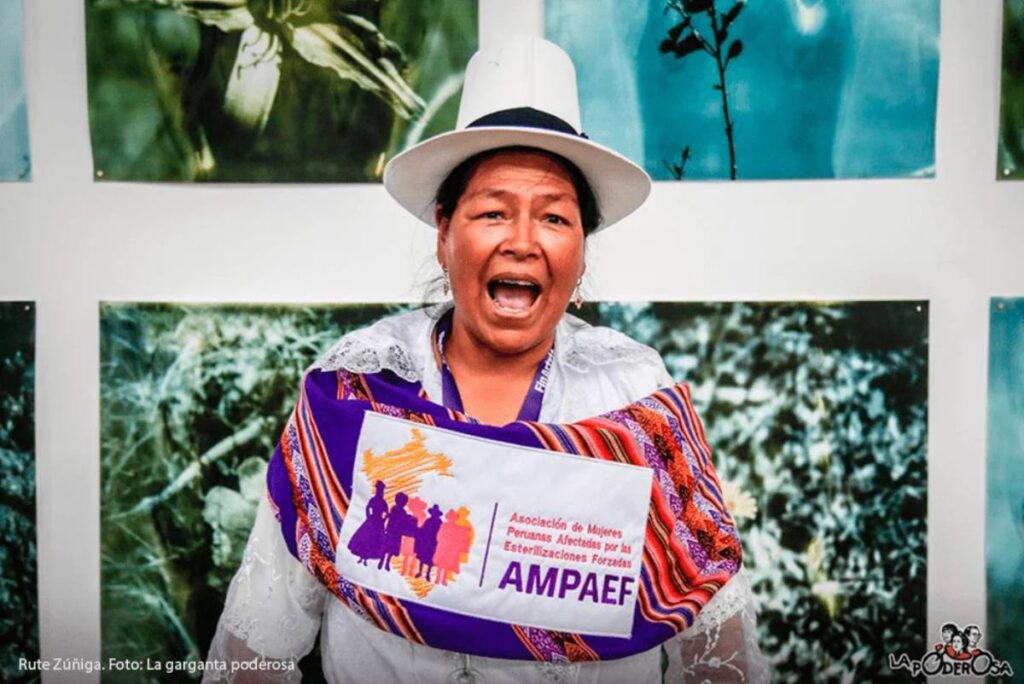
Rute Zúñiga gives us a little of her time in the middle of a fair where she sells her agricultural products to support her household.
She could easily pass as just another woman among the many who struggle to survive alongside their families. But Rute is the president of AMPAEF, the Association of Peruvian Women Affected by Forced Sterilizations. That is to say, she is one of the nearly 300,000 women who were subjected to forced sterilizations as part of the massive logistical operation of a genocidal state policy—planned, directed, celebrated, and still unpunished—under the dictatorship of Alberto Fujimori in the 1990s . Specifically, between 1996 and 2001, it was known as the National Program for Reproductive Health and Family Planning .
If it hadn't been for the first women to come forward, from Anta (Cusco) , where Rute is from; for the spontaneous organization of many of them throughout Peru to confront the violation of their human rights; and for feminist investigations, especially those of Giulia Tamayo, a Peruvian lawyer who, in 1998, revealed what was happening by presenting the report "Nothing Personal: Human Rights Report on the Application of Emergency Contraception in Peru 1996-1998" ; the lives and health of thousands of indigenous, peasant, and Quechua-speaking women would have continued to be affected by politicians, officials, and health workers who, to this day, remain unpunished.
Such is the case of former health ministers Eduardo Yong Motta, Marino Costa Bauer, and Alejandro Aguinaga. The latter is now even a congressman for the Fujimori party, demonstrating, once again, how little some lives matter.
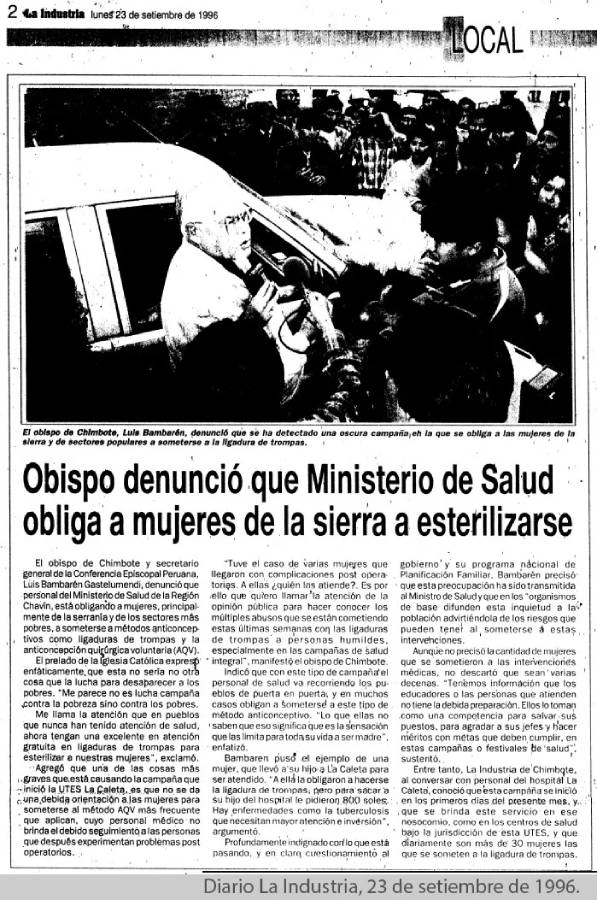
Behind Alberto Fujimori's political speech in Beijing , in which he stated his goal was for "women to own their bodies" and for this to reduce poverty in Peru, lay a more ominous plan: to exterminate the poor. In this case, the poorest of the poor.
Nearly three decades later, the stated objective was never achieved: the women who were victims of forced sterilizations not only failed to escape poverty, but were plunged deeper into it . They had to endure the pain of a forced, abusive, careless, and negligent operation; the pressures and humiliations inflicted by medical personnel who exploited the banality of evil to meet their daily quotas of surgical procedures; and the torturous and chronic physical and mental health consequences that lasted until the end of their lives. And those who did not die suffered a radical change in their life plans, often compounded by family and social scorn, abandonment by their partners in many cases, post-traumatic stress, and the ongoing legal battles that continue to this day, as well as the lack of comprehensive reparations from each successive government.
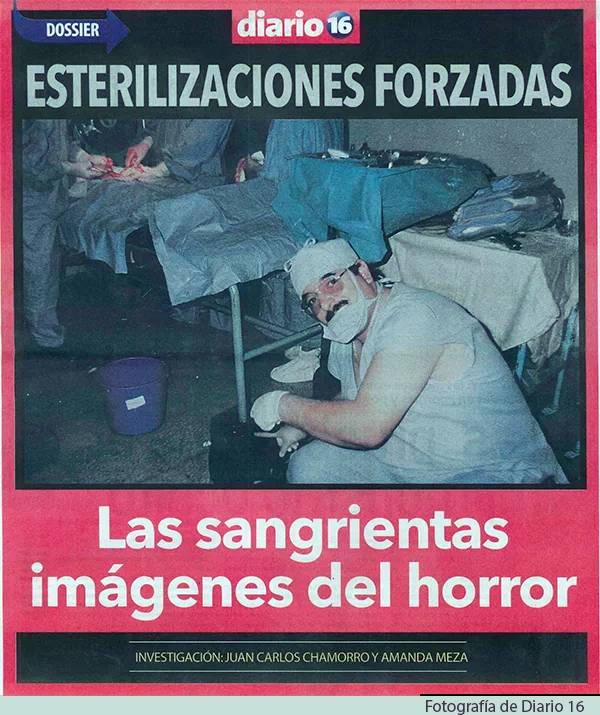
In times when audiovisual evidence is vital to generating irrefutable proof of human rights violations, the documentary "Nothing Personal" had the opportunity to record the testimonies of women who had been sterilized a few days earlier in Huancabamba (Piura) in a Surgical Contraception Campaign carried out between November 22 and 23, 1996. The images, chilling, speak for themselves.
Eighteen women died as a result of the forced sterilizations carried out by Alberto Fujimori, his ministers, and advisors. Two of these cases became emblematic of how the Fujimori government manipulated, deceived, coerced, abandoned, and then forgot about women: Celia Ramos (Piura, 1996) and Mamérita Mestanza (Cajamarca, 1997). They embodied the crimes committed by the Peruvian state: serious bodily harm, bodily harm resulting in death, manslaughter, endangering others, kidnapping, coercion, embezzlement, obstruction of justice, failure to report a crime, and dereliction of duty.
In 2021, 19 years after the preliminary investigations began, a judge finally convened the first hearing to formally present charges in the case of forced sterilizations against 1,307 victims. To date, more than five hearings have been held in a slow and revictimizing process.
In the late 1990s, twelve women from Anta traveled to Lima to denounce the human rights violations they suffered through forced sterilizations. This marked the beginning of an organizational process among the victims. They called themselves AMAEF ( Association of Women Affected by Forced Sterilizations ), reaching out to each other in various towns and districts. Currently, there are 14 organizations from several regions of Peru, including Ayacucho, Cajamarca, Cusco, Huancavelica, Lima, Callao, Loreto, Piura, and San Martín. In 2015, they were recognized as victims and registered in REVIESFO (Registry of Victims of Forced Sterilization), a registry administered by the Ministry of Justice and Human Rights. REVIESFO was created to identify the number of people affected by this harmful public health policy and has over 8,000 registered members.
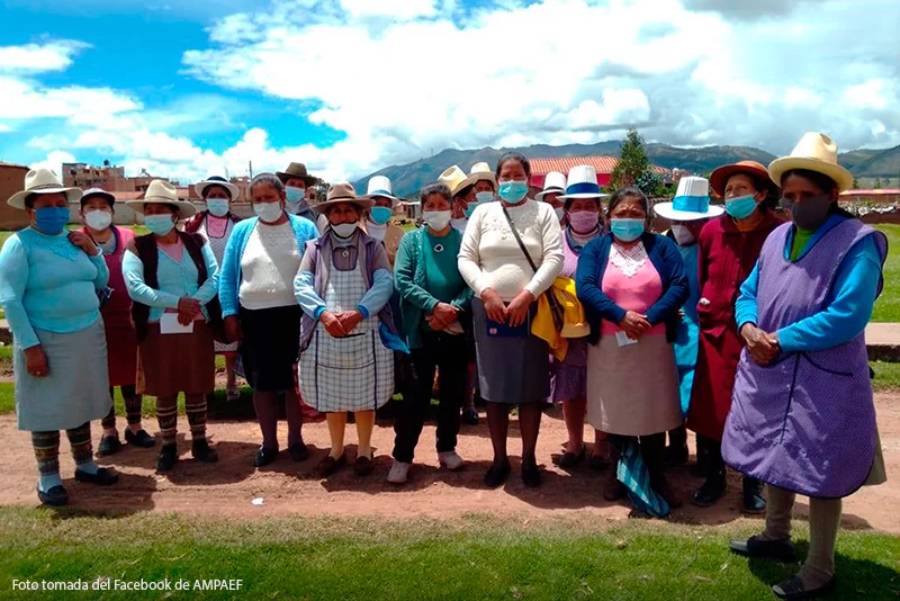
They meet once a month in a general assembly, after their own local meetings. Together, the women of Anta coordinate their future activities and agree on ways to support those who are ill. They have formed a group to make their voices heard in the face of an indifferent state, but also to resist together the hardships they face.
Rute tells us how their cases are progressing: “We are requesting that forced sterilizations be included among the grounds for Alberto Fujimori’s extradition before the Supreme Court of Chile. We have six cases before the CEDAW (Committee on the Elimination of Discrimination against Women) and three before the UN Committee on Non-Discrimination. What we want is for progress to be made; we want full reparations and, at the very least, for them to provide us with treatment for our illnesses.”
They know all too well why their cases aren't progressing in the Peruvian judicial system: corruption, the constant changes of judges and prosecutors, and Fujimorism entrenched in the highest echelons of power have caused cases to be delayed, legal proceedings to be shelved multiple times, and impunity to persist after 27 years. They also know how politicians exploit their complaints, always around election time: “Every authority, every president who comes in, just makes promises. They use us to say they're going to take up our case, that they're going to do this, but once they're in office, they don't even remember us. When we request an appointment, they refuse, and we're left thinking that we were mistreated before and continue to be mistreated,” Rute explains.
The work of AMPAEF and its spokeswomen has not been easy. For decades, they have faced denial from Fujimori-era politicians, right-wing figures, and even publications [4] that deny it was a state policy designed to harm them. The brutality of this health policy continues in its current accomplices who wield political, economic, and academic power, and belong to the social elites who seek to maintain the colonial state that allowed these kinds of crimes.
“We, Quechua-speaking Indigenous peasant women, are not listened to by the authorities, but we will continue fighting,” Rute says. They hope that the Peruvian state will apologize and provide them with reparations at the highest level.
Meanwhile, access to some resources has allowed them to receive training, establish their Warmikuna Sayaynin (Brave Women in Resistance) Leadership School , develop materials to publicize their cases, and, above all, mobilize to the places where they need to be to demand their rights. The story of dignity of the women of AMPAEF continues; they are not alone.
“With the Fund’s support, we’ve been able to take our colleagues from other places to places they couldn’t travel to, and we’ve had enough for many activities. The funding is essential; it’s made it easier for us to organize ourselves. Now we’re more united, more organized, and we’re going to continue our struggle. Before, we couldn’t just go anywhere; we couldn’t go to marches to protest. We can’t just do it like that. Where would we get the money? Because what we do for work in the fields is priceless, and we don’t have higher education. With the training, we’re making our voices heard more,” says Rute.
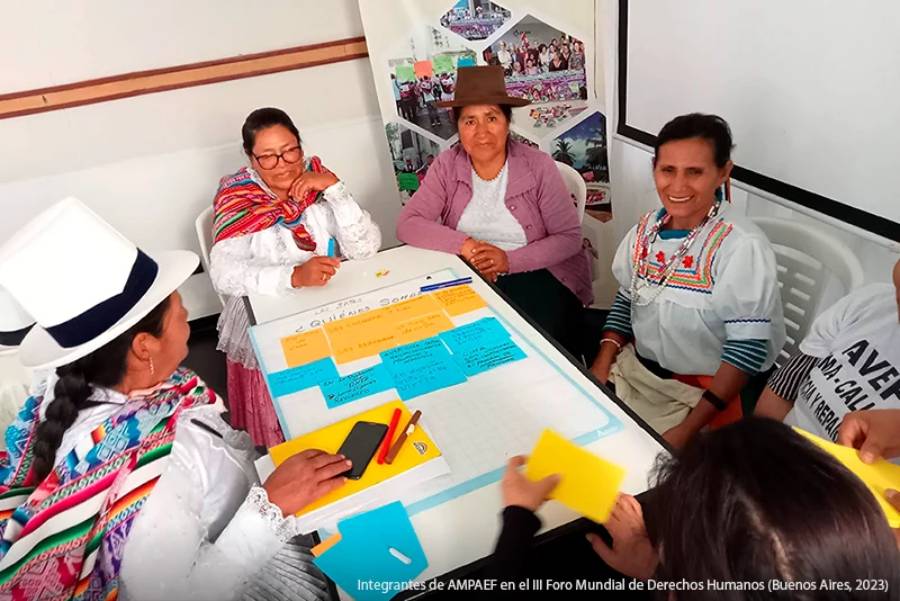
The struggle of the women of AMPAEF is recognized nationally and internationally. In 2021, the Ministry of Women and Vulnerable Populations awarded the "Order of Merit for Women" to 14 presidents of the association. And just hours before finalizing this article, we learned that the International Center for the Promotion of Human Rights (CIPDH -UNESCO) has selected Rute Zúñiga to receive its Annual Award for Human Rights Defenders.
May their story and that of thousands of women who still cry out for justice be heard, repaired, and appreciated, because their lives are worth as much as any other life.
The article was published on the website of the Southern Women's Fund. AMPAEF is an organization supported by this fund, within the framework of the Leading from the South (LDS) consortium.
We are present
We are committed to journalism that delves into the territories and conducts thorough investigations, combined with new technologies and narrative formats. We want the protagonists, their stories, and their struggles to be present.
SUPPORT US

FOLLOW US
Related notes

We are present
This and other stories are not usually on the media agenda. Together we can bring them to light.