

What is denialism?
Denialist discourses have always existed, but the advance of ultraconservative sectors intensifies their expansion.

Share

Denialism is a human behavior and a discourse that chooses to deny scientifically or historically proven facts, such as climate change or genocide. In recent years, there has been a rise in denialist discourses that seek to discredit empirical research as well as historical narratives. This has been seen in various parts of the world, from the United States to Spain, Brazil, and now Argentina.
Denialist discourses, as such, have existed since World War II. But the rise of ultraconservative or supposedly apolitical sectors is intensifying their expansion at a time of disinformation bombardment and challenges to democratic consensus.
"Denialist discourses are inherent phases in genocidal processes, which seek to guarantee impunity and perpetuate their symbolic and material consequences," explains Argentine lawyer Verónica Torras, from the Center for Social and Legal Studies (CELS).
Denialism encompasses everything from the theory of evolution, the round earth, the HIV/AIDS pandemics; ecocide, COVID-19 to the recognition of various genocides, such as the Armenian or Jewish genocides.
On a political level, the first Holocaust denier was the Frenchman Paul Rassinier. At the end of World War II, he denied the crimes of Nazism, especially the deaths of millions of Jews in the gas chambers.
Political denialism in Argentina
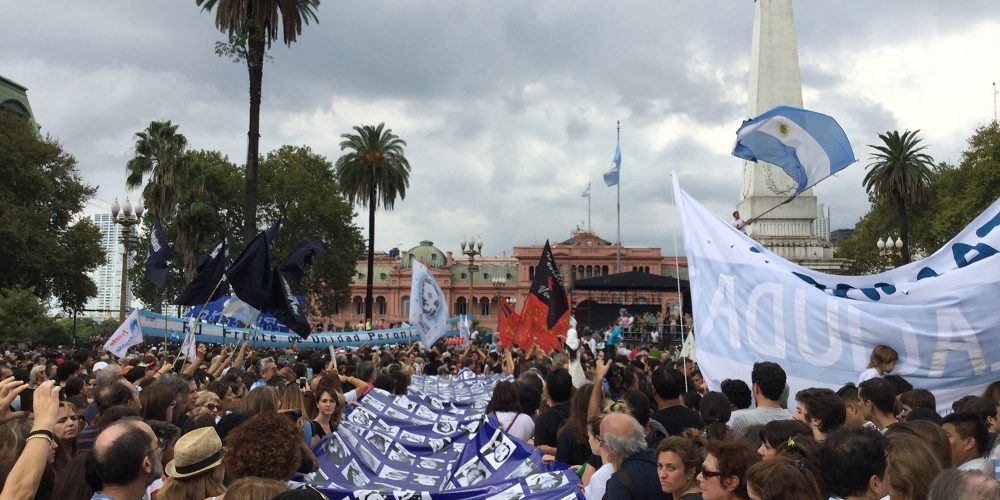
At the political level, denialist discourses regarding the genocide committed during the civic-military dictatorship (1976-1983) have coexisted with democracy. They speak of a "dirty war," "confrontations," a "war on terror," and the theory of the two demons to avoid addressing state terrorism. Despite the Trial of the Juntas, where human rights violations were proven, and the CONADEP , conservative sectors continue to deny the genocide. Their method is to claim that "it wasn't 30,000" disappeared persons, but a lower number. The figure of 30,000 arose from an agreement among human rights organizations based on the impossibility of continuing to register and locate those who were disappeared and murdered by the military.
During Carlos Menem's presidency, the military was pardoned , and during Mauricio Macri's presidency (2015-2019), this discourse gained traction with statements by Darío Lopérfido (Secretary of Media and Culture) and the President himself, who questioned the number of disappeared persons and referred to the "human rights racket." These statements and positions had concrete political repercussions, including the dismantling of state agencies linked to memory and human rights.
2023, denialism reloaded
During this election year, with the far-right party La Libertad Avanza (LLA) taking center stage, denialist discourses took the lead.
Presidential candidate Javier Milei has repeatedly denied climate change, as well as the coronavirus, but above all, his vice-presidential candidate, Victoria Villarruel, systematically denies the genocide during the dictatorship .
Villarruel founded and chairs the Center for Legal Studies on Terrorism and its Victims (CELTyV) . Furthermore, the current congresswoman and vice-presidential candidate comes from a military family. She advocates the "two demons" doctrine and regularly visits imprisoned military personnel.
A bill to penalize denialist speech
In the first week of November, the Secretariat of Human Rights and human rights organizations presented two bills that seek to curb the circulation of denialist discourses about the last dictatorship and other crimes against humanity.
The initiatives joined other similar proposals that the Human Rights Commission of the Chamber of Deputies began to debate at the end of October.
Both proposals seek to amend the Penal Code to sanction public officials and candidates with administrative penalties rather than prison sentences. They also establish mandatory training programs.
We are present
We are committed to journalism that delves into the territories and conducts thorough investigations, combined with new technologies and narrative formats. We want the protagonists, their stories, and their struggles to be present.
SUPPORT US

FOLLOW US
Related notes

We are present
This and other stories are not usually on the media agenda. Together we can bring them to light.