

Lessons and tensions from the 36th Meeting of Women and Dissidents of Bariloche
Chronicle of the march of the 36th Plurinational Meeting of Women, Lesbians, Transvestites, Trans, Bisexuals, Intersex and Non-Binary People in Bariloche.


Share

After three days of activities and workshops, Mapuche spiritual ceremonies, two marches, and a folk music gathering, the 36th Plurinational Meeting of Women, Lesbians, Transvestites, Transgender, Bisexual, Intersex, and Non-Binary People concluded in Bariloche, having welcomed 100,000 people. By unanimous vote, it was decided that the next meeting will be held in Jujuy . This province has the largest Indigenous population and is currently experiencing an open political conflict following Governor Gerardo Morales' constitutional reform. As in previous years, the decision regarding the next location was made the morning after the Meeting's march.
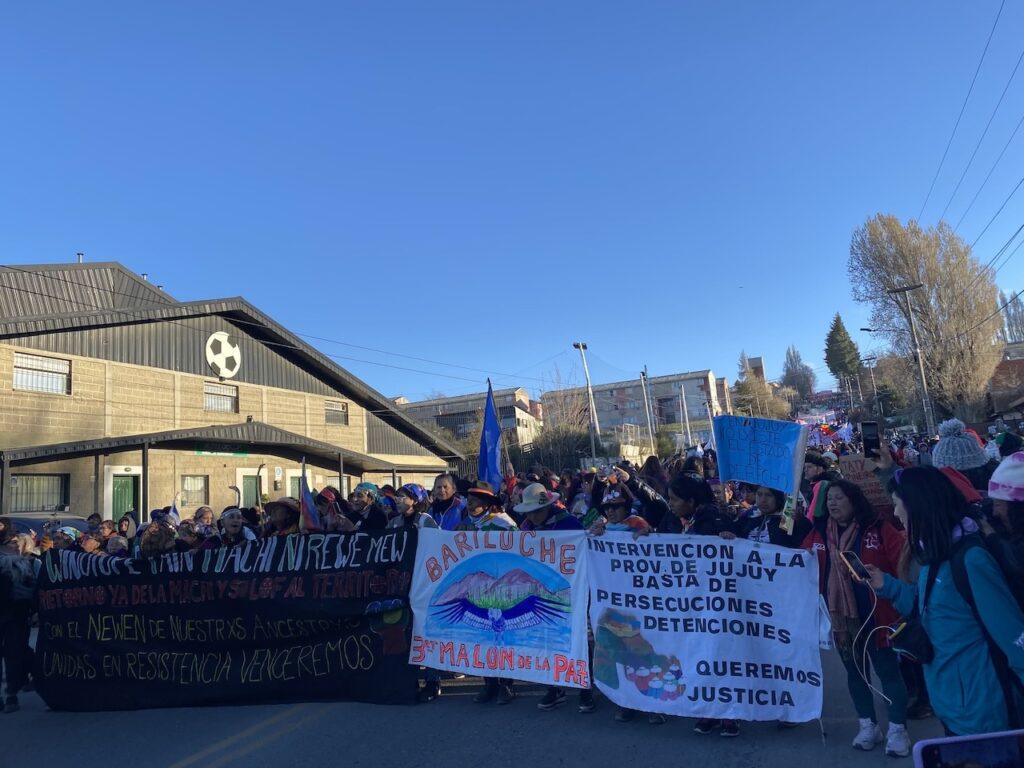
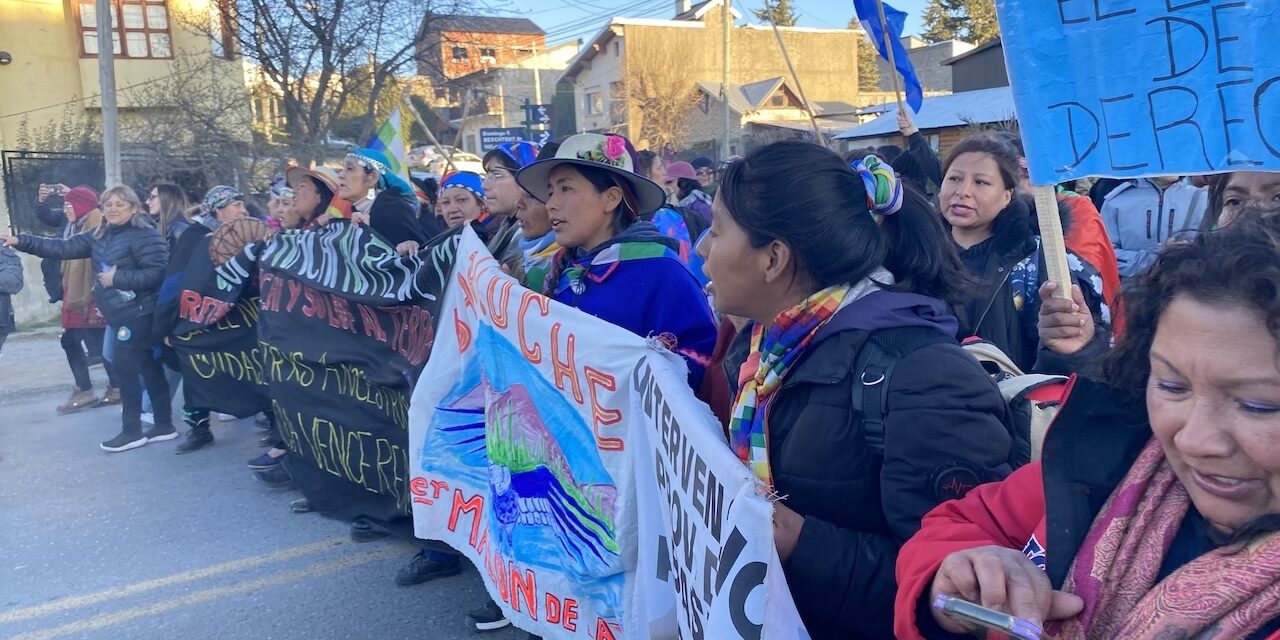
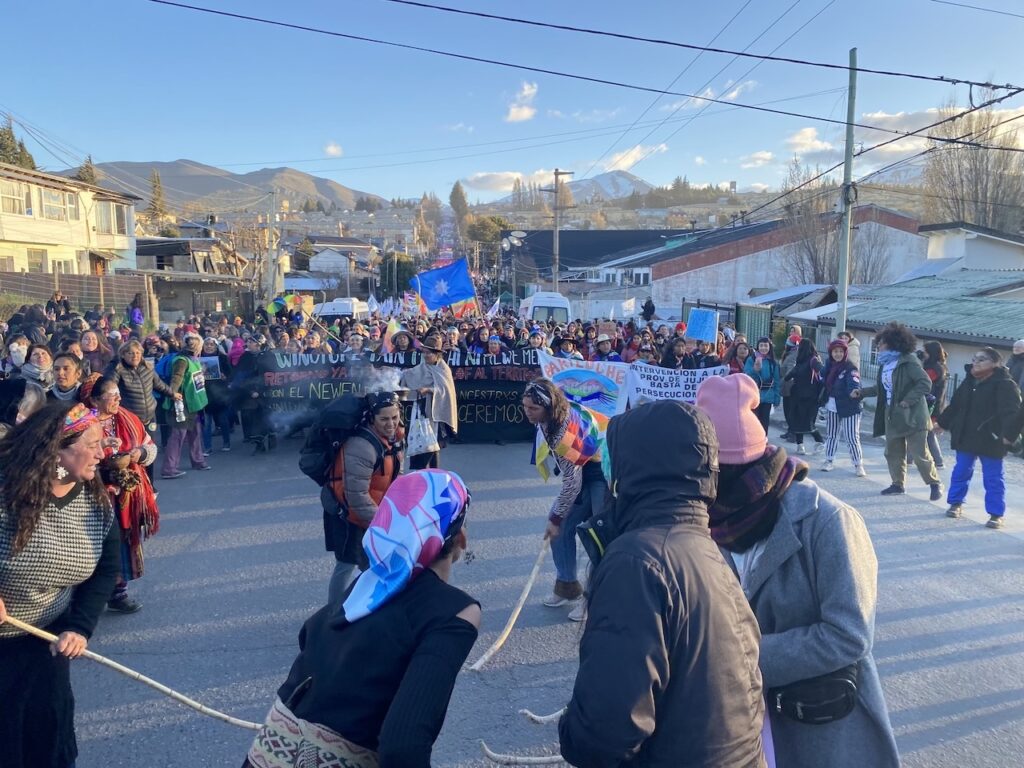
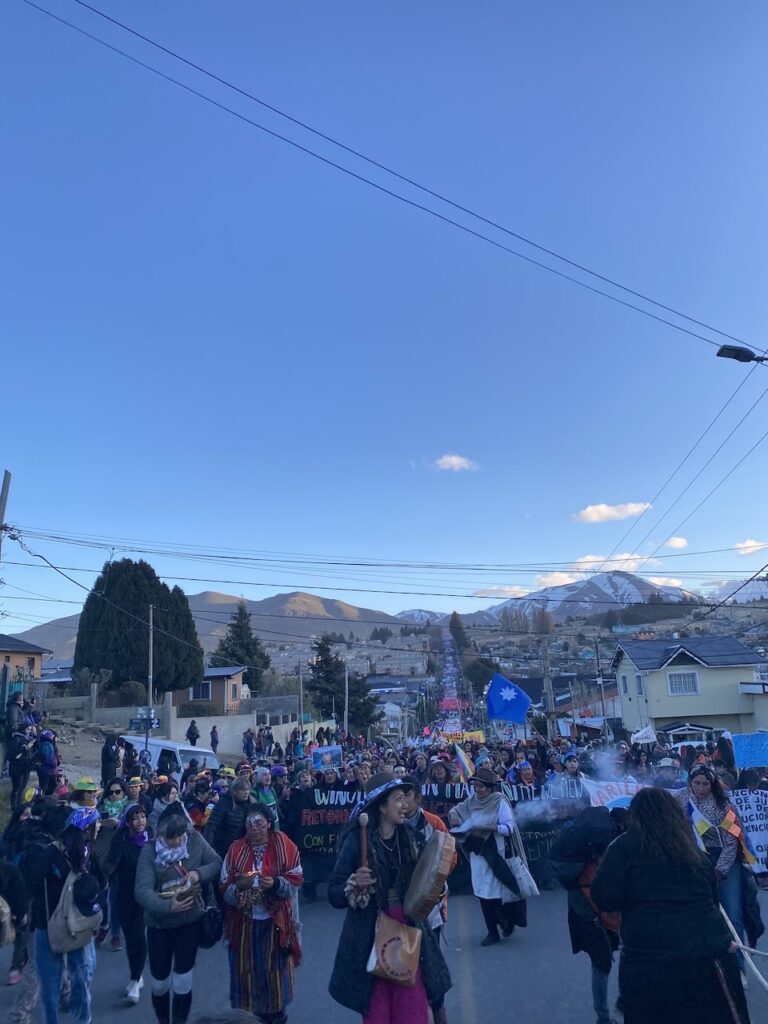
The powerful way in which the machi (Mapuche spiritual authority) Betiana Colhuan and women from various Indigenous communities led the march is something that must be remembered. The sound of the wooden Mapuche drums (palines) struck the pavement with force, invoking Newen (strength). A dance of warrior women cleared the way for the machi. She advanced, beating her drum with force, smiling but also with an air of alertness, accompanied by other sisters who burned incense from the front of the procession. The ancestral strength of plurinationality was paving the way for the more than 70,000 people who followed them and marched more than 3 kilometers through Bariloche.
A year ago, Machi Betiana was imprisoned along with six other women. They had been arrested just days before the 35th Encuentro de San Luis (National Gathering of Mapuche Women) following a repressive eviction operation by the Albatros force, which reports to the Coast Guard, in the Lafken Winkul Mapu community on the shores of Lake Mascardi. This news permeated that Encuentro, where calls were made for the release of the Mapuche prisoners. It was also decided that, in support of them, this year's gathering would be held in Bariloche.
The columns
The Indigenous women marched from the meeting point in Alto, a neighborhood of apartment blocks in the highest part of the city. There they met with members of the Movement of Women and Diversities for Good Living and those from the Third Peace March. Among them were Aurora Choque, Coranzuli's grandmother, and Milagros Lamas, the 19-year-old, along with other women who have been peacefully occupying the courthouse for over two months, waiting for the demands of the Third Peace March to be heard: the repeal of the Jujuy reform and federal intervention in the province governed by Gerardo Morales. Their demands were a crucial part of the march and the agenda of the Encuentro (Meeting).
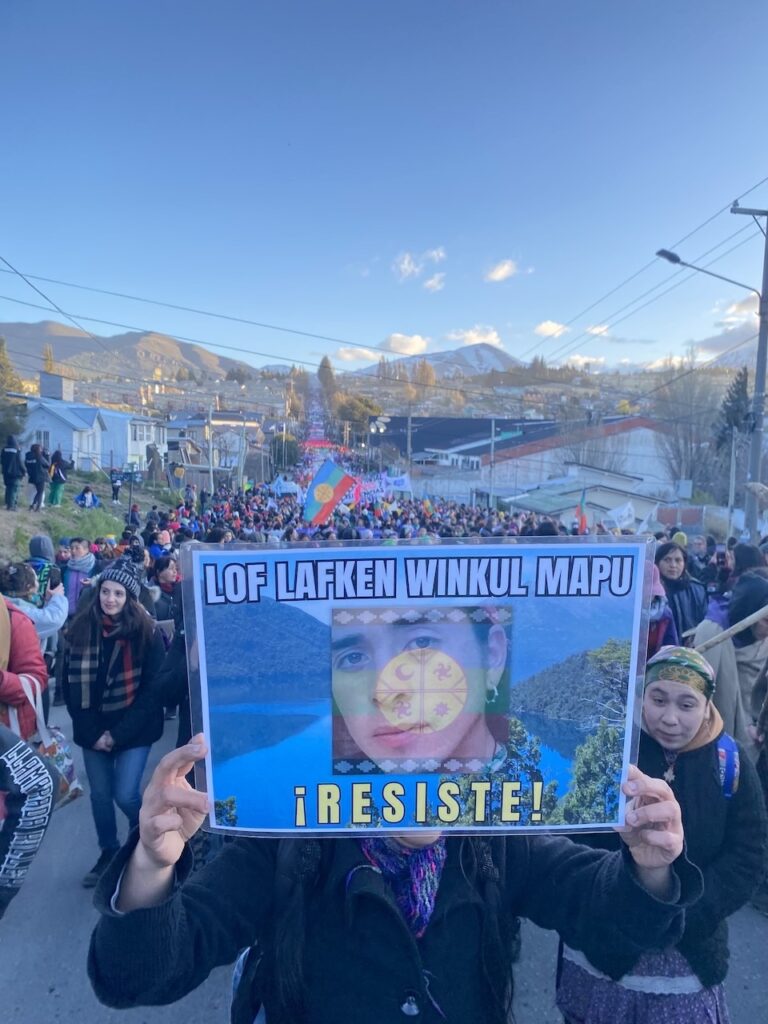
Behind the Indigenous women marched the Organizing Committee carrying the event's banner. They were followed by feminist and LGBTQ+ groups, unions, student movements, and political and cultural organizations. It was one of the largest marches Bariloche has seen in recent years, according to the organizers.
Transvestites and trans people marched with their flags demanding historical reparations. The demand for justice, "Where is Tehuel?" was also very prominent.
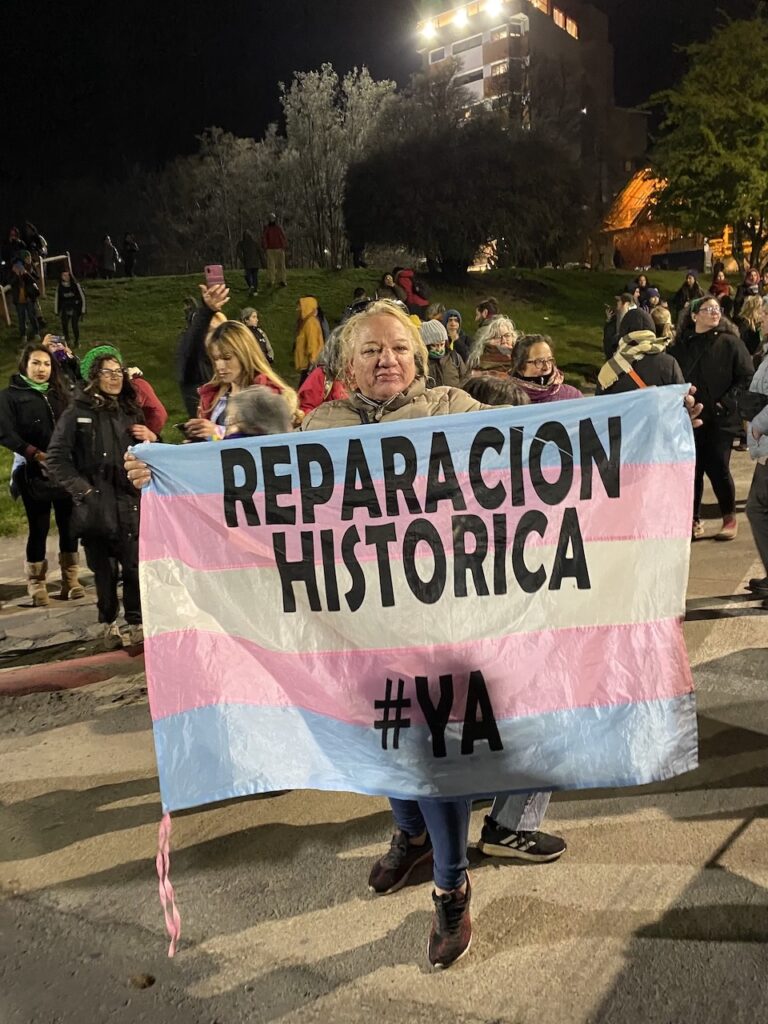
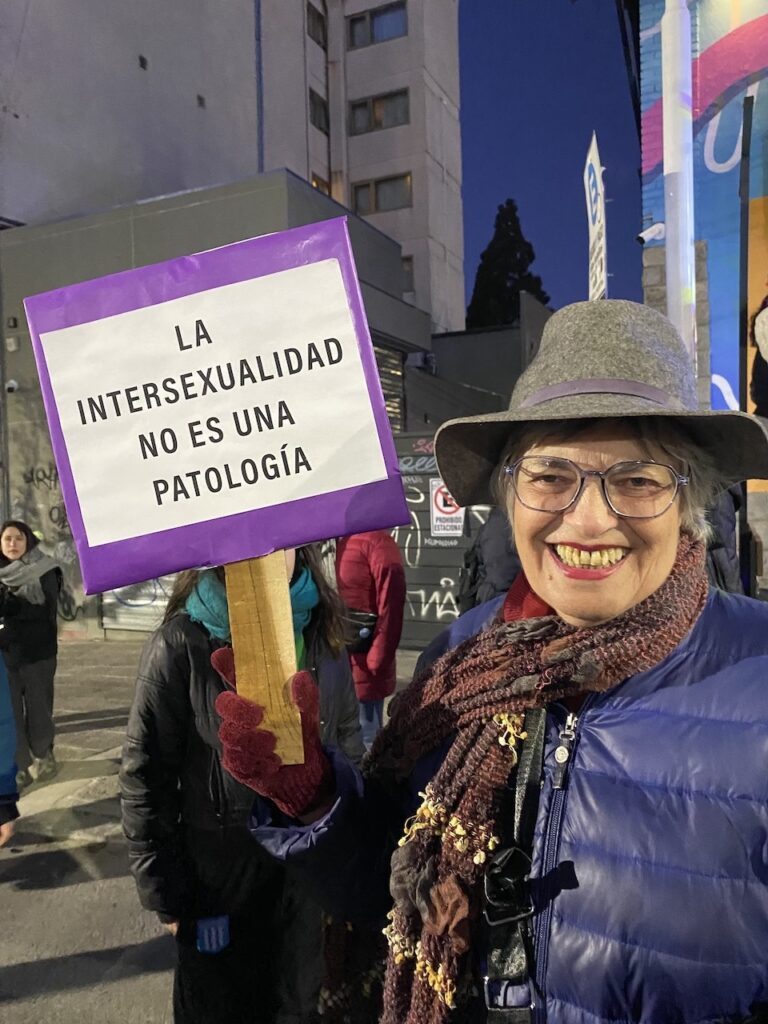
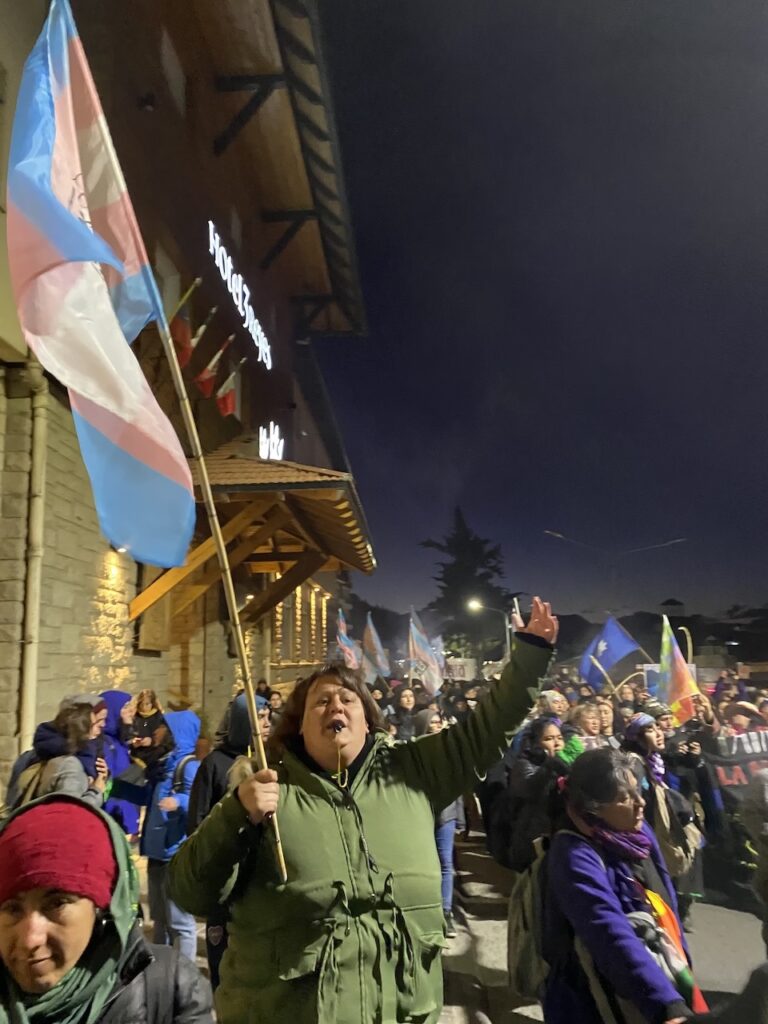
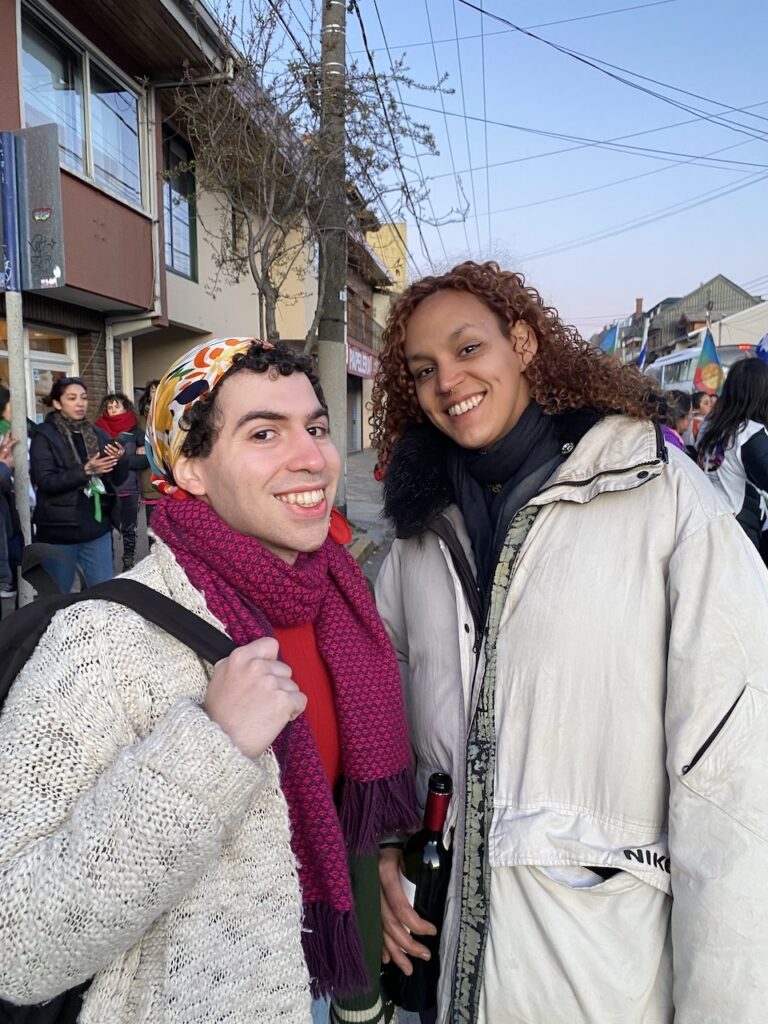
The march didn't pass by many iconic landmarks beyond the Cathedral—it didn't start from the Civic Center as initially planned. Along many stretches, it was greeted with cheers, even from apartment windows. Its many songs were joined in by women gathered on street corners to watch it pass.
The chants went:
“Let it be heard, let it be heard, this territory belongs to the Mapuche nation”
“Up with rights, down with reform!”
“Plurinational ancestral force”
“The stolen land will be recovered, loved, cared for, and never negotiated.”
“Machi, listen, your struggle is our struggle”
Hooded figures and tensions
There were also moments when people not involved in the march, hooded and carrying sticks, tried to provoke a disturbance. The Indigenous women formed a circle around the machi to protect her and make it clear that these people had no connection to them. At another point, fear spread when alleged environmental activists, also with their faces covered, attempted a strange performance.
As night fell and we walked along the avenue bordering the lake, the Indigenous women leading the march were overtaken by groups of women marching in columns behind them, who rushed to take their place at the front. It was a tense and bitter moment, filled with pushing and shoving. The Indigenous women continued walking, unsure of which way to go up the hill that led to the final destination: the Velodrome.
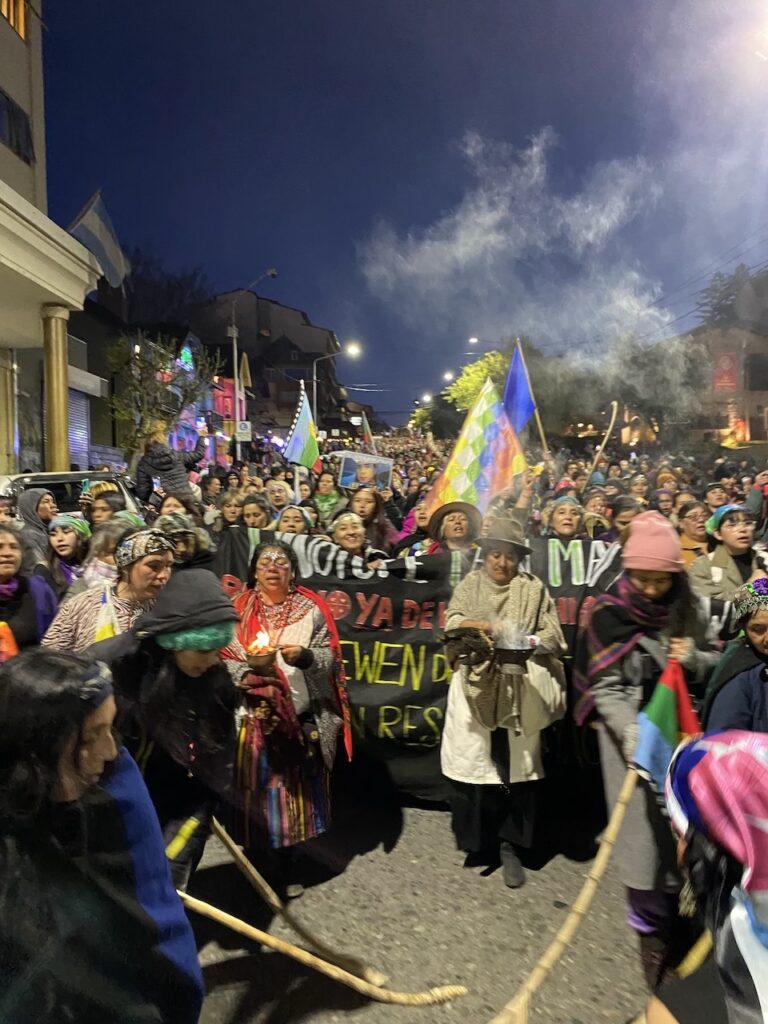
Faced with the difficulty of advancing, they decided to end the march meters before the entrance to the Velodrome. There, a group of people chanted indigenous slogans from the stage.
In a small circle, the machi Betiana, surrounded by women, thanked them all. There was a closing ceremony with fire, incense, and the warriors' walking sticks once again knelt, dancing on the ground and in the icy air. After four hours of walking, the march ended, full of tension and very different from how it had begun.
“We, Indigenous women and diverse groups, are convinced that the Encuentro is a necessary and unique space.”
“The gathering is gradually acquiring a Plurinational identity. But those sectors stemming from party structures and patriarchal, male leadership still need to work on their racism, sexism, and obsequious obedience. This permeates into inappropriate behavior for a horizontal, heterogeneous, and now Plurinational space, with a strong presence of LGBTQ+ comrades,” Moira Millán, a Mapuche warrior (weychafe), . She has been one of the driving forces behind this plurinational identity for several years.
Yesterday, a meeting of Abya Yala Feminists was held at the Civic Center, drawing a large crowd and featuring prominent voices from various groups. The second day included Mapuche singing and poetry circles, book presentations such as Moira Millán's "The Train of Oblivion," and a screening of the documentary "The Rebellion of the Flowers." Workshops also focused on drafting conclusions that will form part of the final document.
We are present
We are committed to journalism that delves into the territories and conducts thorough investigations, combined with new technologies and narrative formats. We want the protagonists, their stories, and their struggles to be present.
SUPPORT US

FOLLOW US
Related notes
We are present
This and other stories are not usually on the media agenda. Together we can bring them to light.