

Let's walk, Valentina: "I wanted to tell the world what it was like to live in a congregation of hypocrites."
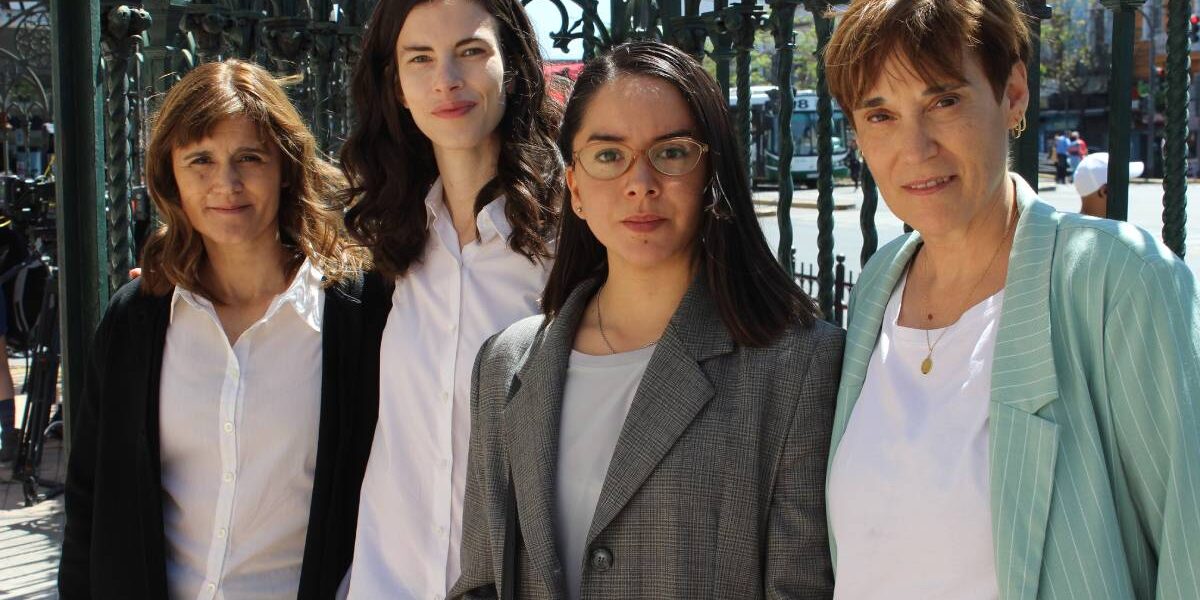
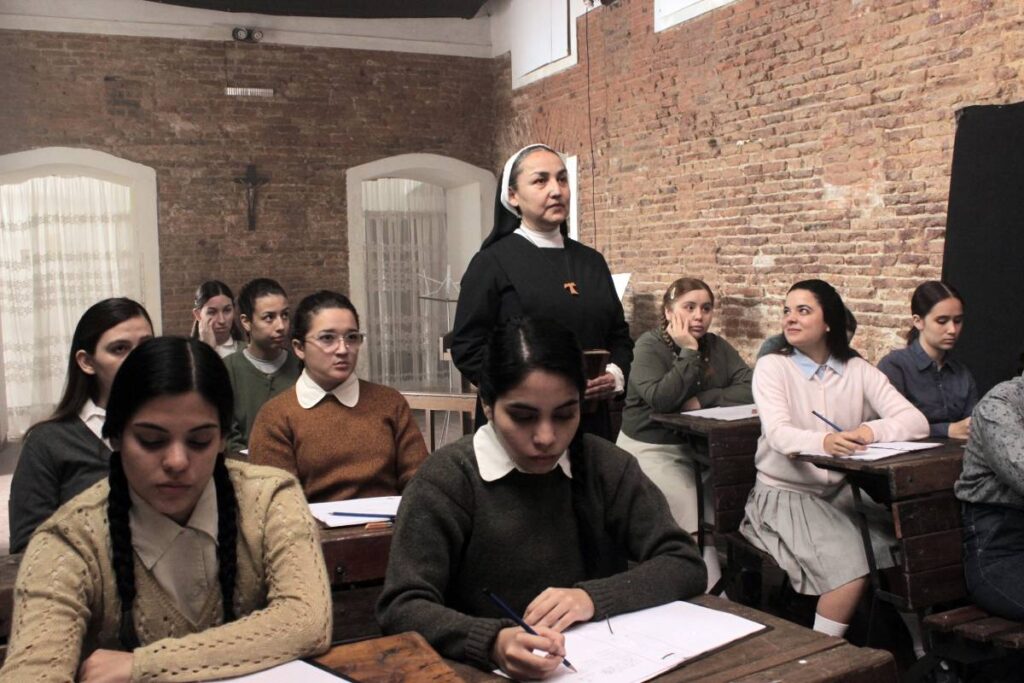
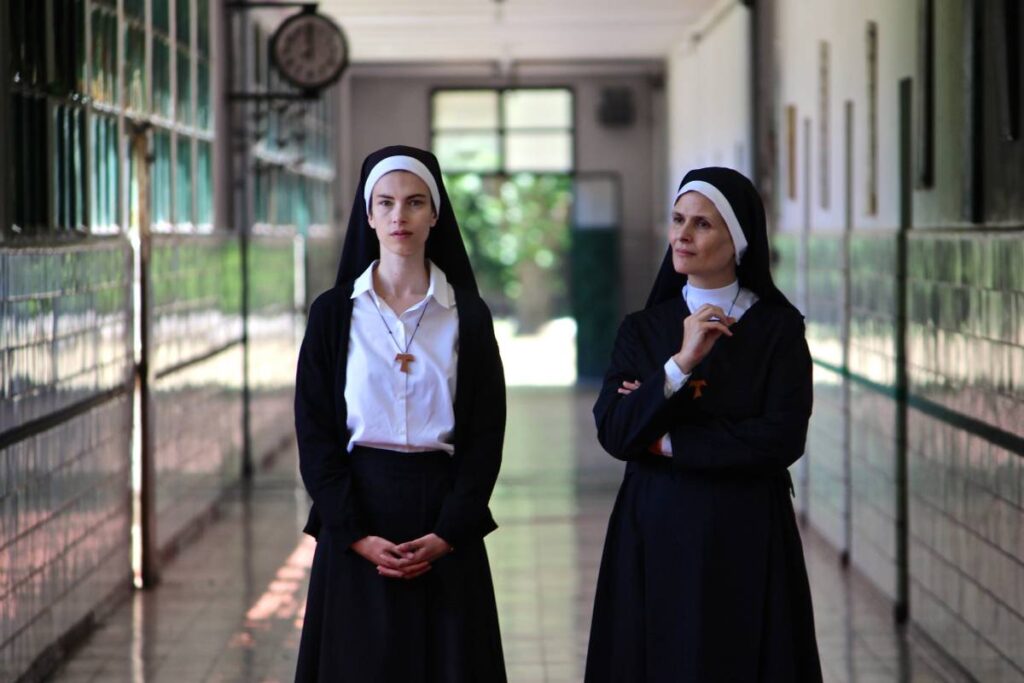
Alberto Lecchi's film tells the story of Sandra Migliore and Valentina Rojas, former nuns who were abused in their adolescence during the novitiate, and after leaving the habit they got married.


Share

BUENOS AIRES, Argentina . When Sandra Migliore and Valentina Rojas first crossed paths, nothing connected them except working at the same school in Lanús. Sandra was a former nun and administrator, Valentina a nun. However, when a series of emails arrive denouncing Sister Bibiana for abusing teenagers studying to become nuns, Sandra and Valentina realize they are also united by a shared traumatic experience: both had been victims of this nun during their adolescence at the novitiate of the Franciscan Educational Sisters of Christ the King in San Lorenzo, Santa Fe.
More than two decades passed before Sandra, spurred by these accusations, went public with her own. The response from the Archdiocese of Buenos Aires was nonexistent: the case was shelved. Sister Bibiana, for her part, fled to Venezuela under a different name. The statute of limitations had expired. But Sandra and Valentina were already bound by something much happier. They fell in love. Valentina left the convent, they married, and today they live in Sandra's hometown of Justiniano Posse, in Córdoba.
While Valentina tends to her garden and Sandra to her dog's barking, both spoke with Presentes following the premiere of Caminemos Valentina, the film by Alberto Lecchi that tells their story.
–The film is based on Sandra's memoir, *Race of Vipers*. What was the writing process like for you, Sandra?
Sandra: – I finished the book in 2014, and it was like I always say: I was forbidden to write it, and that's why I did it. When Valen and I filed the complaint, I had already written a chapter. When the highest authority of the congregation came to talk to us about it, I attached that prologue, which was my complaint. He told me it wasn't in my best interest to write the book, that I shouldn't. That's when I felt most compelled to write it. I wanted to get some of the anger I had bottled up inside me for so long out and seek a kind of justice, a social condemnation. I wanted to tell everyone what it was like to live inside a congregation of hypocrites.
–How did it feel to see your story portrayed on screen?
Valentina: – I think the film is beautiful. I'm very happy with the work Alberto Lecchi did and with the actresses. We worked with them for a year beforehand, when they received the scripts. We talked, I shared my feelings, I told them about my experiences, and they asked me questions. It was a process of character development for them and healing for me.
–They've said on other occasions that the film's objective wasn't to denounce the Catholic Church. What was the objective?
Valentina: – We don't want to attack any institution, and we don't want any of the faithful to perceive this as a denigration of the Church. We are deeply peaceful people and believe that many things can be accomplished through peace, but we cannot fail to denounce the cover-up by certain sectors of the Church regarding cases like ours. If it can help some authorities reconsider their actions, all the better. I hope it challenges them.
Sandra: – We must distinguish between the Church as a hierarchy of men and the congregation, which is a private institution for women. We filed the complaint before chancellors and bishops so that she would be removed first from the congregation and then from the Church. The Mother General promised us that this would happen, but Bibiana beat her to it; she changed her name and escaped, with someone's help.
-What is your connection to Christianity today?
Sandra: – When you're 16, you're very idealistic. It's fertile ground, easy to cultivate. I was drawn to the life of a nun who worked here in town, showing us Franciscan spirituality, and I wanted to be like her. As you mature, you realize that theory has nothing to do with practice. Add to that the fact that we encountered this unbalanced person who made us lose faith in religious life. Coping with life is easier when you believe in something, in an energy or spirituality, but not in religions. I think religions have other interests, interests that divide.
Valentina : – I don't think we can say we are Roman Catholic Christians today. We have faith; I, in particular, have faith in humanity. I believe that human beings are capable of the most heroic and also the most horrendous acts. I believe we can create increasingly inclusive societies for all minorities, and that helps us grow in a world we share with many species.
–Although their story in the film isn't directly related to the topic, they too were part of the Church or worked in convents as lesbians. How do they see the relationship between the LGBT community and the Church from their own experience?
Sandra : I don't agree with gay relationships within the convent, but simply because every person consecrated to God at this point in history takes a vow of chastity. Not upholding that vow is part of the hypocrisy of these places. They deny or condemn certain types of relationships that occur clandestinely and secretly within the convent. However, what we wanted to denounce was different: an adult who was in charge of educating teenagers and who not only failed to do so, but on the contrary, abused minors.
Valentina : – We've seen so many things within the Church that aren't relevant to mention because they involve relationships between consenting adults, but it's part of the great hypocrisy of saying one thing and then letting something else happen behind closed doors. It's part of the disillusionment that made us leave.
We've had conversations with LGBT groups, and they point out that the difficulty of accepting different types of sexuality or sexual identity is commonplace among Jehovah's Witnesses, Evangelicals, Muslims, and others. It's common to any of these large institutions . Everyone who has had faith has felt the separation or pain of not having their reality accepted. It's not exclusive to the Catholic Church. It's a source of pain for those people who need these supportive spaces but can't find them because of their sexual orientation or gender identity. Humanity has a long way to go in this regard.
–Having been part of religious life for so many years, how did they experience coming out? Was it difficult for them?
Sandra : – We experienced it with so much joy, happiness, and gratitude for being able to discover ourselves. We had the support of our families and friends. The love, happiness, and camaraderie that united Valen and me was so strong that I don't feel like coming out was difficult at all.
Valentina : There's a dialogue in the film that's absolutely real and happened exactly as it happened. When Sandra tells me, "I feel like I'm in the wrong vessel," my heart immediately tells her, "The vessel is perfect." It didn't matter to me: I had discovered in Sandra someone I wanted to spend my life with. So many years of religious life taught me that guilt is a useless emotion because the past is impossible to change. Today, at 50, I struggle to understand the teenager I was who couldn't defend herself against the abuse, but today I embrace her and understand that I did what I could with the tools I had.
The film is directed by Alberto Lecchi and stars Paula Sartor and Gabriela Robledo
Azócar.
We are present
We are committed to journalism that delves into the territories and conducts thorough investigations, combined with new technologies and narrative formats. We want the protagonists, their stories, and their struggles to be present.
SUPPORT US

FOLLOW US
Related notes


We are present
This and other stories are not usually on the media agenda. Together we can bring them to light.