

A massive Diversity March in Montevideo denounced "the plundering of rights"
The proclamation denounced the "impunity of the State" and called for the unity of the social movement to "continue fighting fascism".

Share

By Stephanie Demirdjian in La Diaria
Photos: Laura Sosa and Camilo do Santos/la diaria
There is no doubt that the Diversity March in Montevideo is one of the largest public demonstrations in Uruguay, along with the March of Silence and the one held on International Women's Day every March 8th. What happened this Friday reaffirmed that.
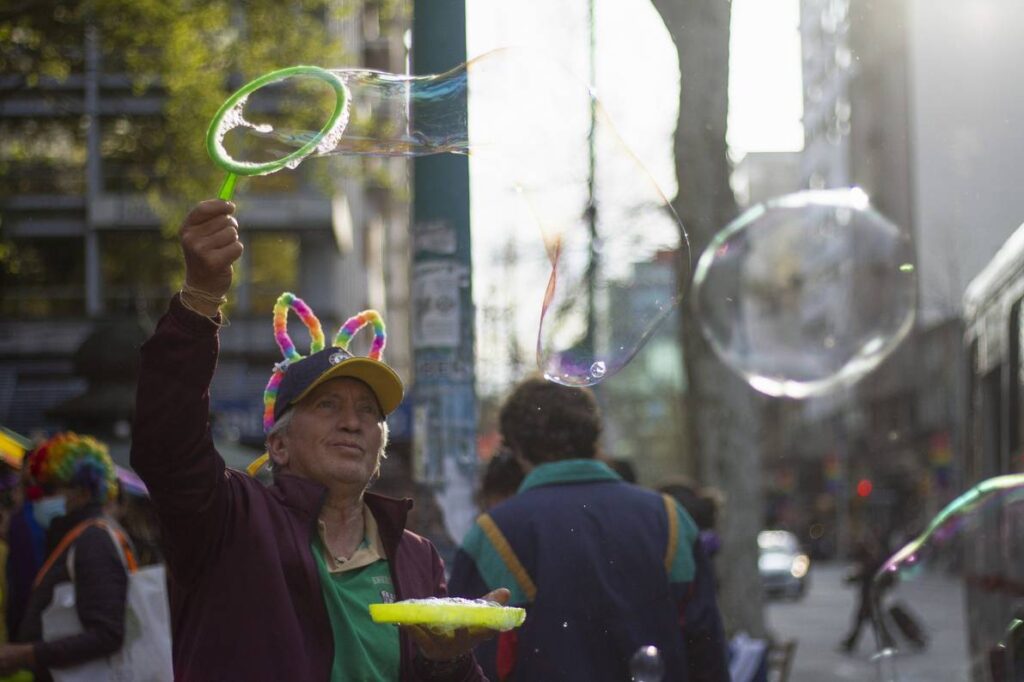
A little before 6:30 p.m. – the time set by the March Coordinator – the colors of the rainbow invaded 18 de Julio Avenue: they could be seen in scraps of fabric that decorated the lampposts, in the many stalls where they sold flags and in the infinite badges worn by the people who walked from all directions towards the same meeting point: the Plaza del Entrevero.
A few blocks away, Plaza Libertad, which hosted the "Pre-march" during Thursday and part of Friday, now functioned as the official pre-march: it was the meeting point for many people who took the opportunity to put on face paint, cover their bodies in glitter and prepare signs.
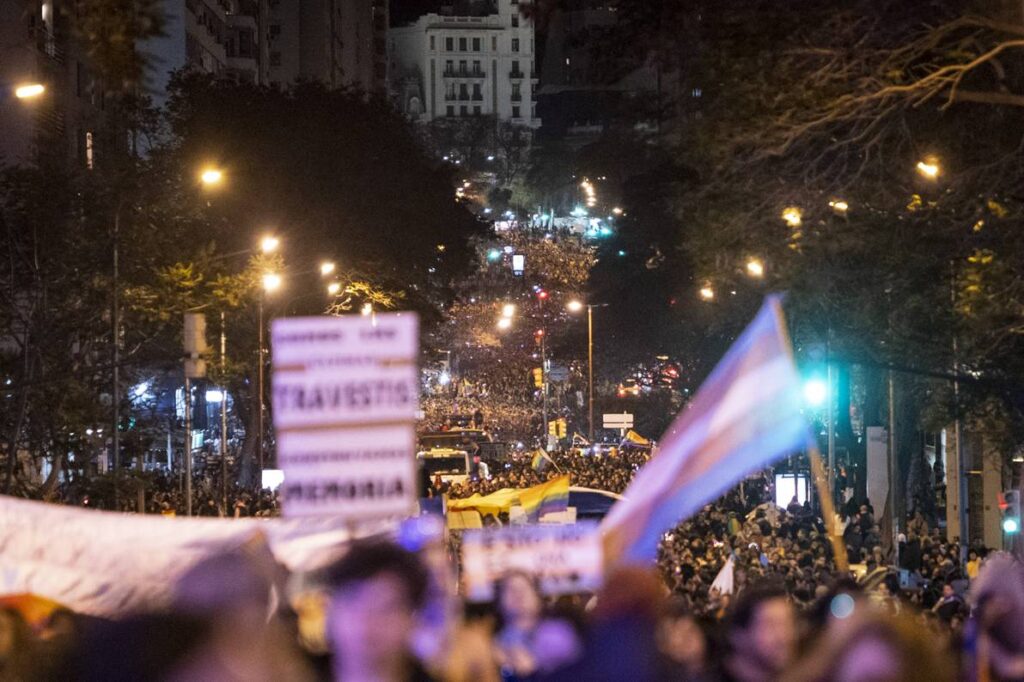
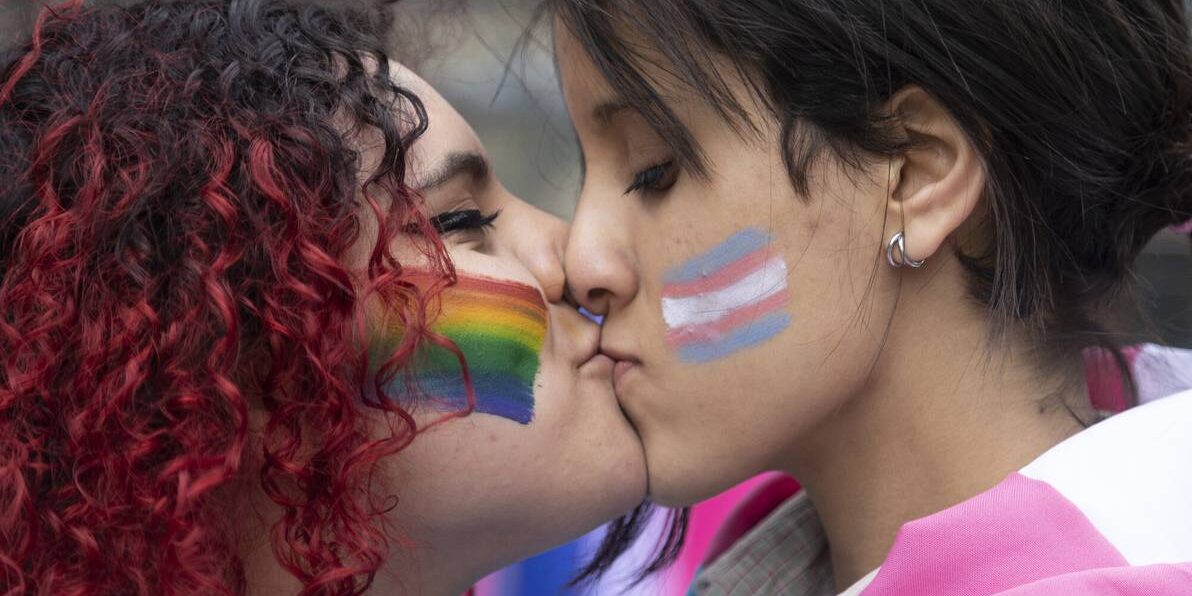
A similar atmosphere prevailed in Plaza del Entrevero. The crowd included people of all ages, but most were young people, teenagers, and children. This was the case for Valentina and Tyler, both 17, who were waiting on a bench to march together, as a couple, for the first time. “It’s nice to be with other people who understand you, who share something with you, and above all, you don’t have those judgmental looks, in my case, for being a trans person,” Tyler told la diaria . The teenager said that, “in everyday life,” he faces those looks “all the time,” with people asking “what he is or how he identifies,” but at the march, that doesn’t happen: “It’s a comfortable environment, nobody looks at you badly, nobody asks you who you are, it’s safe.”
Neither Valentina nor Tyler were aware of this year's march slogan, which was "Stop impunity and the plundering of rights." However, they were very clear that being there was more than just enjoying a safe space: it meant joining a struggle. "We came to march for rights and to be more visible," said the teenager. "Now we are a little freer than before, but we continue fighting for future generations," she added, because "discrimination," "oppression," and "violence" persist.
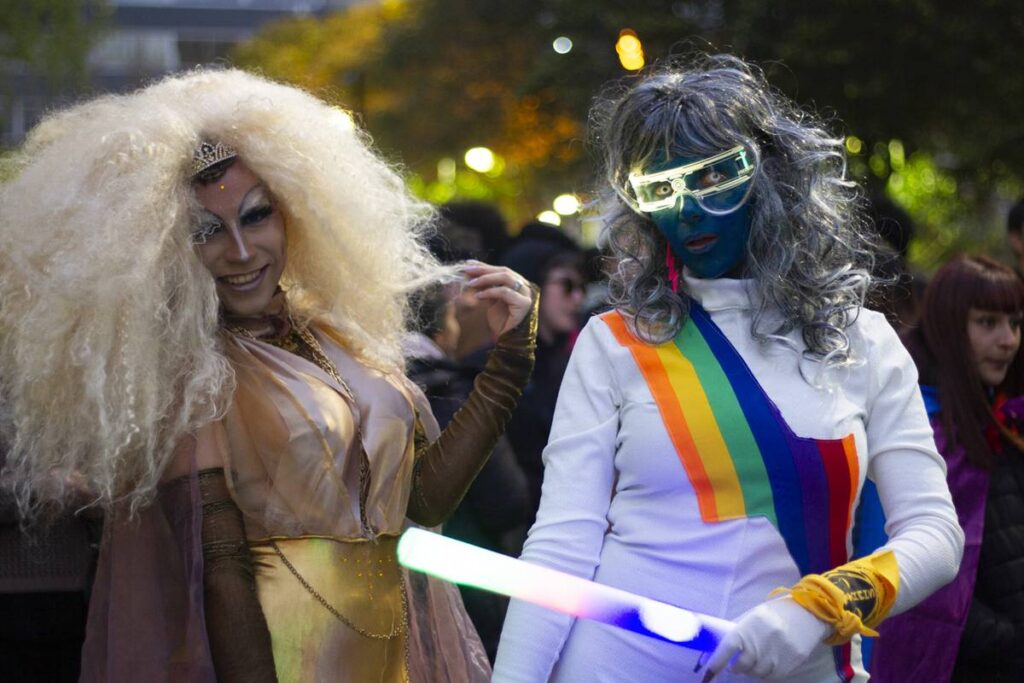
"We are the last transvestites: let's build memory"
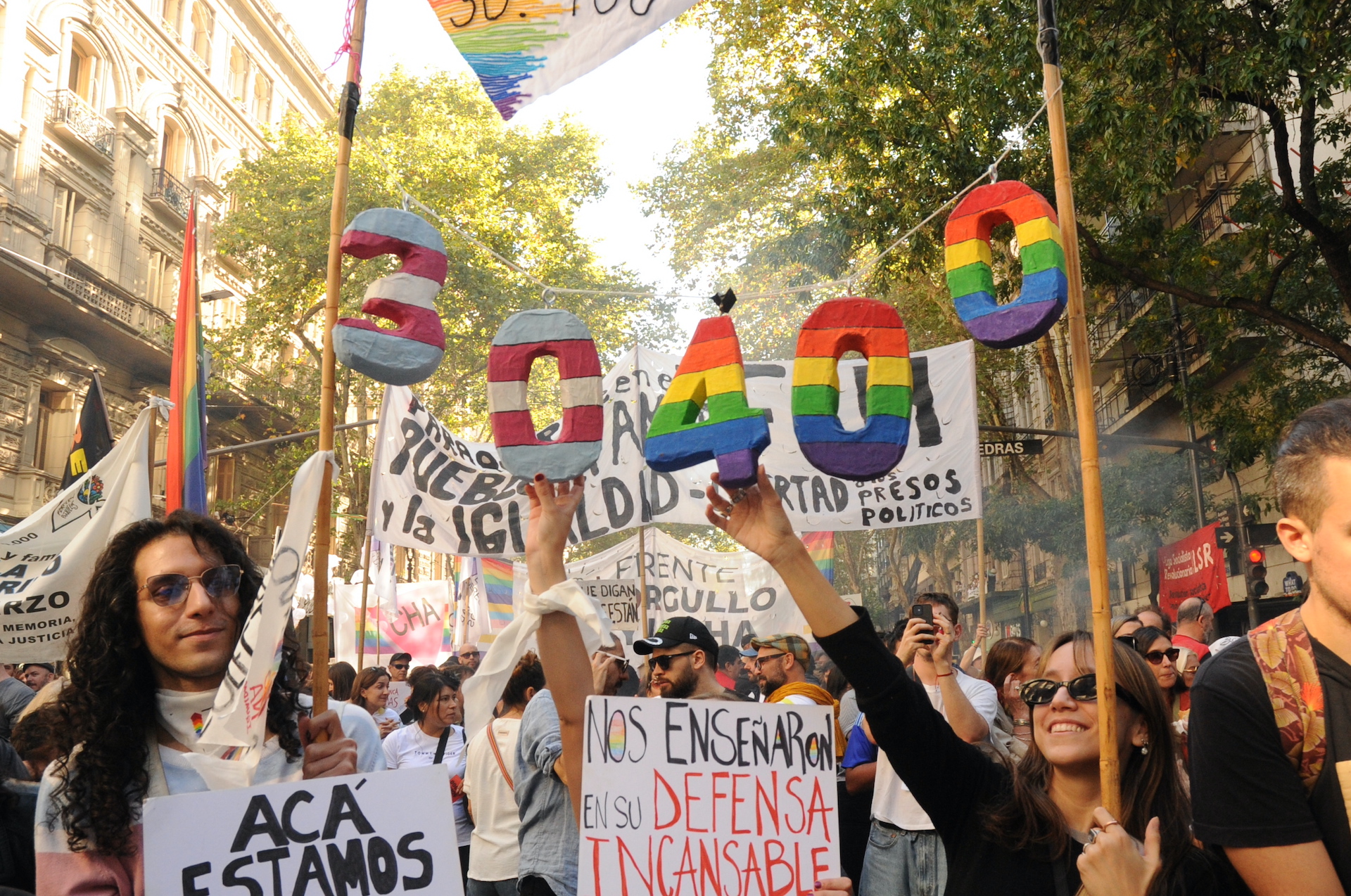
The march began at the intersection of Avenida Libertador and Uruguay. It was led by a giant banner with the slogan, held by prominent trans figures. One of them held up a sign that read: “We are the last trans women. Let's build memory.” Far behind them were “proud trans families.” In that group, a woman held a sign that read “I love my trans son,” and next to her, a child displayed another that said: “I support my trans brother from day one.”
As the march was getting ready to start, a few meters from the front row stood Maia and Isabella, both 11, and Santiago and Franco, 16 and 17, holding up a carefully crafted sign with a wish: “I hope that one day no one will have to come out of the closet and it will be enough to say 'I'm in love.'” All of them were participating in the march for the first time. “I came because I want others to know that we all have the same rights, even if we have different sexualities,” Isabella told la diaria . For Santiago, participating was about finding the opportunity to feel “very free” and “accepted,” something he doesn't experience where he lives, in a town “very far” from the capital. “I came to have a good time and so that everyone knows that we exist, that we deserve respect, and that we are people,” added Franco.
When the clock struck 7:30 p.m., the anthem began to play – “I Will Survive” by Gloria Gaynor – and the crowd began to march, until they arrived a while later at Plaza 1º de Mayo, a few meters from the Legislative Palace, where representatives of the Coordinating Committee delivered the proclamation.
“We continue to fight fascism”
The collective statement denounced various problems contributing to the “impunity” and “plundering of rights” that the central slogan addressed. Along these lines, the readers referred to the “impunity of the State” in the face of various social problems, such as “the sustained increase in homelessness and people living in informal settlements,” or the handling of the water crisis, which resulted in people from the most vulnerable sectors having to “choose between drinking water or meeting other needs.”
They also asserted that the State “reproduces and legitimizes anti-rights rhetoric.” “We are at a critical juncture, where fascism not only threatens, but is advancing and drawing ever closer,” they stated, adding that in Uruguay this is evident “every day, every time a trans woman is attacked, every time a homeless person is attacked, with every instance of union persecution, every time a politician opens their mouth to insult our existence with impunity, and every time speaking about sexual diversity is prohibited in our country’s schools and high schools.”
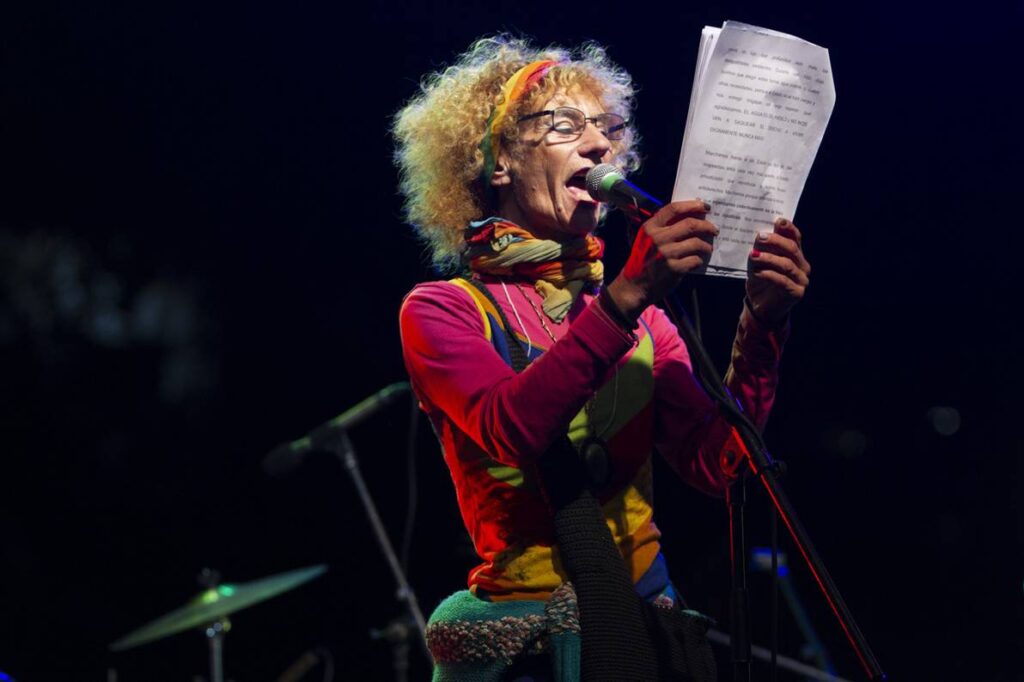
Another section focused on the Comprehensive Law for Transgender People, which, they said, “continues to be unfulfilled, due to both deliberate action and omission on the part of the State.” “For many health centers and state agencies, we continue to be a problem because we demand quality care, access to medication, we denounce omissions in care, malpractice, the failure to provide us with expired medication, the lack of recognition of our identities, and the lack of response to complaints and reports,” they stated. At the same time, they questioned why “the employment quota for transgender, Afro-descendant, and disabled people is not being met, because there is no political will to do so.”
Furthermore, they criticized the “insufficiency and negligence with which national policies on sexual diversity are addressed.” In this regard, they stated that “the vast majority” of the commitments outlined in the National Sexual Diversity Plan approved in 2018 “have not been fulfilled” and that the Ministry of Social Development, the governing body in this area, “does not ensure compliance with and effective oversight of public policy throughout the country.”
The proclamation included a demand for rights for populations that are not included in the acronym LGBTI+ but who also experience exclusion and discrimination, such as people with disabilities, fat people, Afro-descendant people, and those living with HIV.
He also criticized the educational transformation promoted by the government, demanded “a justice system that incorporates a human rights perspective throughout the process and guarantees the defense of victims of structural inequalities,” and pointed out that the “Penadés case” “reflects years of 'gentlemen's agreements' that are sustained by being accomplices, facilitators, and cover-ups of complex networks of [sexual] exploitation at different levels; even by the very people who write laws, head ministries, and define the course of an entire country.”
“In times when conservatism is on the rise, we need to strengthen our communities and take a firm stand against our own logic, which reinforces inequalities,” the activists said at the close. “The revolution we are building is transfeminist, class-based, anti-ableist, and anti-racist. It is time to raise our voices, to unite in this battle for a more just Uruguay for all. This moment, our history, the one we have been writing and the one they tried to interrupt, is our victory: we continue to fight the fascism that keeps trying to erase us,” but which, despite everything, “we always survive.”
We are present
We are committed to journalism that delves into the territories and conducts thorough investigations, combined with new technologies and narrative formats. We want the protagonists, their stories, and their struggles to be present.
SUPPORT US

FOLLOW US
Related notes


We are present
This and other stories are not usually on the media agenda. Together we can bring them to light.