

Facundo Saxe: “I have to come out and explain that I'm not working on Batman's anus”
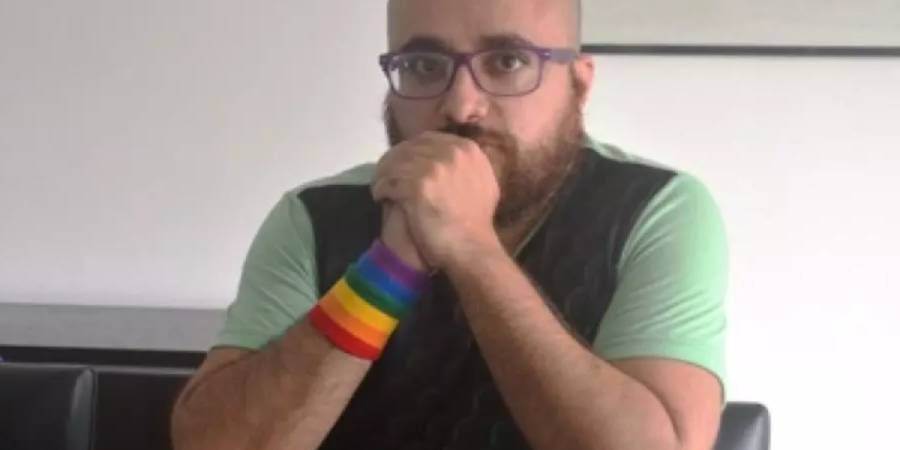
Journalist Franco Torchia interviewed Conicet researcher Facundo Saxe on his program, who is suffering death threats because of an alleged sociological study.


Share

BUENOS AIRES, Argentina. For some years now, sectors of the Argentine right have been producing hate speech against sexual and cultural diversity, as well as against workers in certain organizations. One of these organizations is the National Scientific and Technical Research Council (CONICET) .
On Wednesday, September 20, vice-presidential candidate Victoria Villarruel, during a candidates' debate on a news channel, again mentioned an alleged investigation into "Batman's dilated anus." In doing so, she reinforced a major lie regarding the specific investigation in which that phrase was used and deepened the existing prejudices surrounding social science research.
Regarding that mention, journalist Franco Torchia interviewed on his program "Francotirador" (which airs on Splendid AM 990). Saxe has been suffering violent attacks due to his professional work.
Interview by Franco Torchia with Facundo Saxe
«They threaten me, insult me, defame me, say they're going to beat me up, kill me, call me AIDS-ridden, call me a degenerate faggot. All the insults they want, which we're often used to. And there's something that matters to me: that person who adds to all the hatred really wants me to cease to exist. They want me dead. "Oh, no, we don't want you to leave CONICET." No, no, no, no, it's not just that. So they might want me to leave CONICET, but that's another discussion. Why do they insult me? Why do they wish I didn't exist? Would the lives of the people who say that improve if I, or so many others, didn't exist? There are a lot of people I don't like, but I don't wish them dead or for them to cease to be part of the world. I'm also a teacher, and although I think the world is awful, I believe that to be a teacher you have to have some hope.
I welcome to Francotirador the CONICET researcher, professor and PhD in Letters from the National University of La Plata, author of a paper that he made at some point in all these years, for a specific congress, called or that includes, rather, the expression the "dilated anus of Batman", which he took as an expression in a completely malicious and distorted way and deliberately the freedom of Mr. Javier Milei and also many extremely aggressive digital activists that he has on social networks.
-Facundo Saxe, how are you? I know these are very difficult days for you, because we've talked about it. You're receiving many death threats.
-Yes. I think this all stems from the aftermath of the primaries, when many of us within LGBTQ+ or LGBTQ+ communities saw a greater acceptance of hate speech coming. You know how the more far-right figures or conservative rhetoric emerges, the more it's allowed, right? In that context, I've been harassed on social media for years because of my work at CONICET, which is a distorted view, but let's call it that. In that context, and after the primaries, the situation became a bit harsher, and yes, I received death threats, some quite vicious, and constant attacks. They published my real address the same day they threatened me; it's like a direct threat, "we know where you live." Here in La Plata, they even organized poster campaigns or public shaming of some researchers in certain areas, targeting their work titles related to gender, sexualities, and LGBTQ+ issues.
"That's the terrain that particularly interests them because the war is ideological. It won't be economic or political in any way; it will be primarily and fundamentally ideological, which is, in any case, the only thing that La Libertad Avanza can guarantee. We already know that everything else is impractical. Now, Facundo, you're not living well at all."
"I swear, today I find it hard to give it a real character at times. According to my psychologist, it's a form of defense, so to speak, because it reaches such a level of delirium and violence that one tries to tone it down a bit."
—You find it hard to believe that what's happening to you is happening to you.
—Exactly. For me, it's unbelievable that I'm talking to you on the radio about this situation. I'm a university professor who teaches and researches topics related to the Humanities, Social Sciences, and Gender Studies. I'm not prepared for all this. I'm not even prepared to go on a radio program that wants me to talk for five minutes explaining, "Why did you say 'Batman's anus'?" We're going to die from literal interpretations, too. Because I practically have to go on and explain that I'm not working on Batman's anus. It's ridiculous. What? Do I travel to the United States, find Adam West's corpse, and investigate his anus? I mean, it doesn't make the slightest sense. There's been a campaign against CONICET for years now, but it's resurfaced this year. They're trying to justify the destruction or cuts to CONICET, or the lack of gender research. There's an ideological battle about it. Attacking, in particular, my figure and those of us who work with things that seem cut off, seem useless and even bothersome in a common sense oriented towards sexual social panic.

"This started, as you said, many years ago. I remember it was the journalist Eduardo Feinmann— when he was still working at A24, during Alberto Fernández's presidency or the final throes of Mauricio Macri's government—who first, quite arbitrarily, found the expression 'Batman's dilated anus' on the CONICET website. I repeat, it's not even something you research, but it was a paper you presented at a specific conference. From then on, things started going badly for you. Now, after the primaries, this same thing that Eduardo Feinmann started is being brought up again."
—Exactly. It's all very confusing. What they're doing is selectively manipulating the information on the CONICET website—which also doesn't explain how it works and isn't designed for auditing individual research. It's more complex than that.
"Let me illustrate that very briefly. On the CONICET website, every career researcher has to publish everything they do. Everything means everything: what they do within the CONICET context and what they do outside of it as well. If tomorrow they are invited to give a talk in Formosa, which has nothing to do with CONICET, the talk in Formosa has to be listed."
—Exactly. You upload all the information and then they randomly select some things, especially the presentations. And then they selectively edit all that information in a biased way. If we think about it, literally, the Congress and the paper I presented on Batman's anus, which is edited—the full title is “Batman's Dilated Anus, Notes for an Investigation into Hate Files and the Erasure of Gender-Sex Dissent”—didn't receive funding from CONICET.
"CONICET didn't fund it, and even if it had, so what? The issue of the anus, and, if you prefer, studies about the buttocks, are fundamental in numerous universities around the world. Especially, and fundamentally, in matters of gender. It's not a minor issue at all. Many countries allocate a significant portion of their research budgets, not to study the buttocks proctologically, as doctors do, but to the cultural implications of the buttocks. Both Facundo and I, and many other people listening, have been called 'broken ass' since we were very young. This is just to consider one of the meanings this has."
"Exactly, Franco. And that's what I work on. I work on how that violence affects lives like ours and other lives. I'm 43 years old, and all this that's happening makes me want to shut up and go back to silence. And I don't want to live a silent life when I lived like that for so long. I didn't do anything wrong; I'm simply working. This work could easily have been funded by CONICET, like others. If you go to CONICET and look up my current research, it's called ' Sex-Gender Dissidences: Archive and Memory from a Comparative Perspective in Recent German and Argentine Cultural Texts .' That presentation from the year of Batman, based on a series of theorizations I've made, I'm using for something that will be published this year, funded by my CONICET salary. I don't have any project funding beyond my salary."
"You're a CONICET researcher, and it was incredibly difficult, as you've already described. Not just anyone becomes a CONICET researcher; you have to work extremely hard, and I won't even mention how much harder it is in the social sciences, like you. That's another myth that originated with Batman's dilated anus: the idea that it's teeming with social scientists. A lie."
"That's an absolute lie. Social and human research receives less funding because we don't work in a laboratory. It's a different way of working. Something I'd like to add to what you were saying: let's suppose I investigated Batman's 'dilated anus,' as they say, and I think it raises something like, 'What's the problem with saying the word 'anus'?'"
"The problems remain numerous, and that's why a state that aspires to be modern, attentive to mitigating violence, must work effectively to eliminate, for example, the word 'anus,' the complete removal of the word 'ass.' Facundo, you didn't take any of these death threats you received to court; you decided not to pursue legal action?"
—Not for now. Right now I'm doing ideological damage control. Once some time has passed, we'll file criminal charges against the accounts that are literally threatening me with death.
What's annoying about investigations
Federico García del Corro and David Burt, members of the program hosted by Torchia, also joined the interview.
—Could you elaborate a little more on what you're researching? I'm a comic book and graphic novel reader, and it would be cool to delve into your research process.
"It would take an hour and a half to explain the whole process, but I can summarize it. The idea of considering Batman's homosexuality has to do with how certain hegemonic masculinities are constructed, and I work, as Franco said, with a line of theorizing that comes from Paul Preciado, who talks about the expression 'castrated anus' to think about how a type of traditional and hegemonic cis-heterosexual masculinization is generated."
—Paul Preciado is a Spanish philosopher who has, among others, the following hypothesis: “Man in our contemporary culture is the one who has a closed ass,” that is, being a man is a guarantee of a closed ass.
—So, what I'm working on is the 1950s, precisely the time when comics were being attacked as nefarious products, where Batman was portrayed as the homosexual fantasy of many children and teenagers. In a dreadful book, a collection of hateful documents, a psychologist quotes a poor kid institutionalized in a psychiatric hospital for being gay, and the kid says, “I read Batman and Robin; they're the fantasy of what I want to be. I'd like to live like that.” That statement was later taken up by many people who analyzed Batman and considered how the masculinization of Batman works when, at many points, he was a figure that allowed LGBTQ+ audiences to identify with him. There is verifiable evidence of sexual-dissident identification with Batman from the 1950s and 60s: fans who drew Batman and Robin or Superman kissing. That generates a whole genealogy that's important to me. I'm currently working on the second half of the 1980s, when the heterosexualization of Batman was reinforced, which, as a fictional character, is what we do when we read about him and transform him into something else. In that context, many gay men identified with Wonder Woman, for example.
DB - Let's remember that Robin was removed in the second Batman film because he was seen as a homosexual character.
—Exactly. If we look at the years 1985, 1986, 1987, Robin is killed. In the movie, they take Robin away and give him Kim Basinger as a romantic interest, which further heterosexualizes him. The strong female Batman characters from the late 70s are killed off: Batgirl at that time is left in a wheelchair and is abused by the Joker. There are a lot of things there that have to do with that masculinization of the character towards traditional heterosexuality, which didn't exist in the same way before. The Adam West series allowed for other kinds of identification. I connect how that remains latent. For example, there are books by an Argentinian writer named Osvaldo Bossi, in which he writes poems about the homosexual relationship between Batman and Robin, or prose pieces in which the speaker is Batman to Robin, and he uses images from the series. That's what connects with that imagery of the erased homosexual Batman. So, it's not as literal as looking at the physical anus; It's another thing that has to do with that anal philosophy. I'm connecting all of this to a legend in Argentine culture surrounding mandatory military service, which says that if you were marked as homosexual on the medical exam, they would put the initials AD on your name.
FT: —“Dilated anus,” exactly. I was drafted into the service, and because of that myth, we faced that moment in terror. I can't even tell you what it was like if, like me, you were abused in childhood. We faced that moment in terror because, indeed, there was a myth that the soldiers would search your body and your anus, and if they saw that you had an open anus, you would begin to experience a series of incredible insults and humiliations.
—I'll add something else. We live in a society where the electoral law of the province of Buenos Aires, until 1990, prohibited homosexuals from voting on the grounds of unworthiness. I think that what I'm researching is important for understanding why these kinds of things are still not being discussed in our society.
You can listen to the full interview here.
We are present
We are committed to journalism that delves into the territories and conducts thorough investigations, combined with new technologies and narrative formats. We want the protagonists, their stories, and their struggles to be present.
SUPPORT US

FOLLOW US
Related notes



We are present
This and other stories are not usually on the media agenda. Together we can bring them to light.